By Gloria Ikibah


The House of Representatives has faulted the Nigerian Communications Commission, accusing it of weak oversight and holding it responsible for the continued poor quality of telecommunications services nationwide.
Lawmakers argued that the regulator has not done enough to enforce compliance with industry standards, allowing service providers to fall short in delivering dependable connectivity. They warned that unreliable networks could have serious consequences, particularly in emergency situations where communication is critical to safety. 
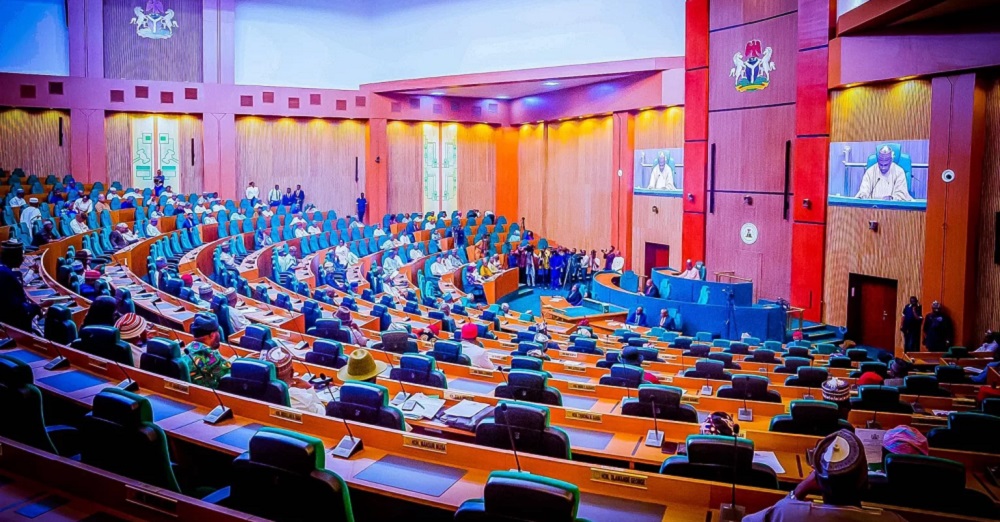
This resolution is sequel to the adoption of a motion of urgent public importance sponsored by Rep. Ahmadu Jaha, who represents the Chibok/Damboa/Gwoza federal constituency, during plenary on Wednesday.
In presenting the motion, Jaha highlighted the growing importance of telecommunications to both the national economy and everyday life, noting that expectations among subscribers continue to rise. He, however, pointed to a widening gap between what users expect and the level of service currently being delivered, describing the trend as a growing concern that requires urgent attention.
“Telecommunication has become a vital part of everyday life in Nigeria. It connects families, supports businesses, enhances education, and drives economic growth. However, despite its importance, the quality of service provided by many telecom companies remains unsatisfactory,” he said.
He cited recurring issues such as dropped calls, poor data speeds and failed message delivery as evidence of systemic inefficiencies within the sector.
“The House is concerned that poor network connectivity is a major issue. Subscribers frequently experience dropped calls, slow internet speeds, and difficulty sending messages. This affects both personal communication and business operations, leading to frustration and financial losses,” Jaha added.
Lawmakers also raised concerns about the mismatch between the high cost of telecom services and the quality delivered.
“The House notes that the high cost of data and call tariffs does not match the quality of service delivered. Nigerians often pay significant amounts for data bundles that are quickly exhausted due to unstable connections and network interruptions,” he said.
Beyond network issues, Jaha highlighted what he described as a breakdown in customer service systems, noting that subscribers often struggle to get timely responses or resolutions to complaints.
According to him, “many subscribers find it difficult to get timely responses to complaints, and issues are often left unresolved for long periods, thereby affecting emergency communications in dire situations like fire outbreaks, medical situations, vehicular situations and the needed responses.”
He further attributed part of the problem to inadequate infrastructure expansion, especially in rapidly growing urban centres and underserved rural communities.
“Network congestion during peak hours and in densely populated areas shows that infrastructure development has not kept pace with the growing number of users. In light of these challenges, I strongly believe that telecom companies must take urgent steps to improve their services,” he said.
Supporting the motion, Deputy Minority Whip George Ozodinobi accused telecom operators of prioritising profit over service improvement, while also faulting the NCC for regulatory complacency.
“It is like these companies have made enough profits in billions, and so, they don’t care about improving the network anymore. The NCC, the regulator, has become complacent,” Ozodinobi said.
Nigeria’s telecommunications sector has undergone a remarkable transformation since its liberalisation in the early 2000s, growing from fewer than one million connected lines to more than 200 million active subscriptions. This expansion, largely fuelled by private sector investment and the rapid spread of mobile technology, has positioned telecoms as a central pillar of the country’s digital economy.
Yet, the pace of infrastructure development has lagged behind this surge in demand. Analysts continue to flag a shortage of base stations, erratic electricity supply and rising operating costs as key factors undermining service quality. Many operators remain dependent on diesel generators to keep networks running, a costly workaround that limits further expansion and efficiency.
The burden is compounded by multiple layers of taxation imposed by federal, state and local authorities, which industry players say discourage fresh investment in infrastructure. Persistent vandalism of telecom installations and ongoing right-of-way disputes have further slowed network rollout, particularly in rural communities and areas affected by insecurity.
Despite these constraints, critics maintain that the Nigerian Communications Commission has not taken a sufficiently firm stance in enforcing quality standards. While the regulator periodically sets benchmarks and imposes fines, enforcement is often viewed as inconsistent, with penalties too weak to compel lasting compliance.
Consumer advocacy groups have also raised concerns about inadequate protection for subscribers, pointing to issues such as opaque billing practices, slow complaint resolution and unreliable service delivery.
The House unanimously adopted the motion and directed all telecom operators to step up investment in modern infrastructure, widen coverage—especially in underserved rural areas—and improve customer service systems.
Lawmakers also called for fairer pricing structures that better reflect the quality of service provided.
The House signalled a tougher stance on regulation, directing the commission to enforce stricter standards and ensure operators are held accountable.
The House resolved to set up an adhoc committee to examine the underlying causes of poor service delivery and propose further legislative measures.