

Connect with us

News

Rotary Club Brings Hope to Abuja Schoolchildren with Learning Support Initiative

Published

on

ADVERTISEMENT
Zoom Ad
ADVERTISEMENT
Zoom Ad

By Gloria Ikibah

As away of giving back to the society the Rotary Club of Abuja City District 9127, has distributed educational materials and welfare support to pupils of L.E.A. Primary School, Jahi Kado-Kuchi to assist disadvantaged children and promote school attendance.

The intervention which formed part of the club’s “Back to School” and “Street to School” campaigns aimed at helping vulnerable pupils remain in the classroom despite economic hardship.

During the outreach on Thursday in partnered with non-governmental organisations Dream Awake Empowering Initiative and JFF Foundation, the children were provided with school bags, sandals, socks, exercise books, writing materials and first aid supplies. Many of the pupils had reportedly been attending classes without basic educational items needed for learning.

Advertisement

The initiative was welcomed by the school’s headmistress, Mrs Arhanmudhe Edith, who described the support as a timely intervention that will positively impact the wellbeing and confidence of the pupils.

She explained that representatives of the Rotary Club had earlier visited the school to conduct a needs assessment before rolling out the project, ensuring that the assistance addressed the most pressing needs of the children.

Arhanmudhe disclosed that some of the items donated included bags, sandals, stockings, exercise books, pencils, erasers and materials for the school’s first aid box.

“The very first day they came to the school, they moved from one class to another to identify the needs of the pupils and the school in general. Today, they came in a very big way to touch the lives of these children.

Advertisement

“In fact, I was carried away. They even ensured that our first aid box was properly stocked for emergency treatment of pupils. They are truly giving back to society,” she added.

She called on individuals, organisations and NGOs to support vulnerable children, as se emphasised that government alone cannot meet the burden of education and child welfare.

“Government cannot do everything. We need more organisations like Rotary Club and foundations that will go into schools to find out what children truly need and support them,” she added.

President of the Rotary Club of Abuja City, Rotarian Gloria Ikibah, said the outreach was driven by concerns over the growing number of children attending school without essential learning materials.

Advertisement

She said that the initiative was carried out in collaboration with the Dream Awake Empowering Initiative and JHH Foundation.

Rotarian Ikibah explained that while the club had previously supported pupils through the payment of school fees and PTA levies, this year’s intervention focused more on providing educational materials and welfare items in response to the country’s current economic challenges.

“When I visited the school, I saw children without shoes, some wearing torn slippers, while others carried their books in nylon bags. That informed our decision to intervene after conducting a proper needs assessment.

“We gave out bags, socks, school sandals, exercise books, writing materials and also supported the staff. Rotary’s focus on basic education and disease prevention informed this project,” she stated.

Advertisement

She therefore called on Nigerians to imbibe the culture of giving, stressing that humanitarian gestures should not be limited to members of Rotary International.

“You don’t have to be a Rotarian before helping someone. If your neighbour’s child lacks shoes or a school bag, there is nothing wrong in reaching out. Putting smiles on people’s faces comes with blessings too,” she added.

Representative of Dream Awake Empowering Initiative, Adejoh Solomon, said the organisation partnered with the Rotary Club to bridge the gap confronting underprivileged school children.

He called on the government to intensify efforts toward improving children’s welfare in public schools, particularly by providing uniforms and enforcing monitoring mechanisms.

Advertisement

“We are here to ameliorate the sufferings of these children and close the gap for pupils coming to school without sandals, bags or writing materials. We want to give them a sense of belonging among their peers.

“Government should make efforts to provide school uniforms the same way NYSC uniforms are provided. There should also be monitoring teams to ensure children are not coming to school barefooted or without learning materials,” he said.

Assistant Governor of Rotary District 9127, Rotarian Guobadia Imafidon, said the intervention formed part of the organisation’s ongoing efforts to keep children in school and improve access to education for vulnerable pupils.

He explained that the “Street to School” initiative was created to help move children away from street life and reintegrate them into the classroom through continuous educational support.

Advertisement

“We want this to become a regular project. We will continue to return to provide bags, shoes, reading and writing materials so that every child benefits at different stages,” he said.

Imafidon noted that collaborations with organisations such as the Dream Awake Empowering Initiative and the Joyful Hearts Initiative had strengthened the Rotary Club’s ability to extend support to a larger number of pupils and families.

“With more partners, we will be able to do more for the children and the school community,” he added.
Advertisement
Continue Reading
Advertisement

News

Reps Move to Modernise Price Control Law, as Bill Pass Second Reading

Published

on

ADVERTISEMENT
Zoom Ad
ADVERTISEMENT
Zoom Ad

By Gloria Ikibah

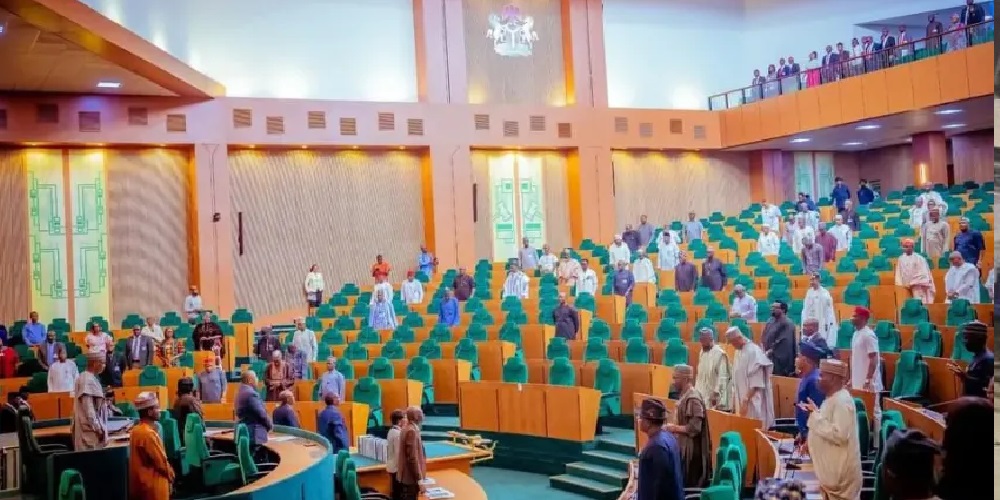
The House of Representatives on Wednesday pushed forward sweeping reforms to Nigeria’s price control regime, as lawmakers approved key bills for second reading amid spirited debate on parliamentary procedure.

Leading debate on the Bill to amend the Price Control Act, Ahmed Munir, declared that the 1977 legislation had become obsolete and ineffective in the face of present-day economic realities.

“The original intent of the 1977 Act was global, to protect ordinary Nigerians from hoarding, price gouging and artificial scarcity. However, the mechanisms it put in place and the list of commodities it covered are completely out of sync with the economic realities of 2026.

Advertisement

“As it stands today, the Price Control Act is blindly a dead letter law,” he said.

He criticised the existing penalties as “laughably low” and faulted the Act for failing to define essential goods in line with the needs of modern households.

He stressed that the amendment would not amount to a return to rigid price-fixing.

“While inflation has external and structural drivers, we cannot ignore the local menace of unscrupulous middlemen, artificial hoarding and predatory price-fixing by cartels, taking advantage of the vulnerability of our people. The current 1977 Act fails us in two major ways — obsolete penalties and vague and outdated definitions.

Advertisement

“This amendment does not seek a return to archaic, heavy-handed price-fixing, which we know destroys businesses. Rather, it introduces a smart, balanced and realistic regulatory framework.

“This bill is not about suffocating the free market. It is about putting a civilised guardrail on it. It ensures that while businesses make legitimate profits, the desperate situation of our citizens is not weaponised against them by cartels,” Munir argued.

According to him, the proposal will “bring transparency to supply chains and give teeth to the regulatory bodies like the Federal Competition and Consumer Protection Commission”.

He urged colleagues to back what he described as “this vital, people-centred bill.”

Advertisement

When put to a voice vote by the presiding officer, Speaker Tajudeen Abbas, the House unanimously adopted the motion and referred it to the Committee on Commerce for further legislative action.

Continue Reading

News

BREAKING: ‘Hope Is Here’: Reps Rally Support for State Police Ahead of Crucial Constitutional Vote On Thursday

Published

on

ADVERTISEMENT
Zoom Ad
ADVERTISEMENT
Zoom Ad

…as Deputy Speaker, Regional leaders declare House united on security reform

By Gloria Ikibah

The House of Representatives has intensified its push for the establishment of state police, declaring that lawmakers are prepared to take decisive legislative action to address Nigeria’s worsening security challenges.

Addressing journalists alongside zonal and caucus leaders of the House, Deputy Speaker Benjamin Kalu said the National Assembly was determined to complement the efforts of the Executive through constitutional reforms that will strengthen policing and improve response to insecurity across the country.

Advertisement

The bill sponsored by Deputy Speaker Kalu and 14 other lawmakers, was passed on February 20, 2024, it seeks to transfer “Police” from the “Exclusive Legislative List ” to the “Concurrent Legislative List”, effectively empowering states to have state to have state-controlled policing.

It proposes 16 alterations to the constitution and introduces a comprehensive framework to ensure cohesion accountability,  and uniform standards between the federal police and state police.

The bill also seeks to establish State Police Service Commission as distinct from the Federal Police Service Commission with clearly defined roles and jurisdictions.

Kalu argued that while Parliament had continued to exercise its oversight powers by summoning security chiefs and government officials, lawmakers must also deploy legislative solutions to tackle the root causes of the nation’s security crisis.

Advertisement

The Deputy Speaker noted that the House had always positioned itself as a platform where national challenges are debated and practical solutions developed through legislation.

He said: “When we say that security of lives and property is a primary purpose of government, what do the executive think that that particular section refers to? Does it consign the three arms of government? And if yes, what is the executive doing? While we call them to order as Parliament and as allowed by Sections 88 and 89 of the Constitution of the Federal Republic of Nigeria 1999 as amended, the question becomes, have we done our part in regards to the expectation of 88 and 89 as it consigns legislative functions?

“We have always referred to the Parliament, the House of Representatives, as the solution hub where hydra-headed problems of the country are presented and solutions given to them in security and legislative tool to cure it.

“Whilst we call the chief service chiefs to come and meet with us to dialogue, while we call ministries of finance, budget office and all the others, there is the need for us to use legislative tool to block the car.”

Advertisement

Kalu praised members of the constitutional amendment committees and regional leaders of the House, describing them as the driving force behind the ongoing efforts to reform the nation’s security architecture.

“These men here are the real leaders of the House of Representatives who have been working night and day.

“When I mean night and day, I mean literally night and day.”
According to him, lawmakers have concluded that the current constitutional framework governing policing is inadequate to meet the security expectations of Nigerians.

“We have discovered that leaving the law as it is will not give us that expectation that all Nigerians have placed in the expectation basket with regards to curing the issue of insecurity.

Advertisement

“Therefore, we decided to prioritise the issue of unbundling security-related problems, response time through the legislative tool of legislation, targeting policing”, he said.

He disclosed that consultations on state policing had attracted broad support from critical stakeholders, including the Inspector-General of Police, governors and the Executive arm of government.

The Deputy Speaker argued that constitutional provisions, particularly Section 214 and related clauses, would need to be amended to pave the way for state police.

“And we said as it is today, the structure which has been agreed to by the IGP and his team, national consensus has also arisen on it, the executive have bought into it, the governors have bought into it, that there is the need for state police.

Advertisement

“The Constitution as it is, especially Section 214 and other consequential amendments in that particular Constitution, would not birth the state police that will guarantee what we’ll be looking for in the space of security.”

Kalu revealed that the House will move to vote on the constitutional amendment proposals, with state police placed high on the agenda.

He added that the announcement was intended to reassure Nigerians that lawmakers across the six geopolitical zones and the Federal Capital Territory were united in support of the proposal.

“So we are here to announce to Nigerians that hope is coming, that hope to have a better response time to incidents of crime is here, that we have decided, do talk, that by tomorrow we’ll be voting on the Constitution and in that we’ll be prioritising state police.

Advertisement

“This is us telling our supporters, our constituents across the nation, that your leaders are represented here, that the six caucus leaders, including the FCT 37, they are here, regional leaders and zonal leaders are here and all of us are together on this mission.

Dismissing reports suggesting that efforts were underway to frustrate the proposal, the Deputy Speaker insisted that the House remained firmly committed to the reform.

“The Speaker has asked us to come and address Nigerians to assure them that hope is coming and there is nobody stopping us from going ahead with state police.
“We’ve read a lot of things on the news that people are trying to stop it. No, the Parliament is marching forward and by tomorrow we’ll be concluding on this”, he noted.

Expressing confidence in the next phase of the constitutional amendment process, Kalu said lawmakers expected strong support from state governors and Houses of Assembly once the proposal leaves the National Assembly.

Advertisement

“This is what we have come to inform you that hope is here and by tomorrow state police will make it in our constitutional amendment.

“We are hoping that by the time we finish tomorrow it will be going to the states and because we have seen the body language of the governors of these 36 states, which is in support of state police, they will work hand in hand with their Houses of Assembly to ensure that it is returned back to Mr President for his assent as quickly as possible”, he added.

The Deputy Speaker also issued an urgent appeal to lawmakers currently carrying out oversight assignments across the country to return to Abuja for the vote.

“We’re also using this opportunity to invite our members who are currently handling oversight function across Nigeria. Let them cut it short and fly in. It’s an emergency situation.

Advertisement

“They should cut it short and fly in tomorrow. We want all our members to be in the House so that will show our constituents that we are in support of state police and that security is priority on our list”, he said.

The proposed state police framework remains one of the most closely watched constitutional amendment initiatives before the National Assembly, with supporters arguing that decentralised policing will improve intelligence gathering, strengthen local security responses and help address the country’s persistent insecurity challenges.

Continue Reading

News

Blackout hits Abuja, Nasarawa, AEDC explains

Published

on

ADVERTISEMENT
Zoom Ad
ADVERTISEMENT
Zoom Ad

Abuja Electricity Distribution Company has announced an electricity outage in parts of the Federal Capital Territory and Nasarawa State.

AEDC disclosed this in a notice on Wednesday.

The disco said the outage is due to a technical fault on the transmission company of Nigeria (TCN) 132kV Apo – Karu – line 1.

Consequently, bulk electricity supply has been disrupted in areas in Abuja and Nasarawa, including in Karu, Nyanya, Jikwoyi, Kurudu, Orozo, Karshi, Mararaba, Ado, New Nyanya, New Karu Uke, Masaka, Auta Balaifi, Keffi, Nasarawa Toto, Akwanga, Nasarawa Eggon, and environs.

Advertisement

The disco, however, assured electricity restoration.

“The technical team of the Transmission Company of Nigeria (TCN) is currently working to restore power supply around 3:00 pm today, 10th June 2026.

“We regret the inconvenience this may cause and appreciate your patience and understanding,” AEDC stated.

Daily Post

Advertisement
Continue Reading

Trending

Copyright © 2024 Naija Blitz News