Connect with us

News

Senate Extends 2025 Capital Budget Implementation to September

Published

on

ADVERTISEMENT
Zoom Ad
ADVERTISEMENT
Zoom Ad

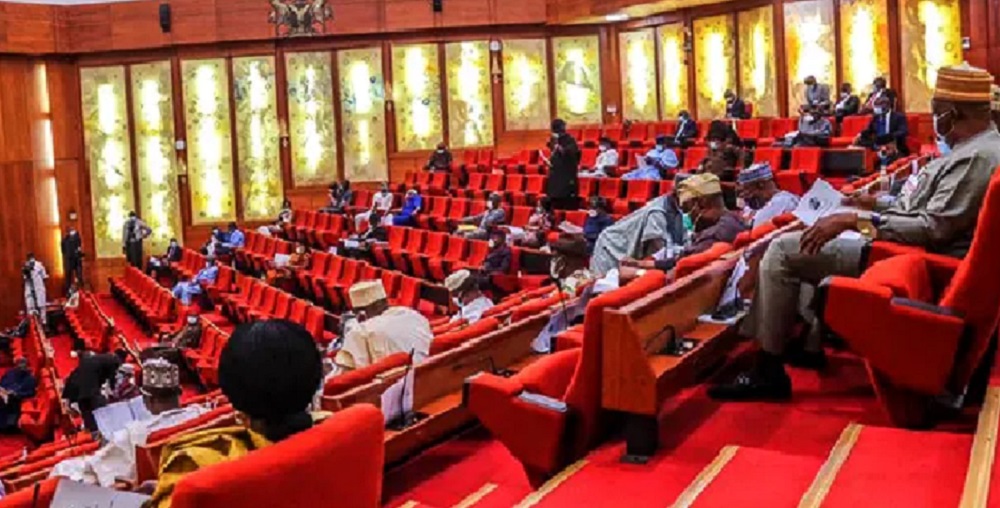
Senate on Thursday approved a fresh three-month extension of the implementation period for the capital component of the 2025 Appropriation Act. It shifted the deadline from June 30, 2026, to September 30, 2026, in a move aimed at salvaging ongoing projects and enabling ministries, departments and agencies (MDAs) to fully utilise funds already released by the federal government.


The decision, which followed the adoption of a motion sponsored by Senate Chief Whip, Senator Tahir Munguno, marked the third extension granted to the capital component of the 2025 budget.

The National Assembly had initially extended the implementation period from December 31, 2025, to March 31, 2026, and later from March 31 to June 30, 2026, before Thursday’s latest shift to September 30.

With the extension, MDAs will have an additional three months to complete ongoing capital projects, process outstanding payments, and meet contractual obligations tied to projects captured in the 2025 fiscal plan.

Advertisement

Leading debate on the motion, Munguno said the extension became imperative because a substantial portion of funds released for approved projects and programmes had yet to be utilised owing to procurement timelines, project execution challenges, and other administrative bottlenecks.

According to him, several strategic projects across key sectors of the economy are already at advanced stages of implementation and require additional time for completion, certification and payment.

He warned that allowing the implementation window to lapse at the end of June could result in the abandonment of critical projects, waste public resources already committed to them, and disrupt ongoing government interventions.

Munguno also expressed concern that some projects contained in the 2025 budget might not be reintroduced in future appropriation cycles, thereby creating funding gaps and undermining national development objectives.

Advertisement

He stated that extending the validity of the capital component would promote efficient utilisation of public funds, improve budget performance and support economic growth.

“The Senate is convinced that granting a further extension of the implementation period is in the national interest and will ensure value for money in public expenditure,” he said.

Chairman of Senate Committee on Appropriations, Senator Olamilekan Adeola, who seconded the motion, said although payment for some capital projects had commenced, numerous obligations remained outstanding.

Adeola recalled that President Bola Tinubu had earlier informed the National Assembly that only about 30 per cent of the funds required for the outstanding 2025 capital commitments would be accommodated through the rollover arrangement, while the balance would be reflected in the 2026 budget framework.

Advertisement

“Payment has commenced, but we still have a lot of outstanding obligations to settle,” he said, urging lawmakers to support the extension.

In his remarks, President of the Senate, Senator Godswill Akpabio, said the decision was consistent with the constitutional responsibility of the National Assembly to ensure effective implementation of the budget and prudent management of public resources.

Akpabio recalled that when Tinubu presented the budget, it was envisaged that only a portion of the capital expenditure would be fully implemented within the approved timeframe, while the balance would be accommodated through subsequent budgetary provisions.

He stated that implementation challenges had earlier necessitated the extension of the capital component to June 30, 2026, but said outstanding obligations still remained significant.

Advertisement

Akpabio stated, “Although payments have commenced, a considerable number of obligations remain outstanding. It has therefore become necessary, in the interest of effective budget execution and accountability, to further extend the implementation period beyond June 30, 2026, to September 30, 2026.”

The senate president expressed confidence that the additional three-month window would enable the government to settle all outstanding commitments under the affected component of the budget, while ensuring that implementation of projects under the subsequent fiscal cycle proceeded without disruption.

The latest extension underscores the persistent implementation challenges confronting federal capital budgets and highlights the government’s efforts to avoid project abandonment amid ongoing fiscal and administrative constraints.
Advertisement
Continue Reading
Advertisement

News

FG To Introduce National Call Centre For Electricity Complaints

Published

on

By

ADVERTISEMENT
Zoom Ad
ADVERTISEMENT
Zoom Ad

The Federal Government is taking steps to establish a national electricity complaints call centre that will give consumers across Nigeria a direct channel to report service challenges, seek redress, and track complaints to resolution.

The Minister of Power, Chief Joseph O. Tegbe, disclosed this at the commissioning of a 3-megawatt hybrid solar power project and Renewable Energy Workshop and Training Centre at Yakubu Gowon University, Abuja.

Tegbe said the initiative was designed to strengthen accountability, responsiveness and consumer confidence in the power sector.

“My office is working on a call centre where electricity complaints across the country can be lodged and resolved,” the Minister said, adding that the initiative would also create sustainable job opportunities for young Nigerians.

Advertisement

The Minister also announced plans for a dedicated reporting channel for vandalism of critical electricity infrastructure, enabling Nigerians to alert the authorities to incidents involving transformers, transmission towers and other power assets for faster intervention.

He said the Federal Government was working with the Nigeria Police Force, the Nigeria Security and Civil Defence Corps and the Economic and Financial Crimes Commission to tackle the destruction of electricity infrastructure.

Tegbe urged Nigerians, particularly members of the university community, to see the protection of power infrastructure as a shared responsibility and to report vandalism promptly.

The commissioning of the hybrid power project provided the backdrop for the Minister’s call for greater public participation in protecting investments in the power sector.

Advertisement

Delivered under Phase II of the Federal Government’s Energising Education Programme by the Rural Electrification Agency, the project is designed to support teaching, research, laboratories and digital services.

At the same time, its 388 streetlights will enhance visibility and security across the campus.

Also speaking, the Managing Director of the Rural Electrification Agency, Abba Aliyu, said the establishment of the Renewable Asset Management Company would help ensure that renewable-energy assets are properly managed, maintained and protected after commissioning.

The planned complaints centre and vandalism reporting channel form part of the Federal Government’s broader effort to build a power sector that is more responsive, accountable and connected to the people it serves.

Advertisement

For the Federal Government, the next phase of power-sector reform is not only about building infrastructure, but ensuring that Nigerians have a clear channel to report problems, public assets are protected, and action follows complaints.

Continue Reading

News

Constitution Review: State Assemblies Await Formal Transmission, Will Act in National Interest — Speakers’ Conference Chairman

Published

on

By

ADVERTISEMENT
Zoom Ad
ADVERTISEMENT
Zoom Ad

The Chairman of the Conference of Speakers of State Legislatures of Nigeria, Rt. Hon. Emomotimi Dennis Guwor, says State Houses of Assembly are awaiting the formal transmission of the resolutions of the ongoing Constitution Review exercise from the National Assembly.

Guwor, who is also the Speaker of the Delta State House of Assembly, stated this while reacting to the announcement by the Clerk to the National Assembly that the Sixth Alteration Bill, including the proposed State Police Bill, had been transmitted to State Assemblies.

In a statement issued by his Chief Press Secretary, Nkem Nwaeke, the Conference Chairman said the Speakers had taken note of the development but were still expecting the formal copies of the bills.

“We are still awaiting formal transmission and as soon as we receive it, we will do what will be good for the people of Nigeria,” Guwor stated.

Advertisement

He said the Conference would subject the bills to thorough legislative scrutiny based on their merits upon receipt, stressing that the proposal for the establishment of State Police required careful consideration because of its implications for sub-national governance.

Guwor disclosed that the Conference of Speakers intends to engage the leadership of the Nigeria Governors’ Forum (NGF) to harmonise perspectives on the proposed State Policing framework before State Houses of Assembly take their final positions.

According to him, such engagement is necessary given the constitutional responsibilities of Governors and State Legislatures in the proposed reform process.

The Speaker assured that all State Assembly Speakers would be carried along on developments and that resolutions reached by the State Houses of Assembly would be communicated to the National Assembly in accordance with Section 9 of the 1999 Constitution, as amended.

Advertisement
Continue Reading

News

Soludo pardons jailed native doctor, appoints him youth ambassador

Published

on

By

ADVERTISEMENT
Zoom Ad
ADVERTISEMENT
Zoom Ad

The Anambra State Governor, Prof. Chukwuma Soludo, has granted a pardon to a popular native doctor, Chidozie Nwangwu, popularly known as “Akwa Okuko Tiwara Aki”.

Soludo signed an order for his immediate release on Friday and pledged to work with him for the betterment of Anambra State.

Nwangwu was convicted in February and sentenced to 11 months in prison following a plea bargain at the Awka High Court after pleading guilty to charges related to the practice of “Okeite” and other related matters.

The court had also ordered the destruction of his shrine in Oba, Idemili South Local Government Area of the state.

Advertisement

He was among eight native doctors arrested in 2025 following the passage of the Anambra State Homeland Security Law 2025.

He was charged with involvement in the promotion of money rituals, quick wealth and the use of human parts for rituals.

He was later handed an 11-month prison sentence and incarcerated at the Nigeria Correctional Service facility in Amawbia, Anambra State. He was also given the condition of renouncing his fetish practice and promising to become an ambassador for youth reformation.

Nwangwu accepted the conditions and had been serving his prison term until Soludo pardoned him under the prerogative of mercy, making him Ambassador for Youth Reformation in Anambra State.

Advertisement

The Special Adviser to the governor on Youth Reformation, Dr Nelson Omenugha, disclosed this in a statement on Friday, saying the governor had visited the prison in fulfilment of his duties when he made the announcement.

Omenugha said, “Thank you, Mr Governor, Prof. Chukwuma Soludo, CFR, for graciously extending your hand of mercy to Chidozie Nwangwu (Akwa Okuko Tiwara Aki) and giving him a new responsibility as Ambassador for Youth Reformation.

“This is the heart of Youth Reformation: not just punishment, but correction, restoration, a new purpose and a new Onye Anambra.”

Advertisement
Continue Reading

Trending

Copyright © 2024 Naija Blitz News