

Connect with us

News

HoR move to address security challenges, strengthen military architecture

Published

on

ADVERTISEMENT
Zoom Ad
ADVERTISEMENT
Zoom Ad

By Ojomah Austin.


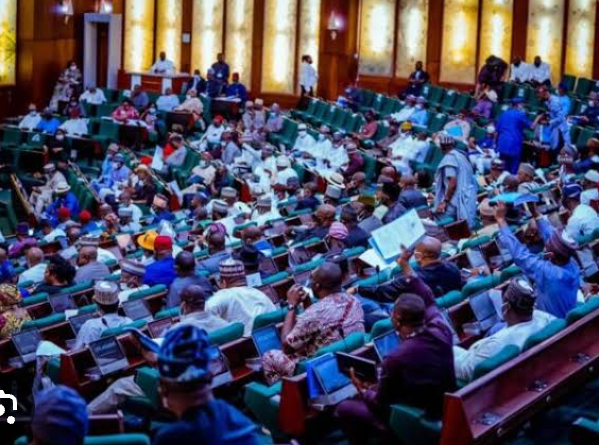
The House of Representatives on Monday commenced a two-day public hearing on a series of defence-related bills aimed at strengthening Nigeria’s military architecture, improving the welfare of service personnel and retirees to combat security challenges.

Speaking at the opening of the hearing at the National Assembly Complex, Speaker of the House of Representatives, Abbas Tajudeen, described the proposed legislation as a direct response to Nigeria’s evolving security challenges and a key component of the 10th House Legislative Agenda.

Advertisement

Abbas noted that the country continues to grapple with insurgency in the North-East, banditry and kidnapping in the North-West, farmer-herder conflicts in the North-Central, separatist agitations in the South-East, as well as emerging threats such as maritime piracy, cyber warfare, and organised crime linked to terrorism.

“We cannot pretend that our nation is at ease. Our Armed Forces are stretched, yet they remain our first and last line of defence,” the Speaker said.
He explained that the bills under consideration seek to strengthen the legal and institutional frameworks governing the military, making it more resilient, accountable, inclusive and capable of responding to modern security realities.

Among the bills before the committee are proposals for the establishment of an Armed Forces Farms and Ranches Scheme to promote food security in conflict-prone agricultural areas, legislation to improve gender representation in the Armed Forces, a comprehensive repeal and replacement of the Armed Forces Act through a new Nigerian Military Force Bill, and a bill to establish a Veterans’ Federation of Nigeria to improve support for retired military personnel.

The Speaker stressed that the hearing was not intended as a “rubber stamp” exercise but a platform for robust and evidence-based engagement.
“I give you my word every memorandum will be read, every oral presentation will be noted, and all relevant contributions will be considered and, where applicable, incorporated into the final reports and bills,” Abbas assured stakeholders.

Advertisement

He urged serving and retired military personnel, civil society organisations, gender advocates, legal experts and ordinary citizens to actively participate in the process, emphasizing that legislative innovation was necessary to address the country’s complex security challenges.
Abbas also commended the House Committee on Defence for organising the hearing and expressed confidence in its ability to conduct a transparent and fair process.

“We are here to serve the Nigerian people and to produce legislation that will make our Armed Forces more professional, more accountable, more gender-sensitive, and more effective in protecting lives and property,” he said.
In his welcome address, Chairman of the House Committee on Defence, Babajimi Benson, described the public hearing as a critical democratic exercise designed to ensure stakeholder participation in the lawmaking process.

According to Benson, defence legislation directly impacts national sovereignty, military effectiveness, operational readiness and the safety of Nigerians, making public input essential.
“The importance of public participation becomes even more significant when dealing with matters of defence and national security,” he said.

He explained that the bills address key areas including military education and professional development, joint operational effectiveness, medical training and healthcare support, strategic research and doctrine development, military governance reforms, food security initiatives, veterans’ welfare and inclusiveness within the Armed Forces.

Advertisement

“Collectively, these proposals represent an important effort to build a stronger, more professional, innovative and future-ready military institution,” Benson stated.
The lawmaker encouraged stakeholders to make oral presentations and submit memoranda, assuring them that all submissions would be carefully reviewed by the committee.

He also paid tribute to officers and soldiers of the Armed Forces of Nigeria for their dedication and sacrifices in safeguarding the nation despite difficult operating conditions.

The hearing also witnessed strong reactions from some veterans who expressed reservations about aspects of the proposed Veterans’ Federation of Nigeria Bill.

Supporters of the proposed (VFN) Bill urged lawmakers to adopt a framework they said aligns with international best practices for veterans’ welfare and representation.

Advertisement

In a policy brief submitted to the Committee, G.A Olonisakin speaking on behalf of veteran stakeholders argued that the debate surrounding the bill should focus on facts, global standards and the welfare of Nigerian veterans rather than on institutional sentiments or nomenclature.

The memorandum noted that in countries such as the United States, the United Kingdom, Canada and Australia, veterans’ organisations such as the American Legion, the Royal British Legion and the Royal Canadian Legion operate as non-governmental charitable associations rather than statutory government bodies.

According to the submission, responsibility for veterans’ welfare in those countries rests with dedicated government agencies, including the United States Department of Veterans Affairs, Veterans Affairs Canada, the United Kingdom’s Office for Veterans Affairs and Australia’s Department of Veterans Affairs.

The stakeholders further argued that Nigeria’s current arrangement, in which the Nigerian Legion combines the roles of both an association and a statutory government body, is uncommon internationally.

Advertisement

They maintained that the proposed VFN model would bring Nigeria closer to global standards by creating a government-driven umbrella body for veterans while preserving the identities of existing associations.

“The proposed Veterans Federation of Nigeria follows international practice by creating one umbrella body for all veterans and veterans’ associations, ensuring inclusiveness across Army, Navy and Air Force veterans, strengthening welfare coordination and improving engagement with government,” the memorandum stated.

The submission also sought to allay fears that the bill would undermine the Nigerian Legion, stressing that the federation would not erase the Legion’s history, traditions or identity.

Rather, it said, the Nigerian Legion would continue to exist as one of the recognised constituent bodies within the proposed federation alongside other veterans’ associations.

Advertisement

The position contrasted with concerns raised by some retired personnel who argued that the bill concentrates leadership positions in the hands of senior officers and called instead for the establishment of a standalone Ministry of Veterans Affairs headed by veterans.

The differing perspectives highlighted the intense interest among stakeholders in shaping the future structure of veterans’ welfare and representation in Nigeria, one of the key issues under consideration during the two-day public hearing.

Also a retired non-commissioned officer and legal practitioner, Sadiqe Nwabuezeh who identified himself as a former sergeant in the Nigerian Army, argued that the draft legislation was overly tilted in favour of senior military officers and failed to adequately accommodate the interests of rank-and-file veterans.

According to him, provisions of the bill appeared to reserve key leadership positions for retired senior officers, including the office of the Director-General, which he said was proposed to be occupied by a retired major general.

Advertisement

He urged lawmakers to reject the bill in its current form and instead consider the establishment of a dedicated Ministry of Veterans Affairs that would be managed by veterans themselves.

“The bill was not properly prepared. It was rushed and concentrates power in the hands of senior officers. We want a level playing ground where all veterans, regardless of rank, can participate in leadership and decision-making,” he told the hearing.

The retired soldier further questioned the involvement of serving military personnel and civilians in handling veterans’ affairs, arguing that retired personnel were best positioned to manage issues affecting former service members.

He maintained that veterans should have greater control over institutions established for their welfare and called for reforms that would guarantee broader representation across all ranks of retired military personnel.

Advertisement

The submission added to a range of perspectives presented by stakeholders as lawmakers continued deliberations on proposals aimed at reforming military administration, strengthening veterans’ welfare and enhancing the effectiveness of Nigeria’s defence sector.

The two-day hearing is expected to produce recommendations that will guide the House Committee on Defence in finalising the bills before their consideration by the House of Representatives.
News

ECOWAS Parliament Rallies Communities Against Irregular Migration, Modern Slavery

Published

on

ADVERTISEMENT
Zoom Ad
ADVERTISEMENT
Zoom Ad

By Gloria Ikibah

The ECOWAS Parliament will this week launch a major grassroots campaign in The Gambia and Senegal to raise awareness of the dangers of irregular migration and modern slavery, amid growing concern over the increasing number of young West Africans embarking on perilous journeys in search of better opportunities.

In a statement by the Chief Communication Officer of the ECOWAS Parliament, Uchenna Duru-Nwaotule, it stated that the initiative is themed “One Journey, Many Risks. Ask First, Move Safely”,  will be held in Banjul from 6 to 10 July before moving to Dakar from 13 to 17 July.

According to the regional parliament, the exercise will bring lawmakers into direct contact with young people, returnees, community leaders, civil society organisations and other stakeholders to discuss the risks associated with irregular migration and human trafficking.

Advertisement

The parliament said the engagement was designed to deepen public understanding of one of West Africa’s most pressing socio-economic and security challenges.

It noted that worsening unemployment, poverty, insecurity and limited economic opportunities continue to push many young people into dangerous migration routes across land and sea.

“Irregular migration remains one of the most pressing socio-economic and human security challenges confronting West Africa.

“Driven by unemployment, poverty, limited economic opportunities, insecurity and aspirations for better livelihoods, many young people undertake perilous migration journeys through unsafe land and maritime routes, exposing them to exploitation, trafficking in persons, forced labour, sexual exploitation, debt bondage and other forms of modern slavery”, the statement read.

Advertisement

The parliament observed that both The Gambia and Senegal continue to face the consequences of irregular migration as countries of origin, transit and return.

It said the campaign aims to educate vulnerable communities, while giving Members of Parliament a clearer understanding of the factors driving migration and the challenges faced by victims and returnees.

“The engagement seeks to sensitize young people and vulnerable communities on these risks, provide Members of Parliament with first-hand insight into the drivers and consequences of irregular migration, promote dialogue between parliamentarians and citizens, and generate practical recommendations to strengthen national and regional prevention, protection and reintegration efforts”, it added.

Activities in The Gambia will begin with a courtesy visit to the Minister of Interior, followed by a stakeholders’ briefing involving the ECOWAS Resident Representative, the Gambian delegation to the ECOWAS Parliament, the International Organization for Migration and the National Agency Against Trafficking in Persons.

Advertisement

The programme will also feature a series of community town hall meetings in Bakau, Brikama and Barra, where parliamentarians will engage residents through local-language awareness sessions, testimonies from returnees and survivors, and interactive discussions.

As part of efforts to reach young people through sport, organisers will also stage a community football event in Bakau under the campaign slogan, “One Journey, Many Risks. Ask First, Move Safely.”

The Gambian leg will conclude with a debriefing session on 10 July to review key findings and consolidate recommendations.

The second phase of the campaign will take place in Dakar, where lawmakers will engage youth groups, students, returnees, community organisations and public institutions through town hall meetings, public discussions and media outreach.

Advertisement

According to the ECOWAS Parliament, both engagements will rely heavily on interactive dialogue, question-and-answer sessions, as well as radio, television and community media platforms to encourage widespread public participation and strengthen awareness of the dangers associated with irregular migration and modern slavery.

Continue Reading

News

FG Condemns Killing of Two Nigerians in South Africa, Warns ‘All Options Remain on the Table

Published

on

ADVERTISEMENT
Zoom Ad
ADVERTISEMENT
Zoom Ad

By Gloria Ikibah

The Federal Government has strongly condemned the killing of two Nigerian nationals in South Africa, demanding swift investigations and justice for the victims while warning Pretoria that Nigeria may consider stronger measures if attacks on its citizens continue.

In a statement issued on Sunday by the Ministry of Foreign Affairs, the government expressed deep concern over what it described as a disturbing pattern of violence against Nigerians amid rising xenophobic tensions in South Africa.

According to the ministry, one of the victims, Emeka Charles Iroegbu, was allegedly killed by officers of the Tshwane Metro Police in Sunnyside, Pretoria, on 28 June after being subjected to what it described as “gruesome interrogation techniques.”

Advertisement

The ministry also recalled the death of Nnaemeka Mathew Andrew Ekpenyong, who was allegedly killed by the same officers on 20 April.

It said although the identities of the four officers involved were known to the South African Police Service, no arrests had been made.

The second victim, Musa Yunana Joe, popularly known as Big Joe, was reportedly shot dead in front of his shop in Witbank, Mpumalanga, on 28 June by unidentified gunmen.

The Federal Government said the incidents had heightened concerns over the safety of Nigerians and other foreign nationals living in South Africa.

Advertisement

It argued that Nigerians were unfairly being blamed for broader socio-economic problems confronting South Africa.

“These two killings come at a time when foreigners are being unduly targeted in South Africa. This raises questions about deliberate attempt by some elements to wrongfully generalise and tag well-meaning, hard-working, and respectable Nigerians as criminals. It also raises further questions over the general safety of Nigerians and other foreigners in South Africa.

“The continuing pattern of such terrible incidents is clearly evidence of complicity on the part of security operatives, especially officers of the Tshwane Metro Police, which raises the question of state responsibility under International Law.

“It is a fact that South Africa currently has one of the highest rates of crime globally, including the culture of looting and mob action. Nigerians are more civil in our engagements with foreign nationals, and we always uphold the rule of law when dealing with illegalities. It is therefore unfair to target foreigners and make them scapegoats of endemic socio-economic conditions that need to be addressed by the authorities”, the statement read.

Advertisement

The Nigerian government also criticised recent remarks attributed to a spokesperson for the South African government, who reportedly challenged Nigerians leaving the country during the ongoing xenophobic protests to reveal where illegal drugs were hidden.

The ministry described the comments as inflammatory.
It added that groups accused of promoting violence against foreign nationals would also be held accountable.

The unguarded public statements are unacceptable and are strongly condemned. Such derogatory, unprofessional and uncensored  public statements by highly placed government officials constitute hate speech that influences and incites negative and criminal actions against members of the Nigerian community.

“The gang leaders of groups such as March on March and Operation Dudula, who incite violence and hate against fellow Africans, will also be held to account as a matter of regional and international criminal liability”, it added.

Advertisement

Nigeria called on the South African authorities to investigate the latest killings as well as other unresolved cases involving Nigerian citizens.

“The Government of Nigeria, therefore, calls on the South African authorities to conduct urgent investigations into the two killings and several other pending cases of extra-judicial killings of Nigerian nationals in South Africa, and ensure that the perpetrators of the heinous crimes are brought to justice without further delay.

“Our position remains that no matter what the allegations or suspicions may be, there are lawful processes and steps to justice. All must be presumed innocent and granted fair hearing in a court of law”, it stated.

The government extended its condolences to the families of the victims and advised Nigerians living in South Africa to remain vigilant while diplomatic efforts continue.

Advertisement

“With the volatile security situation, we appeal to our nationals to remain calm, law-abiding and security conscious, especially due to the ongoing xenophobic and afrophobic demonstrations in the country. They are advised to move to safer neighbourhoods and avoid areas that are prone to violent activities, while the Government continues to explore diplomatic solutions to address the growing scourge of Afrophobia in South Africa”, the Federal Government stated.

The ministry also stressed that South African citizens and businesses continue to operate freely in Nigeria and urged Pretoria to guarantee similar protection for Nigerians.

“The Government of Nigeria wishes to reiterate the fact that there are numerous South African nationals and businesses operating safely in Nigeria without harassment of any kind. Likewise, it is the responsibility of the South African Government to protect the lives and properties of all foreigners, including Nigerian nationals, living in the country.

“Therefore, the systematic targeting of Nigerian nationals who are legally residing in South Africa is not acceptable, and their safety should be guaranteed.

Advertisement

“We wish to place the Government of South Africa on notice that if the situation continues to persist, all options remain on the table, some of which will be activated if the uncultured and provocative trend of intolerance and apartheid-style behaviour of South Africa against foreigners is not addressed”,it stated.

Despite its strong stance, the Federal Government appealed to Nigerians at home to refrain from reprisals.

“The government calls on the general Nigerian public to remain calm and not take laws into their hands with retaliatory actions. We will continue to pursue dialogue and negotiations in the spirit of African unity, brotherhood and solidarity, which are the cornerstones of Nigeria’s foreign policy in resolving the unfortunate developments”, it pleaded.

The ministry added that the ongoing evacuation of Nigerians who had registered to leave South Africa will continue as planned.

Advertisement
Continue Reading

News

NYSC Reforms Spark Fresh Row as Agbese Urges Tinubu to Suspend Plan

Published

on

ADVERTISEMENT
Zoom Ad
ADVERTISEMENT
Zoom Ad

By Gloria Ikibah

A member of the House of Representatives, Philip Agbese, has urged President Bola Tinubu to suspend the Federal Government’s proposed reformsAggese to the National Youth Service Corps (NYSC), warning that some of the changes could weaken the scheme’s founding purpose and undermine Nigeria’s national defence strategy.

Agbese, who represents Ado/Okpokwu/Ogbadibo Federal Constituency of Benue State and serves on the House Committees on Youth and Defence, made the appeal in a statement issued on Sunday in Abuja.

He argued that although reforms were necessary to keep the NYSC relevant, they should not erode the institution’s core mandate of promoting national unity and preparing young Nigerians for national service.

Advertisement

“Reducing NYSC to a skill acquisition training centre is not healthy for our national life”, Agbese said.

His comments come days after the Minister of Youth Development, Ayodele Olawande, unveiled what the Federal Government described as the first comprehensive review of the NYSC since its establishment in 1973.

The proposed reforms include restructuring the orientation camp into three phases, introducing 11 specialised career streams from which prospective corps members will make their choice during registration, strengthening skills acquisition programmes, replacing the traditional khaki uniform with locally produced attire and appointing a civilian, rather than a military officer, to head the scheme.

The proposals have sparked debate, with supporters describing them as overdue modernisation, while critics fear they could alter the character of the national service programme.

Advertisement

Agbese maintained that the NYSC had evolved into far more than a youth development initiative, saying it had become a strategic national institution that had repeatedly supported the country during periods of national need.

He noted that corps members had over the years played vital roles in education, healthcare, elections and emergency response, making the scheme an important component of Nigeria’s nation-building efforts.

The lawmaker also opposed plans to place the scheme under civilian leadership, arguing that the military culture embedded in the orientation programme helps instil discipline, patriotism and national consciousness among participants.

“Instilling military training in citizens is an international practice that must be sustained”, he added.

Advertisement

According to him, removing that element could diminish one of the NYSC’s defining features and weaken its contribution to national preparedness.

Agbese therefore called on President Tinubu to suspend implementation of the reforms and set up a broader review committee comprising security experts, lawmakers, former NYSC officials, youth organisations and other key stakeholders.

He argued that any restructuring of the scheme should be based on extensive consultation to ensure that its original objectives are preserved while addressing contemporary challenges.

Established on 22 May 1973 by the administration of Yakubu Gowon in the aftermath of the Nigerian Civil War, the NYSC was designed to promote reconciliation, national integration and unity by deploying graduates to states outside their places of origins

Advertisement

Over the past five decades, the scheme has become a key platform for cultural exchange and public service, with corps members contributing to sectors facing manpower shortages while supporting government programmes ranging from healthcare campaigns to election duties and disaster response.

Although successive governments have introduced policy adjustments over the years, the current proposals represent the most extensive attempt to reshape the NYSC since its creation, fuelling a wider national conversation about the future of one of Nigeria’s most enduring institutions.

Continue Reading

Trending

Copyright © 2024 Naija Blitz News