
News
Tinubu Commissions Court of Appeal Judges’ Quarters, Urges States to Strengthen Judicial Infrastructure(Photos)

- /home/naijuinz/public_html/wp-content/plugins/mvp-social-buttons/mvp-social-buttons.php on line 27
https://naijablitznews.com/wp-content/uploads/2026/06/IMG-20260616-WA0030-1000x600.jpg&description=Tinubu Commissions Court of Appeal Judges’ Quarters, Urges States to Strengthen Judicial Infrastructure(Photos)', 'pinterestShare', 'width=750,height=350'); return false;" title="Pin This Post">
- Share
- Tweet /home/naijuinz/public_html/wp-content/plugins/mvp-social-buttons/mvp-social-buttons.php on line 72
https://naijablitznews.com/wp-content/uploads/2026/06/IMG-20260616-WA0030-1000x600.jpg&description=Tinubu Commissions Court of Appeal Judges’ Quarters, Urges States to Strengthen Judicial Infrastructure(Photos)', 'pinterestShare', 'width=750,height=350'); return false;" title="Pin This Post">


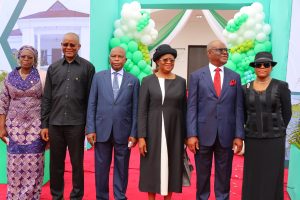
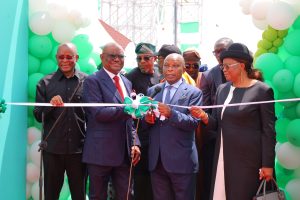
President Bola Ahmed Tinubu on Tuesday reaffirmed his administration’s commitment to judicial independence and institutional reforms as he commissioned the newly completed 10-unit Court of Appeal Judges’ Quarters in Katampe District, Abuja, describing the project as a strategic investment in the rule of law and democratic governance.
Represented by the Attorney General of the Federation and Minister of Justice, Lateef Fagbemi (SAN), the President said the housing estate formed part of a series of judicial infrastructure projects being inaugurated to mark the third anniversary of his administration, stressing that a functional justice system requires more than laws and judicial officers.
“We gather on this important occasion for the commissioning of the 10th Court of Appeal Judges’ Quarters here in Katampe. This event is part of a series of judicial infrastructure projects being commissioned over a three-week period to commemorate the third anniversary of this administration,” Tinubu said.
The President noted that the project was a special intervention by the Federal Government, separate from the judiciary’s statutory budgetary allocations, which he said had also increased significantly under his administration.
“Today’s event is much more than the unveiling of physical infrastructure; it is a tangible demonstration of the Federal Government’s enduring commitment to the welfare, independence, efficiency and dignity of the judiciary,” he said.
“A strong and effective justice sector requires not only sound laws and competent judicial officers, but also the infrastructure and support systems necessary to enable the judiciary to perform its constitutional responsibilities without hindrance.”
Tinubu explained that the provision of modern residential accommodation for judges was aimed at enhancing judicial independence, efficiency and service delivery, emphasizing that the welfare of judicial officers should be viewed as a national investment.
“The welfare of judicial officers is a strategic investment in the rule of law. When judges are provided with secure accommodation and conducive working environments, the entire nation benefits,” he stated.
The President also disclosed plans for further expansion of judicial infrastructure within the district, revealing that additional land had been earmarked for judges of the National Industrial Court, the Code of Conduct Bureau, the Federal High Court and the High Court of the Federal Capital Territory.
“With all these developments, this area could easily be declared the ‘Judiciary Boulevard,” he said.
Tinubu commended the Minister of the Federal Capital Territory (FCT), Barr. Nyesom Wike, for executing the project efficiently.
“I wish to commend my dependable, hardworking and diligent Minister of the FCT, Barr. Nyesom Wike, CON, and his team for the efficiency with which this directive was implemented,” he said.
The President further challenged state governments to emulate the Federal Government by investing in judicial infrastructure and welfare.
“The responsibility of supporting the judiciary does not rest solely with the Federal Government. State governments have a corresponding obligation to ensure their respective judicial sectors are adequately funded, properly equipped and provided with the infrastructure necessary for effective service delivery,” he added.
In his remarks, the Minister of the Federal Capital Territory (FCT), Barr. Nyesom Wike urged governors across the country to take greater responsibility for the development of federal judicial institutions located within their states, arguing that the courts primarily serve the citizens of the host states.
“Governors, I say this: if there is a federal judicial division in a state, that governor knows those courts are serving their own citizens. The Federal High Court, the Court of Appeal, the National Industrial Court they do not render services to neighbouring states; they serve the host state,” he said.
Drawing from his experience as Governor of Rivers State, Wike recalled how he facilitated the establishment of a National Industrial Court division and judges’ accommodation to save litigants from travelling to Bayelsa State.
“When I visited the President of the Industrial Court, he said move to have an Industrial Court in Port Harcourt, Rivers State was stalled by lack of infrastructure. He added that there will be an Industrial Court in Rivers State if I will be willing to provide the necessary infrastructure.
“I immediately replied, ‘I am willing. Give me the designs.’ We took the designs, built the court and provided accommodation. Today, our people no longer face the logistical hazards of travelling to Bayelsa to have their cases heard,” he recounted.
The minister dismissed criticisms that such interventions could compromise judicial independence, insisting that providing infrastructure for judges strengthens rather than weakens the judiciary.
“Taking care of these institutions does not cost us more than we can afford, and it directly guarantees the true independence of the judiciary,” he said.
Wike disclosed that President Tinubu personally encouraged him to prioritize judicial welfare and infrastructure.
“Mr. President told me directly: ‘Do not bother; go ahead and do whatever is necessary to improve the welfare of judges and justices,’” he revealed.
President of the Court of Appeal, Hon. Justice Monica Bolna’an Dongban-Mensem, described the project as a milestone in the quest to provide a secure and dignified environment for judicial officers.
She noted that while judicial proceedings occur in courtrooms, the quality of justice delivered is often influenced by the environment in which judges live and reflect.
“These quarters constitute an extension of the intellectual, contemplative space essential to judicial work,” she said.
According to her, secure housing protects judicial officers from undue influence and reprisals, safeguards the integrity of judicial processes, and helps attract and retain experienced judges.
“Building a judiciary fit for the next 50 years requires sustained investment in modern facilities, technological advancement and judicial welfare,” Dongban-Mensem stated.
She expressed appreciation to President Tinubu and Wike for supporting the judiciary, praying that the estate would become a model for replication across other Court of Appeal divisions nationwide.
Earlier, the Executive Secretary of the Federal Capital Development Authority (FCDA), Richard Dauda, disclosed that the project formed part of a larger 40-unit judges’ housing development in Katampe District.
Dauda said the contract, awarded to Messrs. Details to Dots Development Nigeria Limited in September 2024, had been completed according to specifications.
He explained that the estate comprises 10 fully furnished five-bedroom duplexes with detached boys’ quarters, an event centre with a minimum capacity of 150 persons, a neighbourhood shop, recreational facilities, asphalt-paved roads, water supply systems, electricity infrastructure, standby generators, perimeter fencing and a secured gatehouse.
The commissioning comes barely a day after the inauguration of the new Court of Appeal complex in Abuja, underscoring the administration’s renewed focus on judicial infrastructure as part of broader governance reforms.

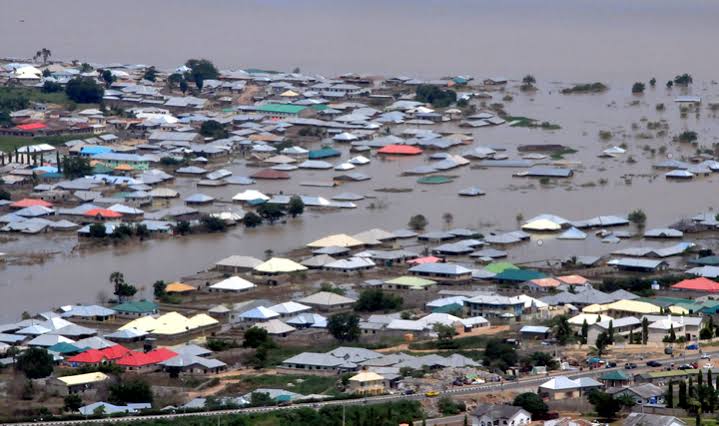
Flooding in Abuja and the Federal Capital Territory (FCT) is not a new phenomenon, nor did it begin with the current administration.
Available records and reports show that flooding has remained a recurring challenge across the nation’s capital for decades, affecting communities under successive administrations.
Historical reports indicate that flooding incidents were recorded in parts of the FCT as far back as 1995, with further incidents reported in 1999.
The problem became particularly severe in 2012, when several communities across the territory were affected by heavy flooding.
The pattern continued in subsequent years. In 2014, Trademore and other communities experienced flooding, while Lokogoma and surrounding areas were badly affected in 2017.
Flooding was also reported in Karshi and Kokosu in 2018, followed by severe incidents in Lokogoma in 2019.
In 2020, communities in Gwagwalada and other parts of the FCT were affected.
The following year, Trademore and Lugbe again witnessed serious flooding.
The scale of the problem increased in 2022, when several Abuja communities, including areas around the city centre, experienced major flooding. Trademore and other communities were again affected in 2023, while Orozo and other areas recorded flooding incidents in 2024.
The history makes one point clear: Abuja’s flooding problem predates the present administration and has persisted through different governments.
This, however, should not be used to dismiss the concerns of residents who continue to suffer losses whenever heavy rainfall overwhelms drainage systems and waterways.
Rather than turning every flooding incident into a political blame game, the focus should be on finding lasting solutions.
The FCT requires better and interconnected drainage systems, proper urban planning, protection of natural waterways, effective waste management and strict enforcement of regulations against construction on flood plains and drainage channels.
Urban development must also take account of changing rainfall patterns and the rapid expansion of Abuja and its satellite communities. Areas that were once sparsely populated are now densely built up, increasing pressure on existing drainage infrastructure.
The current FCT administration, led by Minister Nyesom Wike, therefore faces an important responsibility. The recurring nature of the problem provides an opportunity to develop a comprehensive flood-management strategy that goes beyond emergency interventions after every major rainfall.
Wike has repeatedly emphasised infrastructure development in the FCT. The real test will be whether ongoing and future projects can significantly reduce the frequency and impact of flooding across vulnerable communities.
Abuja’s flooding crisis should therefore be treated as a long-standing urban planning and infrastructure challenge, rather than simply a political weapon. What residents need is not an argument over who started the problem, but a sustainable solution that protects lives, homes, businesses and public infrastructure.
The history of flooding in Abuja is clear. The challenge is decades old; the responsibility to fix it is now.
News
“I Paid for His Flight, Hotel, Visa and Brought Him to the UK” — Lady Shares Ordeal After Lover Walked Away


A lady has shared her experience after allegedly sponsoring her partner’s relocation to the United Kingdom, claiming that their relationship ended just four months after he arrived in the country.
According to the woman, she bore the financial burden of making the relocation possible, including paying for his flight, hotel and visa.
However, she alleged that the relationship came to an end only a few months after his arrival in the UK.
The woman further claimed that the man’s family subsequently contacted her and asked her not to report the matter to the UK Home Office.
Sharing her experience, she said: “I paid for his flight, hotel, visa and brought him to the UK. He broke up with me four months after, and his family had the guts to tell me not to inform the Home Office.”
Her account has sparked reactions on social media, with many users debating the potential risks of taking on significant financial responsibility to facilitate a partner’s relocation abroad.
The incident has also renewed discussions about relationships involving immigration arrangements, financial commitments and the expectations that may arise when one partner plays a major role in helping the other relocate.

By Gloria Ikibah
The Association of West African Legislative Correspondents (AWALCO) has nominated the Chairman of the Nigerian Union of Journalists (NUJ), FCT Council, Comrade Grace Ike, for a prestigious award in recognition of what it described as her outstanding leadership and contributions to the journalism profession.
The nomination was announced during a courtesy visit by AWALCO executives, led by the association’s President, Comrade Innocent Odoh, to the NUJ FCT Council Secretariat in Abuja.
Odoh applauded Ike’s performance since assuming office, describing her emergence as the first female Chairman of the NUJ FCT Council as a landmark achievement.
He said her leadership had brought visible changes to the council and demonstrated the qualities required to inspire confidence and drive meaningful reforms.
“We are indeed very impressed and inspired. It takes somebody with this kind of courage and commitment, and someone who will take charge of things, and we are really seeing the change,” Odoh said.
He explained that the nomination followed extensive consultations within the association on journalists and media leaders who had distinguished themselves through exceptional service to the profession.

According to him, Ike’s achievements, including her previous role as Chairperson of the House of Representatives Press Corps, made her a worthy candidate for the award.
Odoh disclosed that AWALCO had initially planned to hold the ceremony last year as part of activities marking the 25th anniversary of the ECOWAS Parliament.
However, he said the event had to be postponed after the regional parliament scheduled a separate award ceremony.
He added that the proposed award was also part of the association’s efforts to deepen collaboration with the NUJ FCT Council.
According to him, AWALCO intends to partner with the council to organise seminars, workshops and conferences focusing on democracy, good governance, development and legislative accountability.
Describing the legislature as the backbone of every democratic system, Odoh stressed that parliamentary correspondents have a critical responsibility to examine policies, interrogate democratic processes and ensure that legislation translates into meaningful development for citizens.
With West Africa’s population exceeding 400 million people, he said stronger cooperation between AWALCO and the NUJ will create an opportunity to promote democratic values and strengthen governance across the ECOWAS sub-region.
Responding, Comrade Ike expressed appreciation for the recognition and assured the association of the NUJ FCT Council’s readiness to work closely with AWALCO.
“I really don’t take this award for granted. I’m honoured,” she said.
She emphasised the need for journalists to remain committed to the core values of the profession, including accuracy, fairness, balance and ethical reporting.
According to her, the media remains one of the most important institutions in any society and must continue to serve as a force for accountability and development.
Ike also challenged journalists to broaden their focus beyond traditional reporting areas and pay greater attention to issues capable of driving positive change across Nigeria and the wider West African region.
She reiterated that the welfare of journalists remains one of the key priorities of her administration.
The NUJ chairman also encouraged AWALCO members to uphold the principles of accountability and transparency in all their activities.
She assured the association that the council will support its initiatives through publicity and strategic collaboration.
Ike further urged journalists to critically examine emerging issues affecting democracy in the region, including electoral reforms and other policy proposals capable of strengthening democratic institutions.
She noted that issues with the potential to improve governance should be properly scrutinised and brought into public discourse.
“Leadership is not easy. If you are a leader, you must do everything possible to leave a legacy behind,” she said.
She also encouraged younger journalists to remain committed to changing public perceptions about leadership and service.
According to her, journalists must strive to tell stories that make a meaningful difference and positively impact society.
Also speaking during the visit, AWALCO’s Financial Secretary, Favour Olise, praised Ike’s leadership and urged her to continue mentoring young professionals in the industry.
“Younger ones not in age, younger ones in the journalism profession, carry them along as you are already doing and keep doing the good works,” Olise said.
She described Ike’s achievements as inspiring, particularly her efforts to attract reputable organisations to collaborate with the NUJ.
Olise added that the NUJ chairman’s leadership was contributing significantly to the growth of the profession and strengthening the image of journalism in the Federal Capital Territory.
AWALCO reaffirmed its commitment to strengthening its partnership with the NUJ FCT Council, especially in advancing legislative journalism, promoting democratic accountability and supporting good governance across Nigeria and the West African sub-region.

(Analysis)Abuja Flooding Did Not Start Today: FCT Must Move Beyond Political Blame

Sad: Venezuela death earthquake toll hits 6,438

Lamentations after defeat: APC says Adeleke was taken for granted as in-house aided his victory




-

 News17 hours ago
See Dollar to Naira exchange rate today, August 17, 2026
-
 News20 hours ago
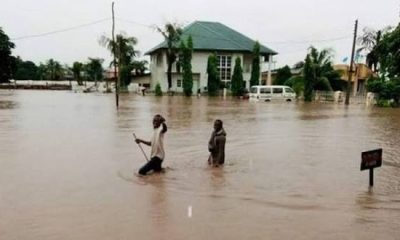
Abuja Flooding: FCT Minister’s Aide Takes a Swipe at Adeyanju
-
 Politics16 hours ago
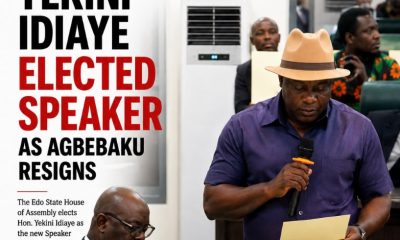
Edo Assembly elects Yekini Idiaye Speaker As Agbebaku Resigns
-

 News16 hours ago
NDLEA destroys N301bn worth of cocaine, heroin, opioids, others in Lagos (Photos)
-

 News16 hours ago
Edo new speaker reveals why speaker was flushed out
-
 News15 hours ago
Osun Poll: Davido’s Father Alleges APC Spent N60bn on Vote Buying
-

 News13 hours ago
Nigeria Eyes Manufacturing Boom as FG Moves to Maximise China’s Zero-Tariff Policy
-

 News15 hours ago
Nigerian lands in Accra Court for attempting to rob three Ghanaian banks