
News
FG, FRSC Join Forces to Crack Down on Fake Diplomatic Number Plates

- /home/naijuinz/public_html/wp-content/plugins/mvp-social-buttons/mvp-social-buttons.php on line 27
https://naijablitznews.com/wp-content/uploads/2026/06/IMG-20260616-WA0006-1000x600.jpg&description=FG, FRSC Join Forces to Crack Down on Fake Diplomatic Number Plates', 'pinterestShare', 'width=750,height=350'); return false;" title="Pin This Post">
- Share
- Tweet /home/naijuinz/public_html/wp-content/plugins/mvp-social-buttons/mvp-social-buttons.php on line 72
https://naijablitznews.com/wp-content/uploads/2026/06/IMG-20260616-WA0006-1000x600.jpg&description=FG, FRSC Join Forces to Crack Down on Fake Diplomatic Number Plates', 'pinterestShare', 'width=750,height=350'); return false;" title="Pin This Post">


…move follows discovery of 1,000 vehicles using forged diplomatic, government identification documents
By Gloria Ikibah
The Ministry of Foreign Affairs and the Federal Road Safety Corps (FRSC) have agreed to strengthen cooperation in a renewed effort to tackle the growing misuse of diplomatic number plates and protect the integrity of Nigeria’s diplomatic system.
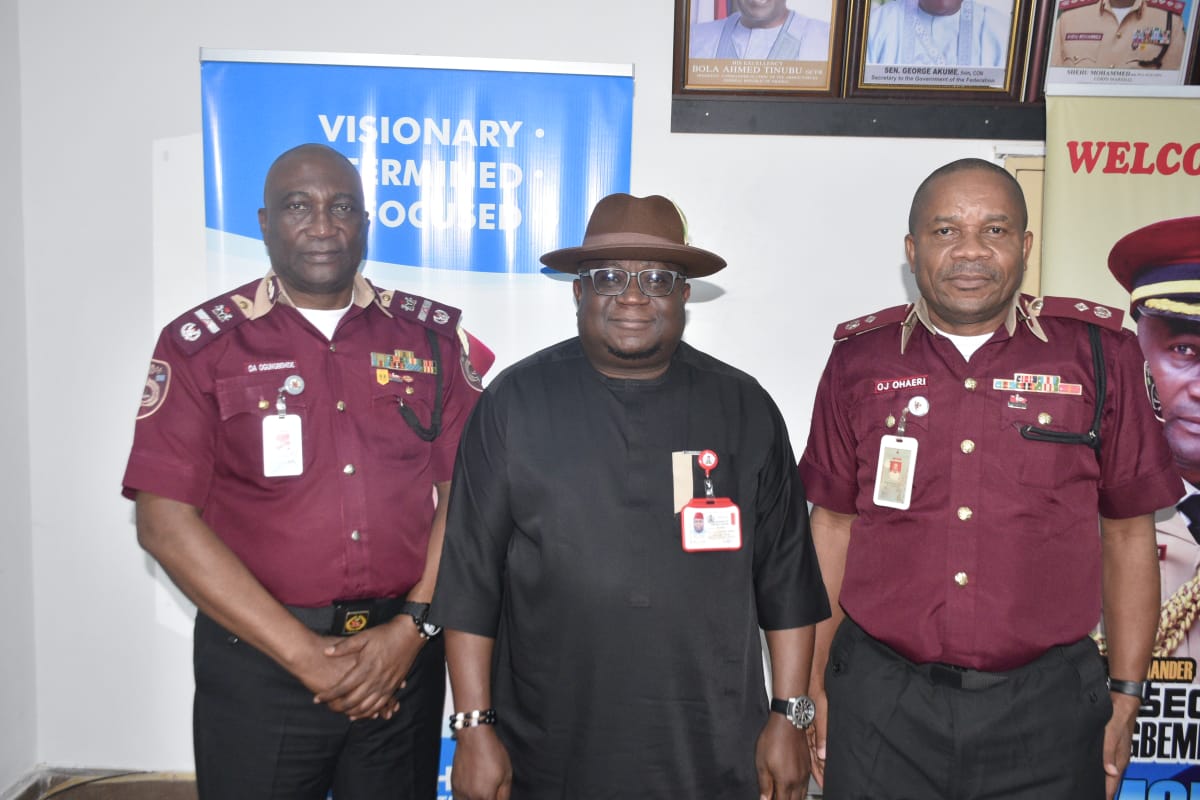
The decision was reached during a meeting between the spokesperson of the Ministry of Foreign Affairs, Kimiebi Imomotimi Ebienfa, and senior officials of the FRSC at the Corps’ National Headquarters on Monday in Abuja.
The discussions, which took place during a courtesy visit to the Corps Public Education Officer and spokesperson of the FRSC, Deputy Corps Commander Osondu Ohaeri, as well as a meeting with Assistant Corps Marshal Operations, Olusegun Ogungbemide, focused on emerging security concerns linked to the proliferation of fake diplomatic number plates and other official vehicle identification documents.
During the engagement, Ebienfa disclosed that the ministry was already intensifying efforts to curb the unlawful use of ambassadorial titles and diplomatic credentials by individuals with no official status.
Mr Ebienfa informed that the Ministry is currently campaigning against the illegal use of Ambassadorial titles by unauthorized persons and some of such persons also use fake diplomatic passports and vehicle number plates.
The meeting also reviewed the outcome of recent enforcement operations conducted by the FRSC across several states aimed at identifying and confiscating illegally acquired diplomatic and government number plates.
According to the Corps, the operations uncovered widespread abuse involving forged registration documents, fake diplomatic plates and unauthorised government vehicle identification.
“The operations, conducted in several states of the Federation, resulted in the interception of one thousand vehicles found to be using fake diplomatic plates, unauthorized government plates, cloned registration documents, and other forms of vehicle identification obtained through fraudulent means”, he said.
Officials of both institutions expressed concern that the abuse of diplomatic identification systems poses serious security risks and damages Nigeria’s international standing.
To address the worrisome development, the two institutions expressed concern that the misuse of diplomatic number plates not only undermines the integrity of Nigeria’s diplomatic privileges and immunities regime but also constitutes a significant national security threat capable of facilitating criminal activities, identity concealment, and other unlawful acts.
They also warned that the practice undermines globally accepted diplomatic protocols and could weaken confidence in Nigeria’s diplomatic framework.
Both agencies agreed that such practices tarnish Nigeria’s international image and undermine established diplomatic norms.
As part of the new collaboration, the Ministry and the FRSC agreed to enhance information sharing, strengthen verification procedures for diplomatic vehicles and accreditation records, and develop a more effective monitoring system for the issuance and use of diplomatic number plates.
The agencies are also exploring technology-driven solutions that would enable real-time verification of diplomatic vehicles through integration of accreditation records and vehicle registration databases.
The two institutions also agreed to explore the establishment of improved verification mechanisms linking diplomatic accreditation records with vehicle registration databases to facilitate real-time authentication of diplomatic vehicles and prevent unauthorized use of diplomatic identities and privileges.
The Ministry commended the FRSC for its enforcement efforts and reaffirmed its commitment to working with security and law enforcement agencies to protect the credibility of Nigeria’s diplomatic institutions.
In the coming months, both organisations are expected to undertake additional consultations and public awareness campaigns to educate stakeholders on the lawful use of diplomatic number plates and the consequences of offences such as forgery, impersonation and unlawful possession of diplomatic documents.
The Ministry reiterated that diplomatic number plates remain the exclusive preserve of accredited diplomatic missions, international organisations and recognised diplomatic personnel, stressing that diplomatic privileges and immunities must never be transferred, sold or exploited by unauthorised individuals.
It also urged members of the public to report suspected cases of misuse of diplomatic number plates and diplomatic identification documents to the relevant authorities as part of efforts to safeguard Nigeria’s diplomatic credibility, national security and international reputation.
News
“I Paid for His Flight, Hotel, Visa and Brought Him to the UK” — Lady Shares Ordeal After Lover Walked Away


A lady has shared her experience after allegedly sponsoring her partner’s relocation to the United Kingdom, claiming that their relationship ended just four months after he arrived in the country.
According to the woman, she bore the financial burden of making the relocation possible, including paying for his flight, hotel and visa.
However, she alleged that the relationship came to an end only a few months after his arrival in the UK.
The woman further claimed that the man’s family subsequently contacted her and asked her not to report the matter to the UK Home Office.
Sharing her experience, she said: “I paid for his flight, hotel, visa and brought him to the UK. He broke up with me four months after, and his family had the guts to tell me not to inform the Home Office.”
Her account has sparked reactions on social media, with many users debating the potential risks of taking on significant financial responsibility to facilitate a partner’s relocation abroad.
The incident has also renewed discussions about relationships involving immigration arrangements, financial commitments and the expectations that may arise when one partner plays a major role in helping the other relocate.
By Gloria Ikibah
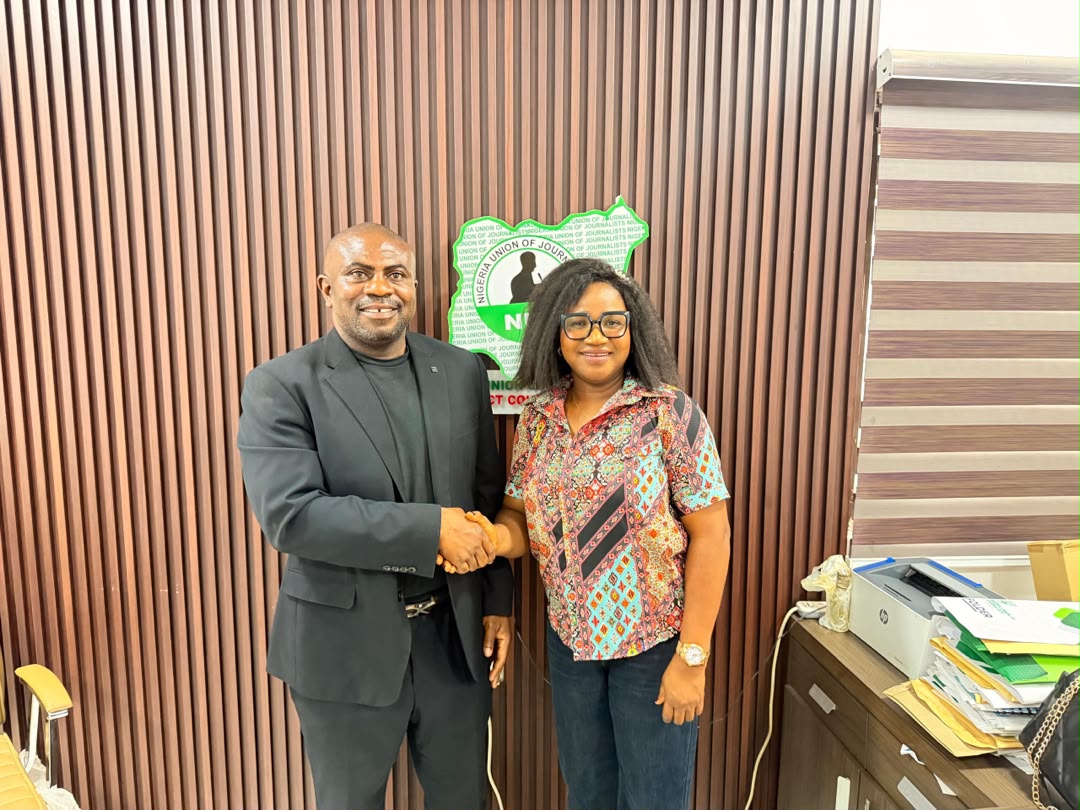
The Association of West African Legislative Correspondents (AWALCO) has nominated the Chairman of the Nigerian Union of Journalists (NUJ), FCT Council, Comrade Grace Ike, for a prestigious award in recognition of what it described as her outstanding leadership and contributions to the journalism profession.
The nomination was announced during a courtesy visit by AWALCO executives, led by the association’s President, Comrade Innocent Odoh, to the NUJ FCT Council Secretariat in Abuja.
Odoh applauded Ike’s performance since assuming office, describing her emergence as the first female Chairman of the NUJ FCT Council as a landmark achievement.
He said her leadership had brought visible changes to the council and demonstrated the qualities required to inspire confidence and drive meaningful reforms.
“We are indeed very impressed and inspired. It takes somebody with this kind of courage and commitment, and someone who will take charge of things, and we are really seeing the change,” Odoh said.
He explained that the nomination followed extensive consultations within the association on journalists and media leaders who had distinguished themselves through exceptional service to the profession.
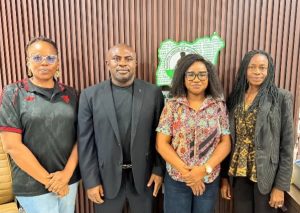
According to him, Ike’s achievements, including her previous role as Chairperson of the House of Representatives Press Corps, made her a worthy candidate for the award.
Odoh disclosed that AWALCO had initially planned to hold the ceremony last year as part of activities marking the 25th anniversary of the ECOWAS Parliament.
However, he said the event had to be postponed after the regional parliament scheduled a separate award ceremony.
He added that the proposed award was also part of the association’s efforts to deepen collaboration with the NUJ FCT Council.
According to him, AWALCO intends to partner with the council to organise seminars, workshops and conferences focusing on democracy, good governance, development and legislative accountability.
Describing the legislature as the backbone of every democratic system, Odoh stressed that parliamentary correspondents have a critical responsibility to examine policies, interrogate democratic processes and ensure that legislation translates into meaningful development for citizens.
With West Africa’s population exceeding 400 million people, he said stronger cooperation between AWALCO and the NUJ will create an opportunity to promote democratic values and strengthen governance across the ECOWAS sub-region.
Responding, Comrade Ike expressed appreciation for the recognition and assured the association of the NUJ FCT Council’s readiness to work closely with AWALCO.
“I really don’t take this award for granted. I’m honoured,” she said.
She emphasised the need for journalists to remain committed to the core values of the profession, including accuracy, fairness, balance and ethical reporting.
According to her, the media remains one of the most important institutions in any society and must continue to serve as a force for accountability and development.
Ike also challenged journalists to broaden their focus beyond traditional reporting areas and pay greater attention to issues capable of driving positive change across Nigeria and the wider West African region.
She reiterated that the welfare of journalists remains one of the key priorities of her administration.
The NUJ chairman also encouraged AWALCO members to uphold the principles of accountability and transparency in all their activities.
She assured the association that the council will support its initiatives through publicity and strategic collaboration.
Ike further urged journalists to critically examine emerging issues affecting democracy in the region, including electoral reforms and other policy proposals capable of strengthening democratic institutions.
She noted that issues with the potential to improve governance should be properly scrutinised and brought into public discourse.
“Leadership is not easy. If you are a leader, you must do everything possible to leave a legacy behind,” she said.
She also encouraged younger journalists to remain committed to changing public perceptions about leadership and service.
According to her, journalists must strive to tell stories that make a meaningful difference and positively impact society.
Also speaking during the visit, AWALCO’s Financial Secretary, Favour Olise, praised Ike’s leadership and urged her to continue mentoring young professionals in the industry.
“Younger ones not in age, younger ones in the journalism profession, carry them along as you are already doing and keep doing the good works,” Olise said.
She described Ike’s achievements as inspiring, particularly her efforts to attract reputable organisations to collaborate with the NUJ.
Olise added that the NUJ chairman’s leadership was contributing significantly to the growth of the profession and strengthening the image of journalism in the Federal Capital Territory.
AWALCO reaffirmed its commitment to strengthening its partnership with the NUJ FCT Council, especially in advancing legislative journalism, promoting democratic accountability and supporting good governance across Nigeria and the West African sub-region.

By Gloria Ikibah
The European Union has approved €2.3 million in emergency humanitarian funding to help Nigeria, Cameroon, Chad and the Central African Republic contain the worsening cholera outbreak spreading across West and Central Africa.
The intervention comes as the World Health Organization (WHO) reported more than 61,000 cholera cases across the African region within the first five months of 2026, raising concerns over the growing public health crisis.
Nigeria, which has recorded one of the highest disease burdens, will receive the largest share of the funding, amounting to €1.5 million.
According to the European Commission, the support will be used to expand emergency response teams, provide essential medical supplies, distribute cholera treatment kits and strengthen water, sanitation and hygiene interventions.
The funding will also support the treatment of public water sources and household water, improve epidemiological surveillance in hard-to-reach communities and strengthen case management, risk communication and public awareness campaigns.
Cameroon will receive €100,000 to support outbreak containment efforts through the deployment of additional personnel, provision of essential medicines and establishment of more cholera treatment units and oral rehydration centres in affected communities.
In the Central African Republic, €500,000 has been earmarked to improve case management, expand vaccination campaigns and strengthen water, sanitation and hygiene programmes.
The funding will also support surveillance, case detection, community engagement and provision of safe and dignified burials.
Chad will receive €200,000 to improve access to clean water, strengthen sanitation services and support community-based surveillance and treatment programmes aimed at stopping the spread of the disease.
European Commissioner for Preparedness and Crisis Management, Hadja Lahbib, said the outbreak highlighted the devastating consequences of inadequate access to basic healthcare and clean water.
“Cholera is preventable and treatable. Yet it still threatens lives when people lack something as basic as safe water and healthcare.
“At a time when humanitarian needs are growing and resources are shrinking, Europe is not looking away.
“This emergency funding will help our partners act quickly, contain the outbreaks and protect the communities most at risk,” Lahbib said.
Health experts say cholera is caused by the Vibrio cholerae bacterium and is commonly transmitted through contaminated water or food.
The disease can cause severe diarrhoea, leading to rapid dehydration and shock if left untreated.
Although cholera remains a major public health challenge in many developing countries, the European Commission noted that it is not a common health problem in Europe and that the risk of transmission from imported cases remains low.
The latest intervention underscores growing international concern over the spread of cholera across Africa, where poor sanitation, limited access to clean water and humanitarian crises continue to fuel outbreaks.
Public health experts have repeatedly stressed that improving access to safe drinking water and strengthening healthcare systems remain the most effective long-term solutions to preventing future outbreaks.

“I Paid for His Flight, Hotel, Visa and Brought Him to the UK” — Lady Shares Ordeal After Lover Walked Away

AWALCO Honours NUJ FCT Chair Grace Ike, Hails Her Transformational Leadership

EU Releases €2.3m Emergency Fund as Cholera Cases Surge Across West/Central Africa




-

 News15 hours ago
See Dollar to Naira exchange rate today, August 17, 2026
-
 News15 hours ago
NDLEA destroys N301bn worth of cocaine, heroin, opioids, others in Lagos (Photos)
-
 News18 hours ago
Abuja Flooding: FCT Minister’s Aide Takes a Swipe at Adeyanju
-
 Politics15 hours ago
Edo Assembly elects Yekini Idiaye Speaker As Agbebaku Resigns
-
 News14 hours ago
Edo new speaker reveals why speaker was flushed out
-
 News14 hours ago
Osun Poll: Davido’s Father Alleges APC Spent N60bn on Vote Buying
-
 News13 hours ago
Nigerian lands in Accra Court for attempting to rob three Ghanaian banks
-

 News12 hours ago
Aregbesola hails Adeleke’s victory says “Osun people have given their verdict”