Economy
Dangote Refinery Imports Additional 11m Barrels Of US Crude Oil Due To Domestic Supply Shortage
- /home/naijuinz/public_html/wp-content/plugins/mvp-social-buttons/mvp-social-buttons.php on line 27
https://naijablitznews.com/wp-content/uploads/2024/04/images-7.jpeg&description=Dangote Refinery Imports Additional 11m Barrels Of US Crude Oil Due To Domestic Supply Shortage', 'pinterestShare', 'width=750,height=350'); return false;" title="Pin This Post">
- Share
- Tweet /home/naijuinz/public_html/wp-content/plugins/mvp-social-buttons/mvp-social-buttons.php on line 72
https://naijablitznews.com/wp-content/uploads/2024/04/images-7.jpeg&description=Dangote Refinery Imports Additional 11m Barrels Of US Crude Oil Due To Domestic Supply Shortage', 'pinterestShare', 'width=750,height=350'); return false;" title="Pin This Post">
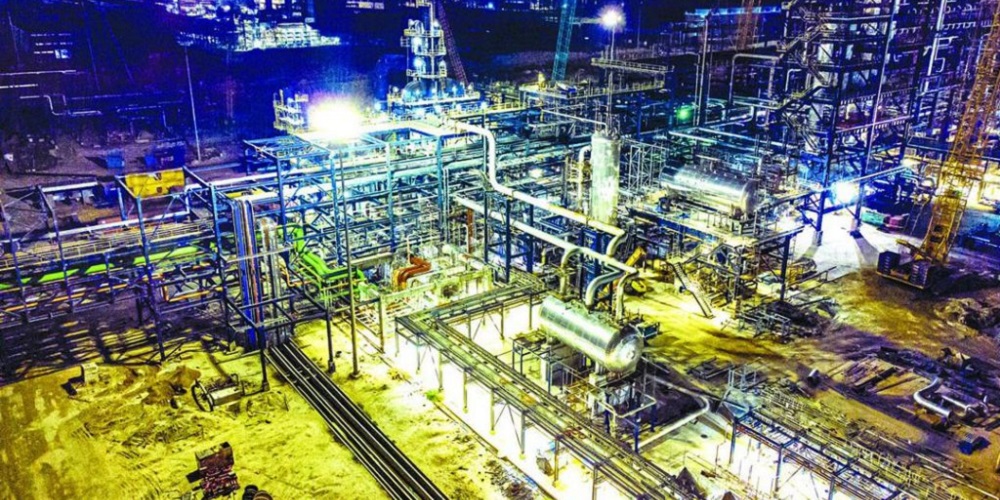
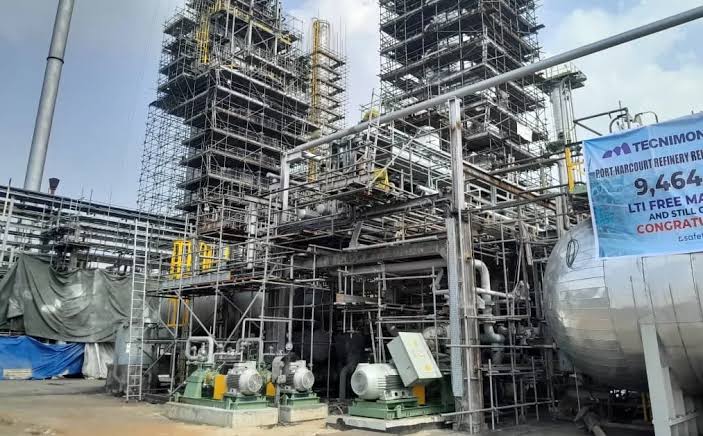
Dangote Petroleum Refinery and Petrochemicals has issued a tender for an additional 11 million barrels of US crude oil over the next six months due to Nigerian crude oil producers’ inability to meet its feedstock requirements.

The 650,000 barrels per day refinery has already received 9 million barrels of West Texas Intermediate crude from the US since the beginning of 2024 to offset unreliable domestic supplies. The new tender, closing on July 21, aims to procure two million barrels per month of WTI Midland crude for the world’s largest single-train facility located in Ibeju Lekki, Lagos, for the next six months starting in August.
In a tender reported by Bloomberg, Dangote Refinery purchased five million barrels of West Texas Intermediate (WTI) Midland crude for delivery in the upcoming months of August and September. Additionally, the company initiated a tender process to acquire an additional six million barrels of American crude for September.

This reliance on US crude highlights Nigeria’s challenges in meeting its own refining needs, attributed to issues such as crude theft, aging infrastructure, and underinvestment, which have led to a decline in production. In April, Nigeria’s daily output was only 1.45 million barrels, well below its capacity of 2.6 million barrels per day. The country recorded an estimated 30 million barrels underproduction in the first four months of 2024.
Dangote Refinery, crucial to Nigeria’s goal of becoming a net exporter of petroleum products, has found it necessary to import crude to sustain operations amidst insufficient domestic supply.
President of Dangote Group, Aliko Dangote, stated during the Africa CEO Forum 2024 that the refinery will need to continue importing crude as production scales up and alternative supply contracts are sought.
“It also makes economic sense for us to tender for crude. If we could source 100 percent Nigerian crude, then fine, but we can’t wait,” said Dangote.
Commenting on the challenge with sourcing crude locally, Dangote added, “there is a bit of a problem for us to source the entire volume of crude that we’re looking for domestically because we need different types and mixes. Unless crude production improves – which we pray and hope for – we need to go elsewhere.”
The refinery took in more than 41 million barrels of feedstock in the first half of the year as it completed test runs and gradually increased processing rates, tanker-tracking data show. Of that, about a quarter has been American supply.
According to CAS, the refinery took delivery of 11 WTI cargoes, or 9 million barrels, between February and May, contrasting with around 18 million barrels of Nigerian crude deliveries.
Nigerian National Petroleum Company (NNPC), NNPC has struggled to meet its 300,000 barrels per day obligation to the refinery due to operational constraints.
International financial analytics corporation, S&P Global, recently described the Dangote Petroleum Refinery and Petrochemicals company as capable of resolving Nigeria’s foreign exchange (forex) issue and its huge pressure on the local Naira currency, while also catalysing the country’s economic development.
S&P Global, headquartered in Manhattan, New York City, disclosed this during an onsite visit to the refinery as part of its sovereign credit ratings assessment of Nigeria. The team from the international rating agency were accompanied by officials from the Federal Ministry of Finance.
S&P noted that the refinery would bolster Nigeria’s oil sector and, more importantly, also have a positive impact on its growing economy.
Currently operating at 350,000 barrels per day capacity, Vice President of Oil and Gas at Dangote Industries Limited (DIL), Devakumar Edwin, recently disclosed that the refinery would scale up to at least 500,000 barrels per day capacity by July/August, commencing the refining of petrol and ultra-low sulphur diesel.
He noted that the refinery, designed to process a wide range of crudes including various African and Middle Eastern crudes, as well as US Light Oil, conforms to Euro V specifications. In addition, it is designed to comply with US EPA, European Union (EU) emission norms, the Department of Petroleum Resources (DPR) emission/effluent norms, and the African Refiners and Distribution Association (ARDA) standards.
While noting that most refineries were built by foreign companies, he said it is a thing of pride that a Nigerian company designed and built the world’s largest single-train refinery complex while acting directly as its own Engineering, Procurement, and Construction (EPC) contractor. The refinery which also incorporates a self-sufficient marine facility capable of handling the world’s largest vessels, can meet 100% of Nigeria’s requirement of all liquid products (Gasoline, Diesel, Kerosene & Aviation Jet) and have surplus of each of these products for export.

Economy
Pension assets rise 51% to N31.48tn in two years, says PenCom DG
Nigeria’s pension assets have risen by 51 per cent over the past two years, from N 20. 7 trillion to N 31. 48 trillion, while nearly one million new contributors have joined the Contributory Pension Scheme, Omolola Oloworaran, Director- General of the National Pension Commission (PenCom), said on Tuesday.
Oloworaran attributed the growth to renewed public confidence in the nation’s pension system, saying reforms introduced by the President Bola Tinubu administration had strengthened the industry’s credibility and expanded participation.
She disclosed this while briefing journalists at the Meet the Press session organised by the Presidential Communications Team at the Presidential Villa, Abuja.
According to her, pension assets increased by N 10. 7 trillion over the period, reflecting what she described as restored trust in the system.
“Every successful pension system on Earth is built on a simple foundation: confidence—confidence that contributions are safe, confidence that institutions work, confidence that after decades of honest labour, retirement will bring security, not uncertainty. Two years ago, that confidence needed restoring. Today, the verdict is in.
“Pension assets have grown from N 20. 7tn to N 31. 48tn as at this month. That is a 51 per cent increase, representing N 10. 7tn in new retirement wealth.
“Let me say plainly what those numbers mean: confidence is back, and the system is growing,” she said.
The PenCom boss noted that the growth was driven not only by improved investment performance but also by increased enrolment, with 938, 938,229 new contributors joining the Contributory Pension Scheme over the past 24 months.
She said the commission had also prioritised translating the growth in pension assets into improved welfare for retirees.
According to Oloworaran, aggregate monthly pension payments have risen by 22 per cent, increasing from N 12. 2 billion to N 14. 9 billion.
She further disclosed that following the implementation of the new national minimum wage, the Federal Government approved a N 32, 000 monthly consequential pension adjustment for eligible retirees of treasury- funded Ministries, Departments and Agencies who retired on or before July 29, 2024.
She said more than 195, 195,000 pensioners have already benefited from the upward review, describing it as part of the administration’s commitment to improving the welfare of retired public servants.
Economy
See Black Market Dollar To Naira Exchange Rate Today 14th July 2026
The Black Market Dollar-to-Naira Exchange Rate for 14th July 2026 Can Be Accessed Below.
IMPORTANT NOTE: The exchange rate changes hourly. It depends on the volume of dollars available and the Demand. This means…you can buy or sell 1 dollar at a certain rate, and the price can change (high or low) within hours.
The official naira black market exchange rate in Nigeria today, including the Black Market rates, Bureau De Change (BDC), and CBN rates.
Please note that the exchange rate is subject to hourly fluctuations influenced by the supply and demand of dollars in the market.
What’s the dollar to naira black market today, 14th July 2026?
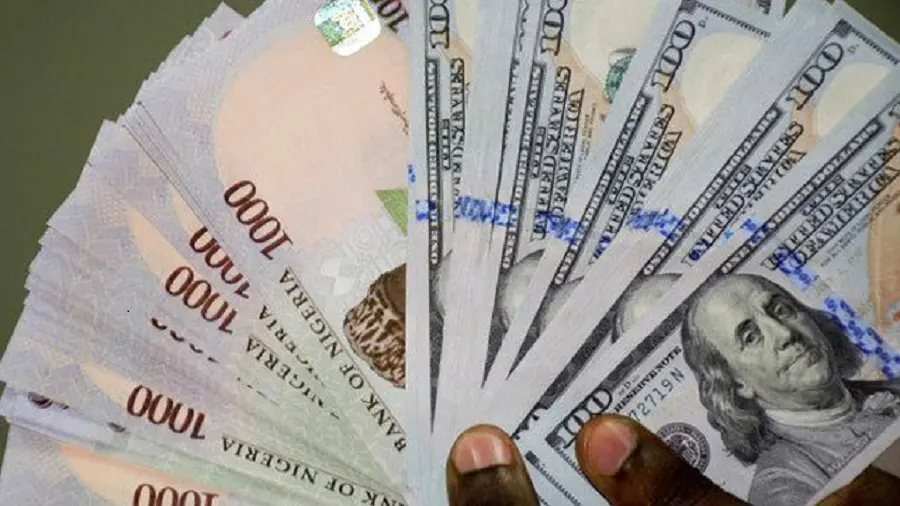
The exchange rate for a dollar to naira at Lagos Parallel Market (Black Market) players sell a dollar for ₦1425 and buy at ₦1410 on Tuesday, 14th July, 2026, according to sources at Bureau De Change (BDC).
Please note that the Central Bank of Nigeria (CBN) does not recognize the parallel market (black market), as it has directed individuals who want to engage in Forex to approach their respective banks.
Dollar to Naira Black Market Rate Today
Dollar to Naira (USD to NGN) Black Market Exchange Rate Today
Selling Rate ₦1425
Buying Rate ₦1410
Dollar to Naira CBN Rate Today
Dollar to Naira (USD to NGN) CBN Rate Today
Highest Rate ₦1381
Lowest Rate ₦1378
Economy
Nigeria’s crude oil output hits 74-month high, beats OPEC quota
Nigeria’s crude oil production has climbed to its highest level in more than six years, with the country exceeding its Organisation of the Petroleum Exporting Countries production quota for the fourth consecutive month, buoyed by improved operational stability and fewer disruptions to oil infrastructure.
Latest figures released on Sunday in Abuja by the Nigerian Upstream Petroleum Regulatory Commission showed that the country’s average crude oil production rose to 1.56 million barrels per day in June 2026, while condensate output stood at 0.18 million barrels per day, bringing total crude oil and condensate production to 1,735,398 barrels per day.
The production level represents 104 per cent of Nigeria’s 1.5 million barrels per day crude oil production quota approved by OPEC and marks the country’s highest crude oil output since April 2020, making it a 74-month high.
The figures, contained in the commission’s latest production report and conveyed in a statement issued by its Head of Media and Corporate Communications, Eniola Akinkuotu, showed that June also marked the fourth consecutive month of production growth, reinforcing the recovery of Nigeria’s upstream oil sector after years of production losses caused by crude theft, pipeline vandalism and operational disruptions.
The statement read, “Nigeria’s crude oil and condensate production soared to an average of 1,735,398 barrels per day in the month of June 2026, representing positive growth for a 4th consecutive month. In the month under review, crude oil production hit 1.56mbpd while 0.18mbpd of condensates was produced. This means Nigeria met 104 per cent of the 1.5mbpd crude oil production quota set by the Organisation of Petroleum Exporting Countries.”
According to the commission, total crude oil and condensate production increased from 1.700 million barrels per day recorded in May to 1.735 million barrels per day in June, representing a 2.2 per cent month-on-month increase.
The report showed that combined production had earlier stood at 1.483 million barrels per day in February before rising steadily to 1.564 million barrels per day in March, 1.663 million barrels per day in April, 1.701 million barrels per day in May and 1.735 million barrels per day in June.
The NUPRC attributed the improved performance to stable production activities across major oil-producing assets and the absence of significant pipeline outages during the review period.
“The improved performance was primarily driven by stable production operations across most producing assets and the absence of any major pipeline outages during the period under review.
“This enhanced operational stability supported improved production uptime and crude evacuation efficiency. Although a limited number of assets experienced short-duration operational shutdowns, the overall impact on national production was minimal.
“In addition, scheduled turnaround maintenance activities were effectively managed and completed without significant disruption to production operations.
“The sustained growth recorded in June reflects the continued commitment of operators and industry stakeholders towards improving operational efficiency, maintaining asset integrity, and enhancing production reliability across the Nigerian upstream petroleum sector,” the statement added.
The commission also disclosed that Nigeria’s highest daily combined crude oil and condensate production during the month reached 1.89 million barrels per day, while the lowest daily production stood at 1.57 million barrels per day.
The peak production level underscores Nigeria’s growing potential to achieve the Federal Government’s medium-term ambition of producing two million barrels of oil per day, a target that has remained elusive for years due to insecurity in oil-producing communities, crude theft and ageing infrastructure.
An analysis of production by export terminals showed that Bonny Terminal retained its position as Nigeria’s highest-producing terminal, recording an average daily production of 318,280 barrels, compared with 293,880 barrels in May.
Forcados Terminal ranked second with 306,360 barrels per day, up from 289,900 barrels recorded in the previous month.
However, production at Qua Iboe Terminal declined to 164,730 barrels per day from 173,360 barrels per day in May.
Similarly, Escravos Terminal recorded a slight increase to 138,030 barrels per day, compared with 135,470 barrels per day in the previous month, while Bonga Terminal maintained steady output, producing 103,660 barrels per day, slightly above the 102,540 barrels per day recorded in May.
The sustained production growth is expected to strengthen Nigeria’s oil export earnings, improve foreign exchange inflows and provide additional fiscal revenues for the Federal Government at a time authorities are seeking to increase crude output and attract fresh investment into the upstream sector.
Nigeria has struggled in recent years to meet its OPEC production allocation because of widespread crude oil theft, pipeline vandalism, underinvestment and prolonged operational challenges.
However, reforms introduced under the Petroleum Industry Act, enhanced security around critical oil infrastructure and closer collaboration between government agencies and oil producers have contributed to the gradual recovery in production.
Maintaining production above the OPEC quota and sustaining operational stability will be critical if Nigeria is to realise its target of producing two million barrels per day and maximise the benefits of favourable global oil market conditions.
-
Health20 hours agoWhat is being released to NCDC is a drop in the ocean- Senate C’ttee laments
-
News20 hours agoPolice Arrest Alleged Fake Agency DG Adeyemi
-
News20 hours agoADC Takes Congress Dispute to Supreme Court, Says 2027 Primaries Remain Valid
-
Sports20 hours agoAshe declares readiness for Commonwealth Games
-
News14 hours agoDAY 26 of Projects Commissioning in the FCT:
-
News12 hours agoSenate Moves to Amend Electoral Act After Dozens of Incumbent NASS Members Lose Party Tickets
-
Sports20 hours agoFIFA Names Ismail Elfath As Referee To Officiate England Vs Argentina 2026 FIFA World Cup Semi Final
-
Economy19 hours agoPension assets rise 51% to N31.48tn in two years, says PenCom DG

Warning: Undefined variable $user_ID in /home/naijuinz/public_html/wp-content/themes/zox-news/comments.php on line 49
You must be logged in to post a comment Login