
News
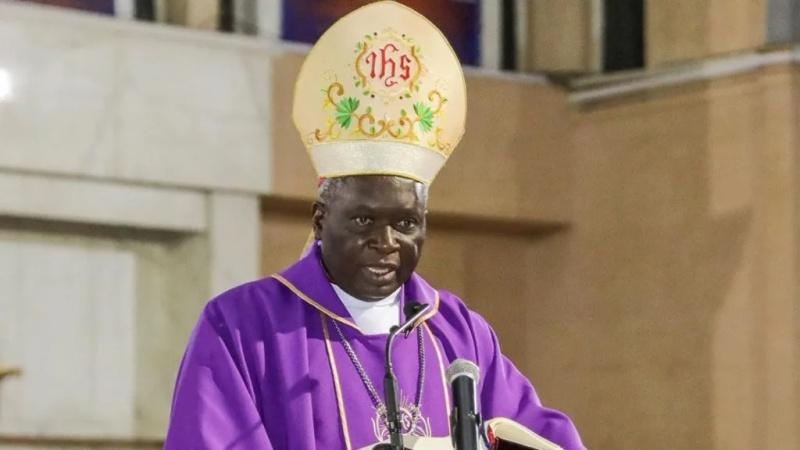
Catholic Church rejects $40k from Kenya’s president

- /home/naijuinz/public_html/wp-content/plugins/mvp-social-buttons/mvp-social-buttons.php on line 27
https://naijablitznews.com/wp-content/uploads/2024/11/1732035218-1.jpeg&description=Catholic Church rejects $40k from Kenya’s president', 'pinterestShare', 'width=750,height=350'); return false;" title="Pin This Post">
- Share
- Tweet /home/naijuinz/public_html/wp-content/plugins/mvp-social-buttons/mvp-social-buttons.php on line 72
https://naijablitznews.com/wp-content/uploads/2024/11/1732035218-1.jpeg&description=Catholic Church rejects $40k from Kenya’s president', 'pinterestShare', 'width=750,height=350'); return false;" title="Pin This Post">


Archbishop of Nairobi Philip Anyolo said the cash would be returned and declined other pledges from
Kenya’s Catholic Church has rejected a donation of about $40,000 (£32,000) made by President William Ruto.
He offered the money towards the building of a priest’s house and as a gift to the choir during Mass on Sunday at the Soweto Catholic Church in the capital, Nairobi.
The donation followed a recent statement by Catholic bishops, who had hit out at the government for failing to fulfil their electoral promises.
Churches have been under pressure this year from young anti-tax protesters who have accused them of being too close to politicians.
Following Ruto’s much-publicised donation on Sunday, many Kenyans urged the Catholic Church to reject the money.
The president had given around 2.6m Kenyan shillings ($20,000, £16,000) in cash, pledged the rest of the money later and also promised to give the parish a bus.
The Catholic Archbishop of Nairobi, Philip Anyolo, said the cash would be returned over “ethical concerns and the need to safeguard the Church from being used for political purposes”.
He also declined his other pledges and said a donation of 200,000 Kenyan shillings made by the Governor of Nairobi, Johnson Sakaja – who attended the same service, was also being handed back.
“The Catholic Church strongly discourages the use of church events such as fundraisers and gatherings as platforms for political self-promotion,” Archbishop Anyolo said.
Such donations were in breach of the church directives as well as the Kenyan law, he added.
The long ties between churches and political institutions – in a country where more than 80% of the population are Christian – seem to be fraying.
Three years ago, established churches banned politicians from using the pulpit during services in return for donations.
But the relationship was still perceived to be close – with young demonstrators accusing the churches of siding with the government when it decided to impose new taxes earlier this year.
Under the social media hashtag #OccupyChurch, many hit out at the churches for failing to take their side during the deadly protests that erupted in response to the planned tax hikes.
The uproar forced President’s Ruto’s government to withdraw the controversial finance bill in July.
Then last week, the Kenya Conference of Catholic Bishops – which represents all Catholic bishops in the country – accused the government of perpetuating a “culture of lies”.
In a scathing statement, it also raised issues about over-taxation, corruption, violation of human rights, freedom of speech, unemployment as well as a “crumbling” education system and healthcare services.
“Despite the calmness we are experiencing, there is a lot of anxiety and most people are losing trust in the government,” it said.
In response, President Ruto appeared to hit back at the clergy, saying “we must be careful to give factual information lest we become victims of the things we accuse others of doing”.
A senator allied to government, Aaron Cheruiyot, also accused the church of “misinformation”, adding that the “clergy must avoid being purveyors of propaganda, fake news and falsehoods”.
Many of Kenya’s Christians are Catholic – estimated to number 10 million, about 20% of the population, according to government statistics.
Other Christians belong to a variety of evangelical churches and other denominations, including the Anglican Church of Kenya – which has defended the Catholic Church’s position.
Anglican Archbishop Jackson Ole Sapit said the Catholic bishops had reflected the feelings of many Kenyans.
“Calling church leaders names or dismissing the bishops’ statement as ‘misleading, erroneous and false,’ is itself dishonest,” he said.
“The [Catholic] bishops have spoken the minds of Kenyans and faithfully expressed the truth as things are on the ground.” (BBC)
News
If Umahi’s daughter was found naked and dead in a poor man’s house Nigeria would’ve been on fire-Dalung

Ex- Minister of Youth and Sports, Barrister Solomon Dalung, has criticised what he described as double standards in the investigation into the death of physiotherapist Mary Habila, saying the public response would have been entirely different if the victim had been the daughter of a government official
Dalung made the remark while reacting to the controversy surrounding Habila’s death at the country residence of the Minister of Works, David Umahi, in Uburu, Ohaozara Local Government Area of Ebonyi State.
Speaking in a video shared on social media, the former minister questioned the pace and manner of the investigation, arguing that ordinary Nigerians are often subjected to harsher scrutiny than powerful public office holders.
“If Umahi’s daughter had been found naked in a poor man’s house, Nigeria would be burning,” Dalung said, suggesting that the circumstances surrounding Habila’s death would have attracted a different level of public outrage and official response if the roles had been reversed.
Mary Habila, a 26-year-old physiotherapist from Kaduna State, was found dead at Umahi’s residence on June 27, 2026. She was reportedly attached to the David Umahi Federal University of Health Sciences and had been seconded to the Federal Ministry of Works.
Umahi has since confirmed the incident, describing Habila as a dedicated member of staff who had worked with him for about three years. He said emergency medical personnel were contacted immediately after she was found unresponsive and disclosed that he advised the family to consent to an autopsy to determine the exact cause of death.
The minister has repeatedly denied allegations of any cover-up, insisting that he has nothing to hide and supports a thorough investigation into the circumstances surrounding the physiotherapist’s death.
Meanwhile, the Nigeria Police Force transferred the case to the Ebonyi State Criminal Investigation Department (CID) for further investigation, as public interest in the incident continues to grow.
Dalung’s remarks add to the increasing calls for transparency and accountability in the investigation, with many Nigerians demanding that the case be thoroughly investigated and that its outcome be made public regardless of the status of those involved.

Launch of the Sales Office/Experience Centre: The Abuja City Walk Development
#FCTProjects2026
#FCT31DaysCommissioning
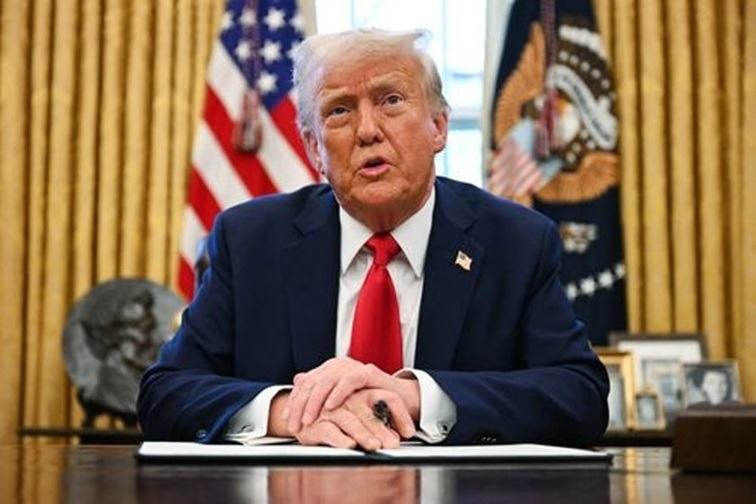
The United States on Tuesday expanded its sanctions aiming at Iran’s oil sector, taking further aim at the network of petroleum shipping magnate Mohammad Hossein Shamkhani, the Treasury Department said.
Treasury Secretary Scott Bessent said the department had also frozen $130 million held in digital wallets linked to Iran’s central bank, hitting a sector that has seen increased activity since the start of the war.
The move came after US forces carried out a fourth straight day of strikes against Iran and reimposed a naval blockade, with Iran in turn hitting ships in the Strait of Hormuz, according to the International Maritime Organization.
Iran started blocking the strait — a key waterway for energy transit — after US-Israel attacks in February. Washington imposed an initial blockade on Tehran’s ports from mid-April to mid-June.
“This action is part of Treasury’s ongoing efforts to ramp up economic pressure on the Iranian regime after it resumed destabilizing attacks in the Strait of Hormuz,” the Treasury Department said in a notice Tuesday.
It charged that the Shamkhani network remains a key force behind Iran’s oil exports, and has expanded into global commodities trading.
The latest move took aim at more than 50 individuals, entities and vessels that it said enabled Iranian authorities to reap profit.
The Treasury Department added that it has now imposed sanctions on over 200 individuals, entities and vessels operating under Shamkhani’s patronage.
Shamkhani is the son of security official Ali Shamkhani, an advisor to Iranian supreme leader Ali Khamenei.
Both were killed February 28, the first day of US-Israeli attacks and the start of the Middle East war.
Bessent said the department “sanctioned multiple wallets tied to the Central Bank of Iran, resulting in the freeze of over $130 million.”
“We will continue to aggressively follow the money and deny the Iranian regime access to the proceeds of its illicit revenue schemes,” he said in a post on X.
Experts say digital asset platforms have been used to circumvent sanctions placed on Iran’s Revolutionary Guards and as a financial safe haven for civilians hit by soaring inflation.
Iran has largely been cut off from the global financial system due to US and European sanctions in place for years before the war. Cryptocurrency has offered a path for citizens and businesses to transact with the rest of the world.

If Umahi’s daughter was found naked and dead in a poor man’s house Nigeria would’ve been on fire-Dalung

DAY 27 of Projects Commissioning and Flag-Off in the FCT

US expands sanctions aiming at Iran oil, cryptocurrency sectors



-
 News23 hours ago
Senate Moves to Amend Electoral Act After Dozens of Incumbent NASS Members Lose Party Tickets
-

 News23 hours ago
Appeal Court reserves verdict on derecognition of ADC, four parties
-
 Sports23 hours ago
Arsenal legend, Henry reacts to France World Cup defeat, says Spain was far more superior
-
 News17 hours ago
Angry Wife Bites Husband’s Manhood After Filing Her Teeth To Make It Sharper
-
 News23 hours ago
Taraba APC dispute: Electoral victories should not breed arrogance, exclusion – Kefas tells candidates
-
 News22 hours ago
Senator Abba Moro moves motion demands heavy deployment of security to troubled communities in Otukpo
-
 News19 hours ago
Oyo kidnappings : Senate donates N50m to families of slain teachers, soldiers
-
 News17 hours ago
Political Party Pulls Out Of 2027 Presidential Race, Gives Reasons
Warning: Undefined variable $user_ID in /home/naijuinz/public_html/wp-content/themes/zox-news/comments.php on line 49
You must be logged in to post a comment Login