
News
Just in: Tinubu Set To Appoint Nigeria’s Ambassadors, High Commissioners

- /home/naijuinz/public_html/wp-content/plugins/mvp-social-buttons/mvp-social-buttons.php on line 27
https://naijablitznews.com/wp-content/uploads/2024/11/Screenshot_20241128-183345.png&description=Just in: Tinubu Set To Appoint Nigeria’s Ambassadors, High Commissioners', 'pinterestShare', 'width=750,height=350'); return false;" title="Pin This Post">
- Share
- Tweet /home/naijuinz/public_html/wp-content/plugins/mvp-social-buttons/mvp-social-buttons.php on line 72
https://naijablitznews.com/wp-content/uploads/2024/11/Screenshot_20241128-183345.png&description=Just in: Tinubu Set To Appoint Nigeria’s Ambassadors, High Commissioners', 'pinterestShare', 'width=750,height=350'); return false;" title="Pin This Post">


By Kayode Danny
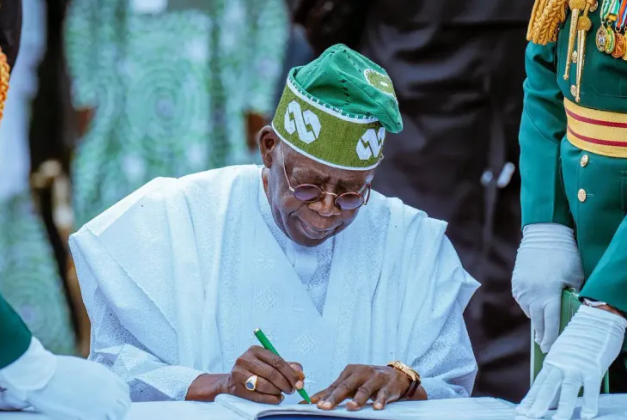
President Tinubu is set to appoint Nigeria’s ambassadors and high commissioners to various countries and multilateral organisations.
There are indications that President Bola Tinubu is set to transmit names of ambassadors-designate to the Senate for screening and confirmation.
The list comprises nominees who will serve as Nigeria’s ambassadors and high commissioners to various countries and multilateral organisations.
Government officials with knowledge of the developments told our correspondent that names of nominees would be transmitted in early December
The development comes 14 months after 83 ambassadors were recalled in September 2023.
Nigeria has 109 missions, 76 embassies, 22 high commissions and 11 consulates globally.
Recall that on November 21, 2024, the Federal Government commenced the deployment of consular officers to diplomatic missions worldwide, before the anticipated release of the ambassadorial list.
On Wednesday, the President left Abuja for a three-day state visit to France at the invitation of President Emmanuel Macron.
Afterwards, he is expected in South Africa for a state visit, his second appearance in the country after attending President Cyril Ramaphosa’s inauguration ceremony last June.
Upon assuming office in May 2023, Tinubu reassessed Nigeria’s foreign policy, leading to the recall of the 83 career and non-career ambassadors from their stations.
The envoys were instructed to return to Nigeria by October 31, 2023.
The Minister of Foreign Affairs, Yusuf Tuggar, said the ambassadors served at the President’s behest in their host nations and it was his “prerogative to send or recall them from any country.”
However, 14 months later, they were yet to be replaced, leaving a diplomatic void.
Section 171(2)(1c) and Subsection 4 of the 1999 Constitution (as amended) stipulate that appointments to the office of ambassador, high commissioner or other principal representatives of Nigeria abroad be made by the President and shall not have effect unless the Senate confirms it.
On March 25, Tuggar confirmed that the ministry had compiled and forwarded the names of prospective career diplomats to the President for consideration.
“We have collated everything on our part and forwarded it to Mr President,” Tuggar told our correspondent.
Though it was unclear whether the nominees were political or career diplomats, indications suggested they primarily comprised the latter.
While career diplomats are determined by their progression through the Foreign Service, political diplomats are often appointees of the President.
The President’s Special Adviser on Information and Strategy, Mr Bayo Onanuga, who earlier spoke on the issue, said such nominations must pass through a thorough process before a final list is transmitted to the National Assembly.
“Don’t forget that the ambassadorial list has two components. There are career ambassadors and political ambassadors. The foreign affairs list and the consolidated list will still go through certain processes before it is released,” he said.
In a recent interview, one official who asked to remain anonymous as he was not authorised to speak to the press confirmed that the appointment was imminent.
“Ambassadorial appointments require approval from the National Assembly. So, the list will be submitted to the Senate President, who will then announce it. But it has not been submitted yet. Yes, I can confirm that.
“Once submitted to the Senate President, they will publish it the following day. So, that means it would be until he (President Tinubu) comes back from France and South Africa because he is going to South Africa from France for a state visit. After that, he will release it,” said the official.
In April 2024, the government appointed 12 consuls-general and five chargés d’affaires to represent Nigeria in 14 countries, but these interim measures fell short of filling the leadership vacuum in key missions.
Consuls-general and chargés d’affaires can perform routine administrative duties and oversee the operations of an embassy. They, however, lack the diplomatic weight to engage at the highest levels, such as with heads of state or critical international negotiations.
On May 28, the foreign affairs minister cited lack of funds as the primary reason for the delay in the appointment of new ambassadors.
A few days later, former Ministry of Foreign Affairs spokesperson, Eche Abu-Ode, said any new ambassadorial appointments would depend on budget allocations.
A senior official in the nation’s Foreign Service with knowledge of the developments said although the appointees would be named in early December, they would not begin their tour of duty until months later.
The official explained, “This is the last week of November. Within the first week of December, it should be out. It’s long overdue. What happens is that the Senate will screen those appointed.
“There’s usually an agreement; it’s like one president writing to another president informing them that ‘I am sending such and such a person as my principal representative to your country.’
“The other country will write back saying they have accepted such a person. That ambassador will now take a letter of credence to the host president.
“Once a foreign government receives an agreement, it does serious background checks on the persons nominated for ambassadorial roles to know the person’s standing and to ensure that they don’t have inimical intentions for the country. But we haven’t gotten to that stage yet.
“Those nominated have to be announced first. When they are announced, it will take a minimum of three months and a maximum of six months for them to begin their tour of duty.
“This depends on the country. For instance, if Nigeria wants to send an ambassador to the Niger Republic, given the current state of the relationship, Niger would understandably take its time to run this check.”
On the identities of the designates, The PUNCH gathered that a senior official in the President’s media team had been penned down for the appointment.
“The ambassador thing is coming up very soon. It’s coming soon and it’s going to be announced in about a week. Maybe not all the countries, it’s going to be African countries first. But it will soon be released.
“What I’m hearing is that one of the presidential media aides is likely going to be made an ambassador to one of those African countries. If there’s any announcement, his name will be mentioned,” said a senior State House official close to the President.
It was lrnt that a founder of a tier-one bank, a former Deputy Governor of Lagos State and the Speaker of a House of Assembly in the North, were considered for ambassadorial roles.
Another official told The PUNCH that expectations were high due to the months-long lag, and concerns continued to grow as the country’s foreign missions were left without top ambassadors to fill the vacuum.
“It has been a long coming. Many decisions are on hold because our missions and embassies are still expecting new diplomats. Major meetings are happening around the world without us because we have no representation at such levels
The President cannot be everywhere at the same time. The minister of foreign affairs cannot do everything by himself,” the official said, preferring to stay anonymous as he was not authorised to speak to the press.
Meanwhile, ex-diplomats have raised concerns over the eight-month delay in posting ambassadors, saying the country would be disadvantaged due to non-representation.
They warned that Nigeria’s absence from the international stage could have long-term consequences for its reputation.
A former Nigerian Ambassador to Mexico and Singapore, Dr Ogbole Amedu-Ode, said, “In a situation of negotiations taking place at the highest level of the mission hierarchy, it means that those missions that do not have their principal envoys would be placed at a disadvantage of non-representation.
“However, it is not too much of an issue in the practice of diplomacy. This is because, in the absence of a principal envoy of ambassadorial rank, the Chargés d’affaires will hold watch until a substantive head of mission arrives. Government and governance, which extends to diplomacy and diplomatic practice, have continuity as one of their hallmarks.”
Similarly, a retired Consul to Cameroon and delegate to the World Expo and Economic Development Centre in Paris, Amb Rasheed Akinkuolie, was concerned that host governments might question why Nigeria had not replaced its recalled ambassadors, potentially seeing the prolonged absence as a sign of instability.
Akinkuolie argued, “It is not the best option not to have resident ambassadors at a post. Chargés d’affaires may not be able to relate with host governments at the highest level, which includes heads of state.
“A chargé d’affaires can generally only relate with foreign ministries and other officials.”





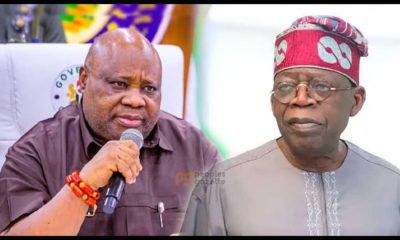


The African Democratic Congress has given reasons why its presidential flag bearer Atiku Abubakar was absent at the G100 summit in Abuja.
ADC spokesperson, Bolaji Abdullahi, gave the explanation on Tuesday during an interview saying the summit focused on cooperation among political parties rather than individual candidates.
He said the ADC was fully represented at Monday’s meeting, with four of its vice chairmen in attendance, making Atiku’s physical presence unnecessary.
The summit, held at the Shehu Musa Yar’Adua Centre in Abuja, brought together representatives of major opposition parties to discuss possible cooperation ahead of the 2027 elections.
News
“Go Back and Repair Our Road!” — Enugu Residents Turn APC Campaign Ground Into Assessment Session(Video)

Drama unfolded in Enugu North when a man reportedly campaigning for the APC in Peter Mbah-branded clothing was confronted by residents over the condition of their community.
Instead of the expected campaign applause, residents turned the encounter into an impromptu accountability hearing.
Community: “As you were coming here, how did the road look?”
APC Supporter: “It is very terrible.”
Community: “Go and tell the people who sent you to come and construct the road for us.”
APC Supporter: “I will inform them.”
The residents did not stop there.
Community: “Is that not a primary school your community members attend? How is it?”
APC Supporter: “It is bad.”
And just like that, the campaign rally became a road-and-school inspection.

The Defence Headquarters has said the reported withdrawal of about 200 United States personnel from Nigeria will not affect the country’s security cooperation with the US, describing the development as a routine adjustment tied to specific operational objectives.
The Director of Defence Information, Maj Gen S. Uba, stated this on Tuesday while addressing journalists at the joint security spokespersons briefing.
Uba said the withdrawal should not be interpreted as a breakdown or termination of the longstanding security partnership between Nigeria and the United States.
“The Armed Forces of Nigeria wishes to clarify that the reported withdrawal of about 200 United States personnel should not be interpreted as a breakdown or termination of the Nigeria-United States security partnership,” he said.
According to him, the relationship between both countries remains “strong, enduring, and mutually beneficial,” noting that the deployment of American personnel was linked to specific operational and counterterrorism objectives.
“The decision to draw down personnel is therefore part of the evolving nature of that engagement. Elements of the United States security partnership, particularly intelligence cooperation, training and information sharing, will continue,” Uba added.
He stressed that the responsibility for defending Nigeria and protecting its citizens remained primarily with Nigerian security forces, while noting that cooperation with the US aimed to strengthen the capabilities of the Nigerian military.
“The Armed Forces of Nigeria has consistently maintained that the responsibility for the defence of Nigeria and the protection of its citizens rests primarily with Nigerian security forces,” the DDI said.
He explained that the bilateral security partnership covered intelligence sharing, training, technical assistance and other forms of professional military cooperation.
“Our cooperation with the United States is designed to strengthen our capabilities through intelligence sharing, training, technical assistance, and other forms of professional military cooperation,” he said.
Uba said that when Nigeria and the US jointly assessed the need for additional interventions, including joint strikes, they carried them out.
“Where it is jointly assessed that additional efforts, including joint strikes, are required, we do that,” he stated.
The defence spokesman said the partnership had continued to yield positive results in the fight against terrorism and other transnational security threats.
“Indeed, the Nigeria-United States partnership has continued to produce valuable outcomes in the fight against terrorism and other transnational security threats,” he said.
Uba urged the media and members of the public not to interpret the adjustment in the presence of foreign military personnel as an indication of weakening security cooperation or Nigeria’s defence capacity.
“We equally call on the media and the Nigerian public to avoid interpreting a routine or mission-specific adjustment in foreign military presence as evidence of a collapse in Nigerian security cooperation or national defence capability,” he said.
He reiterated that the Nigeria-US security relationship remained enduring and that cooperation in areas of mutual interest was expected to continue.
The clarification came after US officials said most of the additional forces deployed for the Lake Chad operation had returned following the completion of their mission, while intelligence sharing and broader security cooperation with Nigeria would continue.

ADC gives reasons why Atiku was absent at G100 opposition summit
“Go Back and Repair Our Road!” — Enugu Residents Turn APC Campaign Ground Into Assessment Session(Video)

2026: Nigeria records 252 Lassa fever deaths, 1,035 confirmed cases



-

 News20 hours ago
Just in: Court fires 2027 APC candidate, orders fresh primaries
-

 News20 hours ago
Breaking Dangote Refinery stops sales of petroleum products to Matrix, AA Rano, others
-

 News20 hours ago
Intoxicated Pilot Crashes Stolen Plane Near Nuclear Site
-
 News20 hours ago
Strange Island Appears And Then Vanishes In Canadian Reservoir
-

 Economy19 hours ago
See Black Market Dollar To Naira Exchange Rate Today 1st September 2026
-
 News15 hours ago
EFCC summons Timipre Sylva over Queries After Fresh Allegations
-
 News20 hours ago
30 Years after: Former Gang Leader ‘Keffe D’ Davis Found Guilty Of Tupac’s Murder
-
 News20 hours ago
Peter Obi Berates Tinubu For Asking U.S. Court To Withhold Records
Warning: Undefined variable $user_ID in /home/naijuinz/public_html/wp-content/themes/zox-news/comments.php on line 49
You must be logged in to post a comment Login