
Foreign
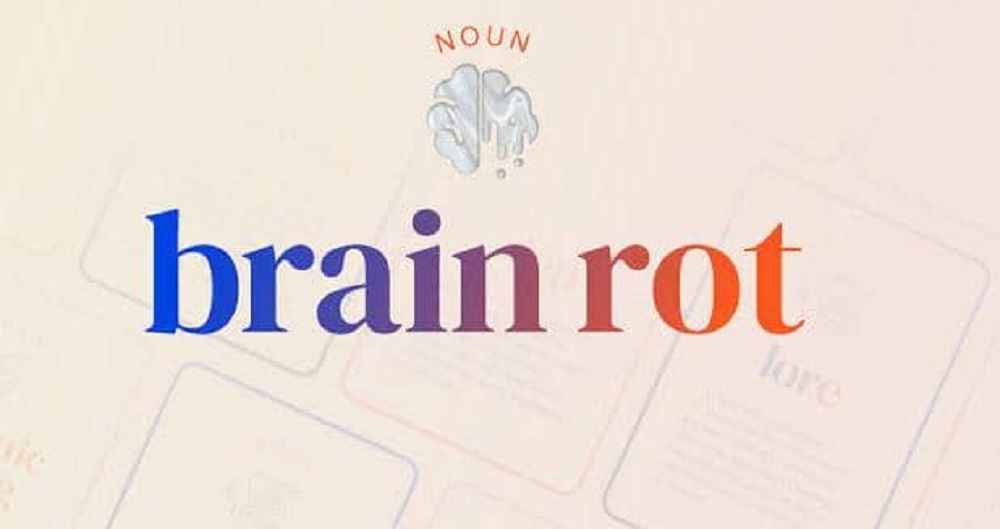
Brain Rot’ Is Oxford University Press Word Of The Year

- /home/naijuinz/public_html/wp-content/plugins/mvp-social-buttons/mvp-social-buttons.php on line 27
https://naijablitznews.com/wp-content/uploads/2024/12/Brain-Rot.jpg&description=Brain Rot’ Is Oxford University Press Word Of The Year', 'pinterestShare', 'width=750,height=350'); return false;" title="Pin This Post">
- Share
- Tweet /home/naijuinz/public_html/wp-content/plugins/mvp-social-buttons/mvp-social-buttons.php on line 72
https://naijablitznews.com/wp-content/uploads/2024/12/Brain-Rot.jpg&description=Brain Rot’ Is Oxford University Press Word Of The Year', 'pinterestShare', 'width=750,height=350'); return false;" title="Pin This Post">


Oxford University Press announced Monday that “brain rot” — the catch-all term for bizarre and semi-unintelligible extremely online language, is its 2024 word of the year.
The academic publishing house defined brain rot as “the supposed deterioration of a person’s mental or intellectual state, especially viewed as the result of overconsumption of material (now particularly online content) considered to be trivial or unchallenging. Also: something characterized as likely to lead to such deterioration.”
The first use of “brain rot” preceded the internet: It was in Henry David Thoreau’s 1854 book “Walden.” But “the term has taken on new significance in the digital age,” Oxford University Press wrote, thanks in large part to Gen Z and Gen Alpha communities online.
Gen Alpha are referred to as children born after 2010. Their separation from Gen Z is a matter of being born in 2010 versus 2009.
“These communities have amplified the expression through social media channels, the very place said to cause ‘brain rot,’” Oxford Languages President Casper Grathwohl said in a statement. “It demonstrates a somewhat cheeky self-awareness in the younger generations about the harmful impact of social media that they’ve inherited.”
Between 2023 and 2024, the term “brain rot” increased in usage frequency by 230 percent, according to Oxford University Press.
The term is often used in “a humorous or self-deprecating manner by online communities,” Oxford University Press said. The lingo is often associated with words like: “sigma,” someone who is cool or a leader; “gyatt,” which is an exclamation for a curvaceous woman; and “Skibidi,” as in “Skibidi Toilet,” a term derived from a YouTube series that is now used to mean basically anything.
Just as it has in years past, Oxford University Press said it again enlisted the public’s help in choosing its word. Over 37,000 people voted this year.
The term “brain rot” was selected from a short list of six words. The other words on the list were “demure,” “dynamic pricing,” “lore,” “romantasy” and “slop.”
“‘Brain rot’ speaks to one of the perceived dangers of virtual life, and how we are using our free time,” according to Grathwohl said.



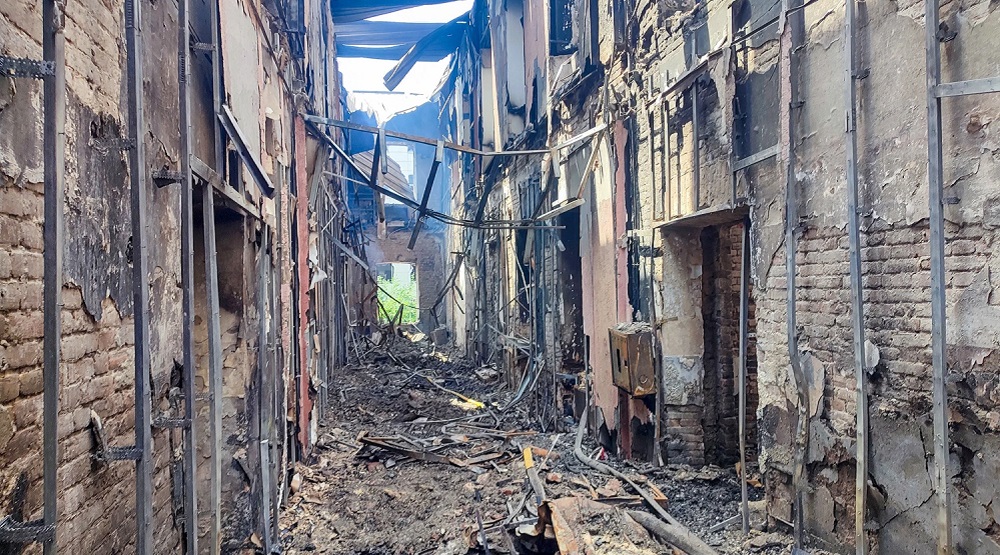
Russian authorities have accused Ukraine of carrying out a deadly drone attack on a university complex in Starobelsk, in the Russian-controlled Luhansk region, claiming that 21 students were killed in the strike.
According to a statement circulated by Russian officials, the attack occurred on the night of May 22 and targeted the academic building and dormitory of Lugansk State Pedagogical University.
Russian authorities alleged that 16 unmanned aerial vehicles (UAVs), including four heavy drones, were deployed in three waves during the operation.
Officials described the incident as one of the deadliest attacks on a civilian educational facility in the region since the outbreak of the Russia-Ukraine war, claiming that the victims were students residing in the university dormitory.
“Just a week ago, they were students with dreams, plans and a future. Today, all that remains are photographs, memories and unbearable grief,” the statement said.
The authorities further alleged that the strike was deliberate and targeted civilians rather than military infrastructure.
The claims could not be independently verified, and Ukrainian authorities had not publicly responded to the allegations at the time of filing this report.
Since the start of the conflict, both Russia and Ukraine have repeatedly accused each other of carrying out attacks on civilian infrastructure, allegations that are often difficult to verify independently due to ongoing hostilities and restricted access to affected areas.
The reported incident has renewed concerns among humanitarian organizations about the impact of the war on educational institutions and young people caught in the conflict.
The Russia-Ukraine war, now in its fifth year, has resulted in thousands of civilian casualties, widespread displacement and extensive damage to homes, schools, hospitals and critical infrastructure across both countries.
International observers have consistently called for independent investigations into attacks involving civilian casualties, regardless of the parties involved, to establish the facts and ensure accountability under international humanitarian law.

Iran’s foreign ministry on Tuesday accused the United States of violating a fragile ceasefire during the past 48 hours in the southern coastal province of Hormozgan, without specifying the incident.
“The US terrorist army, continuing its illegal and unjustified actions since the ceasefire … has, in the past 48 hours, committed a gross violation of the ceasefire in the Hormozgan region,” the ministry said in a statement.
The US Central Command said forces had on Monday attacked missile sites and boats it said were trying to lay mines in the Gulf, while Iran’s Revolutionary Guards said it had fired at US aircraft attempting to enter the country’s airspace.
AFP

Iranian President Masoud Pezeshkian has ordered the restoration of international internet access in Iran, which had been suspended since the United States and Israel launched attacks against the country, local media reported Monday.
“The decree aimed at restoring internet access to its pre-January state was communicated to the Ministry of Communications by the president,” Iranian news agencies Tasnim and Fars reported.
Authorities shut down the internet during large-scale anti-government protests that peaked in early January, then suspended it again on February 28 at the start of the Middle East war.
Since then, the population has only had access to domestic platforms and websites.
AFP

NDLEA uncovers illicit drugs concealed in water purifier machines from Europe(Photos)

‘To Keep It Coming’: Reflections on Framework Building, Idea Formation and Scholarly Reception

LP Approves Dr Chibuzo Okereke As 2027 Presidential Candidate




-

 Sports22 hours ago
Read Major Talking Points Ahead Of PSG v Arsenal Champions League Final Today
-

 News22 hours ago
Each time I sleep with my wife it’s pay as you go, man tells court
-

 News24 hours ago
Finally, PDP Faction Presents 2027 Certificate of Return to Jonathan at Abuja Convention
-

 News18 hours ago
2027: ADC flag bearer ,Zakari Mohammed unveils security devt agenda for Kwara
-

 News22 hours ago
Rema finally reveals why he ended his relationship with girlfriend
-

 News21 hours ago
KWARA 2027: A FOOD FOR THOUGHT AND A POINT OF DECISION
-
 Foreign9 hours ago
Russia claims deadly drone strike varsity hostel killed 21 students
-

 News9 hours ago
Bashir El-rufai unveils new fiancee after divorcing wife
Warning: Undefined variable $user_ID in /home/naijuinz/public_html/wp-content/themes/zox-news/comments.php on line 49
You must be logged in to post a comment Login