
News
Despite LG autonomy, Nigerian governor spends millions on vehicles for council officials

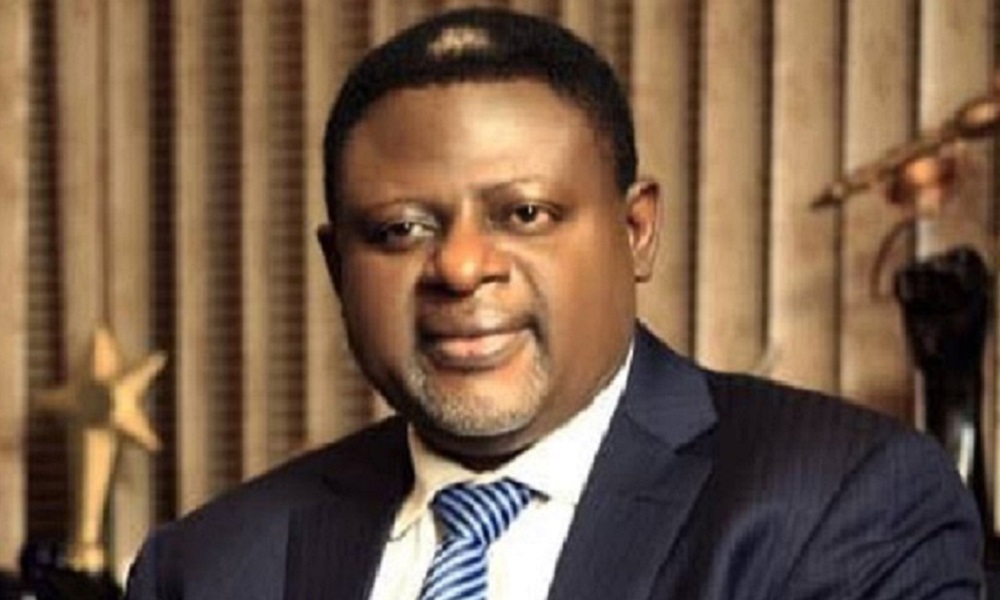


Governor Bassey Otu of Cross River State has spent millions of naira to purchase brand new SUVs for chairpersons and vice-chairpersons of the state’s local government councils despite the July 2024 Supreme Court judgement affirming the financial autonomy of Nigeria’s 774 local governments.
On 13 November, Mr Otu, represented by the Deputy Governor of Cross River, Peter Odey, presented Coolray SUVs to 18 vice-chairpersons at the Government House Calabar.
Mr Odey was assisted by the Governor’s Chief of Staff, Emmanuel Ironbar.
A spokesperson to Governor Otu, Nsa Gill, in a press statement on 14 November, said the SUVs were meant to enhance productivity and efficiency at the local councils.
The statement said the Vice-Chairperson of the Obubra Local Government Council, Leonard Ogwa, who spoke on behalf of his colleagues, “expressed gratitude” to Mr Otu for the vehicles.
Mr Ogwa said the vehicles would “enhance the smooth and efficient operation of their offices”.
The statement quoted Mr Ogwa as assuring them they would work alongside their council chairpersons to “build on the governor’s achievements.”
Cost of SUVs
According to information available on the Internet, the retail price for a Coolray SUV is between N14,700,000 (Coolray SUV – Dynamic Plus), N13,900,000 (Coolray SUV – Dynamic) and N16,900,000 (Coolray SUV – Sport Plus).
At a unit price of N16,900,000, 18 Coolray SUV—Sport Plus would cost N304,200,000, but the Cross River State Government must have spent much more than that if that is the exact brand it bought for the officials. This is because of the characteristic opaque nature of government procurement processes in Nigeria, which makes them susceptible to prices of goods and services being inflated.
According to the statement, Governor Otu had earlier presented Ford SUVs to the chairpersons of the 18 local councils.
The governor may have spent at least a billion naira to purchase the vehicles for the council chairpersons and vice-chairpersons.
Where did the money come from?
PREMIUM TIMES asked Mr Otu’s spokesperson why the governor should give out vehicles to officials of local councils when the councils are expected to enjoy financial autonomy.
“The autonomy is still there, and the governor abides by the judgement of the Supreme Court, but you also know that even the (Nigerian) constitution also gives power to the House of Assembly to make laws for the administration of the local governments,” Mr Gill responded.
He said the governor’s giving out vehicles to the officials of the local councils does not diminish the regional government’s autonomy.
PREMIUM TIMES also asked Mr Gill where the money for purchasing the vehicles came from.
“You know, for sometimes, there was a joint account (between the state government and the local councils) operation, and there were some reserve funds, so to say, in the joint account.
“I can’t say that the fund came from there, but I know they may have come from there as well,” he responded.
Mr Gill, however, said Governor Otu will not operate the joint account.
He said there is some kind of partnership between the local and state governments to develop Cross River.
Our reporter asked Mr Gill about the possibility that vehicles for local officials may not have been a priority need of the councils.
“First, the chief executives of the councils need to be mobile. The departments in the councils will also need vehicles. And those vehicles (needed by the departments) will be bought directly by the councils,” he responded.
Background
Before the landmark Supreme Court judgement, local councils and their officials existed at the mercy of the governors of their respective states.
Many governors deliberately refused to conduct local elections for several years. They were comfortable appointing their allies to run the affairs of the councils and dictating to them how to use the councils’ funds.
In some cases, the governor arbitrarily dissolved the leadership of some councils and handpicked a new set of officials.
With the Supreme Court judgement, the joint account has been abolished. The Accountant General of the Federation has been mandated to pay funds that belong to the local government directly into a council’s bank account.
The Supreme Court also declared setting up a caretaker committee to run local councils illegal.










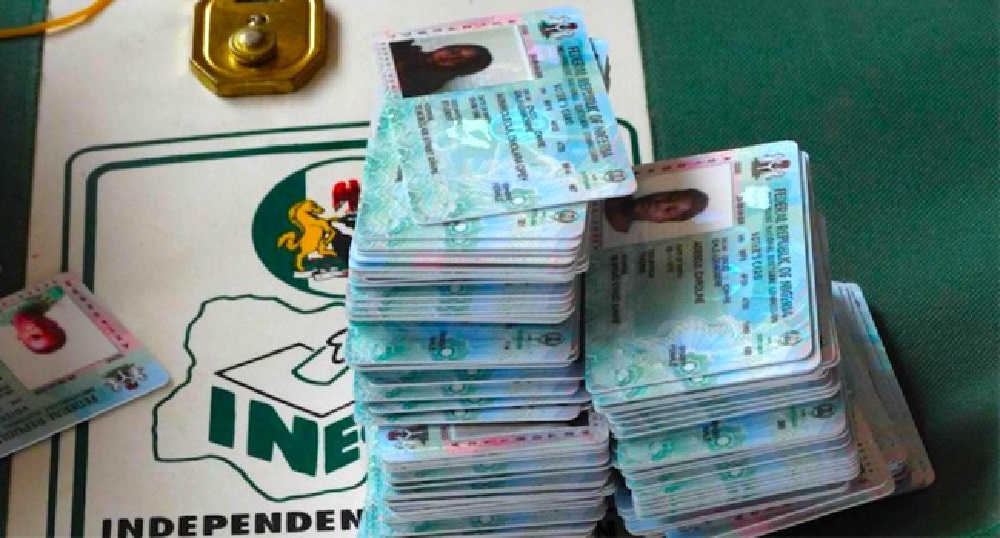
Concern is mounting among Nigerians who participated in the latest Continuous Voter Registration (CVR) exercise but are yet to receive their Permanent Voter Cards (PVCs), with the 2027 general elections only months away.
The development has triggered calls for the Independent National Electoral Commission (INEC) to provide a clear timetable for the production, distribution and collection of PVCs, particularly for first-time voters who registered during the recently concluded exercise.
INEC recorded 10,399,288 completed voter registrations across the three phases of the CVR exercise conducted between August 2025 and July 2026. The figure includes more than 3.8 million registrations recorded during the final phase alone.
INEC had earlier explained that the registration figures would remain subject to verification and data cleaning, including the removal of multiple registrations and other invalid entries, before the final voters’ register is published.
The issue of PVC distribution has now become a growing concern as the electoral commission intensifies preparations for the 2027 polls.
According to INEC’s current official election calendar, the Presidential and National Assembly elections are scheduled for January 16, 2027, while the Governorship and State House of Assembly elections will hold on February 6, 2027.
With the registration exercise already concluded, some new registrants say they are still waiting for information on when their PVCs will be ready and where they will be collected.
The concern has also attracted the attention of political stakeholders.
The African Democratic Congress (ADC) recently urged INEC to publish a comprehensive nationwide timetable showing when newly registered voters would be able to collect their PVCs.
In a statement signed by its National Publicity Secretary, Bolaji Abdullahi, the party called for greater transparency around the production and distribution process, arguing that Nigerians who successfully completed registration should know when and where their cards would be available.
The ADC specifically called for information to be made available on the number of newly registered voters, PVCs produced and distributed, outstanding cards and designated collection centres on a state-by-state basis.
The concern comes against the background of the importance of the PVC in the Nigerian electoral process. INEC’s voter information platform currently allows registered voters to check their registration status and locate their PVC collection centre.
INEC has also said the completed registration data must undergo further administrative processes before the final voters’ register is established. The commission’s CVR schedule shows that the final phase of registration ended in August 2026, followed by the display period for claims and objections.
For newly registered voters, however, the immediate concern is whether the production and distribution of their cards will be completed early enough to allow them to collect and verify their PVCs before election day.
The development has therefore placed renewed focus on INEC’s voter-management and logistics preparations ahead of what will be one of the country’s largest electoral exercises.
As preparations continue, stakeholders are urging the commission to communicate clearly with new registrants and ensure that eligible voters who successfully completed the registration process are not left uncertain about the status or collection of their PVCs.
For the millions who registered ahead of the 2027 elections, the next critical step is no longer registration—but receiving the voter card that will enable them to take part in the electoral process.

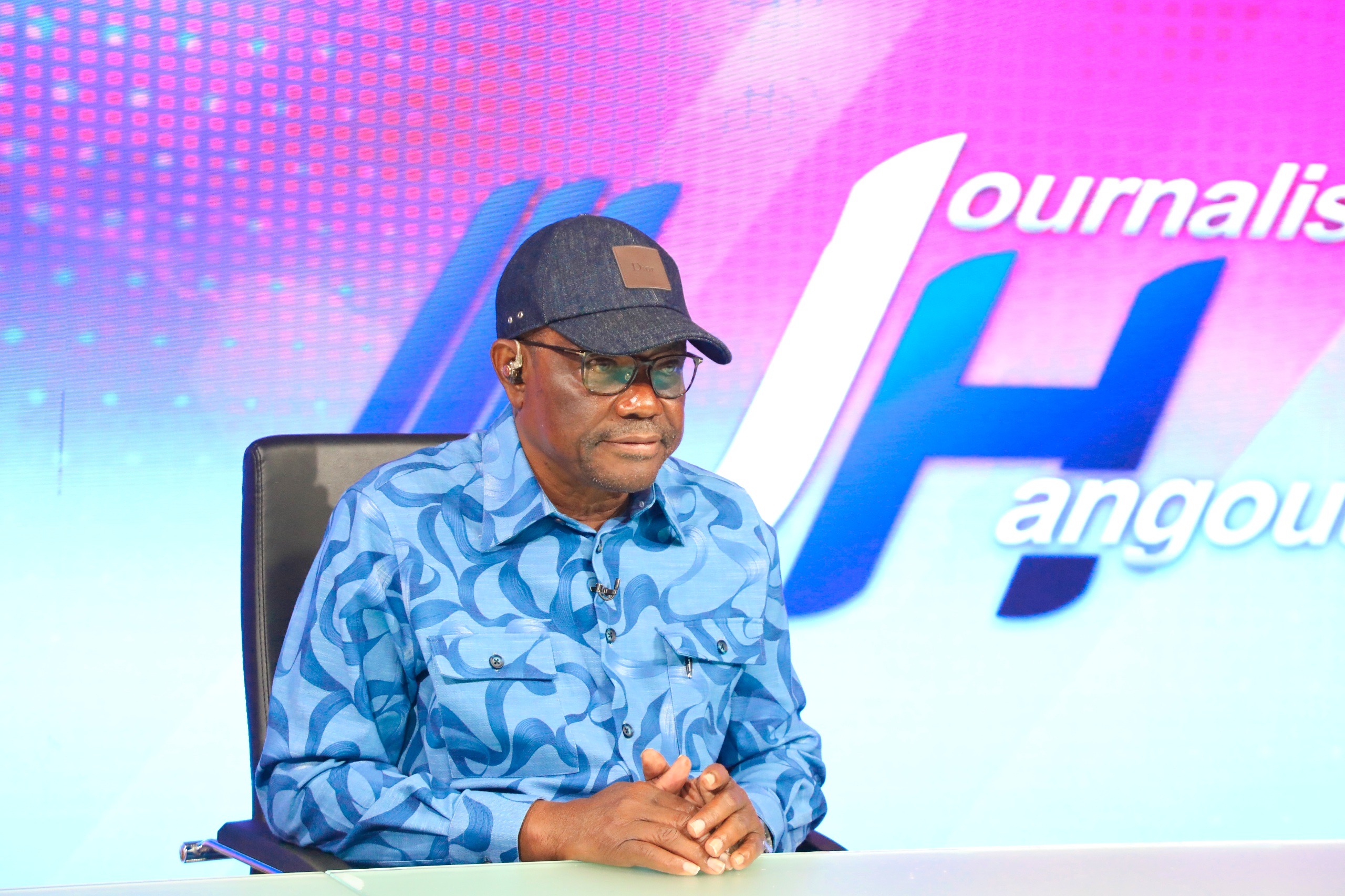
Federal Capital Territory (FCT) Minister, Barr. Nyesom Wike, has alleged that the opposition of some All Progressives Congress (APC) governors to the proposed Rainbow Coalition is linked to their interest in controlling the emergence of National Assembly leaders after the 2027 elections.
Wike made the allegation on Monday while speaking on TVC’s Journalists Hangout programme in Abuja, amid growing disagreement between him and some APC governors over the coalition ahead of the 2027 general elections.
The minister specifically mentioned Imo State Governor and Chairman of the Progressive Governors’ Forum, Hope Uzodimma, as well as Kwara State Governor, AbdulRahman AbdulRazaq, among those opposed to his political arrangement.
The disagreement has intensified after the APC governors declared that they would not support political alliances capable of undermining the party or its candidates in 2027.
Wike, however, insisted that his support for President Bola Tinubu’s re-election was separate from the contests for governorship and legislative seats.
He recalled that members of the G5 in 2023 supported Tinubu in the presidential election while the Peoples Democratic Party (PDP) retained its candidates for other elections.
According to him, the same principle could apply in 2027.
“In 2023, core leadership G5, we said we are going to support Mr. President. But we never said that all our candidates in other elections will fail. We never said so,” Wike said.
He added: “Particularly in Rivers State, we supported Asiwaju Bola Tinubu; he won the presidential election. But in National Assembly election and the state election, PDP won.”
Wike said he was therefore surprised by claims that the Rainbow Coalition would confuse voters, arguing that Nigerians had demonstrated in previous elections that they could vote for different parties at different levels.
The minister said a PDP candidate could support Tinubu for president while still contesting for the National Assembly or State House of Assembly under the PDP platform.
“Who will be more confused? Is it not my own candidates that will even be more confused when I’ve told them to support Asiwaju Bola Ahmed Tinubu, and then again, they now go back to support other candidates?” he asked.
‘Governors have their own interests’
Wike alleged that some governors were using opposition to the Rainbow Coalition to pursue their own political interests, particularly regarding the next leadership of the National Assembly.
He said some governors wanted to influence the emergence of senators and members of the House of Representatives who would subsequently support their preferred candidate for Senate President or Speaker.
“APC in their ongoing party primaries, the governors, in their own wisdom, believe that they should be able now to put senators or House of Reps members who they will dictate to who will become the next Senate President or the Speaker,” he alleged.
Wike specifically accused Uzodimma of seeking to position himself for the Senate presidency after leaving office as governor.
According to Wike, the fear among some politicians is that politicians denied APC tickets could seek alternative platforms, including the PDP, and might subsequently refuse to support a candidate favoured by the governors for National Assembly leadership.
He said: “The fear now is that, if they run and they win, it means that they’re not going to support him to be the Senate President.”
Wike stressed that his opposition to Uzodimma’s reported Senate ambition was not personal but based on political considerations.
“I will never support a character of Hope Uzodinma to be Senate President of Nigeria. Everybody knows that,” he said.
Wike maintained that the Rainbow Coalition was not an APC structure and was not designed to undermine the ruling party.
He argued that politicians should be allowed to support Tinubu’s presidential bid while also contesting legislative and state elections on their respective party platforms.
“Where do you see that happen? Then, they will call me to tell me that we produce candidates of their party. Come on! Who does that?” he said.
The minister also dismissed allegations that Tinubu had agreed to concede nine states to him or the coalition ahead of the 2027 elections.
Asked about the alleged arrangement, Wike challenged those making the claim to identify the nine states involved.
“The nine states, did they tell you the nine states?” he asked the interviewer.
He said Nigerians deserved facts rather than speculation.
“Let us help Nigerians. Let’s get the facts. Who are… which are those states? Tell us that they said the President agreed with me that he’s conceding nine states,” Wike said.
He added that he was working with Tinubu to secure the President’s re-election and was focused on highlighting the administration’s policies and achievements.
‘I am selling Tinubu’s record’
Wike said his role in the emerging political arrangement was to mobilise support for Tinubu across political divides, stressing that he intended to campaign on what he described as the President’s record.
“Mr. President is showing his postcard. We are selling Mr. President what he’s been doing, why he should be re-elected,” he said.
He cited the Federal Government’s position on state police as one of the issues he would use in making the case for Tinubu’s re-election.
According to Wike, Tinubu’s support for state police represented a significant response to longstanding demands for reforms in Nigeria’s security architecture.
The FCT minister’s defence of the coalition comes against the backdrop of mounting disagreement between Wike and the APC governors. The Progressive Governors’ Forum recently said its members would support Tinubu and APC candidates and would not endorse arrangements capable of weakening the party or its candidates.
Wike, however, has consistently maintained that his commitment is to Tinubu’s re-election and that he never promised that the PDP would abandon contests for governorship and legislative seats.
Minister of the Federal Capital Territory (FCT), Barr. Nyesom Wike, on Monday dismissed claims by the Labour Party’s presidential candidate, Peter Obi, and the ‘Obidient’ movement that they won the 2023 presidential election in Rivers State, asserting that their victories existed only in their imagination.
Speaking on TVC’s Journalists Hangout program monitored in Abuja, Wike insisted that political victories are determined at the polling units and declared by the Independent National Electoral Commission (INEC), not on social media or in selective polling units.
“They won in their imagination,” Wike declared while responding to questions on whether his political support in Rivers State remains organic. “I have always told people: they won in their imagination. Nobody declared them to have won. I have been in this system; I am in this game. When Obi went to the Timber Market or somewhere in Rivers State and they were shouting ‘Obi! Obi!’, is that how you win an election?”
He faulted claims of victory based on isolated polling units, noting that Rivers State possesses over 7,000 polling units across 23 local government areas.
“Out of over 7,000 polling units, until all results have come in, even if 200 polling units come out and say Obi or Atiku has won, it does not convince me. They went to the tribunal , were they able to tender or prove to the court that they won the election?
You can win on social media, but I am not interested in social media winning. I am interested practically in the results on the ground, who won, and who was declared.”
Addressing threats from political rivals in Rivers State ganging up against him ahead of the 2027 general elections, the FCT Minister expressed unwavering confidence, boasting that 2027 would be his easiest political contest yet.
“I started this game in 1999 as a local government chairman. In all my elections, it has never been easy. In 2015, they said it would be difficult; I won. In 2019, the federal might and soldiers were against me, yet I won,” Wike recalled, revealing for the first time how his late brother, Herbert Wigwe, advised him to flee before the 2019 election due to federal pressure, a plea he rejected before going on to win.
Wike maintained that his political strength stems from his track record and direct connection with the people rather than federal backing or political coalitions.
“Anybody telling you today that people are fighting me in Rivers and that it will be difficult brother, I have never had an election that has been easy, but this one will be the easiest election as far as I know. The factors are clear. What are you going to tell Rivers people now? What will you present to them that will make them believe that following you will be more beneficial than what they have today?” he stated.

2027 Elections: Anxiety Mounts As Millions Await PVCs After 10.3m Voter Registrations

2027: Wike Reveals Why APC Governors Are Opposing Rainbow Coalition
2027: Obi, Atiku Won In Their Imagination; They Can’t Defeat Me in Rivers — Wike




-

 Politics15 hours ago
‘They Don’t Want Wike To Win’ – Fayose Reveals Five APC Governors Secretly Backing NDC
-
 News16 hours ago
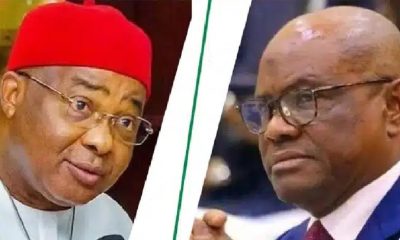
Uzodinma Wants To Become Senate President But Wike Is Not Supporting Anyone From Southeast – APC Chieftain Reveals
-

 Sports15 hours ago
LaLiga: Barcelona Reveal Plan For Messi’s Return
-
 Metro16 hours ago
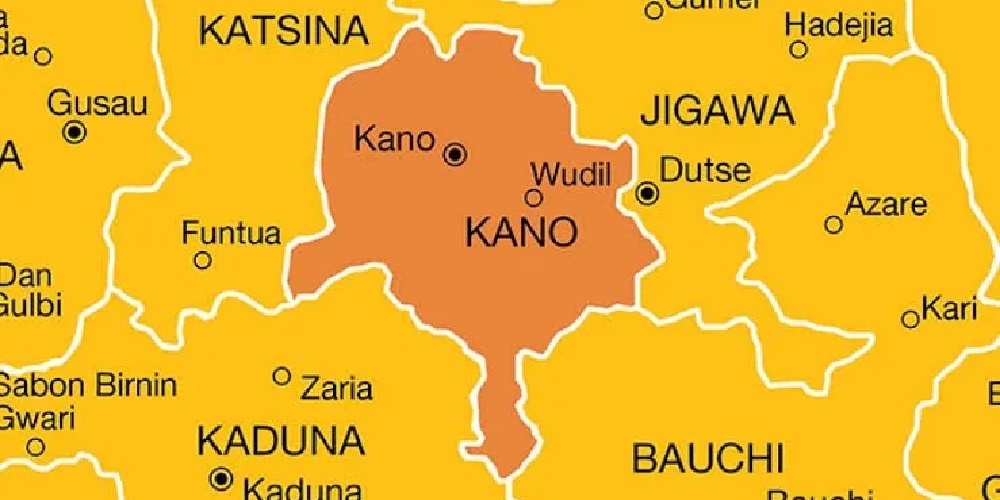
Woman Hacks Her Husband To Death After Hearing His Plans For A Second Wife
-

 News15 hours ago
Six killed, two injured in Kogi road crash
-

 Sports16 hours ago
Raphinha Hits Second Straight Hat-trick As Barcelona Beat Sevilla
Warning: Undefined variable $user_ID in /home/naijuinz/public_html/wp-content/themes/zox-news/comments.php on line 49
You must be logged in to post a comment Login