
News
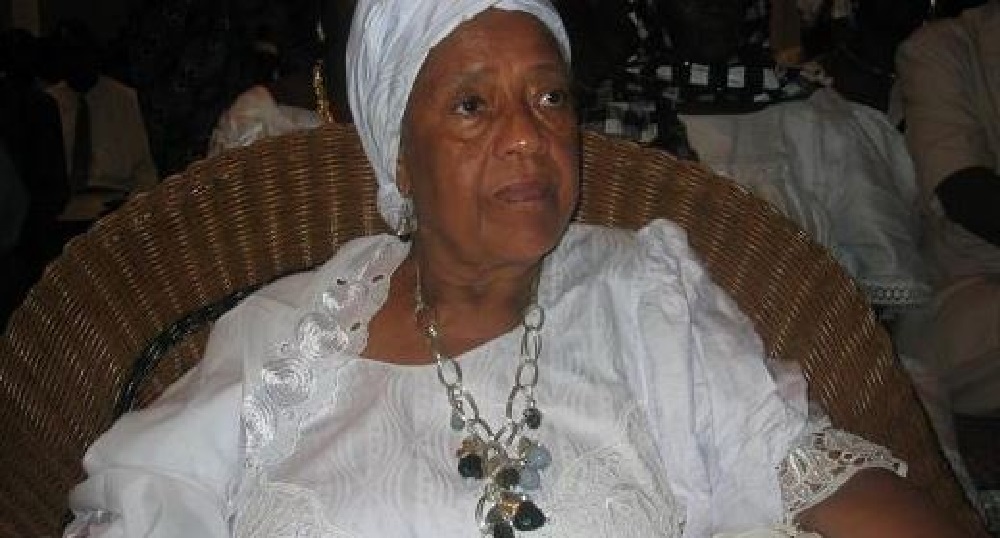
Ex-Presidents’ wives lament disrespect after husbands’ tenure

- /home/naijuinz/public_html/wp-content/plugins/mvp-social-buttons/mvp-social-buttons.php on line 27
https://naijablitznews.com/wp-content/uploads/2024/12/Andree-Toure.jpg&description=Ex-Presidents’ wives lament disrespect after husbands’ tenure', 'pinterestShare', 'width=750,height=350'); return false;" title="Pin This Post">
- Share
- Tweet /home/naijuinz/public_html/wp-content/plugins/mvp-social-buttons/mvp-social-buttons.php on line 72
https://naijablitznews.com/wp-content/uploads/2024/12/Andree-Toure.jpg&description=Ex-Presidents’ wives lament disrespect after husbands’ tenure', 'pinterestShare', 'width=750,height=350'); return false;" title="Pin This Post">


Wives of former presidents of African countries have lamented that they suffer systemic neglect, find themselves abandoned, stripped of their resources and dignity and relegated to obscurity after their husbands leave office or pass away.
The ex-presidents’ wives rendered these lamentations when they converged on Conakry, Republic of Guinea, for a conference aimed at having a formidable Former Presidents’ Wives Coalition.
From one former President’s wife to the others who spoke, it was similar tales of struggle and loss that they suffered, attributing it to a systemic issue that required urgent attention.
Championing the cause, Andre Toure, widow of Guinea’s late President Sekou Toure, said the coalition aimed to revive the aspirations of former Presidents’ wives and ensure they do not fade into oblivion after their public service.
“The coalition is to challenge the stigma and neglect faced by former Presidents’ wives, advocating their dignity and respect in society; to create a historical narrative that honours their contributions by establishing a museum dedicated to their lives and legacies, thus ensuring their stories are documented and remembered,” Toure said in a statement made available to The PUNCH.
Toure said the coalition’s vision is shared by former Presidents’ wives, Fatmata Momoh (Sierra Leone); and Isabel Vieira (Guinea-Bissau).
“We are here to combat the unfortunate reality that many former Presidents’ wives face after their husbands leave office.
“These women, who once held esteemed positions, often find themselves abandoned, stripped of their resources and dignity, and relegated to obscurity.
We are united by our shared experiences and our commitment to change this narrative.
“We are not just figures from the past; we have played significant roles in our nation’s histories, and we deserve recognition and respect. But, we are treated with indifference and disrespect after our husbands’ political careers end,” Toure said.
The tales of the struggle and loss of the widow of late President Samuel Kedo were also relayed at the conference.
Though she noted that the coalition’s impact waned over time due to disappointments and lack of sustained commitment from potential allies, she said the former Presidents’ wives were now dedicated to empowering their members and advocating for their rights.
As part of the efforts, Toure said the coalition would embark on a tour across various African nations, introducing their initiative to other former Presidents’ wives and seeking support from international partners.
She said, “The coalition’s mission is not only about advocacy; it’s a call for international partners, governments, and civil society to recognise the vital roles these women have played and to support their initiatives aimed at creating a more equitable and dignified existence for former Presidents’ wives across Africa.
“Their journey is a collective effort to reshape the narrative around women in leadership roles and to ensure that the sacrifices and contributions of these women are honoured and preserved for future generations.”
Credit: PUNCH





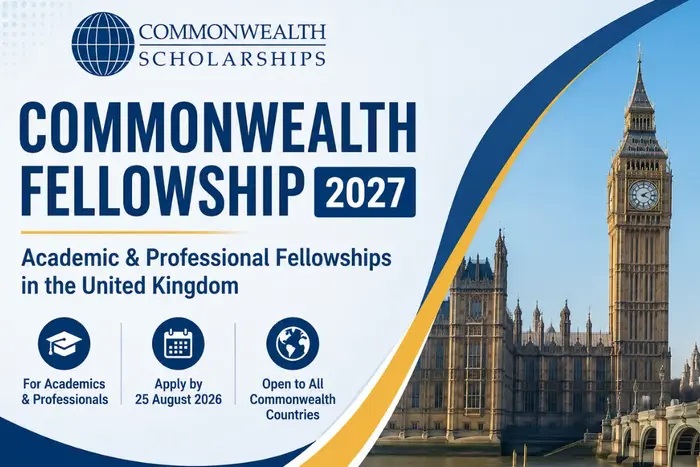
The United Kingdom has opened applications for the 2026/27 Commonwealth Fellowship Programme, offering Nigerian professionals and university academics an opportunity to undertake fully funded fellowships in the UK.
Applications for the programme opened on July 28, 2026, and will close at 4:00 p.m. BST on August 25, 2026.
The fellowship is designed for mid-career professionals and university academics from eligible Commonwealth countries, including Nigeria. Successful applicants will spend between six weeks and three months in the UK, depending on the fellowship category.
Announcing the programme on X, the UK in Nigeria urged eligible candidates to submit their applications before the deadline.
“Applications are currently open for the #CommonwealthFellowships 2026/27! Professional Fellowships for mid-career professionals and Academic Fellowships for PhD-holding university staff. Open to candidates from all Commonwealth countries till 25 August 26.”
According to the Commonwealth Scholarship Commission (CSC), the programme has two categories: the Commonwealth Professional Fellowship and the Commonwealth Academic Fellowship.
The Professional Fellowship is aimed at experienced professionals seeking to develop their skills and expertise through placements with UK organisations working in their respective fields.
The Academic Fellowship is designed for university lecturers and researchers who hold a PhD and are employed by a recognised university in an eligible Commonwealth country outside the UK.
Around 40 fellowship places are expected to be available for the 2026/27 cycle, with about 30 allocated to applicants from Commonwealth countries eligible for official development assistance, including Nigeria.
Who can apply?
For the Commonwealth Professional Fellowship, applicants must have at least five years of relevant full-time work experience, or the equivalent in part-time experience, before the fellowship begins.
Applicants for the Commonwealth Academic Fellowship must hold a PhD and be employed by a recognised university in an eligible Commonwealth country outside the UK.
All applicants must also meet several general requirements.
They must:
Be citizens of, or have refugee status in, an eligible Commonwealth country.
Be permanently resident in an eligible Commonwealth country.
Be employed by an organisation they intend to return to after completing the fellowship.
Provide at least two references, including one from their current employer, unless they are self-employed.
Not have received a Commonwealth Fellowship within the previous five years.
How long will the fellowship last?
Professional Fellowships will last between six weeks and three months and are expected to begin between mid-February and mid-March 2027.
Academic Fellowships will run for three months, with programmes scheduled to begin in January or February 2027.
Successful applicants are therefore expected to undertake their fellowships in the UK in early 2027.
How can Nigerians apply?
Interested Nigerian applicants must complete the online application through the Commonwealth Scholarship Commission’s application portal before the August 25 deadline.
Applications close at 4:00 p.m. BST on August 25, 2026.
Applicants will be required to provide information and documents including:
Educational qualifications.
Employment history.
Relevant professional experience.
Publications and awards, where applicable.
Two references.
A personal statement.
A development impact statement.
Leadership and voluntary experience.
A scanned copy of a valid passport or national identity card.
The development impact statement is an important part of the application. Candidates are expected to explain how their proposed fellowship aligns with one of the CSC’s six development themes and how the skills and knowledge gained will contribute to development in their home country after they return.
The six themes are:
Science and technology for development.
Improving health systems and population health.
Innovation and entrepreneurship.
Peace, security and governance.
Crisis response and resilience.
Access, inclusion and opportunity.
What does the Commonwealth Fellowship cover?
The Commonwealth Fellowship is fully funded, meaning successful applicants do not have to cover the main costs associated with undertaking the programme in the UK.
According to the CSC, fellows will receive:
Return airfare between their home country and the UK.
Reimbursement of the standard UK visa application fee.
A monthly stipend of £2,218, or £2,753 for fellows based in the London metropolitan area.
An arrival allowance of up to £1,247.09.
Additional funding for approved conferences, short courses and visits to other UK organisations where necessary.
For Nigerian professionals and academics seeking international exposure and professional development, the fellowship provides an opportunity to gain experience in the UK while receiving financial support for travel and living expenses.
Eligible candidates are encouraged to complete their applications before the August 25, 2026 deadline.

The Enugu State governorship candidate of the Peoples Democratic Party (PDP) in the 2027 election, Uche Nnaji, has signed an undertaking to serve only one term of four years if elected governor.
Nnaji signed the pact on Friday at Akpugo, Nkanu West Local Government Area, during a grand reception organised in his honour by PDP supporters and stakeholders.
The candidate said the decision was in recognition of the existing zoning arrangement in the state, assuring that he would not seek re-election after completing his first term.
According to him, the one-term commitment would enable him to focus on good governance and the implementation of his development agenda without being distracted by the pursuit of a second term.
“I am not interested in perpetuating myself in power. That is not the idea. That is why I said I am not going to disrupt the arrangement that is running, which is zoning of power.
“I am aware that Nkanu has gone for four years. So, being an Nkanu man, I will go for one term. After the one tenure, I will go.
“I am going to bring a different approach to governance. My approach will be just for human beings. I am not going to govern for animals. We must have conscience in governance. Government is said to be for the people, by the people and for the people,” he said.
Nnaji also promised to introduce what he described as a “one-day, one-project” policy, through which his administration would initiate and execute development projects across the state.
He said his ambition was to leave a legacy of rapid development and improved living standards at the end of his four-year tenure.
The PDP candidate appealed to the people of Enugu to support his aspiration, promising that his administration would be people-oriented, transparent and committed to the development of the state.
On taxation, Nnaji said his administration would govern with “conscience”, arguing that policies imposing excessive burdens on residents and businesses should be reviewed.
“So, we must govern with conscience. If you put a tax regime in place and it becomes so bad for the people, why are you keeping it? You withdraw it.
“Look at all these taxes going on in Enugu State. The cost of living has risen so high. Enugu State has become the most expensive state in the whole federation, and this is a civil service town, a public service town.
“Most people who want to build industries in Enugu State are taking them to Anambra because of the fear of taxation. So, we must govern with conscience,” he said.
Also speaking, a PDP chieftain, Basil Ani, pledged the support of party members and supporters for Nnaji’s ambition, saying they would work to ensure his emergence as governor in 2027.
Ani said Nnaji had grown beyond being a political candidate, describing him as a movement with growing support among the people.
“I want to tell you that Uche Nnaji has become a movement that is at the heart of the people. It is no longer about the political party; it is about the conviction of the people towards him.
“Nwakaibie is here to stay. Nwakaibie is here to take over,” he said.
Ani maintained that Enugu State remained a stronghold of the PDP, expressing confidence that the party would reclaim the governorship in the 2027 general election.

The Management of Nnamdi Azikiwe University (UNIZIK), Awka, has said that it is investigating a case of sexual misconduct involving a lecturer in the Department of Chinese Studies, Faculty of Arts, over a female student of the University.
This followed Videos of the incident, which went viral, in which the lecturer was attacked by irate students on Saturday, August 15, 2026.
A statement signed by the Director, Information and Public Relations, comrade Aloysius Emeka Attah, said management is “deeply saddened by the unfortunate incident and strongly condemns the resort to violence, self-help, or any form of jungle justice under any circumstance”.
The Vice-Chancellor of Nnamdi Azikiwe University, Prof. Ugochukwu Bond Stanley Anyaehie, it said, has consistently reaffirmed the University’s zero-tolerance policy towards sexual misconduct, harassment and all forms of inappropriate behaviour.
However, management emphasised that allegations of misconduct must be handled through established institutional procedures and due process. “No individual or group is permitted to take the law into their own hands within the University environment”, it added.
Given the seriousness of the matter, it said the University Management has directed that an immediate, comprehensive and impartial investigation be conducted to establish the facts and circumstances surrounding the incident.
It said that an administrative process had been activated to ensure that justice is served fairly and objectively to all parties involved, because, according to it, “the University remains firmly committed to protecting the dignity, safety and wellbeing of its staff and students and will continue to take decisive action against any conduct that violates these principles”

How to apply: UK opens 2026 Commonwealth Fellowships for Nigerians

Enugu 2027: Nnaji signs one-term pact, vows to quit after four years

How to apply: FG opens access to 250,000 free business name registrations


-

 News20 hours ago
Osun decides: Ahead today’s poll, police dogs deployed to combat thugs
-
 News13 hours ago
BREAKING: Gov Adeleke in Early Lead, Wins First INEC Announced Results
-
 Foreign22 hours ago
SAD! Professor’s lifeless body found in London apartment days after receiving sack letter
-
 News18 hours ago
Osun Decides: We’re monitoring INEC boss from all sides— Peterside
-

 News21 hours ago
Just in: Security operatives take over Osun Assembly Speaker residence
-

 News48 minutes ago
Jonathan, Oborevwori, Diri, Ibori Mourn 104-Year-Old Prince Penawou
-

 News18 hours ago
Police Bust Human Parts Syndicate in Oyo, Nab 10, Recover Heart, Skull
-

 News14 hours ago
Davido Alleges He Was Barred From Entering Osun to Cast His Vote
Warning: Undefined variable $user_ID in /home/naijuinz/public_html/wp-content/themes/zox-news/comments.php on line 49
You must be logged in to post a comment Login