

Connect with us

Economy

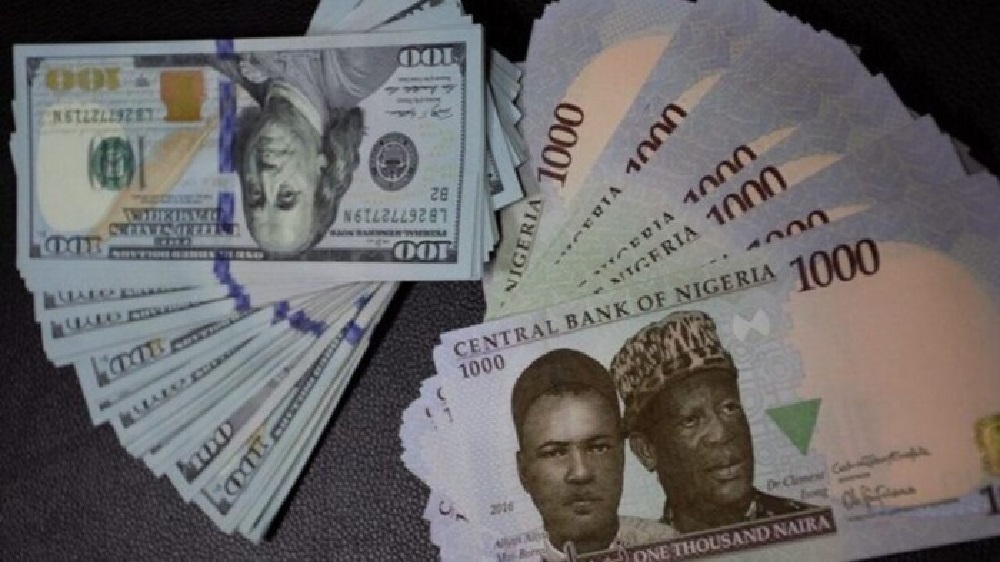
SEE Current Black Market Dollar (USD) To Naira (NGN) Exchange Rate

Published

on

ADVERTISEMENT
Zoom Ad
ADVERTISEMENT
Zoom Ad

The exchange rate between the US dollar (USD) and the Nigerian naira (NGN) continues to fluctuate, influenced by economic policies, market demand, and foreign exchange availability.
Below is an overview of the current exchange rates in both the parallel (black market) and official markets.

Black Market (Parallel Market) Exchange Rate – January 29, 2025
The black market, also known as the parallel market, operates outside the regulatory framework of the Central Bank of Nigeria (CBN). Traders and Bureau De Change (BDC) operators in Lagos and other major cities offer the following rates today:

Buying Rate: ₦1,630 per $1
Selling Rate: ₦1,640 per $1
These rates are based on reports from currency traders and may vary slightly depending on location and negotiation power.

Official Exchange Rate – Central Bank of Nigeria (CBN) Rate
The CBN determines the official exchange rate, which is used for transactions involving government-approved forex allocations, import/export activities, and other formal financial dealings. As of January 28, 2025, the official exchange rate stands at:

Advertisement

Highest Rate: ₦1,537 per $1
Lowest Rate: ₦1,530 per $1
It is important to note that the CBN does not recognize the parallel market and has advised individuals and businesses seeking foreign exchange to conduct transactions through licensed banks and authorized forex dealers.

Factors Affecting the Naira’s Value Against the Dollar
Several factors contribute to the exchange rate fluctuations in both the black market and official forex markets. Some key influences include:

Foreign Exchange Reserves: Nigeria’s forex reserves impact the CBN’s ability to intervene in the market and stabilize the naira.

Oil Prices: Since Nigeria is an oil-dependent economy, changes in global oil prices significantly affect the supply of dollars in the country.

Advertisement

Inflation and Economic Policies: High inflation rates, government fiscal policies, and CBN interventions play a role in determining the naira’s strength.
Demand for Foreign Currency: Businesses, importers, and individuals requiring forex for travel, education, or medical reasons often turn to the black market when supply at official rates is limited.
Speculation and Market Sentiment: The perception of Nigeria’s economic stability, political climate, and investor confidence also influence exchange rates.
CBN’s Efforts to Curb Black Market Activities
In recent months, the Central Bank has implemented several measures to reduce dependence on the black market and improve access to forex through official channels. These include:

Strengthening forex regulations to prevent illegal trading.
Increasing dollar supply to banks to meet legitimate demand.
Encouraging foreign investments to boost forex reserves.
Promoting local production to reduce reliance on imported goods, which drives forex demand.

Despite these efforts, the parallel market remains a popular option for many due to the difficulty in obtaining forex at the official rate.

As the Nigerian economy navigates ongoing challenges, forex rates continue to be a critical concern for businesses and individuals. While the official rate remains below the black market rate, the gap between the two highlights the ongoing struggle to stabilize the naira.

Advertisement

For those engaging in forex transactions, it is advisable to compare rates from multiple sources and remain updated on CBN policies to make informed financial decisions.

Would you like me to include predictions on future exchange rates or additional analysis?

Economy

OPEC+ approves fourth oil output increase since Hormuz closure

Published

on

By

ADVERTISEMENT
Zoom Ad
ADVERTISEMENT
Zoom Ad

The Organisation of Petroleum Exporting Countries and its allies, also known as OPEC+, has approved the fourth oil output increase since the Hormuz closure crisis.

The decision followed renewed commitments by Saudi Arabia, Russia, Iraq, Kuwait, Kazakhstan, Algeria and Oman to support market stability.

In a statement issued at the weekend, OPEC stated: “The seven OPEC+ countries, which previously announced additional voluntary adjustments in April and November 2023, namely Saudi Arabia, Russia, Iraq, Kuwait, Kazakhstan, Algeria and Oman, met virtually on June 7, 2026, to review global market conditions and outlook.

“In their collective commitment to support oil market stability, the seven participating countries decided to implement a production adjustment of 188,000 barrels per day from the additional voluntary adjustments announced in April 2023.

Advertisement

“This adjustment will be implemented in July 2026. The additional voluntary adjustments announced in April 2023 may be returned in part or in full, subject to evolving market conditions and in a gradual manner.

“The countries will continue to closely monitor and assess market conditions and, in their continuous efforts to support market stability, reaffirmed the importance of adopting a cautious approach and retaining full flexibility to increase, pause or reverse the phase-out of the voluntary production adjustments, including reversing the previously implemented voluntary adjustments announced in November 2023.

“The seven OPEC+ countries also noted that this measure will provide an opportunity for the participating countries to accelerate their compensation.

“The seven countries reiterated their collective commitment to achieving full conformity with the Declaration of Cooperation, including the voluntary production adjustments, which will be monitored by the Joint Ministerial Monitoring Committee (JMMC).

Advertisement

“They also confirmed their intention to fully compensate for any overproduced volumes since January 2024. The compensation period will be extended until the end of December 2026.”

It added: “The seven OPEC+ countries will hold monthly meetings to review market conditions, conformity and compensation. The seven countries will meet on July 5, 2026.”

Continue Reading

Economy

Naira depreciates to N1,397/$ in parallel market

Published

on

By

ADVERTISEMENT
Zoom Ad
ADVERTISEMENT
Zoom Ad

The naira on Friday depreciated to N1,397 per dollar in the parallel market from N1,390 per dollar on Thursday.

Likewise, the naira depreciated to N1,365 per dollar in the Nigerian Foreign Exchange Market, NFEM.

Data from the Central Bank of Nigeria, CBN, showed that the indicative exchange rate for the market rose to N1,365 per dollar from N1,359.75 per dollar on Thursday, reflecting N5.25 depreciation for the naira.

Consequently, the margin between the parallel and official markets widened to N32 per dollar from N30.25 per dollar on Thursday.

Advertisement

The turnover in the interbank foreign exchange market recorded its fourth daily decline by 42.5 per cent to $73.6 million from $128.2 million on Thursday.

This week, the naira strengthened by N1 per dollar in the official market, with turnover in the interbank foreign exchange market climbing to N683.2 million, representing a 76.7 per cent rise compared to N386.54 million recorded the previous week.

However, the local currency weakened in the parallel by N2 against the greenback.

Advertisement
Continue Reading

Economy

See Dollar to Naira exchange rate today, June 5, 2026

Published

on

ADVERTISEMENT
Zoom Ad
ADVERTISEMENT
Zoom Ad

The Nigerian naira maintained a relatively stable performance against the United States dollar at both the official and parallel foreign exchange markets as traders monitored liquidity conditions and demand pressures.

Data from the Central Bank of Nigeria’s Nigerian Foreign Exchange Market (NFEM) showed the naira trading around ₦1,361 to the dollar, reflecting a largely steady trend compared to recent sessions. The most recent NFEM rate published by the apex bank stood at approximately ₦1,361.05/$, while trading during the week remained within the ₦1,359–₦1,365 range.

Market data from recent official trading sessions also indicated that the naira had strengthened modestly in early June, supported by improved foreign exchange supply and sustained interventions aimed at enhancing market liquidity.

At the parallel market, commonly referred to as the black market, the dollar traded at between ₦1,390 and ₦1,405 on Friday, depending on location and transaction size. Several market trackers reported buying rates around ₦1,380–₦1,395 and selling rates between ₦1,393 and ₦1,405 per dollar.

Advertisement

The gap between the official and parallel market rates remained relatively narrow compared with previous months, reflecting ongoing efforts to improve transparency and liquidity in the foreign exchange market.

Currency dealers said market participants continue to watch foreign portfolio inflows, crude oil earnings, and Central Bank policies, all of which remain key factors influencing the naira’s direction in the coming weeks.

As of June 5, 2026, the dollar exchanged at about ₦1,361 in the official NFEM market, while parallel market transactions ranged from approximately ₦1,390 to ₦1,405 per dollar.

Advertisement
Continue Reading

Trending

Copyright © 2024 Naija Blitz News