

Connect with us

News

CBN: Navigating the process for monetary stability

Published

on

ADVERTISEMENT
Zoom Ad
ADVERTISEMENT
Zoom Ad

By Ibrahim Modibbo

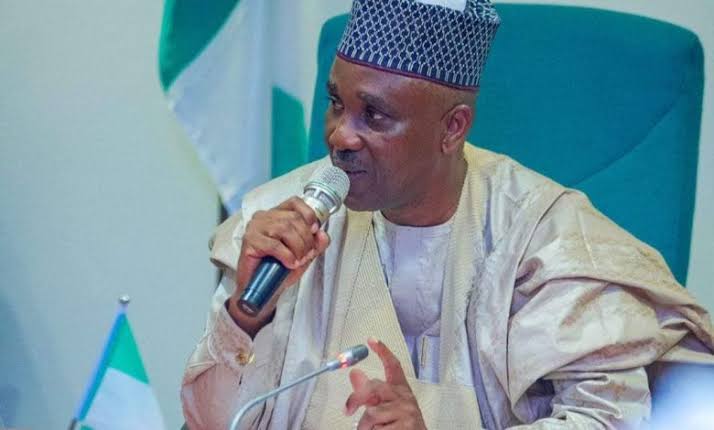
The 2025 Monetary Policy Forum, declared open by the Governor of the Central Bank of Nigeria (CBN), Olayemi Cardoso, reinforces the apex bank’s steadfast commitment to price stability and macro-economic reforms.

The theme: “Managing the disinflation process,” resonates with the nation’s current economic realities, where inflationary pressures persist amid global and domestic shocks. The governor’s remarks reflect a balanced mix of optimism, pragmatism, and a forward looking approach to monetary policy.

His speech emphasizes the CBN’s strategic measures in taming inflation, restoring foreign exchange stability, and implementing financial sector reforms that position Nigeria for sustainable economic growth. Cardoso framed the forum as an essential intellectual platform for examining monetary policy challenges with precision. Unlike broader economic conferences, this event fosters evidence based discussions that shape policy direction. In emphasizing the need for clear communication, he acknowledges the critical role of transparency and stakeholder engagement in building confidence in monetary policy decisions.

Advertisement

This emphasis on dialogue is significant, particularly as monetary policy remains a powerful yet complex tool requiring careful calibration. A major take-away from the governor’s speech is his review of the economic landscape over the past year.

Nigeria has faced persistent inflationary pressures, driven by both structural challenges and monetary dynamics. As of December 2024, headline inflation stood at 34.80 percent, with core inflation remaining a major concern despite some moderation in food inflation.

The governor rightly points to domestic structural bottlenecks, exchange rate pass through effects, and energy price adjustments as factors exacerbating inflationary trends.
While acknowledging these supply-side constraints, he also recognizes the role of past liquidity injections in fueling demand driven inflation.

This candid assessment is crucial in understanding Nigeria’s inflationary progression, as it highlights the multifaceted nature of the challenge.

Advertisement

The governor’s remarks on liquidity injections and their unintended consequences reflect an awareness of policy trade-offs. He notes that unorthodox monetary interventions, particularly in response to theCOVID-19 pandemic, led to an excess liquidity overhang that did not translate into productivity growth.

The resulting inflationary pressures and exchange rate volatility necessitated a shift towards a more disciplined and coordinated monetary policy approach. This shift is evident in the Monetary Policy Committee’s (MPC) tightening cycle, which saw the Monetary Policy Rate (MPR) rise by a cumulative 875 basis points to 27.50 percent in 2024. Similarly, the Cash Reserve Ratio (CRR) for Other Depository Corporations (ODCs) was raised by 1,750 basis points to 50.00 percent, a bold move aimed at mopping up excess liquidity.

These decisive interventions, the governor argues, were necessary to prevent inflation from spiraling further. Counter- factual estimates suggest that without such measures, inflation could have surged to 42.81percent by the end of 2024.

This assertion stresses the importance of proactive policy responses in mitigating economic distortions.

Advertisement

The commitment to tightening reflects the CBN’s resolve to anchor inflation expectations while ensuring that monetary policy remains an effective tool for macro-economic stability. Beyond inflation control, the CBN has implemented critical financial sector reforms to strengthen Nigeria’s economic resilience.

The unification of multiple exchange rate windows has improved efficiency in the foreign exchange market, leading to a notable increase in remittances through International Money Transfer Operators (IMTOs).

The governor cites a79.4 percent rise in remittances to $4.18billion in the first three quarters of 2024, compared to $2.33billion in the same period of 2023.

This reform, alongside the clearance of a $7.0 billion backlog of FX commitments, has bolstered market confidence and enhanced liquidity with a rising external reserves of $40billion as of December, 2024. Another significant policy shift is the lifting of restrictions on 41items previously banned from accessing the official FX market. The reversal of this 2015 policy signals a more market-driven approach aimed at improving supply side dynamics.

Advertisement

Additionally, the introduction of new minimum capital requirements for banks, effective by March 2026, is a forward thinking measure designed to strengthen the financial system’s resilience. By ensuring that banks are adequately capitalized, this policy aligns with Nigeria’s ambition of becoming a $1trillion economy, reinforcing the stability and global competitiveness of the banking sector.

The governor also showcases the launch of the Women’s Financial Inclusion Initiative (WIFI) under the National Financial Inclusion Strategy.

This initiative addresses gender disparities in financial access, empowering women through digital tools, education, and financial services. Inclusive finance remains a key pillar of sustainable economic development, and the CBN’s focus on bridging financial gaps reflects a broader commitment to equitable growth.
In a further effort to instill transparency and efficiency in the FX market, the CBN recently introduced the Nigeria Foreign Exchange Code.

This framework, built on six core principles, aims to enhance integrity, fairness, and trust within the financial ecosystem. Such measures are essential in attracting foreign investment and maintaining confidence in Nigeria’s economic reforms.

Advertisement

Cardoso’s speech also contextualizes Nigeria’s disinflation efforts within the global monetary landscape.

He acknowledges emerging optimism regarding potential improvements in capital flows to emerging markets, particularly as advanced economies transition toward monetary easing. However, he cautions that Nigeria’s ability to attract these inflows hinges on investor confidence in domestic reforms.

The need to deliver positive real returns on investment accentuates the importance of maintaining macro-economic stability and ensuring that inflationary trends do not erode gains.

Looking ahead, the governor stresses that the shift from unorthodox to orthodox monetary policy is crucial for restoring confidence and strengthening policy credibility. Encouragingly, early signs of progress are evident.

Advertisement

FX liquidity is improving, and the naira is gradually aligning with market fundamentals, creating a more predictable environment for economic activities. While acknowledging that challenges remain, Cardoso expresses confidence that Nigeria’s policies are setting the stage for sustainable economic stability.
The call for collaboration is another vital point in his remarks.

Managing disinflation requires coordinated efforts between monetary and fiscal authorities, alongside active engagement with the private sector and civil society. This alignment is necessary to anchor inflation expectations, maintain investor confidence, and ensure that economic policies translate into tangible benefits for Nigerians.

The governor reiterated the importance of a forward looking, adaptive, and resilient monetary policy framework. By prioritizing price stability, financial sector resilience, and macro-economic reforms, the CBN is laying the foundation for sustainable economic growth.

The 2025 Monetary Policy Forum thus serves as a fundamental platform for generating actionable insights that will shape Nigeria’s economic direction.
Essentially, Cardoso’s speech reflects a well calibrated approach to managing inflationary pressures while fostering economic resilience. His emphasis on disciplined monetary policy, financial sector reforms, and investor confidence corresponds with Nigeria’s broader economic aspirations. As the country navigates the complexities of disinflation, the CBN’s commitment to transparency, coordination, and policy credibility will be instrumental in achieving long-term stability.
Dr. Modibbo, a development communication scholar writes from Abuja
Advertisement

News

Tinubu Files Case In US Court To Stop Release Of Alleged Drug Trafficking Record — Lawyer

Published

on

ADVERTISEMENT
Zoom Ad
ADVERTISEMENT
Zoom Ad

President Bola Tinubu has filed a challenge in a US court to prevent the U.S. Department of Justice, FBI and DEA from releasing records linked to allegations of drug trafficking.

The records are being sought by American transparency activist Aaron Greenspan, who filed a Freedom of Information Act (FOIA) lawsuit against several US government agencies seeking documents relating to investigations involving Tinubu.
Greenspan’s requests include the FBI’s entire file on Tinubu and FBI Form 302 interview records concerning the period between 1992 and 1993.
The case also involves an alleged record connected to a 1993 civil forfeiture proceeding in the United States involving about $460,000 linked to Tinubu.
Tinubu has denied wrongdoing.

According to the 16-page court documents shared with Channels Television by his lawyer and legal team, Christopher W. Carmichael, Victor P. Henderson, and Oluwole O. Afolabi, on Saturday, Tinubu argued that the release of the records could infringe on his privacy.

“Submitted in that proceeding, did not reveal the details of a possible criminal investigation (or its results) involving Intervenor. Other than by speculation or labels, Plaintiff does not point to an existing public record that contains details of a governmental criminal investigation or findings about Intervenor. (DE 85-3, No. 16.)

Advertisement

“The purpose of Plaintiff’s motion is to obtain such information because it is not public. Moreover, Plaintiff’s argument that the limited disclosures in connection with the forfeiture negates all privacy interests is not consistent with precedent. The Supreme Court explained that an individual retains a privacy interest in an entire file or document being produced, even where there are “scattered” disclosures of information from that same file. See Reporters Committee, 489 U.S. at 764-67 (“our cases have recognized the privacy interests inherent in the non-disclosure of certain information even where the information may have been public at one time.”).
“While some information may appear in portions of public records, an individual still retains a privacy interest in the details that remain undisclosed.

Applying Reporter’s Committee, this Court explained that an individual retains a privacy interest even if they were previously publicly associated with criminal activity. Judicial Watch, Inc. v. United States Dept. of Justice, 898 F.Supp.2d 93, 104-05 (D.D.C. 2012).

“Other decisions have likewise described the fact someone was under investigation as “distinct” from the contents of the investigative files. See Electronic Privacy Info. Center v. United States Dept. of Justice, 18 F.4d 712, 719 (D.C. Cir. 2021) (“Although the names of – 6 – Case 1:23-cv-01816-BAH Document 98 Filed 08/28/26 Page 7 of 16 Trump campaign officials appear in public portions of the Report, they retain a privacy interest in ‘avoiding disclosure of the details of the investigation.’”)
“Regardless of the prior disclosure in the forfeiture proceeding, Intervenor retains a privacy interest in potential disclosure of the investigative files sought by Plaintiff”, the document read in part.

“Plaintiff’s motion critiques the FBI’s search efforts, the DEA’s Vaughn Index, segregability, document specific withholdings, and the applicability of exemptions to deceased individuals and confidential sources. All of Plaintiff’s other critiques should be viewed in the context of Plaintiff’s overarching goal.

Advertisement

“Plaintiff’s filings, overwhelmingly, demonstrate that his singular focus is obtaining documents with Intervenor’s “name on them.” (See supra pgs. 1-3, 10, and 11.) Any other issues should – 14 – Case 1:23-cv-01816-BAH Document 98 Filed 08/28/26 Page 15 of 16 not allow Plaintiff to access documents that should otherwise be withheld or redacted under Exemption 7(C) or the Privacy Act.
“If this Court finds that Plaintiff cannot use FOIA to mine information in government files about a private individual, he should not be able to access documents with Intervenor’s “name on them.”
“Conclusion For all the foregoing reasons, Intervenor requests that the Court deny Plaintiff’s motion for summary judgment and allow the redactions or withholdings made by the FBI and DEA to stand”, Tinubu’s legal team further argued.

Continue Reading

News

Confusion in Niger as gunfire, explosions rock presidential palace, airport

Published

on

ADVERTISEMENT
Zoom Ad
ADVERTISEMENT
Zoom Ad

Panic as gunshots and explosions were heard in parts of Niamey, Niger’s capital, early Saturday, with reports of heavy shooting around a military base near the city’s international airport.

The source of the attack remained unclear as of Saturday morning, while Nigerien authorities had yet to issue an official statement on the incident.

A resident told AFP that heavy gunfire and explosions were heard around Air Force Base 101, located within the airport complex.

Several other witnesses reportedly confirmed hearing the sounds, with the first shots beginning at about 1am local time (0000 GMT) and continuing until daybreak.

Advertisement

Video footage shared by a local journalist showed activity around the airport area during the early morning hours.

Another resident in western Niamey said sporadic small-arms fire was heard at about 5am.

Reports on social media also pointed to gunfire and explosions in other parts of the capital, including the administrative district where the presidential palace and national television station are located.

Videos circulating online showed armoured vehicles being deployed around neighbourhoods close to the airport.

Advertisement

The incident comes after Niamey’s airport was targeted twice by jihadist groups earlier this year.

The Islamic State in the Sahel (EIS) claimed responsibility for an attack in January, while the Group for the Support of Islam and Muslims (JNIM), the Sahel branch of al-Qaeda, carried out another assault in June.

The two groups are rivals and have been competing for influence across the Sahel, particularly in Niger, while also carrying out attacks against civilians and government forces.

During the January attack, Nigerien authorities said 20 attackers were killed and four soldiers wounded.

Advertisement

In June, the country’s defence ministry said at least 11 soldiers and two civilians were killed, alongside 22 attackers, during another assault on the airport.

The military said both attacks were repelled.

Strategic military base
Air Force Base 101 is considered a highly sensitive military facility because it sits within the international airport complex.

The base also houses the headquarters of Russian Africa Corps personnel in Niger, as well as the command of the joint force established by the Alliance of Sahel States, comprising Niger, Burkina Faso and Mali.

Advertisement

Niger has been ruled by a military junta led by General Abdourahamane Tiani since the July 2023 coup that ousted President Mohamed Bazoum.

The junta has struggled to contain jihadist violence that has plagued the country for years.

Following the January airport attack, Tiani acknowledged security weaknesses that had allowed the assault to take place, saying the attackers had sought to destroy the army’s air capabilities.

Jihadist violence persists despite shift to Russia
Niger, Burkina Faso and Mali have all experienced military coups and subsequently moved away from their traditional Western security partners, particularly France.

Advertisement

The three countries also withdrew from the Economic Community of West African States (ECOWAS) and formed closer security and political ties with Russia.

However, the shift has yet to end the jihadist insurgency, with Islamic State and al-Qaeda-linked groups continuing to operate across the region.

The latest gunfire in Niamey has raised fresh concerns over security in the capital, particularly around strategic military and government installations.

Authorities had not publicly confirmed who was responsible for Saturday’s shooting or whether there were casualties as of the latest reports.

Advertisement
Continue Reading

News

Police rescue two abducted Colombian women in Lagos

Published

on

ADVERTISEMENT
Zoom Ad
ADVERTISEMENT
Zoom Ad

Lagos State Police Command rescued two abducted Colombian women in Lagos.

The Force Public Relations Officer, CSP Ani Iniedu, disclosed this in a statement released on Saturday.

According to the statement, the two women were “fraudulently lured to Nigeria, held against their will, and had their travel documents confiscated” by some Chinese nationals, who are currently at large.

The statement said the police launched a covert tracking operation immediately after receiving the intelligence.

Advertisement

It added that the operatives located the hideout in Lagos and rescued the victims “on the same day.”

The statement read in part, “Upon receipt of the intelligence, police operatives promptly launched a covert tracking operation, locating the hideout in Lagos where both victims were safely rescued on the same day.”

According to the police, the suspects fled the location when they noticed the approaching operatives.

“The fleeing suspects abandoned the location upon sighting the approaching team, and efforts have been intensified to track down and arrest all members of the syndicate,” the statement said.

Advertisement

The police said the rescued Colombian nationals were currently in safe custody and receiving necessary support.

“The rescued victims are currently in safe custody and receiving necessary support,” the statement added.

The statement further disclosed that the Colombian Embassy in Accra was collaborating with the National Central Bureau to facilitate the victims’ return to their country.

“The Colombian Embassy in Accra is working in close collaboration with the Bureau to secure hotel accommodations for the victims and arrange emergency travel documents to ensure their safe return to Bogotá,” it said.

Advertisement

The Inspector-General of Police, Olatunji Disu, reaffirmed the commitment of the police to protecting residents and strengthening international cooperation against transnational crimes.

The statement said Disu “reaffirms the unwavering commitment of the Nigeria Police Force to safeguarding the lives and property of all residents within the country, while deepening collaboration with international law enforcement partners to combat cross-border crimes.”

The police said efforts had been intensified to arrest the fleeing suspects and dismantle the trafficking network.

Advertisement
Continue Reading

Trending

Copyright © 2024 Naija Blitz News