Connect with us

News

Nigeria’s rebased inflation to hit 37% in 2026 – IMF

Published

on

ADVERTISEMENT
Zoom Ad
ADVERTISEMENT
Zoom Ad

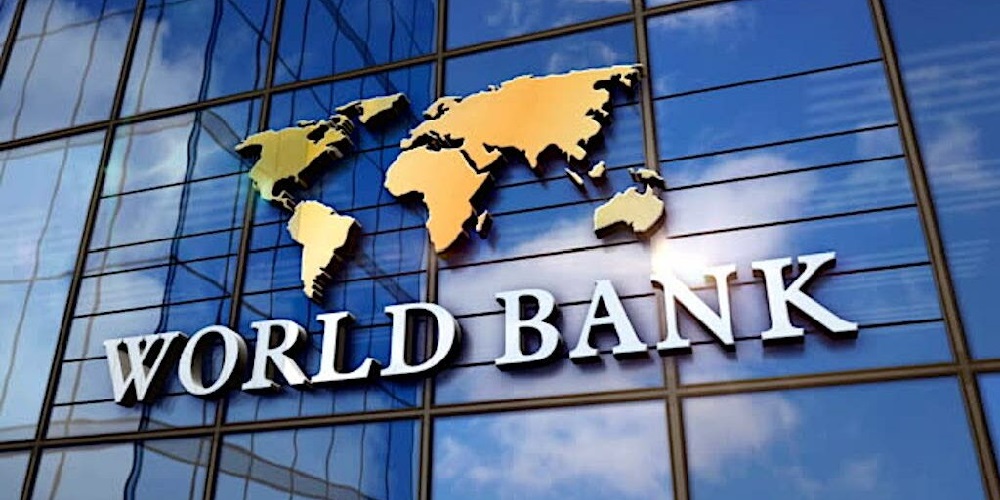
Nigeria’s headline inflation is projected to rise sharply to 37 per cent in 2026, according to the International Monetary Fund, which issued the forecast in its April 2025 World Economic Outlook report released on Tuesday.


The IMF said the new projection follows the rebasing of Nigeria’s Consumer Price Index by the National Bureau of Statistics in January 2025, and warned that persistent price pressures and structural constraints would likely keep inflation elevated over the medium term.

According to the Fund, inflation, which averaged 33.2 per cent in 2024, is expected to moderate slightly to 26.5 per cent in 2025 before surging to 37.0 per cent the following year.

The projection, however, has drawn mixed reactions from Nigerian economists, some of whom described the outlook as “excessively pessimistic” and detached from domestic policy realities.

Advertisement

The IMF report also downgraded Nigeria’s economic growth forecast for 2025, citing weakening global oil prices as a major risk to the country’s fiscal and external balances.

The Fund revised its 2025 GDP growth forecast for Nigeria downward by 0.2 percentage point to 3.0 per cent, down from 3.2 per cent. Growth for 2026 was also revised downward by 0.3 percentage point to 2.7 per cent.

The report stated, “Among the larger economies, the growth forecast in Nigeria is revised downward by 0.2 percentage point for 2025 and 0.3 percentage point for 2026, owing to lower oil prices.”

It noted that Nigeria, like many oil-exporting countries in Sub-Saharan Africa, remained highly vulnerable to external shocks, particularly commodity price declines, which continue to affect government revenue, trade balances, and investor sentiment.

Advertisement

Despite maintaining a current account surplus in 2024, Nigeria’s external position is expected to weaken.

The IMF projected that the current account surplus would shrink from 9.1 per cent of GDP in 2024 to 6.9 per cent in 2025, and further to 5.2 per cent in 2026.

This comes on the back of a balance of payments surplus of $6.83bn in 2024, according to data published by the Central Bank of Nigeria.

The surplus was largely driven by a goods trade balance of $13.17bn and a recovery in capital flows.

Advertisement

But analysts have warned that the surplus may not be sustained. Global investment bank JP Morgan said earlier this year that Nigeria could slide into a current account deficit if crude oil prices remain below its fiscal breakeven of $60 per barrel.

Fitch Ratings, however, gave a slightly more optimistic view. It projected that Nigeria’s current account surplus—estimated at 6.6 per cent of GDP in 2024—would average 3.3 per cent over 2025 and 2026, buoyed by improved local refining capacity and continued reforms in the energy sector.

On inflation, the IMF’s forecast follows Nigeria’s decision to rebase its CPI calculations. The National Bureau of Statistics announced in January 2025 that it had updated the base year from 2009 to 2024 to better reflect present-day consumption patterns.

Following the adjustment, inflation for January was recalculated at 24.48 per cent, down from 34.80 per cent recorded in December 2024 under the old base.

Advertisement

The inflation rate declined further to 23.18 per cent in February before edging up again to 24.23 per cent in March, a development that economists attribute to food price spikes, logistics bottlenecks, and foreign exchange volatility.

The Central Bank of Nigeria retained its Monetary Policy Rate at 27.5 per cent at its February meeting, noting the need to sustain tightening in the face of sticky inflation.

With both inflation and money supply rising in March, the CBN may be compelled to consider further hikes in its next policy meeting.

While the IMF did not provide any justification for the inflation projection, Nigerian economists have expressed reservations over the severity of the projection.

Advertisement

Adewale Abimbola, a Lagos-based economist, told The PUNCH that the IMF’s 37 per cent forecast may be overstated.

“Since the rebasing, inflation has hovered around 23 to 24 per cent. Even in 2024, when inflation was high and unrelenting, it averaged 33 per cent. So, I believe the IMF’s 37 per cent projection for 2026 is exaggerated,” he said.

Abimbola also offered recommendations for moderating inflation: “We need stronger support for the real sector to boost productivity, sustained CBN intervention to stabilise exchange rates, security enhancement in food-producing states, and continuation of the naira-for-crude policy to help manage petrol prices.”

Also speaking, economist and CEO of the Centre for the Promotion of Private Enterprise, Dr Muda Yusuf, said the Fund’s outlook did not fully account for domestic policy flexibility.

Advertisement

“Inflation in Nigeria is largely driven by supply-side constraints and exchange rate instability,” he said.

“If we address insecurity, especially in food-producing areas, food inflation—which is the largest component of headline inflation—will ease. If we also support manufacturers through fiscal measures and reduce production costs, inflation will moderate,” he added.

Yusuf criticised the IMF’s 37 per cent projection, arguing that it assumes no improvement in Nigeria’s fiscal discipline, oil output, or security architecture.

“I don’t see inflation getting to 37 per cent. That’s a worst-case scenario. If we manage our spending, reduce deficit financing, and improve oil earnings, our macroeconomic stability will improve. The outlook does not have to be that dire,” he said.

Advertisement

He further stressed the need for Nigeria to manage its monetary expansion carefully.

“We must keep money supply growth in check, reduce unnecessary borrowing, and avoid overheating the economy,” he added.

The President of the Nigerian Economic Society and former Head of Economics at the University of Ibadan, Prof. Adeola Adenikinju, agreed that Nigeria’s growth prospects have weakened but attributed this partly to global economic trends.

“The trend is consistent with what’s happening in other parts of the world. We are likely to post lower growth this year due to weak oil prices and low output,” he said.

Advertisement

Adenikinju added that local issues such as security in agricultural zones, high transport and energy costs, and poor infrastructure were worsening the outlook.

“These challenges have a ripple effect on output and inflation. Food prices will rise, and productivity will suffer,” he said.

He warned that the government’s expansionary fiscal stance might further fuel inflation if not managed prudently.

“If high spending leads to wider deficits financed by borrowing—especially from the CBN—it will drive inflation. We also have to watch the exchange rate, which continues to weaken. That will further feed into prices,” he said.

Advertisement

He noted that with inflation and money supply rising again in March, the CBN may be forced to raise rates further, a move that could slow economic activity in the short term.

The IMF also pointed to weak income growth in Nigeria, projecting that real output per capita will grow by just 0.6 per cent in 2025 and 0.3 per cent in 2026.

These figures, far below the Sub-Saharan Africa average, underscore the country’s inability to translate headline growth into tangible welfare improvements for citizens.

Economists say this highlights the need for Nigeria to diversify its economy away from oil, invest in infrastructure, address insecurity, and create enabling conditions for private investment to thrive.
Advertisement
Continue Reading
Advertisement
Click to comment

You must be logged in to post a comment Login

Leave a Reply

News

Breaking: Iran fires multiple missiles to UAE, six killed, 141 injured including Nigerians

Published

on

ADVERTISEMENT
Zoom Ad
ADVERTISEMENT
Zoom Ad

The United Arab Emirates Ministry of Defence has disclosed that the country’s air defence systems intercepted multiple aerial threats launched from Iran, as tensions continue to escalate in the region.

In a statement posted on its official X handle on Saturday, the ministry said that “UAE air defence systems on 14th March engaged 9 ballistic missiles and 33 UAVs launched from Iran.”

The disclosure highlights the scale of the latest wave of attacks that the Gulf nation says it has had to repel in recent days.

According to the ministry, the interceptions form part of a broader pattern of hostilities since the beginning of what it described as “the onsets of the blatant Iranian aggression.”

Advertisement

It stated that its defence forces had repeatedly been forced to activate their air defence systems to neutralise incoming threats aimed at the country.

Providing a cumulative breakdown of the attacks so far, the ministry said that “since the onsets of the blatant Iranian aggression, UAE air defences have engaged 294 ballistic missiles, 15 cruise missiles and 1600 UAVs launched from Iran.”

The figures suggest a sustained barrage of aerial projectiles and drones that authorities say have targeted the United Arab Emirates over time.

The ministry also confirmed that the attacks have resulted in casualties and injuries involving people from several nationalities living and working in the country.

Advertisement

According to the statement, “these attacks have resulted in 6 fatalities of Emirati, Pakistani, Nepali and Bangladeshi nationals.”

It further disclosed that a significant number of individuals sustained varying degrees of injuries during the attacks.

The ministry said “141 minor to moderate injuries” had been recorded among residents and workers from a wide range of countries.

Those affected, the statement said, include nationals of the United Arab Emirates as well as individuals from Egypt, Sudan, Ethiopia, the Philippines, Pakistan, Iran, India, Bangladesh, Sri Lanka, Azerbaijan, Yemen, Uganda, Eritrea, Lebanon, Afghanistan, Bahrain, Comoros, Türkiye, Iraq, Nepal, Nigeria, Oman, Jordan, Palestine, Ghana, Indonesia and Sweden.

Advertisement

While giving the casualty details, the ministry did not specify the locations where the fatalities and injuries occurred or the specific incidents that led to them.

However, the statement suggested that the attacks involved multiple aerial threats over time.

Reaffirming the country’s defence posture, the ministry said the armed forces remain on high alert and prepared to respond to any further threats targeting the nation’s territory or security.

The Ministry of Defence affirmed that it remains fully prepared and ready to deal with any threats,” the statement said.

Advertisement

It added that the military would “firmly confront any attempts to undermine State security in a manner that ensures the protection of its sovereignty, security and stability, and safeguards its national interests and capabilities.”

Authorities did not indicate whether additional defensive measures have been put in place following the latest interceptions, but reiterated their commitment to maintaining national security and protecting residents across the federation.

Recall that the government of Qatar sent another formal complaint to the United Nations and the United Nations Security Council over what it described as repeated military aggression by Iran against its territory.

In a statement released on Friday, Qatar foreign ministry said it had sent its eighth identical letter to the UN Secretary-General, António Guterres, and to the United States Permanent Representative to the UN and President of the Security Council for March, Michael Waltz.

Advertisement

According to the statement, the letter was submitted by Qatar’s Permanent Representative to the United Nations, Sheikha Alya Ahmed bin Saif Al-Thani.

The Qatari government said the communication was aimed at informing the UN about what it called “Iranian aggression” against its territory and to highlight the security implications for the region.

The letter described the incidents as serious violations of Qatar’s sovereignty and territorial integrity.

Advertisement
Continue Reading

News

INSECURITY: Thugs kidnap mortuary attendant, disrupt mass burial in Benue

Published

on

ADVERTISEMENT
Zoom Ad
ADVERTISEMENT
Zoom Ad

Residents of Tyungu Jam and Mbaav communities in Kwande Local Government Area of Benue State were thrown into shock on Thursday when families of victims of a bandit attack were denied access to their bodies while preparing for a mass burial.
It was gathered that the families, who had gathered at the mortuary to retrieve the corpses, were stunned when the mortuary attendant was reportedly abducted.

Bandits had last Thursday invaded Tyungu Jam and Mbaav communities in Yaav and Mbadura Council wards of Kwande Local Government Area, killing several people and injuring many others.
The state governor, Rev. Fr. Hyacinth Alia, in a statement issued through his media aide, Solomon Iorpev, described the killings as “senseless and barbaric” and urged security operatives to apprehend the attackers.
Some families who could not immediately bury their loved ones had fixed Thursday for the burial but were reportedly shocked on arrival at the morgue to collect the bodies.

Eleven victims of the bandit attack were scheduled for a mass burial on Thursday, attracting people and priests from within and outside the state.

However, some thugs were said to have invaded the hospital and abducted the mortuary attendant, preventing families from accessing the bodies for burial.
Condemning the disruption of the mass burial, the All Progressives Congress (APC) in the state described the incident as disgraceful.
In a statement issued by the party’s State Publicity Secretary, Daniel Ihomun, the APC alleged that the disruption was sponsored.
The statement read in part: “We have received disturbing reports that sponsored thugs abducted a mortuary attendant, Mr. MT Tiga, and sealed his mortuary facility in a desperate attempt to prevent the people of Turan from carrying out a mass burial for the victims who were killed in Mbachoon, Yaav District of Turan in Kwande Local Government Area.
“This barbaric act is not only inhumane but also an assault on the fundamental right of a community to mourn and bury their dead with dignity. The people of Turan have every right to determine how they lay their loved ones to rest and to draw the attention of the world to the ongoing suffering and systematic killings being perpetrated against them by armed Fulani bandits.

Advertisement

It is deeply troubling that in the face of relentless attacks and loss of lives, the people are now being denied even the basic humanity of burying their dead. One must ask: can the people not even be allowed to bury their dead in peace?
“While we commiserate with the grieving families and the entire Turan community over this painful tragedy, we commend Mr. Alex Barbir, who travelled all the way from the United States of America to stand in solidarity with the people, witness the burial, and support efforts to bring the story of the Benue genocide to the international community, as well as assist in rebuilding homes destroyed by the attackers.”
The party also expressed appreciation to Rev. Ezekiel Dachomo of Plateau State, who was reported to have officiated at the mass burial, and appealed to the state government to immediately investigate “the abduction of the mortuary attendant, the sealing of the mortuary, and the harassment of the Turan community.”

Also condemning the incident, the President General of Mdzough U Tiv Worldwide and retired Comptroller General of Prisons, Iorbee Ihagh, described the situation as shameful.
Ihagh, who hails from Turan in Kwande LGA, said, “I don’t know why anybody should be against the burial of people who were victims of Fulani herdsmen.
“It’s very shameful because people came from far away, even outside the country. The mortuary attendant was not seen and the place was locked. The people wanted to force the place open but the priest advised them not to do that.”
When contacted, the Chairman of Kwande Local Government Area, Neji Terhile, said those mobilising for the mass burial did not take into account the volatile security situation in the area.
The chairman said that as at the time he spoke with journalists on Friday, he was on his way to the community with officials of Homeland Security and other government agencies.

The PUNCH

Advertisement
Continue Reading

News

Sad: Iconic ex-Super Eagles midfielder, Henry Nwosu dies at 62

Published

on

ADVERTISEMENT
Zoom Ad
ADVERTISEMENT
Zoom Ad

Ex-Super Eagles iconic midfielder Henry Nwosu has passed at the age of 62, leaving the nation’s football community in mourning.

Nwosu, a key player in Nigeria’s 1980 Africa Cup of Nations’ triumph, died on Saturday morning at Lagos State University Teaching Hospital, where he had been receiving intensive care since Wednesday.

His death was announced by former teammate Segun Odegbami, who described Nwosu as the “Youngest Millionaire” and expressed deep pain over the loss.

Odegbami wrote: “After 5 days in hospital battling for his life, the one I call ‘Youngest Millionaire’ passed on at 4:00 am this morning at the Lagos State University Teaching Hospital, Ikeja, Lagos where he had been in Intensive Care since Wednesday.

Advertisement

“It is with deep pain in my heart that I have to be the conveyor of the news of the death of Henry Nwosu MON.

“May he rest peacefully with our Creator in Heaven.”

Nwosu’s playing career spanned several notable clubs, including ASEC Mimosas, New Nigeria Bank FC, and African Continental Bank FC.

He also represented Nigeria in multiple AFCON tournaments and the 1980 Summer Olympics.

Advertisement

After retiring, Nwosu transitioned into coaching, leading Nigeria’s U-17 team and managing clubs like Ibom Stars and Gateway United.

His contributions to Nigerian football are immeasurable, and his legacy will be remembered for generations to come.

Continue Reading

Trending

Copyright © 2024 Naija Blitz News