
Foreign
Israel Insists Those Killed in Recent Gaza Attack Were Hamas Operatives, Not Journalists


- /home/naijuinz/public_html/wp-content/plugins/mvp-social-buttons/mvp-social-buttons.php on line 27
https://naijablitznews.com/wp-content/uploads/2025/08/Sharren.jpg&description=Israel Insists Those Killed in Recent Gaza Attack Were Hamas Operatives, Not Journalists', 'pinterestShare', 'width=750,height=350'); return false;" title="Pin This Post">
- Share
- Tweet /home/naijuinz/public_html/wp-content/plugins/mvp-social-buttons/mvp-social-buttons.php on line 72
https://naijablitznews.com/wp-content/uploads/2025/08/Sharren.jpg&description=Israel Insists Those Killed in Recent Gaza Attack Were Hamas Operatives, Not Journalists', 'pinterestShare', 'width=750,height=350'); return false;" title="Pin This Post">


Israeli Deputy Minister of Foreign Affairs has explained that the people killed in its recent attacks on Gaza were never journalists but members of Hamas.
Four Journalists were reportedly to have been killed by the Israeli soldiers on Monday in the ongoing clampdown on Hamas in Gaza.
Addressing newsmen in Abuja, the Deputy Minister of Foreign Affairs of the State of Israel, Sharren Miriam Haskel-Harpaz, who is on an official visit to Nigeria, insisted that the slain journalists were affiliates of Hamas. Haskel-Harpaz said Israel has evidence to back up its claims.
She said: “I want you to look at the images of the funeral of the so-called journalist that was there. And you will see those that are carrying him and the symbol of Hamas as well. It’s because he wasn’t a real journalist.
“But the fact is that they are Hamas affiliated members. Many of them have military training. It’s not just because of that that they have the symbol of Hamas on their grave, carrying them in the funeral.
“Do you know why Hamas operatives and militants are carrying them? We could identify them to you.”
She further stressed: “Many people in Gaza are being used as a tool, as part of a propaganda war of Hamas. The war that we are fighting against terrorist organisations is not just in the military front. They are also on social media, in the general media.
“How do you think they recruit new terrorists? Even here, it’s easier for them through the media, through social media, to attract them, to push their ideology. There are many more fronts, the economical one, through that political influence one, where those terrorist organisations are spreading that chaos in many more countries all around the world. And so in that war of media, many of their operatives are being used, disguised as journalists.”
The Deputy Minister also noted that most of the reports about starvation in Gaza were mere propaganda so as to pressure the international community to sanction Israel.
She said: “Those images that you brought from the funeral that you broadcast on your media, do those people who carry them look starving? Do they look like skeletons? So here’s another proof of that propaganda, of the fake news that Hamas has been propagating through the media in a media war against Israel.
“Why do they do that? To put pressure on Israel to stop the war. But we can’t.”
On when she thinks the war will end, she said: “ It ends in one way, and why only one way? Because we don’t have any other option. When all of our hostages will be back home, safely, and when Hamas destroys itself. And it could have ended yesterday, six months ago, a year ago, just now.”
She went on to say, “for a few weeks we’ve been negotiating so delicately on a ceasefire that will end this war. We agreed to it. Any proposal in the last few months that the Americans and the American envoy Whitcock put on the table, Israel said yes. Hamas said no.”
She also added another dimension to the issue, blaming the European Union threat on Israel for the elongation of the war.
“Why don’t they want to end it? Why don’t they want a ceasefire? I’ll tell you why. And I’ll tell you why those negotiations broke down. Because of European leaders like Macron.
“Every single week during those delicate negotiations, the European Union or Macron has given them a reward for the continuation of the war. Putting pressure only on Israel. Stating that if Israel doesn’t surrender, then they might impose an economical boycott.
“That is, if Israel doesn’t surrender, then Macron will declare a Palestinian state.
“What do you think Hamas thinks of it? They say, oh, that’s great. The longer this war will go, the more Macron will reward us. The more the international community will reward us. So what reason do they have to finish this war in the sun themselves? None. And that’s why the negotiation failed.”
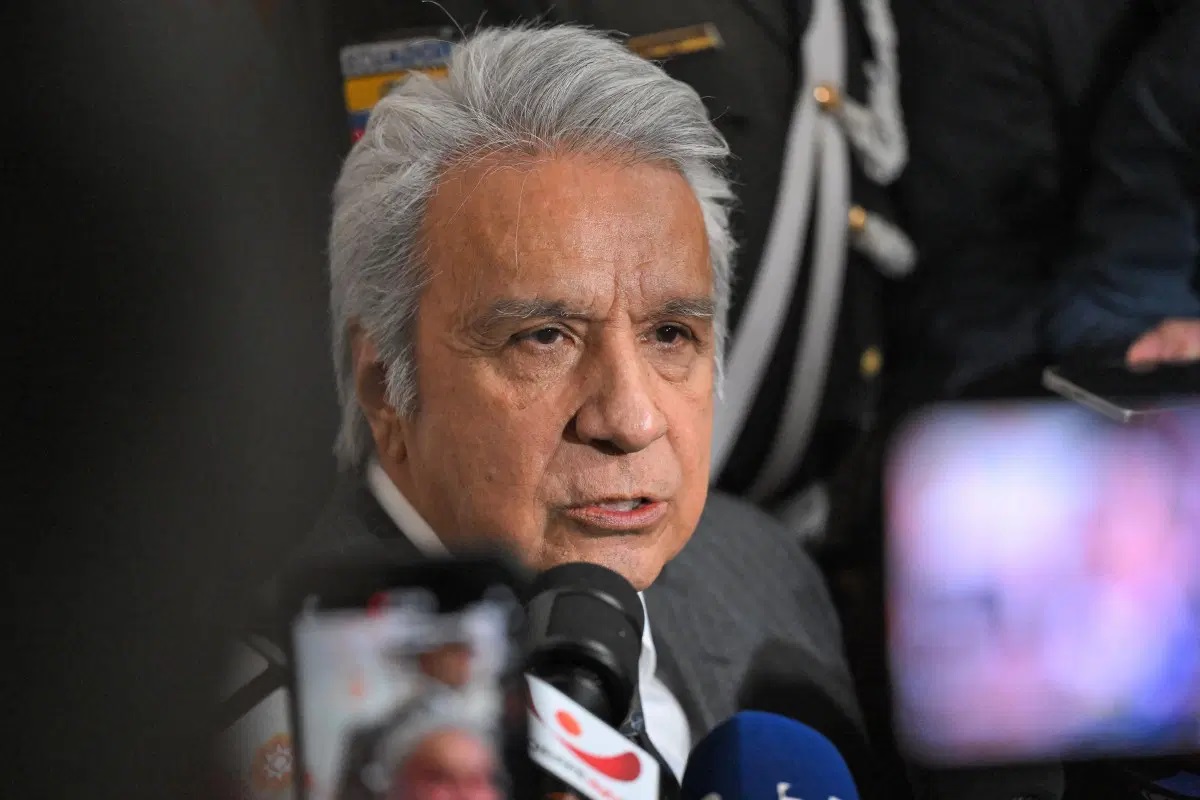
An Ecuadorian court has sentenced former President Lenin Moreno to five years in prison for accepting bribes linked to the construction of the country’s largest hydroelectric dam.
Moreno, who served as president from 2017 to 2021, was among 20 people convicted over corruption allegations surrounding the Coca Codo Sinclair hydroelectric project, which was built by Chinese company Sinohydro.
Prosecutors alleged that Sinohydro paid about $76 million in bribes, representing roughly four per cent of the project’s total cost.
Moreno, 73, denied the allegations and maintained that he never received money from the Chinese company.
Speaking after Friday’s ruling, the former president said he had never received “a single cent” from Sinohydro.
He also blamed the case on the administration of his former political ally and predecessor, Rafael Correa, whom he accused of seeking revenge after their political relationship deteriorated.
Moreno served as Correa’s vice-president between 2007 and 2013 before succeeding him as president. The two later fell out after Moreno moved away from Correa’s socialist policies and developed closer ties with the United States.
The court also sentenced Moreno’s wife and other relatives to nearly three years in prison for complicity in the corruption case.
Two former managers of the Coca Codo Sinclair power plant were also among those convicted.
Prosecutors had initially requested a six-and-a-half-year prison sentence for Moreno.
The former president has announced plans to appeal the judgment.
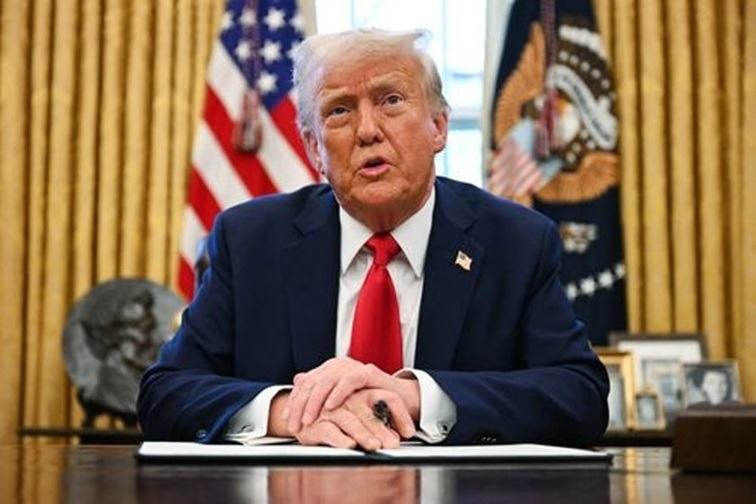
US President Donald Trump has signed an executive order renaming Lake Ontario as “Lake America” for official US federal use, in the latest escalation of his dispute with Canada.
Trump signed the order on Thursday at the White House, saying the change was effective immediately. The order directs the US Department of the Interior to update federal geographic records and naming systems.
Trump justified the move by accusing Canada of treating the United States unfairly in trade and defence. He said Canada had been “ripping us off” in trade and criticised Ottawa over its relationship with Washington.
However, the order does not require Canada or international organisations to adopt the new name. Lake Ontario is shared by the US state of New York and Canada’s province of Ontario, with more than half of its surface area lying in Canadian territory.
Ontario Premier Doug Ford dismissed the move, saying the lake would continue to be known as Lake Ontario by Canadians and much of the rest of the world.
The renaming comes amid a rapidly worsening US-Canada trade dispute. Washington recently imposed 50 per cent tariffs on about $20 billion worth of Canadian goods, while Canada responded with retaliatory tariffs of its own on hundreds of US products.
The latest move echoes Trump’s decision in January 2025 to rename the Gulf of Mexico as the “Gulf of America” for US federal purposes.
Trump also suggested that further geographic name changes could be considered, joking that after a gulf and a lake, the United States might eventually rename the Atlantic or Pacific Ocean.
Canadian Prime Minister Mark Carney’s government had not immediately issued a formal response to the latest order.
The controversy has added another symbolic dimension to already strained relations between the two neighbouring countries, as both sides continue to impose tariffs and seek to protect their economies.
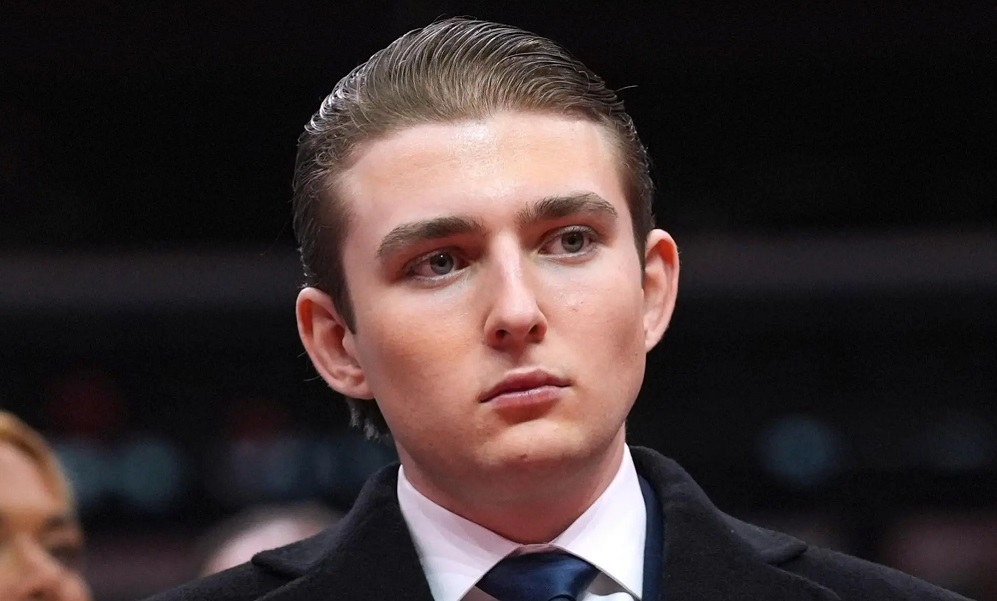
The United States Secret Service has confirmed that it is aware of a video broadcast by Iranian state media that appears to threaten the life of Barron Trump, the youngest son of US President Donald Trump.
The nearly three-minute video, aired by the state-run Islamic Republic of Iran Broadcasting (IRIB), opens with an English-language graphic asking: “Where to kill Barron Trump?!” It then displays stylised graphics identifying places where Barron is publicly known to spend time, including Trump Tower in New York.
The video ends with a narrator referring to people being “eagerly waiting to receive our $10 million reward.”
Secret Service spokesperson Nate Herring confirmed that the agency was investigating the video as a potential threat against one of its protectees.
“The US Secret Service is aware of the video and investigates anything that can be perceived as a threat toward our protectees,” Secret Service spokesperson Nate Herring told CNN in a statement. “Out of concern for operational security, we do not discuss matters of protective intelligence.”
The apparent targeting of Barron marks a new development in a broader pattern of threats directed at Trump and members of his family by hard-line Iranian media.
Iranian media outlets have previously published material threatening President Trump and his family, while first lady Melania Trump has also been the subject of threats. However, the video appears to be the first public instance in which Barron has been specifically singled out.
A federal law enforcement source told CNN that the video forms part of a wider campaign of material from Iran targeting Trump and his family. According to the source, some of the videos have included details about movements and suggestions for killing members of the president’s family.
The security response to such threats involves continuously changing and adjusting protective arrangements, based on information gathered by the Secret Service, other US agencies, police authorities and foreign governments.
IRIB, which broadcast the video, is regarded as aligned with hard-liners within Iran’s regime, while its head is directly appointed by Iran’s supreme leader.
Trump has previously spoken publicly about threats against his life from Iran.
“I’m on whatever list… so far, I guess I’ve been a bit lucky, but maybe that doesn’t last very long. These are evil, sick people.”
He made the comments in July at the NATO summit in Turkey, before secretly leaving the country aboard an alternate military aircraft.
The departure was part of an elaborate security operation reportedly triggered by an Iranian threat. Trump boarded the aircraft while concealed inside a catering truck after officials determined that travelling on either version of Air Force One could expose him to an unacceptable level of danger.
A person familiar with the matter told CNN that the threat involved a shoulder-fired missile and was considered specific enough for officials to fear that Trump’s life would be at enormous risk if he travelled on either version of Air Force One.

Atiku Knocks Tinubu Over Three-Week Europe Vacation

Tinubu takes South Africa xenophobia row to AU, demands action

Madrid cruise past Malaga 4-0 as Mbappe, Bellingham shine




-
 News21 hours ago
Rep Chinda, others make INEC list as gubernatorial candidates for Rivers
-
 News20 hours ago
BREAKING: Nigerian British heavyweight boxer Itauma carried out on stretcher after being knocked out in world title bout
-

 News14 hours ago
Just in: Tinubu begins three-week vacation, Presidency silent on Shettima as acting president
-

 Foreign24 hours ago
Ecuador ex-president bags five-year jail term over $76m bribery scandal
-

 News21 hours ago
Military junta claims to be back in control as soldiers’ mutiny rocks Niger’s capital
-

 News13 hours ago
CEKI hails Kayode Arewa, urges support for Ekiti Assembly bid
-
 News18 hours ago
NDLEA intercepts N6.2bn worth of ‘Jihadi drug’ in Ghana soap, opioids at Lagos Airport (Photos)
-

 News15 hours ago
BREAKING: Early morning fire destroys Jabi building materials market
Warning: Undefined variable $user_ID in /home/naijuinz/public_html/wp-content/themes/zox-news/comments.php on line 49
You must be logged in to post a comment Login