News
Christian killings: FG disagrees as CAN backs US senator

- /home/naijuinz/public_html/wp-content/plugins/mvp-social-buttons/mvp-social-buttons.php on line 27
https://naijablitznews.com/wp-content/uploads/2025/03/CAN.jpg&description=Christian killings: FG disagrees as CAN backs US senator', 'pinterestShare', 'width=750,height=350'); return false;" title="Pin This Post">
- Share
- Tweet /home/naijuinz/public_html/wp-content/plugins/mvp-social-buttons/mvp-social-buttons.php on line 72
https://naijablitznews.com/wp-content/uploads/2025/03/CAN.jpg&description=Christian killings: FG disagrees as CAN backs US senator', 'pinterestShare', 'width=750,height=350'); return false;" title="Pin This Post">


The Federal Government has again rejected what it described as “false and baseless” allegations by United States Senator Ted Cruz, who accused Nigerian authorities of orchestrating a genocide against Christians and allowing the destruction of thousands of churches.
But in a statement on Wednesday by its President, Archbishop Daniel Okoh, the Nigerian Christian Association “affirms, without hesitation, that many Christian communities in parts of Nigeria, especially in the North, have suffered severe attacks, loss of life, and the destruction of places of worship.”
“Nigeria’s healing will not come from denial or blame, but from courage: the courage to face our collective failures, to grieve together, and to rebuild trust within our communities,” CAN stated.
Cruz, in an interview with Fox News Digital, alleged that more than 52,000 Christians have been killed in Nigeria since 2009, and over 20,000 churches and Christian schools have been destroyed.
He also announced the introduction of the Nigeria Religious Freedom Accountability Act in the US Senate, a bill seeking sanctions on Nigerian officials he claims are complicit in religious persecution.
But reacting to the claims on Wednesday, the Minister of Information and National Orientation, Mohammed Idris, dismissed the senator’s assertions as “misleading, exaggerated, and not reflective of reality.”
“The Nigerian government rejects that. This is certainly not true,” Idris said in a statement issued through his media aide. “It’s false to claim that over 52,000 Christians have been killed or that 20,000 churches have been burned. Where did he get those numbers from? It’s absolutely absurd and unsupported by any credible evidence.”
Cruz, who chairs the Senate Subcommittee on Africa and Global Health Policy, had claimed that the alleged killings were “the result of decisions made by specific people, in specific places, at specific times,” vowing that the United States “knows who those individuals are” and will “hold them accountable.”
But Idris firmly rejected the notion that Nigerian authorities are complicit in any religiously motivated violence.
“No Nigerian officials will willingly or deliberately side with violent extremists to target any religion. That is absolutely false,” he said.
Reaffirming Nigeria’s commitment to religious freedom, Idris emphasised the country’s long-standing diversity and coexistence.
“Nigeria is a multi-faith country. We have Christians, Muslims, and even citizens who subscribe to neither. Nigeria is a very tolerant nation, and the government remains committed to protecting the rights of all,” he stated.
While acknowledging that violent extremism remains a national security challenge, Idris insisted that such violence has affected both Christians and Muslims.
“It’s unfortunate that extremists have killed people of both faiths in areas where they operate. But it is wrong and misleading to claim there’s a deliberate plan to exterminate Christians. That is simply not true and very unfortunate,” he said.
He assured Nigerians and the international community that security agencies continue to combat terrorism and banditry in all its forms, without bias or discrimination.
But CAN, its statement, titled, “Christian Genocide” – CAN Clarifies Position, maintained that truly killings are facing persecution, saying, “These realities are painful reminders of the urgent need for government and security agencies to act decisively to protect every citizen, regardless of region.”
The CAN President said, “Over the years, CAN and the wider Christian community have worked tirelessly to draw attention, both nationally and internationally, to the persecution of Christians in Nigeria. The association has established mechanisms for recording incidents of religiously motivated killings, engaged with international partners, written to the International Criminal Court in The Hague, and hosted global Christian organisations such as the World Evangelical Alliance and the Lausanne Movement. These sustained efforts demonstrate CAN’s consistent advocacy for justice, peace, and the protection of Christian communities under threat.”
The Christian body said its “concern remains that these cries for justice and protection are too often met with delay or denial.”
“We, therefore, renew our call on government and security agencies to take urgent, transparent, and equitable action to end the killings, safeguard vulnerable Christian communities from displacement, and ensure that perpetrators face the full weight of the law. The pain of Christian families torn apart by violence must never be treated as mere statistics.
“CAN acknowledges the efforts of government and security agencies in responding to the nation’s security challenges, but urges that these efforts be redoubled towards equitable protection for all. It is equally imperative that perpetrators of violence are brought swiftly and transparently to justice. We also appeal to all Christian leaders to continue to speak and act with wisdom, unity, and faith, knowing that peace is too fragile to be taken for granted.”
CAN said, “Nigeria’s healing will not come from denial or blame, but from courage: the courage to face our collective failures, to grieve together, and to rebuild trust within our communities. Only then can our nation rise from its wounds and embrace a future of genuine peace.”
However, the House of Representatives, at its plenary on Wednesday, aligned with the Federal Government in condemning a proposed United States Senate legislation which designates Nigeria as a “Country of Particular Concern” — a move that could trigger sanctions on Nigerian officials under Executive Order 13818 (Global Magnitsky Act) and related authorities.
The Nigeria Religious Freedom Accountability Act of 2025 (S.2747), introduced in the U.S. Senate on September 9, seeks to compel the U.S. Secretary of State to list Nigeria as a “Country of Particular Concern” (CPC) and to sanction officials accused of complicity in religious persecution.
Presnting a motion of urgent national importance, the Deputy Speaker, Benjamin Kalu, and other co-sponsors noted that the U.S. Commission on International Religious Freedom had, in recent annual reports, recommended Nigeria for CPC designation, citing alleged violations and failures to protect citizens from non-state actor abuses.
Kalu, speaking on the motion, argued that Nigeria’s Constitution “guarantees freedom of thought, conscience, and religion and bars the adoption of any state religion.”
He added that successive governments, security agencies, and faith leaders “continue to take measures to protect all worshippers and prosecute offenders,” as reflected in U.S. Department of State country reports.
“The House observes that insecurity in Nigeria is complex and multi-causal — driven by insurgency, criminal banditry, farmer-herder conflicts, separatist violence, and communal disputes — affecting citizens of all faiths,” Kalu said. “International reports attribute a significant share of fatalities to terrorist groups and criminal gangs rather than state policy or any single religious dynamic.”
The lawmakers warned that “external legislative actions based on incomplete or decontextualised assessments risk undermining Nigeria’s sovereignty, misrepresenting facts, straining strategic relations, and unintentionally emboldening violent actors.”
Mindful of Nigeria’s long-standing partnership with the U.S. on counter-terrorism, human rights, and interfaith dialogue, the House “condemned the negative characterisation” of the country and rejected what it called an attempt to “profile Nigeria unfairly.”
Majority Leader Prof. Julius Ihonvbere described the move as part of a misinformation campaign “bent on demarketing Nigeria,” while Katsina lawmaker Sada Soli urged the Federal Government to “state strongly its disappointment at the deliberate attempt to dent the nation’s image.”
Edo lawmaker Billy Osawaru added that Nigeria must urgently strengthen its diplomatic presence, noting that “till now, Nigeria does not have an Ambassador to the United States,” and stressing that the country “cannot afford to fail the African continent.”
The House mandated its Committees on Foreign Affairs, National Security and Intelligence, Interior, Information, National Orientation and Values, Police Affairs, Civil Society, and Human Rights to, within 21 days, coordinate a formal diplomatic demarche to the sponsors of the U.S. bill and relevant congressional committees, transmitting empirical data and Nigeria’s official position.
It also urged the Committees to engage the U.S. Mission in Nigeria and interested legislators to propose a Nigeria–U.S. joint fact-finding dialogue.
In addition, the House called for the establishment of a mechanism on freedom of religion or belief — with participation from faith leaders and independent experts — and to invite the U.S. Commission on International Religious Freedom (USCIRF) to a briefing session to examine sources, methodology, and possible remedies.
The resolutions are to be transmitted to the Presidency, the Ministry of Foreign Affairs, heads of security agencies, the leadership of the U.S. Congress (Senate Foreign Relations and House Foreign Affairs Committees), the U.S. Department of State, USCIRF, the African Union, and ECOWAS Commissions.
The Nigeria Customs Service (NCS) has officially released the final list of successful candidates for its ongoing recruitment exercise, marking the commencement of the final stage of the employment process.
The Service directed all shortlisted candidates to immediately log in to the official recruitment portal to confirm their selection, complete the required documentation, and accept their provisional offers of appointment within the stipulated deadline.
According to the NCS, successful applicants can verify their status through the official recruitment portal, while notifications are also being sent to candidates via their registered email addresses and SMS.
As part of the final documentation process, candidates are required to upload a Medical Certificate of Fitness obtained from a government-approved hospital. They must also update their current state of residence and click the “Accept Offer” button on the portal.
The Nigeria Customs Service warned that candidates who fail to complete these requirements within one week risk forfeiting their provisional appointments.
Following the successful completion of the online process, candidates will receive a Trainee Identification Number (TIN) ahead of the final documentation and training exercise. The dates, venues and other instructions for the next stage will be communicated through the Service’s official channels.
The Comptroller-General of Customs congratulated the successful candidates and urged them to demonstrate discipline, integrity and professionalism as they prepare to join the Service.
How to Check the Final List
Candidates should:
Visit the official Nigeria Customs Service recruitment portal https://recruitment.customs.gov.ng
Log in with the email address and password used during registration.
Check their recruitment status.
Upload the required Medical Certificate of Fitness.
Update their profile and current state of residence.
Click “Accept Offer” and print the acknowledgement slip for future reference.
The Nigeria Customs Service reiterated that its recruitment exercise is free of charge and advised applicants to ignore fraudsters or individuals demanding payment in exchange for employment.
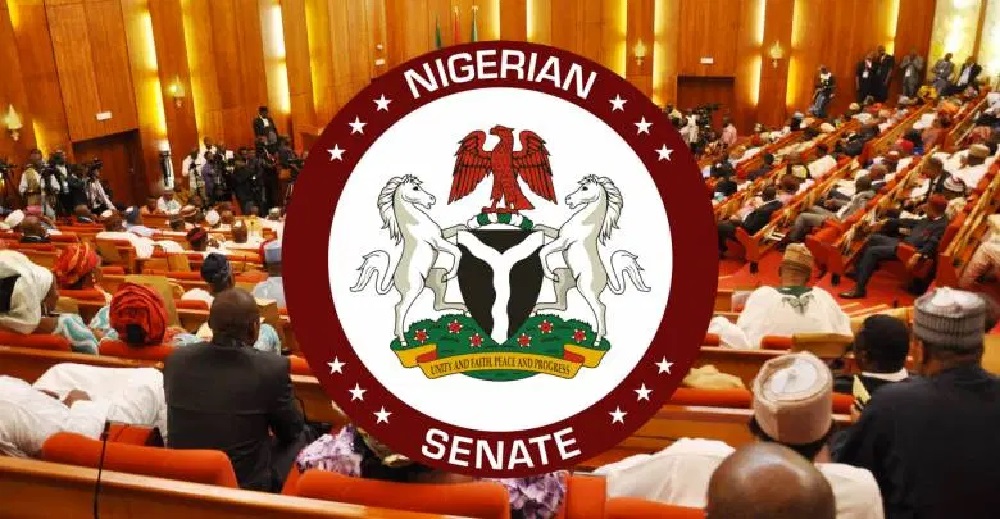
The Senate has debunked claims that the proposed amendment to the Federal Road Safety Commission Establishment Act seeks to introduce a fresh ban on preaching or hawking in commercial vehicles.
According to the upper chamber, preaching and hawking in commercial vehicles have been offences under Nigerian law since the FRSC Establishment Act was enacted in 2007.
The Senate explained that the provision, previously listed as Item 36 in the Second Schedule of the Act, was only renumbered as Item 49 in the ongoing amendment process.
In a statement issued on Monday by the Office of the Senate Leader, the chamber stressed that the amendment does not seek to prohibit street preaching or restrict religious activities in public places.
It said the amendment is about the safety of commuters and other road users and is not intended to undermine any religious activity in the public space.
The Senate also dismissed reports alleging that Senate Leader Senator Opeyemi Bamidele sponsored the amendment bill.
It clarified that the bill originated from the House of Representatives and is before the Senate as a concurrence bill in line with the provisions of the 1999 Constitution.
The upper chamber noted that the legislative process is still ongoing and urged Nigerians with concerns to make their views known through the appropriate legislative channels before the bill is passed.
The Senate reiterated its commitment to transparency and public participation, adding that the proposed amendment is aimed at strengthening road safety measures and protecting commuters across the country.
Independent National Electoral Commission (INEC) says the reported attack on one of its Permanent Voter Cards (PVCs) collection centres in Osun will not deter it from conducting a free, fair and credible governorship election in the state.
Chief press secretary to the INEC chairman, Dayo Oketola, gave the assurance in an interview with journalists on Monday in Abuja.
Some suspected hoodlums had, on Sunday, stormed an INEC PVC collection centre located at Oyinlola DC School, Ward 2, Okuku, attacking staff members on duty and carting away electoral materials, including Bimodal Voter Accreditation System (BVAS) devices and PVCs.
Mr Oketola, however, said that the incident had been formally reported to the police, adding that they had already commenced an investigation into the incident.
“The Osun incident has been reported to the police. As we speak, it is already public knowledge that the police have started an investigation,” Mr Oketola said.
He expressed confidence in the police to apprehend the suspects and recover the stolen commission assets.
“As a commission, we trust that the police will be diligent in their investigation, track those suspects, get them arrested and ensure they face the wrath of the law.
“We also trust that they’ll be able to recover our devices, including the BVAS that were reportedly carted away,” he added.
Mr Oketola maintained that, in spite of the attack, INEC’s operational preparations for the upcoming election remained firmly on track.
“It is a matter already under investigation, I cannot actually comment too much on it.
“But I know that that cannot distract INEC from carrying out the activities preceding the Osun governorship election.
“INEC cannot be distracted. We will conduct a free and fair election in Osun. That incident cannot distract us.
“The election will go on as planned, and we expect it to be free, fair and credible at the end of the day,” he said.
He disclosed that, as part of preparations, the commission was embarking on a pre-assessment tour of the state to evaluate operational readiness and engage key local stakeholders.
Mr Oketola also stated that a total of 4,427 BVAS devices had been configured for the governorship election, including 664 backup units, which could take care of any incident before and during the election.
He also said that INEC had established 97 Super Registration Area Centres (Super RACs) and 105 Registration Area Centres across all the local government areas in the state, which would be fully activated on the night before the election.
“Whatever was carted away will be replaced. Out of the 4,427 BVAS, we have 664 prepared as backups. There is no way whatever happened can disrupt our plans for the election,” he assured.
The chief press secretary described the stealing of PVCs as an exercise in futility, given the strict biometric verification required by the BVAS technology.
“Nobody can use another person’s PVC to vote in an election in Nigeria again. The era of ghost voters is gone. With BVAS, you must tender your PVC and undergo biometric authentication.
“The technology has been tightened in such a manner that nobody can use another person’s identity to vote any longer in Nigeria.
“That has been proven in previous elections, particularly those that were conducted under the leadership of Prof. Amupitan,” Mr Oketola said.
He assured registered Nigerians that the necessary administrative measures would also be taken by the commission to ensure that no voter would be disenfranchised in the state as a result of the incident.
“Once a voter’s name is already on the voters’ register, and somehow, your PVC happens to be among those that have been reportedly stolen, I want to believe you can’t be disenfranchised from exercising your right or participating in the election, come Aug. 15.
“Whatever the commission will do to solve that problem will be done. I know the commission will leave no stone unturned to ensure that no registered voter in Osun is disenfranchised on election day,” he said.
Mr Oketola, while assuring voters of their safety during the election, called on all stakeholders to collaborate with the commission to protect the nation’s electoral assets and ensure a peaceful voting environment.
“While the security agencies will provide adequate security to protect people and election materials, we also need all key stakeholders to be vigilant.
“The people, community leaders and traditional rulers, security agencies, religious organisations, political actors; all of us must work together to ensure that the Osun election is not just successful, but conducted in an atmosphere that gives people the confidence to come out and exercise their franchise,” Mr Oketola said.
(NAN)

Nigeria Customs Unveils Final List of Successful Applicants, Opens Portal for Next Stage

Senate Denies Introducing Fresh Ban on Preaching in Commercial Vehicles
Stolen BVAS, PVCs Will Be Replaced, Osun Election Safe – INEC



-
 News11 hours ago
Fugitive drug kingpin, ex-int’l footballer bag 24 years jail term for cocaine importation(Photos)
-
 News12 hours ago
Reps Order IGP to Produce Alleged Fake Presidential Council DG as Probe Uncovers Fresh Forgery Claims
-
 News19 hours ago
Army Nabs Wanted Soldier Accused Of Supplying Uniforms To Terrorists While Escaping to Cameroon
-
 News16 hours ago
Zamfara federal lawmaker urges constituents to withdraw money to buy weapons to defend themselves
-
 News15 hours ago
We don’t have current negotiations with US — Iran
-
 News13 hours ago
No Rest Until Key FCT Projects Are Delivered, Wike Declares(Photos)
-
 Economy24 hours ago
Cardoso, Okonjo-Iweala to lead Africa emerging markets forum
-

 News11 hours ago
AGF Reveals Alleged Hijacked State House Letter Helped Fake Agency Get Recognition