
News
FG orders tertiary institutions to submit reports on unused TETFund funds within 30 days

- /home/naijuinz/public_html/wp-content/plugins/mvp-social-buttons/mvp-social-buttons.php on line 27
https://naijablitznews.com/wp-content/uploads/2024/11/Tunji-Alausa.jpg&description=FG orders tertiary institutions to submit reports on unused TETFund funds within 30 days', 'pinterestShare', 'width=750,height=350'); return false;" title="Pin This Post">
- Share
- Tweet /home/naijuinz/public_html/wp-content/plugins/mvp-social-buttons/mvp-social-buttons.php on line 72
https://naijablitznews.com/wp-content/uploads/2024/11/Tunji-Alausa.jpg&description=FG orders tertiary institutions to submit reports on unused TETFund funds within 30 days', 'pinterestShare', 'width=750,height=350'); return false;" title="Pin This Post">


The Federal Government has directed all tertiary institutions to submit reconciled reports of unutilised funds received from the Tertiary Education Trust Fund (TETFund) within 30 days.
According to the government, the reconciled reports will undergo joint verification after submission to ensure transparency and accountability in the utilisation of the intervention funds.
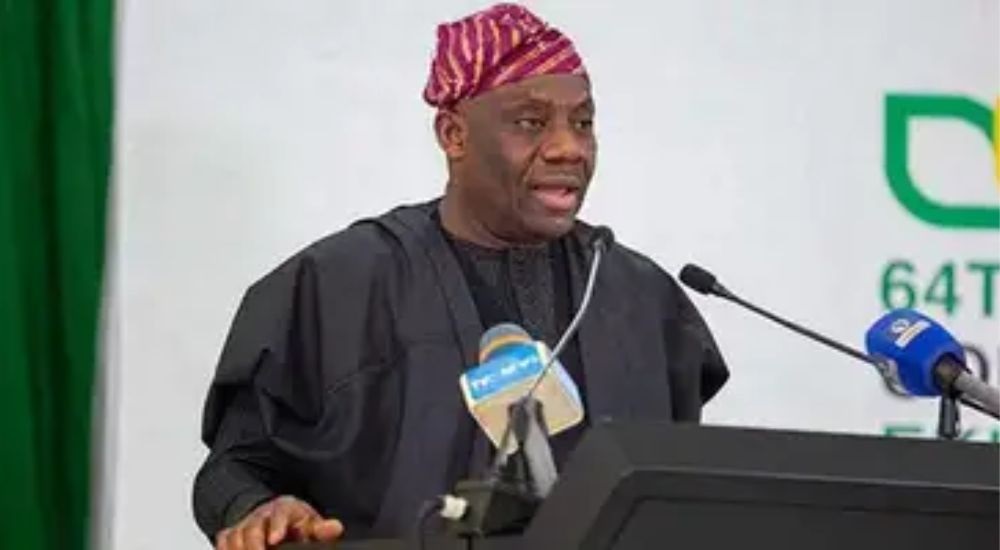
Minister of Education, Dr. Tunji Alausa, gave the directive during a meeting with heads of federal tertiary institutions, bursars, and procurement directors on unutilised TETFund allocations, held in Abuja on Thursday.
Alausa stated that following the meeting, the Federal Ministry of Education will issue new directives to ensure more effective use of TETFund resources across the nation’s tertiary institutions.
He emphasized the central role of education in national development, saying, “Education remains the bedrock of national development. As a nation, we commit substantial resources to strengthening infrastructure, human capital, research, and the learning environment across our tertiary institutions. TETFund plays a pivotal role as the vehicle through which the Federal Government channels support to our universities, polytechnics, and colleges of education.”
“However, one recurring challenge that has continued to undermine this investment is the existence of unutilised balances — funds released for specific projects or interventions that are either not deployed on time or not fully expended before new allocations are made. Over time, these idle funds represent lost opportunities — resources that could have improved laboratories, classrooms, ICT facilities, research centres, faculty development, and more, but did not, due to process delays, weak absorptive capacity, or compliance and accountability gaps.
“Institutions must submit reconciled reports of all unutilised funds within 30 days, which will be jointly verified. Unused funds may be redirected to priority projects, and carrying them over without strong justification will no longer be allowed.
“Procurement plans must align with approved interventions, and approvals should be fast-tracked to prevent delays.”
The minister noted that capacity-building programmes will be introduced to strengthen project management, compliance, and reporting, alongside mentorship initiatives.
He also hinted of quarterly reviews that will track progress and compliance, with sanctions for institutions that fail to utilise funds effectively.
According to the minister, heads of institutions, bursars, and procurement directors will be held responsible for slippages.
Alausa said, “Finally, transparency will be enhanced through a public dashboard showing disbursement and utilisation data, and institutions will be required to publish project progress reports.
“The success of this initiative depends on strong collaboration. TETFund must lead with professionalism, enforce compliance, and ensure transparency.
“Institutional heads should drive urgency and accountability, while bursars, procurement officers, and project coordinators must plan and report diligently. Auditors and oversight bodies are expected to monitor activities and flag irregularities. All stakeholders must uphold a sense of stewardship, recognising that every TETFund naira represents public trust.
“Let us seize this moment to turn the narrative around. Let unutilised balances no longer be a recurring embarrassment, but rather the catalyst for improved governance, greater productivity, and transformative impact in our tertiary education system.
“Our students, faculty, and the future of our nation depend on it. With your cooperation, sincerity, and commitment, I am confident that every fund allocated will translate into tangible outcomes — classrooms built, laboratories equipped, research enhanced, faculty developed, and students empowered.”


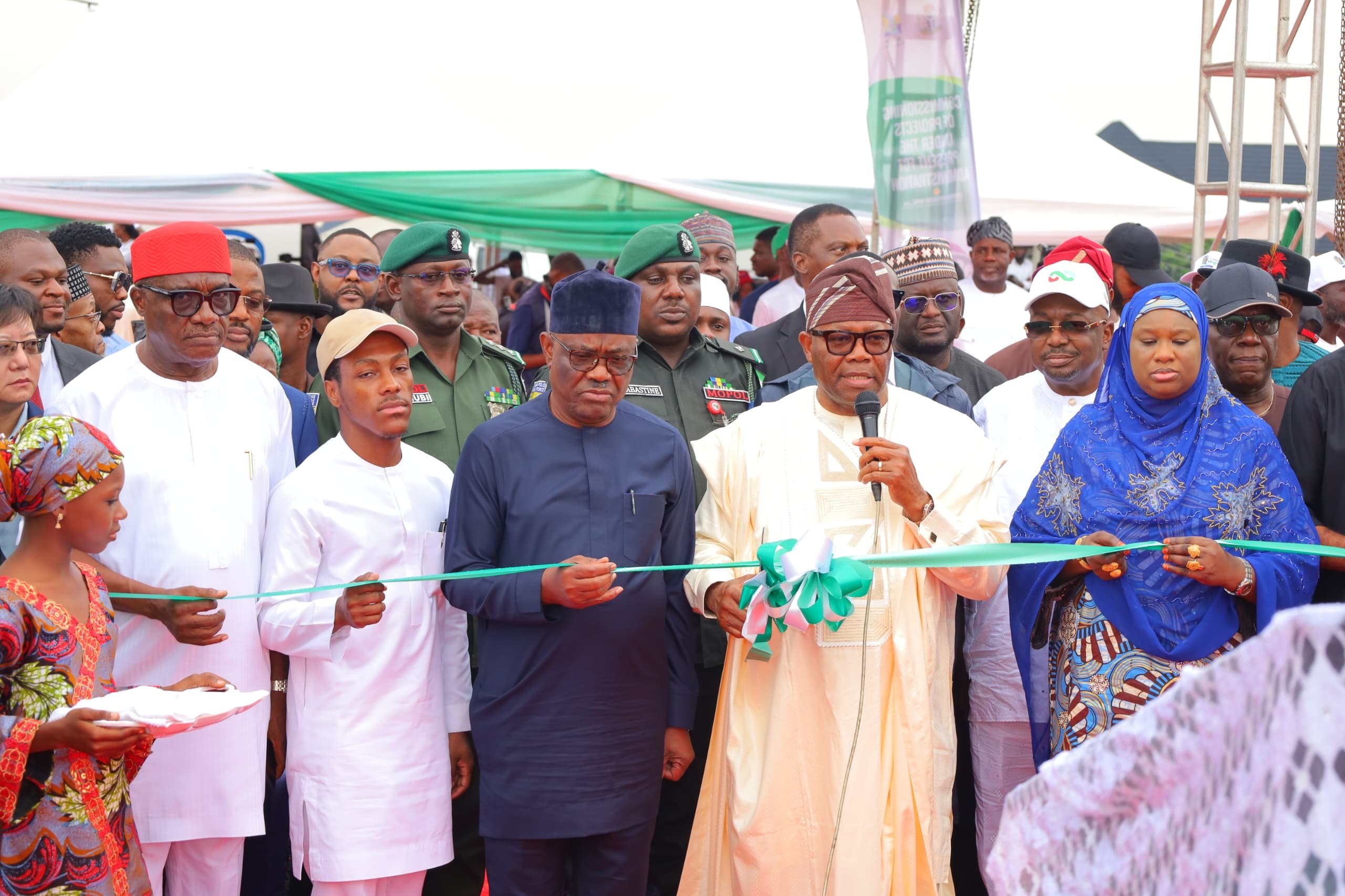
President Bola Tinubu has reiterated that his administration was rebuilding the Federal Capital Territory (FCT) to build trust and restore citizens hope and confidence in government.
Tinubu made the remarks in Abuja on Thursday, while inaugurating the newly constructed Interchange at the intersection between Arterial Road N16 with the Ring Road II, linking Jahi District to Gwarinpa District.
Represented by the Senate President, Senator Godswill Akpabio, the President noted that “Abuja is changing.”
He said: “One interchange at a time, one road at a time, we are rebuilding trust and restoring hope. Together, we will build a country where every citizen can move freely, live safely, and prosper.
“This intersection used to choke Abuja. Gridlock stretched from Maitama to Gishiri, from Jahi to Gwarimpa. Hours were lost, fuel was wasted and businesses were delayed.
“Today, that story ends. This interchange opens up critical districts of the FCT and connects them smoothly to the rest of the territory.”
Tinubu described infrastructure as the foundation of prosperity and roads as the arteries of a nation saying, “when we connect districts, we connect destinies.
“That is the logic of the Renewed Hope Agenda: build the roads, unlock the economy, and let Nigerians thrive. The Jahi/Gwarimpa Interchange is proof that Nigeria is not beyond redemption”.
The President commended FCT Minister, Nyesom Wike, for making Abuja work again, pointing out that from roads to bridges, from city centre to satellite towns, the minister is domesticating renewed hope across the FCT.
“Nigerians can see it, critics can see it and residents feel it in their daily lives. Well done,” he said.
In his remarks, Wike said that the project was awarded, a few days before Tinubu was sworn into office, with no mobilisation. But to show leadership, you made funds available to continue the project awarded by your predecessors.
“Mr President, you have shown that government is continuum. It doesn’t matter who awarded the project. What is important is to complete the project for the betterment and the development of society.
“This is what differentiated the current government and the previous administrations.
“Thank you Mr President for giving us the opportunity to be part of history in changing the narrative as far as the development of Abuja is concerned.”
Reacting to the claim by the African Democratic Congress, alleging that Tinubu government is building only roads while Nigerians are hungry, the minister described the assertion as misleading.
He recalled that just two days ago, Mr President inaugurated the Karu Water Supply Network, adding that another water network would be inaugurated in Bwari in July.
“Let me say that it is not correct that we are only doing roads. It is not correct,” he said.
He, nonetheless, thanked the ADC for acknowledging the road infrastructural stride in the FCT and other parts of the country.
On her part, FCT Minister of State, Dr Mariya Mahmoud said that beyond traffic management, the interchange serves as a critical link connecting communities, businesses, and opportunities across Abuja.
Mahmoud said that the completed interchange would significantly reduce travel time, improve access to commercial centres, facilitate the movement of people and goods, and support the growing demands of the FCT’s expanding population.
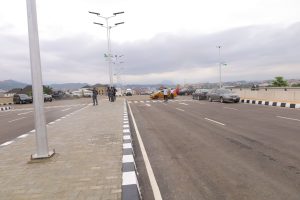
Earlier, Mr Richard Dauda, acting Executive Secretary, Federal Capital Development Authority, said that the project was awarded in May 2023 for the full-scope development of Arterial Road N16 from Ring Road II to Ring Road III with two interchanges.
Dauda said that one of the Interchanges was at the intersection between Arterial Road N16 and Ring Road II, which was being inaugurated.
“The Arterial Road N16 is being developed in stages, with the Phase I section completed, that is the Maitama section. The Katampe section, which is the Phase II section, was also completed up to Wole Soyinka Way (Arterial N20) and inaugurated.
“The Jahi District section is still under construction, while the Phase III section, which is the project we are in now, has attained significant progress with the completion of this interchange,” he said.
He said that the rest of the project up to Ring Road III, a total length of 7.25 kilometres in length, would be completed in due course.
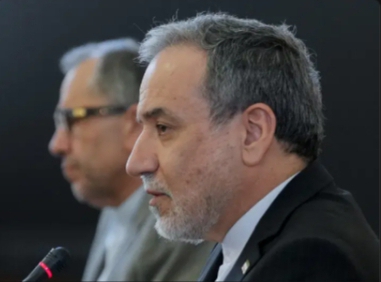
Iran’s Revolutionary Guards on Thursday warned against any crossings of the Strait of Hormuz without authorisation, saying vessels not complying “will be dealt with”.
The future of the strait, a vital route for energy shipments that was blockaded by Iran during the war, is a key sticking point in negotiations between Tehran and Washington.
Tehran has said it plans to impose what it calls maritime service fees, as opposed to tolls, while the United States argues it is an international waterway and therefore should not be charged.
“The only authorised route for passage through the Strait of Hormuz is the route announced by the Islamic Republic of Iran,” said the Revolutionary Guards, the ideological arm of Iran’s military.
Any crossing without authorisation is “unacceptable and extremely dangerous”, they warned in a statement.
They also denounced what they said was a new route through the waterway announced by “certain authorities”.
The statement did not elaborate but it appeared to be a response to an announcement overnight of a temporary corridor by Oman, which also borders the strait.
Omani authorities released a map of a route running close to the Omani coast that they said was coordinated with the International Maritime Organisation, a UN agency responsible for marine safety.
The only route currently authorised by Iran runs through a corridor that follows the Iranian coast.
Hormuz is a narrow stretch of water between Iran and the Gulf countries through which roughly 20 percent of the world’s crude oil and liquified natural gas normally transits.
At its narrowest it is only about 30 kilometres (18 miles) wide.
A memorandum of understanding signed last week by Tehran and Washington to end their war stipulated that commercial ships may transit the strait free of charge for the next 60 days.
With Iran and the US in negotiations, it is unclear what arrangements will be in place after that period.
Iran and Oman announced on Tuesday that they would study the “costs” to be charged for services related to administration of the strait.
But US Secretary of State Marco Rubio, visiting neighbouring Gulf countries this week, said Washington would not accept any tolls or fees.
AFP


Finally oil prices dropped to $72 per barrel on Thursday from about $120 per barrel, their lowest level since the US-Iran conflict began in February.
Brent crude futures for August delivery fell $1.06, or 1.44%, to $72.68 a barrel by 0639 GMT, while U.S. West Texas Intermediate lost 76 cents, or 1.08%, to $69.58 a barrel.
According to Oilprice.com, crude oil had fallen from $76.75 per barrel on Tuesday to $73.50 on Wednesday, after surging during the conflict as tensions threatened shipping through the Strait of Hormuz.
Rising Middle Eastern supply, together with Iran set to boost sales after a reprieve from U.S. sanctions, drove down prices of physical crude oil cargoes around the world.
Traders grew optimistic that the US-Iran agreement would help keep the strategic waterway open, alongside reports of a slight increase in shipping traffic.
An initial accord last week to end the U.S.-Israeli war with Iran, which began on February 28, has allowed the resumption of traffic through the strait.
The accord set up 60 days of negotiations to tackle tougher issues, such as Iran’s nuclear programme. Wright said oil would continue to flow through the strait even if the deal did not hold, and that Iran would not be able to close it again.
Oman opened temporary routes on Wednesday to ease tanker departures from the strait, with the International Maritime Organization and Omani authorities coordinating movements.
According to CNN, traders are still monitoring whether traffic continues to flow smoothly through the strait and whether tensions remain contained across the Middle East.
On Tuesday, President of the United States, Donald Trump, said a record 19 million barrels of oil flowed out of the Strait of Hormuz on Monday. According to Trump, oil prices are tumbling as a result of the oil flow through Hormuz.
“19 million barrels of oil flowed out of the Hormuz Strait yesterday, an all-time record. Oil prices are tumbling down, and the world is a much safer place,” Trump said in a post on his social media handles.

We’re rebuilding Abuja, building trust, restoring hope in governance – Tinubu (Photos)

Middle East: Iran warns against Hormuz passage without authorisation

Finally, oil prices crash to $72 pre-war level




-
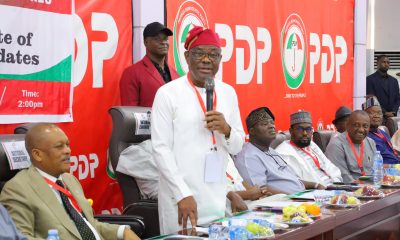
 News13 hours ago
2027: Be Prepared to struggle for power, Wike tells PDP candidates
-

 News24 hours ago
Bandit Kingpin Ado Aleru Declares fellow Bandit Leader who k!lled Gen Rabe Wanted
-
 News5 hours ago
Xenophobic attacks: FG evacuates another 66 citizens from South Africa
-

 News5 hours ago
Viral ‘Sign-Out’ Video: Ondo Govt Withholds WAEC Results of 17 Students
-
 News2 hours ago
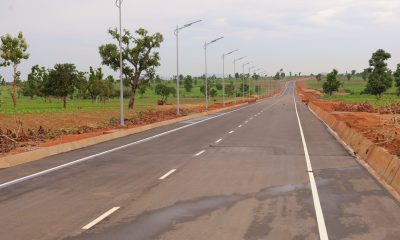
DAY 12 of Projects Commissioning in the FCT: Watch Arterial Road N16 – Ring Road Il Intersection linking Jahi to Gwarimpa District
-

 News21 hours ago
Sokoto High Court slams death sentence on 3 men, including foreign national for terrorism , arms trafficking
-
 News13 hours ago
Senate passes bill to double police trust fund allocation to 1%
-

 Metro13 hours ago
Armed Men Are Vigilantes And Hunters – Police Dismiss Viral Katsina Video