
News
Regional stability: ECOWAS Declares State Of Emergency Across West Africa Over Coups




The Economic Community of West African States (ECOWAS) has declared a state of emergency across the entire West African sub-region, citing a disturbing wave of coups, attempted coups, and military mutinies that have destabilized political systems and heightened security concerns in recent months.
The announcement was delivered on December 9, 2025, by ECOWAS Commission President Dr. Omar Alieu Touray during the 55th Session of the Mediation and Security Council (MSC) at ministerial level in Abuja. According to Touray, the region is facing an “unprecedented security deterioration” driven by unconstitutional changes of government, expanding extremist threats, and a rising loss of public confidence in democratic institutions.
The declaration marks one of the strongest collective security steps taken by ECOWAS in recent years, reflecting the severity of the challenges facing the bloc’s 15 member states.
A Region Under Strain Touray’s remarks painted a sobering picture of a region caught in a spiral of political volatility. Over the last five years, West Africa has witnessed a troubling resurgence of military takeovers, beginning with Mali in 2020 and followed by Guinea, Burkina Faso, and Niger. More recently, the trend appears to be spreading, fueling fears that democratic reversals could become normalized.
The pressure reached a new peak just days ago when security forces in the Benin Republic announced they had aborted an attempted military takeover targeting the government of President Patrice Talon. Though swiftly suppressed, the mutiny sent shockwaves through neighboring countries and raised alarms within regional security agencies. Touray referenced this specific incident while addressing the MSC, noting that the event “reinforces growing concerns that the democratic fabric of the region is being stretched to a breaking point, and urgent coordinated action is required to reverse this drift.”
The ECOWAS chief stressed that these developments cannot be dismissed as isolated episodes, but must be seen as part of a broader pattern of democratic regression and weakening state resilience.
Why ECOWAS Declared the State of Emergency Touray explained that the state of emergency is aimed at enabling member states and the ECOWAS Commission to activate extraordinary mechanisms to safeguard governance, strengthen regional security cooperation, and mobilize resources more rapidly. The emergency declaration includes: Enhanced cross-border intelligence sharing Deployment readiness for regional standby forces Strengthened monitoring of member states facing democratic tensions Streamlined coordination with international security partners Emergency consultations with heads of state and defense chiefs While ECOWAS has previously imposed sanctions and activated diplomatic pressure against coup-born governments, the new emergency framework signals a shift toward more robust collective action. Touray noted that ECOWAS can no longer rely solely on traditional mediation or diplomatic interventions, given the speed with which security situations now deteriorate. “We must treat this moment as a turning point,” he said.
“The stability of our region, the credibility of our institutions, and the future of our young democracies depend on it.” Implications for Democracy in West Africa In his address, Touray also emphasized the need for “deep reflection” on the future of democracy in West Africa. He acknowledged widespread frustrations among citizens over governance failures, corruption, electoral disputes, and socioeconomic hardships—factors that have often been exploited by military actors to justify seizing power.
“Democracy in West Africa cannot survive on declarations alone,” he said. “It must be nourished through credible elections, functional institutions, and leaders who genuinely serve their citizens.” Analysts say Touray’s comments reflect a growing understanding that military coups do not emerge in a vacuum. Instead, they often follow periods of public discontent, political polarization, or perceived injustice—conditions that persist across several West African countries today.
ECOWAS is expected to propose new democratic accountability guidelines in its upcoming heads-of-state summit, including reforms to election monitoring, term-limit enforcement, and early warning mechanisms for governance crises. Security Crisis Deepens Beyond political instability, West Africa continues to battle one of the world’s most complex security environments. Violent extremist groups linked to al-Qaeda and ISIS remain active in the Sahel, particularly in Mali, Burkina Faso, and Niger. Cross-border banditry, rural militias, piracy in the Gulf of Guinea, and rising cyber threats add further layers to the region’s insecurity.
Touray warned that coups and mutinies only worsen these problems by weakening state institutions, disrupting security planning, and giving extremist groups more space to operate.
The fragmentation of regional alliances—most notably with Mali, Burkina Faso, and Niger forming the “Alliance of Sahel States” (AES)—has also complicated ECOWAS’ collective defense strategies. “We cannot fight insecurity with divided fronts,” Touray said. “Our enemies benefit when our countries turn inward or lose trust in regional solidarity.”
International Reaction and What Comes Next Diplomatic sources in Abuja say ECOWAS’ declaration has drawn immediate interest from the African Union, the European Union, and United Nations partners, who have expressed support for intensified regional coordination. ECOWAS is also expected to convene an emergency summit of heads of state in the coming weeks, where further measures—including potential stabilization missions—may be considered.
Member states with stable governments, such as Ghana, Senegal, and Côte d’Ivoire, are reportedly urging for a more proactive approach to deterring military interventions. Meanwhile, states experiencing political strain may receive increased monitoring or early mediation visits as part of the emergency framework.
Conclusion: A Critical Turning Point With political tensions simmering across multiple countries and extremist threats expanding, ECOWAS’ declaration of a state of emergency marks a defining moment for West Africa. Touray’s message was clear: the region must confront its crises head-on or risk a deeper collapse of democratic governance and regional security.
Whether the emergency measures will be enough to halt the wave of instability remains to be seen. But for now, ECOWAS has signaled that it intends to act decisively—and that the survival of democracy in West Africa has become an urgent priority.

By Gloria Ikibah
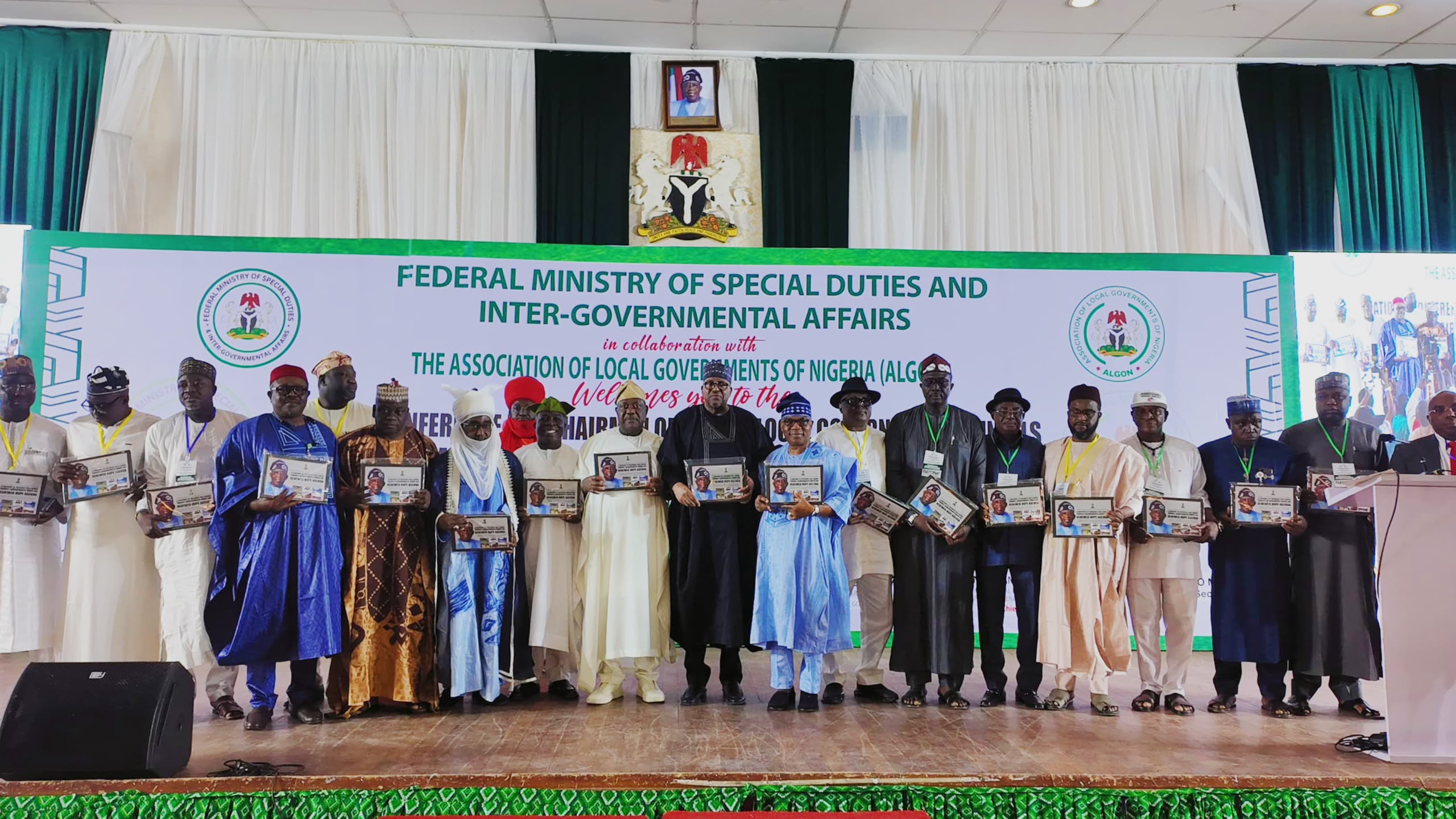
Minister of State for Foreign Affairs, Ambassador Sola Enikanolaiye, has said Nigeria’s grassroots development and mobilisation are central to the country’s foreign policy projection and international image.
The Minister stated this on Tuesday in Abuja while delivering a goodwill message at the 2026 maiden National Conference of the 774 Local Government Chairmen and Chairmen of Traditional Rulers’ Councils at the State House Banquet Hall.
The conference, convened by the Federal Ministry of Special Duties and Inter-Governmental Affairs, was themed, “Cascading President Bola Ahmed Tinubu’s Renewed Hope Agenda to the Grassroots.”
Enikanolaiye said policies implemented at the local level could have implications for Nigeria’s image and relations with other countries.
He said: “For us in the Ministry of Foreign Affairs, we believe that every aspect of our government policy at home has implications for foreign policy and Nigeria’s international relations. Which is why we are interested in everything that goes on domestically because foreign policy is also a projection of domestic policy. And in this context, grassroots mobilization and development is critical to what we do abroad”.
He argued that inclusive governance should be built from the grassroots upwards, rather than imposed from the top, while describing traditional rulers as an important component of Nigeria’s governance structure.
Enikanolaiye commended President Bola Ahmed Tinubu for approving the conference and for recognising the roles of local governments and traditional rulers in the ongoing constitutional amendment process.
Linking his remarks to President Tinubu’s four-D foreign policy doctrine of demography, development, democracy and diaspora, the minister said the success of the Renewed Hope Agenda would ultimately depend on its impact at the grassroots.
On demography, he said Nigeria’s youthful population across the 774 local government areas represented a major asset that could strengthen the country’s position globally if properly empowered.
“On Demography, Nigeria’s youth in the 774 LGAs is our greatest global asset – empower the LGAs, convert numbers to power,” he said.
On development, Enikanolaiye said productive local governments were essential to achieving Nigeria’s economic ambitions, citing agriculture, mineral resources and major infrastructure projects as areas with potential to attract foreign investment.
“On Development, a $1 trillion economy is impossible without productive LGAs. With agriculture booming, 44+ minerals across 500 sites, and massive infrastructure like the Lagos-Calabar and Sokoto-Badagry highways, grassroots stability is what attracts FDI,” he stated.
The minister also linked stronger local governance to democracy, saying empowered local governments and traditional institutions would demonstrate the practice of participatory governance.
“Speaking On Democracy, empowering LGAs and traditional rulers proves Nigeria practises real, bottom-up democracy,” he said.
On the diaspora component of the doctrine, Enikanolaiye said improved conditions at home could encourage Nigerians living abroad to invest in the country and promote a positive image of Nigeria internationally.
“On Diaspora, when home is secure and working, the Diaspora will invest and sell the Nigerian story with confidence,” he noted.
He said the Ministry of Foreign Affairs would support the foreign policy component of grassroots development through investment matchmaking via Nigeria’s 110 diplomatic missions abroad and partnerships with Nigeria’s international partners.
The ministry, he added, would also leverage the community-level knowledge of traditional rulers in support of national security.
In a separate goodwill message, the Head of the Civil Service of the Federation, Mr Olumuyiwa Enitan Abel, represented by Dr Vitalis Obi, said local governments remained the closest tier of government to the people and were central to service delivery.
He also described traditional rulers as important actors in peacebuilding and reaffirmed the commitment of the civil service to accountability and measurable results.
Earlier, the Permanent Secretary, Special Duties and Inter-Governmental Affairs, Dr Onwusoro Maduka Ihemelandu, said the government lacked timely and verifiable data on interventions at the local government level.
He said the ministry had consequently developed an E-Tracking Framework to monitor projects, including their locations, values, timelines and verification status.

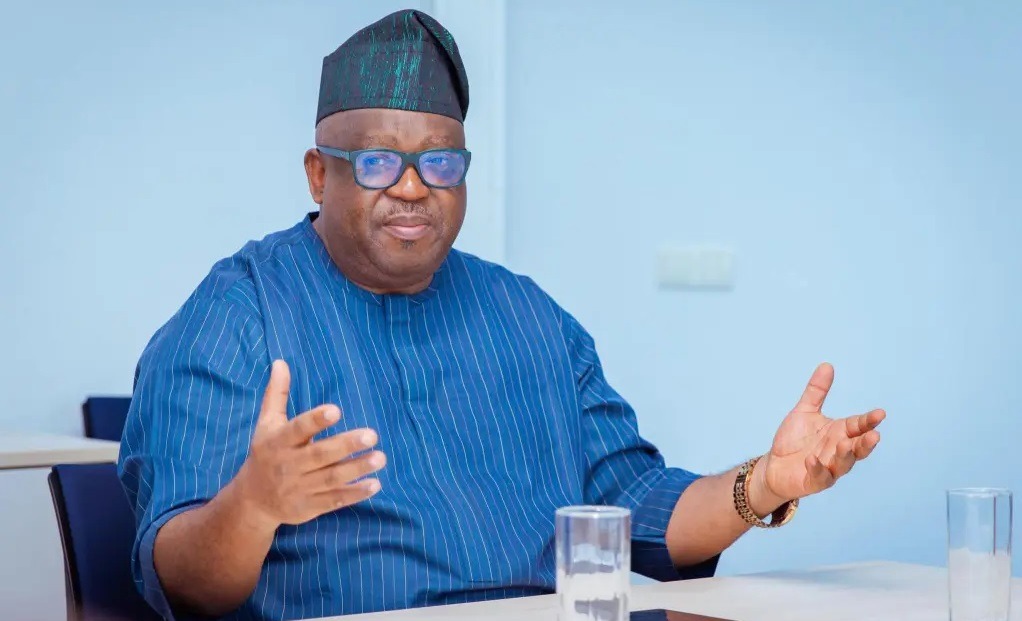
The National Coordinator of the Plateau Initiative for Growth and Development (PIGD), Nengak David, has appealed to residents to remain vigilant and help prevent further violence following renewed attacks in the state.
David urged people with credible information about threats, armed movements or plans for reprisals to alert the police or trusted community leaders promptly, without putting themselves in danger.
“Vigilance means recognising a threat and reporting it early. Tell the authorities where and when you saw it, and give only what you know firsthand. Do not approach armed people or attempt to confront them,” he said.
The appeal follows attacks in Barkin Ladi and Mangu. Plateau police confirmed the deaths of a senior officer and three civilians in separate incidents in Barkin Ladi, while a community group reported the killing of three men in Mangu.
David called on residents to reject reprisals and resist attempts to blame entire ethnic or religious communities for crimes committed by individuals.
“Every killing must be investigated, and those responsible must answer for it. Another innocent family must not suffer because someone chooses revenge or blames a whole community,” he said.
He urged traditional rulers, religious leaders, women and youth representatives to bring emerging disputes to trusted mediators before tensions escalate. The United Nations Development Programme has identified local mediation and early warning as ways communities can help prevent conflict.
The PIGD coordinator also cautioned against circulating old videos, unverified casualty figures and inflammatory claims. “Before forwarding a frightening message, check when and where it was recorded. A false claim can spread fear and provoke harm long after the truth catches up,” he said.
David asked residents of Barkin Ladi, Bokkos and Mangu to observe the state’s 6 p.m. to 6 a.m. curfew and motorcycle ban, announced to remain in effect until further notice. He also appealed for food, shelter and other assistance to reach affected neighbours through trusted local groups, regardless of their background.
“Residents can share information and refuse provocation. Government, in turn, must act on credible reports, protect those who come forward and investigate every killing fairly,” David said.
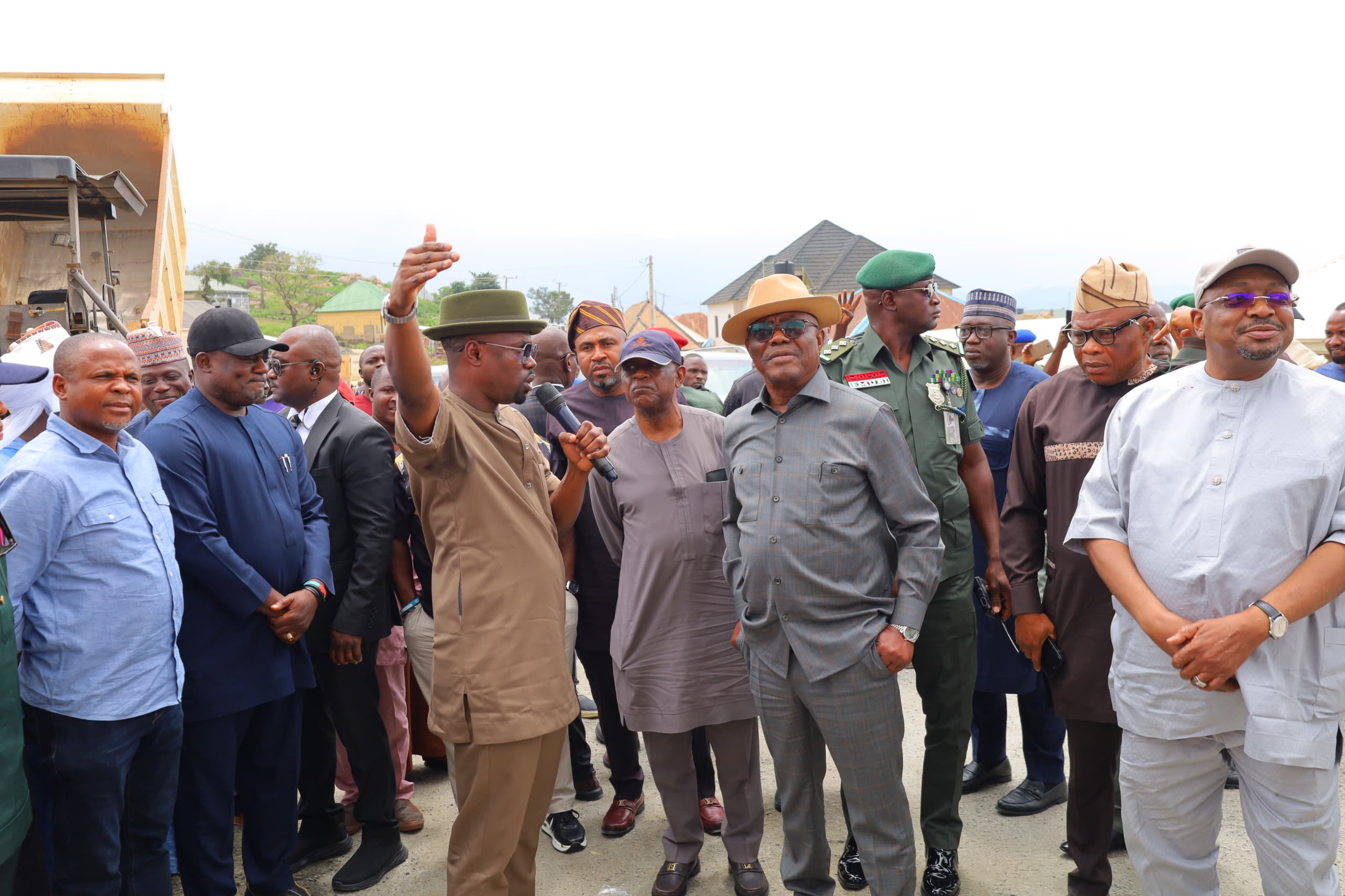
Minister of the Federal Capital Territory (FCT), Nyesom Wike, has expressed confidence that the visible achievements of President Bola Tinubu’s administration will secure victory for the ruling party, All Progressives Congress (APC) in the FCT during the 2027 general elections.
Wike, who stated this after inspecting the ongoing Apo-Karshi and Bwari-Kubwa road projects, stressed that good governance remains the most reliable metric for political success.
He said that the administration’s performance in infrastructure delivery, particularly in long-neglected satellite towns, leaves the opposition with nothing to offer voters beyond empty stories.
He argued that the tangible results on the ground make an unassailable case for President Tinubu’s re-election, including Sen. Philip Aduda (FCT) and House of Representatives candidate John Gabaya (Bwari Federal Constituency).
He said; “If good governance is a barometer to measure whether a government has succeeded or not, then we have nothing to fear.
“Now, the Tinubu administration has come and it’s not only listening to you, it’s not only caring for you, it’s solving your problems. Why will they want to change their mind?”
Dismissing opposition rhetoric, the minister said; “This is the campaign. The people who will come, what will they come with?
“They will tell them stories. But we have not come with stories, we have come with facts, verifiable facts. I can beat my chest, I can close my eyes and go home and sleep with my two eyes closed, that Tinubu will emerge. I have no fear at all.”
The minister pointed out that Tinubu’s Renewed Hope Agenda has shifted development priorities beyond the city centre to directly touch satellite communities.
“The Renewed Hope administration has redefined infrastructure delivery as far as FCT is concerned, not just within the city, but also within the satellite towns.
“We thank God Almighty that has given us a President who has come to listen and to change the narrative that development must not only be concentrated within the city centers, but also spread in the satellite towns,” he said.
Speaking on the projects, Wike said the long-delayed Apo-Karshi road project was on course for completion in November.
He also said that the dualisation of the Bwari-Kubwa road, where residents turned out in large numbers to welcome his delegation, would also be delivered in December.
“Work on site is set to intensify by the first week of October as seasonal heavy rains abate,” he said.

Foreign Policy Begins at Grassroots, Enikanolaiye Tells LG, Traditional Rulers

*PIGD Calls For United Response To Plateau Violence*

2027: Tinubu’s good governance ‘ll secure FCT victory – Wike




-

 News18 hours ago
EFCC declares Abdulrashhed Maina wanted
-
 News8 hours ago
Video: Apo-Karshi road getting required finishing touches
-

 Entertainment17 hours ago
How I manage Davido’s wealth, limit his luxury spending – Sister
-
 News18 hours ago
CCB probes 20 ministers, 30 perm secs
-
 News8 hours ago
SAD! Four Teenage Girls Die As Boat Carrying Eight Capsizes In Jigawa
-

 News8 hours ago
US firm declares America won’t allow Tinubu rig 2027 polls in Nigeria