
Economy
FG pushes for N17.89tn new loans to finance 2026 budget

- /home/naijuinz/public_html/wp-content/plugins/mvp-social-buttons/mvp-social-buttons.php on line 27
https://naijablitznews.com/wp-content/uploads/2024/11/images-2024-11-01T163603.368.jpeg&description=FG pushes for N17.89tn new loans to finance 2026 budget', 'pinterestShare', 'width=750,height=350'); return false;" title="Pin This Post">
- Share
- Tweet /home/naijuinz/public_html/wp-content/plugins/mvp-social-buttons/mvp-social-buttons.php on line 72
https://naijablitznews.com/wp-content/uploads/2024/11/images-2024-11-01T163603.368.jpeg&description=FG pushes for N17.89tn new loans to finance 2026 budget', 'pinterestShare', 'width=750,height=350'); return false;" title="Pin This Post">


The Federal Government plans to borrow N17.89tn in 2026 to fund a widening budget deficit as revenue projections fall sharply below expenditure needs, according to the 2026 budget framework obtained from the Budget Office of the Federation.
Official figures in the 2026 Abridged Budget Call Circular issued by the Federal Ministry of Budget and Economic Planning show that total new borrowing will jump from N10.42tn in 2025 to N17.89tn in 2026. This is an increase of N7.46tn (72 per cent) in fresh loans over one year, amid concerns over rising debt costs.
The borrowing requirement is driven by a larger fiscal deficit and a weaker revenue outlook, even though overall expenditure is projected to fall slightly compared with the current year. The framework puts the 2026 fiscal deficit at N20.12tn, up from N14.10tn approved for 2025.
This represents an increase of N6.02tn, or about 43 per cent year-on-year. Despite this jump in the nominal deficit, the deficit to gross domestic product ratio is projected to decline from 4.17 per cent in 2025 to 3.61 per cent in 2026, reflecting a higher projected GDP base. The deficit ratio is expected to ease further to 3.24 per cent in 2027 and 1.92 per cent in 2028.
Revenue figures explain why the government is resorting to much larger borrowing. The amount available for the federal budget, excluding the retained revenue of government-owned enterprises, is projected to fall from N38.02tn in 2025 to N29.35tn in 2026.
This is a drop of N8.67tn or about 23 per cent between the two years. The government expects revenue to recover modestly to N31.53tn in 2027 and N34.90tn in 2028.
That implies growth of about seven per cent between 2026 and 2027 and about 11 per cent between 2027 and 2028, but the recovery is not strong enough to remove the need for heavy borrowing in the medium term.
The PUNCH further observed that the bulk of the 2026 borrowing will come from domestic creditors. The document shows that of the planned N17.89tn new loans for 2026, N14.31tn will be raised from the domestic market, while N3.58tn will be sourced from external creditors. Domestic borrowing, therefore, accounts for 80 per cent of new loans in 2026, while foreign borrowing contributes 20 per cent.
This strong tilt towards the local market is not new. In 2025, domestic borrowing is put at N8.58tn out of total new loans of N10.42tn, which is about 82 per cent of the borrowing requirement. External borrowing of N1.84tn makes up the remaining 18 per cent.
The same pattern is projected to continue after 2026. In 2027, the Federal Government plans to borrow N21.18tn, comprising N16.94tn in domestic debt and N4.24tn in external loans.
Domestic borrowing thus remains at 80 per cent of the total, with foreign loans at 20 per cent. In 2028, planned borrowing drops to N15.84tn, but the structure remains almost unchanged, with N12.67tn expected from domestic creditors and N3.17tn from external lenders, again roughly 80 and 20 per cent respectively.
When the numbers for the three budget years are added together, the scale of reliance on debt becomes clearer. Between 2026 and 2028, the Federal Government plans to borrow N54.91tn in total. Domestic creditors are expected to provide N43.92tn of this amount, while external creditors will supply N10.98tn.
This means domestic borrowing will account for exactly 80 per cent of new loans over the three-year period, with external debts making up the remaining 20 per cent. Year-on-year analysis of borrowing after 2026 shows a continued heavy dependence on debt, even though the trend turns downward towards the end of the period.
From 2026 to 2027, total new borrowing rises from N17.89tn to N21.18tn, an increase of about N3.29tn or roughly 18 per cent. Between 2027 and 2028, planned borrowing falls from N21.18tn to N15.84tn, a decline of about N5.34tn or roughly 25 per cent.
Debt service costs are also rising. According to the framework, debt service is projected at N13.94tn for 2025 and N15.52tn for 2026, an increase of N1.58tn, or about 11 per cent year-on-year.
The burden of these payments relative to revenue is captured in the debt service to revenue ratio. For 2025, the ratio is put at 34 per cent. In 2026, it is forecast to jump to 45 per cent, meaning nearly one naira out of every two naira of revenue available to the Federal Government will be used to pay interest and principal on existing debt.
The ratio is projected to rise further to 53 per cent in 2027 before easing to 47 per cent in 2028. Total federal expenditure is expected to edge down from N54.99tn in 2025 to N54.46tn in 2026, but the composition of spending continues to tilt towards recurrent items and debt service.
Recurrent non-debt expenditure is projected to rise from N13.59tn in 2025 to N15.27tn in 2026. Within this, personnel costs for ministries and departments will take N8.36tn, while pensions, gratuities, and retirees’ benefits will cost N1.38tn. Other service-wide votes, including key national programmes, will rise from N1.06tn in 2025 to N1.85tn in 2026.
Capital expenditure is set to fall from N26.19tn in 2025 to N22.37tn in 2026. The reduction is linked to a policy decision that ministries and agencies will roll over 70 per cent of their 2025 capital allocations into 2026 rather than seek fresh approvals for the same projects.
Capital spending is projected to recover slightly to N23.28tn in 2027 and then ease to N21.26tn in 2028. Even with this sizeable capital envelope, the combination of recurrent spending and debt service still dominates the budget and squeezes the room for new infrastructure.
Other financing items are relatively small when compared with the borrowing figures. Privatisation proceeds are projected at N312.33bn in 2025 and are expected to fall to N189.16bn in 2026. They are then forecast to rise modestly to N197.23bn in 2027 and jump to N486.54bn in 2028.
Even at that peak level, privatisation receipts would still amount to less than three per cent of total financing. Project-tied loans from multilateral and bilateral partners are also expected to decline from N3.36tn in 2025 to N2.05tn in 2026, then to N1.17tn in 2027, and N556.66bn in 2028.
Speaking earlier in separate interviews with The PUNCH, experts said the deficit, which represents more than one-third of the proposed N54.43tn spending envelope, raises fresh questions about debt sustainability, fiscal discipline, and the government’s ability to manage inflationary and exchange rate pressures in 2026.
The Chief Executive Officer of the Centre for the Promotion of Private Enterprise, Dr Muda Yusuf, said Nigeria must be cautious not to destroy the fragile stability achieved in recent months.
He warned that high deficits and rising debt levels pose a serious threat. Yusuf said he was worried about what he described as the risk of a debt trap, stating that “we need to worry about debt sustainability” because “high levels of deficits and high levels of debt… can choke the fiscal space and lead to a kind of vicious circle of debt.”
He explained that Nigeria has only recently regained some macroeconomic footing and that any disruption could quickly worsen inflation and exchange rate pressures.
According to him, “we already have a reasonable level of macroeconomic stability” and “once we lose that recovery… it will create even more problems because that is where the problem of inflationary pressure will come and that is where the pressure on the exchange rate will come.”
Yusuf said the government had claimed that revenue performance was improving and urged it to take advantage of the gains to cut the deficit rather than expand it. He argued that Nigeria must “leverage on the improved revenue situation to moderate the level of deficit and the level of debt exposure so that we don’t put at risk the macroeconomic stability that we have achieved.”
He added that the systemic effects of macro instability would be severe and urged the government to handle deficit planning with extreme caution.
Also, the National President of the Nigerian Economic Society, Professor Adeola Adenikinju, warned that borrowing heavily from domestic markets would crowd out the private sector and raise interest rates.
He said, “If you borrow from the public… interest rates will go up” because government borrowing increases demand for credit and banks may prefer to lend to the government rather than to businesses. He said this would slow investment and worsen economic hardship.
Adenikinju also questioned the quality of government spending. He said debt was not necessarily bad if it funded productive projects, but Nigeria’s capital releases often come too late to deliver meaningful development outcomes.
Experts at a national debt dialogue in Abuja on Tuesday warned that Nigeria is accumulating liabilities that future generations will inherit without seeing the development that borrowing is supposed to bring.
“At the end of the day, all of these debts, our children will have to inherit them,” the Programme Manager of the Sustainable Nigeria Programme at Heinrich Böll Stiftung, Mr Ikenna Ofoegbu, told participants.
The National Stakeholder Convening on Debt Sustainability and Climate Finance was hosted by the Centre for Inclusive Social Development with support from Heinrich-Böll-Stiftung.
Ofoegbu said decisions taken today were shaping the future of young Nigerians. “My children will have to contend with whatever that child becomes. And it would be in their interest that that child becomes responsible,” he said.
He said debt figures that appear in the news as abstract numbers have real implications. “As of this morning, when I checked, Nigeria’s debt profile is about N152.4bn. In the US dollar, that’s about $99.66bn,” he said.
He said the question citizens should ask was not only how much was being borrowed, but what was being achieved. “We started asking ourselves, what is the true cost of debt? When we borrow money, what exactly are we paying back?” he asked.
Ofoegbu linked the debt issue to climate disasters. “Those floods affected more than 33 states in Nigeria. Road infrastructures were gone. Farmlands were gone. Food was gone. And the cost of that particular flood was about $9.12bn,” he said. “Climate change has a way of destroying infrastructures. And at the end of the day, who pays? The future generation.”
He also warned about the high cost of borrowing in the economy. According to him, revenue is being swallowed by debt payments. “Our debt servicing is about 60 per cent to 70 per cent. It has come down from about 80 per cent to 90 per cent. So now we’re about 60 per cent to 70 per cent,” he said.
He criticised the lack of transparency. “Unfortunately, we’re not dealing with the kind of leaders that we can trust whatever they say or their intentions. We cannot trust the system. We cannot trust our politicians,” he said. “I don’t know the last time we saw all these reports publicly.”
Ofoegbu added that capital spending was unclear. “Many of us may not know, but there’s no capital budget to begin with. I think the only person that seems to be working in my own eye view is Wike,” he said.
He urged citizens to take responsibility. “Nobody is coming to save Nigeria except us. This is where we belong. This is our home. And we’re going to fix Nigeria by repair or whatever means,” he said.
In his welcome address, the Executive Director of CISD, Mr Folahan Johnson, said the human impact of debt should not be ignored. “The true cost of debts is the out-of-school child, the out-of-school girl,” he said. “The true cost of debts is that a woman who has to do business loses her life because of lack of access to basic maternal health care.”
Johnson said those present represented the group that could influence change. “We are here today because we are the new elite. Everybody in this room is the hope that the vulnerable Nigerian has,” he said. He recalled seeing a boy begging and asked, “What does the future hold for this little boy? Does he even know the consequences of the decisions that are being made today?”
BudgIT’s Acting Country Director, Mr Joseph Amenaghawon, said borrowing was not translating into development. “The result is debt without development. The cycle where the burden grows but the benefits do not,” he said.
He argued that loans were being used for recurrent spending rather than transformative projects. “Borrowing should build infrastructures at rising rates, systems of high use, climate resilient communities, and a diversified and productive economy,” he said.
He warned that young people were being left behind. “A generation borrowed but not invested in,” he told participants. “For every loan that remains unaccounted for, a potential generation of youth is left behind.”
He cited the 1980s Lagos Metro Line as an example of how debt failed to deliver. “My question would then be to myself, did I eventually become part of those who paid that debt by actually being a resident of Lagos State? And my parents also paid taxes,” he said.
Amenaghawon said the issue was deeper than debt alone. “What we face today is not simply a debt problem but a structural development crisis. A crisis of priorities, a crisis of governance, a crisis of vision,” he said.
He said borrowing could be useful if properly managed. “Debt is not in itself a sin. Borrowing can and should be a tool for transformation,” he said. “Borrowing can become a boiling point for future generations while the coming benefits remain elusive.”
He urged strict monitoring of projects. “Each loan must be traceable, each project verifiable, each outcome measurable, and accessible to the community,” he said. He closed by calling for reform. “We can make debt a bridge to Nigeria’s future, not a burden. It is time for transparency, accountability, ambition, and justice,” he said.
Credit: PUNCH


Nigeria’s crude oil production surged to an 11-month high in May 2026, with the country exceeding its Organisation of the Petroleum Exporting Countries (OPEC) production quota.
The average crude oil production recorded during May represents 102 per cent of Nigeria’s 1.5mbpd of production quota allocated by OPEC.
The production report released by the Nigerian Upstream Petroleum Regulatory Commission (NUPRC) on Thursday disclosed that Nigeria’s oil production averages 1,530,354 barrels of crude oil and 170,446 barrels of condensates per day (bpd).
According to the report, this brings the total combined production to 1,700,800 barrels per day and consolidates Nigeria’s position as Africa’s largest oil producer.
The report said the production performance during the review period remained robust, with combined crude oil and condensate output ranging from a low of 1.51 million bpd to a peak of 1.86 million bpd.
It said the May 2026 production figures represented the highest recorded by Nigeria since July 2025, when output surged to 1,712,282.
“In strict crude oil terms (excluding condensates), the 1.53 million barrels recorded in May 2026 represents the highest Nigeria has witnessed since January 2025, when crude oil production hit 1.538mbpd.
“The latest crude oil production statistics thus represent a 15-month high on a month-on-month basis, production rose by 2.77 per cent in May 2026 as against 1.48mbpd in April,” it said.
The report said the broader production trend over the last five months had also remained positive.
It said combined crude oil and condensate output increased from 1.48 million bpd in February to 1.54 million bpd in March, 1.66 million bpd in April, and 1.7 million bpd in May, underscoring sustained growth in Nigeria’s hydrocarbon production.
According to the report, among production streams, Bonny Terminal led the pack with a total blend of 293,870 bpd, closely followed by Forcados Terminal at 289,900 bpd, Qua Iboe ranked third with 173,360 bpd, while Escravos Oil Terminal contributed 135,470 bpd.
It said the Odudu (Amenam Blend) accounted for 63,250 bpd across the top five production streams during the month under review.
The NUPRC attributed the rise in production to sustained positive momentum, as operations remained stable throughout the reporting period, with no significant pipeline or facility outages recorded.
It added that all previously scheduled turnaround maintenance activities had been completed, thereby improving operational reliability and production efficiency.
(NAN)
The Central Bank of Nigeria (CBN) has issued draft guidelines that would impose stricter controls on transactions between banks, financial institutions and their affiliated entities as part of efforts to protect depositors’ funds, strengthen consumer protection and reduce risks within the financial system.
The proposed ‘Guidelines on Ring-Fencing Operations of Closely Linked Entities in the Nigerian Financial System’ seek to establish clear operational and functional boundaries among entities under the same corporate group and prevent the commingling of activities across different licence categories.
In a circular signed by the Director of the Financial Policy and Regulation Department, Dr Rita Sike, the apex bank said the framework was developed to promote a safe, sound and stable financial system, safeguard consumer interests and strengthen regulatory oversight.
According to the CBN, the guidelines prescribe requirements relating to governance, intra-group transactions, segregation of customer funds and data, operational independence, recovery and resolution planning, and consolidated supervision.
“The guidelines are intended to strengthen consumer protection, enhance transparency and accountability, mitigate contagion risks among closely linked entities, and preserve financial stability while supporting innovation and fair competition within the financial services sector,” the bank stated.
Under the proposed framework, boards of closely linked entities would be required to ensure that such entities operate independently and maintain separate governance, risk management and control structures. Each entity would also be expected to have a dedicated board and establish policies that ring-fence its operations from those of affiliated companies.
The CBN also proposed limits on overlapping leadership roles within financial groups, stating that the number of directors serving simultaneously on the boards of closely linked entities should not exceed 20 per cent of the total board membership.
To strengthen oversight, the draft guidelines require external auditors to certify annually the effectiveness of board-approved policies and processes designed to ensure operational independence.
The apex bank further proposed that all intra-group transactions must be conducted on arm’s-length terms and reported to the regulator on a quarterly basis.
It also stated that no closely linked entity should extend a loan to, or guarantee the obligations of, another affiliated entity without prior written approval from the CBN.
“The boards of closely linked entities shall ensure that transactions between such entities are conducted at arm’s length and are properly documented,” the draft stated.
The guidelines place significant emphasis on customer onboarding and consumer protection. Where customers choose services offered by an affiliated company, the receiving entity would be required to establish a direct business relationship with the customer, conduct its own KYC verification and provide account or wallet details where necessary.
The draft also requires affiliated entities to remain adequately capitalised at all times and ensure that critical functions are managed independently.
To reduce operational risks, the CBN proposed restrictions on the use of shared technology infrastructure , as entities would not be allowed to use their information technology platforms to offer services outside the scope of their licences or process transactions on behalf of affiliated entities.
The regulator said it could require the separation of data centres where necessary to reduce contagion risks and ensure that each entity can operate independently.
The framework further seeks to protect customer funds by requiring strict separation of accounts belonging to affiliated entities and daily reconciliation of balances, with discrepancies corrected within 24 hours.
Customer funds would not be permitted for intra-group lending, servicing debts, proprietary trading activities, external borrowings or operational expenses of related entities.
The CBN also proposed tighter controls on customer data, requiring data to be stored independently and prohibiting its sharing among affiliated entities without the explicit consent of customers, except as permitted under the Nigeria Data Protection Act.
“Sharing of customer data between closely linked entities without explicit consent of the customer is prohibited,” the draft guidelines stated.
The proposed framework further requires promoters of closely linked entities to establish a non-operating holding company structure. Such holding companies would be required to maintain regulatory capital at least 20 per cent above the combined minimum capital requirements of their subsidiaries.
However, shareholders unwilling to establish a holding company may choose to merge affiliated entities into a single business, subject to regulatory conditions, including the surrender of excess licences.
The CBN has exposed the draft guidelines for public review and invited stakeholders to submit comments before July 9, 2026.
Akpo Ojo
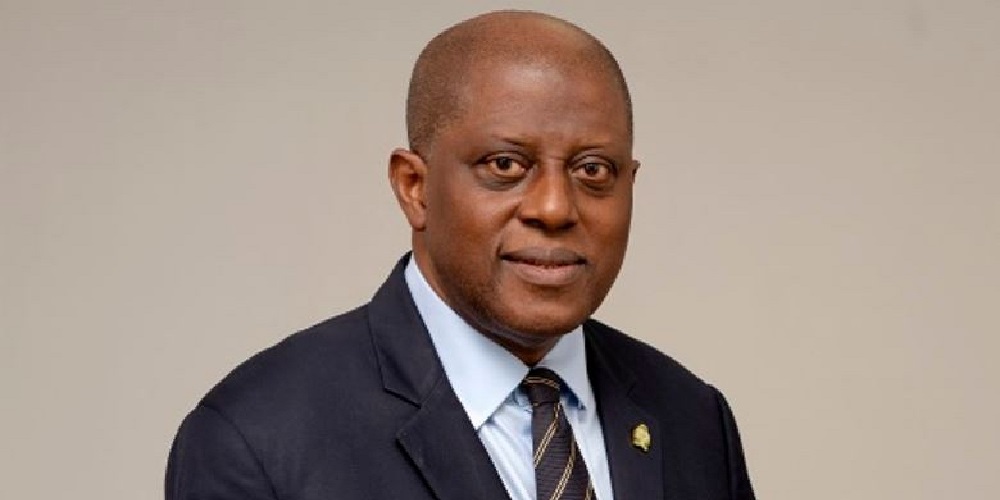
The Governor of the Central Bank of Nigeria (CBN), Mr. Olayemi Cardoso, formally received the Central Bank of the Year Award at the Central Banking Awards ceremony held in London on Wednesday, June 10, 2026.
He dedicated the honour to the board, management, and staff of the CBN for their steadfast commitment to institutional reform and economic stability.
Also, Cardoso expressed appreciation to the Central Banking Publications and the award judges for the recognition, while congratulating fellow institutions and individuals honoured during the event.
The CBN governor stressed that the award is not a personal achievement but a testament to the collective efforts of the entire CBN, particularly the professionals whose dedication, integrity, and expertise – often exercised away from public attention – have strengthened the apex bank and reinforced confidence in Nigeria’s economy.
“I accept this award on behalf of the board, management and staff of the Central Bank of Nigeria,” Cardoso said.
“Above all, it belongs to the many dedicated professionals who serve our institution with integrity, expertise, and an unwavering commitment to the public good.”
Reflecting on the global economic landscape, Cardoso noted that recent years had presented significant challenges for central banks worldwide, with Nigeria facing its own share of economic pressures and policy tests.
He highlighted several difficult but necessary measures undertaken by the CBN, including efforts to address elevated inflation, implement major reforms in the foreign exchange market, and invest in critical digital and financial infrastructure to support the country’s long-term economic development.
Cardoso also pointed to key milestones achieved during the period, including Nigeria’s removal from the Financial Action Task Force (FATF) grey list and the successful completion of the banking sector recapitalisation exercise.
He noted that these accomplishments reflect the collaborative efforts of multiple institutions and stakeholders.
According to the CBN governor, the apex bank’s reform agenda has been guided by a clear objective: restoring confidence, strengthening institutional resilience and policy credibility, and laying a solid foundation for sustainable economic growth.
While acknowledging that significant work remains ahead, Cardoso expressed optimism about the progress made so far and the renewed confidence emerging across the economy.
He attributed these gains to the support of the federal government, market participants, development partners, and, most importantly, the resilience and confidence of the Nigerian people.
“We receive this recognition with humility,” he said. “We see it not as a destination, but as encouragement to continue the important work ahead.”
Cardoso reaffirmed the CBN’s commitment to preserving public confidence, safeguarding financial and monetary stability, and fulfilling its mandate with integrity, professionalism, and accountability.
The award represents significant international recognition for the Central Bank of Nigeria at a time when monetary and financial sector reforms remain central to the country’s economic recovery and long-term growth agenda.

Abandoned health facility for 40years gets new lease of life as Senator Manu moves for its completion(Photos)

Democracy Day: Senator Manu rejoices with constituents and Nigerians saying let’s remain steadfast better days are ahead

DEMOCRACY DAY: Tinubu honours seasoned journalists, Lad Bonuola, Louis Odion, Delee Alake, others with National awards




-

 News13 hours ago
Akpodiete Hails Rt. Hon. Fred Agbedi on Appointment as House Minority Leader
-

 Entertainment21 hours ago
Popular Singer, Davido draws world attention to kidnapped Oyo schoolchildren at World Cup Concert
-
 News21 hours ago
BREAKING: Reps Names New Minority Principal Officers as Fred Agbedi Emerges Minority Leader
-
 News15 hours ago
FG declares Friday June 12 public holiday for Democracy Day
-

 News3 hours ago
2026 World Cup: Why we lost 2-0 to Mexico – South Africa coach, Broos
-

 News14 hours ago
Repatriated Lady Narrates Husband’s Killing in South Africa, Vows Never to Return
-

 News3 hours ago
Democracy Day: Senate President Akpabio Urges Unity, Resilience, Citizen Participation
-

 News14 hours ago
If All The 36 Governors are backing Tinubu Victory Will still be mine in 2027– Peter Obi