Opinion
Orchestrated scandal and legislative blackmail to undermine oversight of Nigeria’s examination bodies, By Ademola Ishola

- /home/naijuinz/public_html/wp-content/plugins/mvp-social-buttons/mvp-social-buttons.php on line 27
https://naijablitznews.com/wp-content/uploads/2025/12/f2593a1f-fabf-42b0-bbef-6934356beea4-1000x600.jpeg&description=Orchestrated scandal and legislative blackmail to undermine oversight of Nigeria’s examination bodies, By Ademola Ishola', 'pinterestShare', 'width=750,height=350'); return false;" title="Pin This Post">
- Share
- Tweet /home/naijuinz/public_html/wp-content/plugins/mvp-social-buttons/mvp-social-buttons.php on line 72
https://naijablitznews.com/wp-content/uploads/2025/12/f2593a1f-fabf-42b0-bbef-6934356beea4-1000x600.jpeg&description=Orchestrated scandal and legislative blackmail to undermine oversight of Nigeria’s examination bodies, By Ademola Ishola', 'pinterestShare', 'width=750,height=350'); return false;" title="Pin This Post">


In recent days, an avalanche of sensational allegations has been deliberately rehashed against Hon. Oboku Abonsizibe Oforji, Chairman of the House of Representatives Committee on Basic Examination Bodies. Carefully choreographed, emotionally charged, and aggressively circulated, these claims are not the product of investigative rigour or civic concern. Rather, they bear all the hallmarks of a calculated blackmail operation, one designed to distract, intimidate, and ultimately derail a legislative committee that has dared to insist on transparency in one of Nigeria’s most sensitive public sectors.
At the heart of this controversy is a simple but inconvenient truth: when oversight becomes uncomfortable, those accustomed to opacity often resort to spectacle. What is unfolding is not a scandal rooted in fact, but a crisis manufactured through exaggeration, selective omissions, and outright distortion, all aimed at weakening the constitutional authority of the legislature. The most reckless strand of the allegations claims that Hon. Oforji and his committee extorted major examination bodies, WAEC, NECO, NABTEB, NBAIS, and JAMB, by coercing them to surrender portions of their Internally Generated Revenue. This narrative collapses immediately under basic scrutiny.
These are not informal outfits operating without legal protection. They are statutory institutions with governing councils, legal departments, compliance units, and direct access to Nigeria’s foremost law enforcement and anti-corruption agencies. Yet, strikingly, not a single one has submitted a petition to the EFCC, ICPC, the Police, or even the leadership of the National Assembly. There is no memo of protest, no letter of complaint, no whistleblower testimony, and no documentary trail. Nigerians are being asked to believe that multiple national agencies were serially extorted—quietly, compliantly, and without resistance. That proposition insults both logic and institutional reality.
What the committee did, in truth, was to demand transparency. It invoked Sections 88 and 89 of the 1999 Constitution (as amended), which explicitly empower the National Assembly to investigate public institutions, scrutinise their finances, and expose inefficiency, waste, or abuse. Requests for audited accounts, operational breakdowns, and performance indicators were not acts of intimidation; they were acts of governance. Rebranding constitutionally grounded oversight as “blackmail” is a cynical rhetorical trick intended to criminalise accountability itself.
Nowhere is the dishonesty of the allegations clearer than in the handling of the JAMB-sponsored programme of underage examination that has been deliberately misrepresented to the public. Even before then, the committee had extended an invitation to JAMB following the resolution of the house for the investigation of the last JAMB examination crisis, which the examination body failed to honour.
The underage examination programme was designed to be held in three centres: Abuja, Lagos, and Owerri. Members of the House Committee on Basic Examination Bodies were expected to attend as part of their oversight responsibilities. Due to an already congested legislative schedule, the committee was only able to attend one centre, a fact that was publicly documented and widely covered by national media, including AIT and Arise Television. Crucially, because the committee did not attend the Lagos and Owerri centres, ₦43 million was formally returned to JAMB on 11 November 2025 to the JAMB account TSA 0020125461019. This refund occurred transparently and in the midst of ongoing oversight activities, not in secrecy, and not under pressure. If the intention were to divert funds, why return such a substantial amount? And why do so openly?
The controversy escalated unnecessarily on 29 October 2025, when JAMB officials first appeared before the committee. In a dramatic and unprecedented move, the JAMB delegation, led by a director in the Registrar’s office, Mr Bello, staged a walkout, claiming they wished to present “sensitive documents.” He said he had earlier sought a private audience with the chairman, and the committee chairman rightly declined it, as committee proceedings must remain institutional, not personalised. Rather than submit their documents formally, the delegation exited and alleged that the chairman intended to embarrass them. Oversight was recast as hostility; procedure was framed as persecution.
By 13 November 2025, a more sober approach prevailed. JAMB was now represented not by a director, but by its Registrar, Prof. Ishaq Oloyede, who apologised for the earlier conduct and formally submitted documents to the committee. The committee, for its part, reaffirmed that it would not be intimidated, blackmailed or distracted from its mandate. Yet the strangest development came later. After receiving the refunded ₦43 million, JAMB inexplicably returned the same funds to the committee again on 17 November 2025, in the middle of an ongoing probe. The committee promptly returned the money once more on 19 November 2025 to the same account number, JAMB account TSA 0020125461019. After this return, JAMB ran to the media to begin their orchestrated campaign of calumny.
This sequence raises a far more serious question than any posed by the blackmail narrative: why would JAMB return funds to a committee actively probing it, if not to compromise, confuse, or distract the oversight process? Nigerians deserve an answer to that question. The burden of explanation lies squarely with JAMB, not with the committee that consistently returned money it did not earn or request.
This is accounting by rumour, a phantom narrative designed to alarm, not to inform. In a system as paper-driven and procedurally rigid as the National Assembly, financial misconduct cannot simply vanish into thin air. Yet the accusers offer numbers without evidence, accusations without victims, and conclusions without investigation. Another strand of the allegations accuses Hon. Oforji of manipulating consultants to fabricate evidence. Once again, there is no supporting material. Committees routinely engage consultants, just as they routinely disengage them when deliverables fall short. Not a single consultant has filed a complaint. None has testified to coercion. No contract document has been produced to suggest impropriety. What remains is an insinuation elevated to headline status.
The allegations regarding foreign travel are equally hollow. Both chambers of the National Assembly were allocated two official slots each for oversight-related foreign programmes. The Chairmen and Deputy Chairmen of the relevant committees, including Hon. Oforji, undertook the trips. No special allowances were paid beyond standard estacode, in line with established rules. If anyone claims otherwise, the challenge is simple: produce evidence. Travel approvals, payment records, and estacode schedules are documented and verifiable. To date, none has been presented.
Perhaps most revealing is the sudden eruption of civil society organisations demanding Hon. Oforji’s removal. A closer examination reveals a familiar pattern: ad-hoc groups with no sustained track record, parroting identical talking points, and offering no independent verification. These are not watchdogs; they are megaphones, deployed whenever certain interests require moral camouflage for political objectives. Strip away the noise, and a clear picture emerges.
The House Committee on Basic Examination Bodies intensified its scrutiny. Financial practices that had long escaped rigorous examination were suddenly under review. Questions were asked. Documents were demanded. Predictably, discomfort followed. Unable to halt the process through procedure, those threatened by transparency turned to a public spectacle. The goal is not justice; it is paralysis. Discredit the chairman, unsettle the committee, and weaken oversight long enough for the dust to settle and business to return to usual.
There is a glaring absence of logic at the core of these allegations. No petitions. No documents. No witnesses. No financial trail. Only noise, timed precisely to coincide with deeper scrutiny. Hon. Oboku Abonsizibe Oforji’s real offence is not corruption; it is insistence. Insistence on transparency. Insistence on accountability. Insistence that institutions entrusted with examining millions of Nigerian children must themselves be examined. History shows that those who challenge entrenched systems rarely escape retaliation. But it also shows that truth, eventually, outlasts noise. Nigerians must look beyond orchestrated distractions and recognise this campaign for what it is: a desperate attempt to silence legislative oversight and preserve institutional impunity. Oversight is not blackmail. Accountability is not persecution. And transparency is not a crime.
■ Ishola, a political analyst and legislative aide, writes from Abuja. He can be reached at adshola29@gmail.com


By
Sonny Aragba-Akpore
With an ambitious move to generate nearly N600b in revenue yearly, the Digital Switch Over (DSO) programme launched recently by the Federal Government of Nigeria may not be as smooth as envisioned despite its promise of free-to-air broadcast systems. The government also anticipates nearly $1b from Spectrum sales alone, and other speculated income streams, and the Information and National Orientation Minister, Mr Idris Mohammed, and his Communications, Innovation and Digital Economy counterpart, Mr Bosun Tijani, are very enthusiastic that DSO will certainly be a game changer.
Nigeria is about 20 years behind the schedule announced by the International Telecommunications Union (ITU). With a wobbling analogue television broadcasting believed to be inefficient and massive misuse of radio frequency bands, the government feels that the transition to DSO, no matter how late, will boost government revenues. “Turning off analogue transmitters frees up high-value frequencies in the 700MHz and 800MHz bands.”
Government intends to sell this freed-up space—known as the “Digital Dividend”—to telecommunications companies for 4G and 5G rollout and mobile broadband expansion to boost internet connectivity, and this single process is projected to generate over $1 billion in direct auction revenue. 40 million homes are expected to pay minimal yearly fees to keep their converter boxes active, thus creating a recurring, high-volume pool of capital, and the government takes a regulatory cut of these administrative fees.
But is revenue generation the ultimate purview of the government? Apart from the Information and Communications Ministries’ involvement at policy formulation levels, the National Broadcasting Commission (NBC) and Nigerian Communications Satellite Limited (NIGCOMSAT) are expected to play key roles as regulators and service providers.
Already, Nigcomsat has a Direct to Home (DTH) centre where it is expected to warehouse programmes with the help of content creators, beam signals of about 100 programmes to multiple radio stations nationwide via its satellite, the Nigcomsat 1R, at no cost to subscribers.
Although there are expected free set-top boxes to track signals for radio stations and TV with no monthly fees, NBC has structured the setup boxes to include a yearly access or activation fee (often called a “Free TV Carriage Fee” or smartcard renewal fee, as the case may be. But that is where the excitement stops.
Millions of homes paying a minimal yearly fee to keep their converter boxes active creates a recurring, high-volume pool of capital. The government takes a regulatory cut of these administrative fees. Analysts say that under the old analogue regime, individual TV stations owned and managed their own expensive transmission masts. By the DSO model, TV channels focus only on making content. They must pay licensed National Signal Distributors (like ITS or Pinnacle) to transmit their channels to the public.
The government generates direct revenue by licensing these signal distributors and takes a percentage-based regulatory levy on the carriage fees paid by the TV stations to remain on the Free TV network. The free set-up boxes are internet-enabled, and so users will have unfettered access to crisp digital signals for optimal content. There will be an advertisement boom projected to hit over N600 billion, from which the government will have cuts as tax. But beautiful as the initiative is, it will not gain currency until December 31, 2028.
Although the DSO programme appears populist, can it compete with DSTV and Star Times even though their tariffs are prohibitive? We just hope DSO is not a wild goose chase. ITU initiated DSO in 2006 with a mandate to migrate tv and radio broadcasts from analogue to digital terrestrial broadcasting.
The 2006 decision was reached at the Regional Radiocommunication Conference held in Geneva. Member nations signed the Geneva 2006 (GE06) Agreement, which originally set a global switch-off deadline for June 2015. Because many regions struggled to meet this target, it was subsequently extended to 2020. Nigeria officially began its DSO journey with a pilot programme in Jos, Plateau State, on April 30, 2016. Following a steady progression, the Federal Government initiated a major nationwide rollout of the DSO but was stifled by a lack of political will laced with alleged personal interests.
While other countries on this belt are striving to create an enabling environment for the implementation of DSO, some countries, including Nigeria, were unable to catch up. The updated rollout pivots to a satellite-first approach to reach nationwide coverage faster, offering seamless picture quality and audio. Even when there are manifest prospects from DSO, there are also palpable contradictions and concerns over its availability.
The hybrid satellite approach appears not to be comfortable with some stakeholders in the Broadcasting Organisations of Nigeria (BON). Analysts reason that true DSO legally requires Digital Terrestrial Television (DTT) to free up bandwidth for telecom operators, warning that the satellite model shifts dish and decoder costs to citizens. And this is unfortunate. The satellite option may be on edge as the Nigerian satellite operator has no backup satellite to mitigate the situation in the event of downtime.
If fully realised, the DSO may free up premium frequency bands (like 700MHz and 800MHz) for auctioning to telecom operators to expand 4G/5G broadband. It is also designed to create thousands of jobs in local content creation and offer an integrated audience measurement system for advertisers with an estimated turnover of over N600 billion yearly. StarTimes and DSTV may lose market shares as advertisers will cash in on the free tv channels to boost their revenue.
But Star Times has a comparable advantage since it is uniquely insulated because it operates as the primary technical partner to the Nigerian Television Authority (NTA) through its joint venture, Integrated Television Services (ITS)—one of the licensed national signal distributors. Because StarTimes built much of the digital terrestrial television (DTT) infrastructure used for the DSO, the company stands to generate substantial business-to-business revenue from transmission fees and infrastructure management.
MultiChoice’s lower-tier GOtv packages face immense pressure; its premium DStv tier remains relatively protected. FreeTV cannot compete with DStv’s exclusive live sports broadcasting rights (such as the English Premier League) and expensive international content libraries. MultiChoice will likely be forced to pivot aggressively toward premium exclusivity and its Showmax streaming platform to hedge against losing the market.
The nationwide platform launch of June 17, 2026, was the official activation of Nigeria’s National Digital Broadcasting Platform. Managed via a partnership between the NBC and NIGCOMSAT, this initial rollout went live with over 57 digital channels, scaling toward a target of 100+ free-to-air stations. From 2026 – 2028 (The Hybrid Rollout Phase) will lead to the deployment of a converged broadcast model.
This combines Direct-to-Home satellite (DTH), Digital Terrestrial Television (DTT), and Internet Protocol (IP) networks to resolve regional infrastructure gaps. December 31, 2028, is the definitive deadline for all analogue transmitters across Nigeria to be permanently turned off. Beyond this date, standard TV antennas will no longer pick up broadcast signals without a digital converter box.

By Ken Harries, Esq.
It often begins as an ordinary day. A commercial bus pulls out before dawn, its passengers expecting nothing more than traffic delays and bad roads. Traders carry the week’s earnings. Students return to school. A nursing mother cradles her child. A retired civil servant travels to visit his family. Elsewhere, anxious parents wave goodbye as a school bus disappears through the gates, expecting to see their children again that afternoon. Then, somewhere along a lonely highway or beside a quiet rural school, armed men emerge from the bush. Within minutes, ordinary life gives way to terror. Passengers are dragged into the forest. Schoolchildren are herded into waiting vehicles. Families receive the dreaded telephone call demanding ransom. By nightfall, another community has joined the growing list of Nigerians praying that their loved ones will return home alive.
That story is no longer exceptional. It has been repeated so often, in different states and under different circumstances, that it has become a grim national pattern. Across Nigeria, parents hesitate before sending their children to school. Farmers weigh every trip to their fields against the possibility that they may never return. Travellers study routes not for the shortest distance but for the greatest chance of survival. In a country blessed with enormous human and natural resources, fear has become an invisible checkpoint on countless roads.
It is against this backdrop that the debate over state police has acquired fresh urgency.
For decades, Nigerians have argued over whether policing should remain the exclusive responsibility of the Federal Government or whether states should be empowered to establish their own police services. It is a conversation that has generated more heat than light, with strong emotions on both sides.
The State Police Bill, now making its way through the constitutional amendment process, represents the most determined effort yet to answer that question and make community policing a constitutional reality.
More importantly, it reflects a growing national consensus that the country’s evolving security challenges require a policing structure that is closer to the people, more responsive to local realities, and better equipped to detect and prevent crime before it occurs. Whether one ultimately supports or opposes state police, there can be little doubt that the debate has moved beyond theory. It is now about finding practical solutions to one of the greatest threats confronting Nigeria’s unity, stability, and future.
It is certainly an ambitious proposal. The strongest argument in favour of state police begins with a simple reality: Nigeria has grown too large, too complex, and too diverse for a completely centralised policing structure to respond effectively to every local security challenge.
A police officer deployed hundreds of kilometres away can rarely know a community as intimately as those who live there. Local officers are more likely to understand the terrain, recognise unfamiliar faces, detect emerging threats, and build the trust that encourages residents to volunteer vital intelligence before crimes occur rather than after lives have been lost. They also have a deeper personal stake in preserving peace. Their families live in the community. Their friends are there. Their children attend its schools. Their lives are woven into its social fabric. That sense of belonging often translates into a stronger commitment to preventing crime because every threat to the community is also a threat to the people and places they call home.
Such local knowledge can make all the difference. It can be the difference between prevention and tragedy. It can enable security agencies to identify suspicious movements before they become deadly attacks, respond more swiftly to kidnappings and violent crimes, resolve communal tensions before they escalate, and gather intelligence that outsiders might never obtain. At the same time, it would allow federal security agencies to concentrate their resources on terrorism, organised crime, transnational offences, and other threats that transcend state boundaries.
There is another advantage that is often overlooked. Effective policing depends not only on uniforms, weapons, and patrol vehicles, but also on public confidence. People are far more likely to cooperate with law enforcement when they regard police officers as members of their own communities rather than distant representatives of an impersonal bureaucracy. They are more willing to report suspicious activities, identify criminal elements, and volunteer intelligence that could prevent crimes before they occur. In the fight against insecurity, timely information is often the most powerful weapon, and that information flows most readily where trust has been earned.
Yet, if the promise of state police is considerable, so too are the risks. No constitutional reform should be judged solely by its potential benefits; it must also be tested against the possibility of unintended consequences. It is here that the debate becomes more complex.
Nigeria’s political history gives critics ample reason for caution. Governors already wield significant influence within their states. Entrusting them with operational control over police formations inevitably raises difficult questions. Could state police be used to intimidate political opponents? Could elections become even more contentious if security agencies are perceived to serve incumbents rather than the law? Could legitimate dissent be treated as political disloyalty? These are not hypothetical concerns. They arise from Nigeria’s own political experience and deserve credible constitutional and institutional safeguards.
Beyond the question of political misuse lies an equally practical challenge: funding. Professional policing is expensive. It requires far more than uniforms and patrol vehicles. Officers need rigorous training, competitive remuneration, modern equipment, reliable communication systems, forensic capabilities, intelligence infrastructure, and continuous oversight. Many states already struggle to pay salaries and finance essential public services. Without a sustainable funding framework, some states could build highly professional police services while others struggle to maintain basic operational capacity. That would not strengthen national security; it would simply replace one centralised policing problem with thirty-six unequal policing systems.
There is also the issue of coordination. Criminals do not stop at state borders to admire welcome signs. They move across jurisdictions with ease. Any state policing framework must therefore establish clear rules for cooperation between state and federal agencies, intelligence sharing, joint operations, and conflict resolution. Otherwise, confusion could become as dangerous as the insecurity the reform seeks to address.
These are difficult questions, but difficult questions are precisely what serious legislatures exist to confront. That is why the Senate’s handling of the State Police Bill deserves plaudits.
Under the leadership of Senate President Godswill Akpabio, the 10th Senate has chosen engagement over avoidance. Few constitutional questions are as politically sensitive as those touching the nation’s security architecture. They evoke competing interests, regional anxieties, constitutional concerns, and deeply held convictions about the nature of the Nigerian federation. Faced with such complexity, the easier course would have been to postpone the debate or leave it to another Assembly. Instead, the Senate elected to confront the issue directly, recognising that a nation under relentless security pressure cannot indefinitely defer difficult decisions.
By encouraging public hearings, inviting diverse perspectives, and steering deliberations through the constitutional process, the Senate has transformed what was once an endless national argument into structured legislative engagement. That is how democratic institutions are supposed to function. The objective is not to eliminate disagreement. It is to channel disagreement into laws that strengthen the republic.
The State Police Bill is certainly not a magic wand. No legislation, however well crafted, can eliminate insecurity overnight. Laws create frameworks; institutions and leadership determine outcomes. The success of state police will therefore depend not merely on the passage of the Bill but on how faithfully its provisions are implemented and how effectively its safeguards are enforced. Independent oversight, merit-based and transparent recruitment, sustainable funding, clear operational protocols, professional accountability, and robust protection against political interference will determine whether state police emerge as trusted guardians of public safety or degenerate into instruments of partisan power.
Achieving those objectives is not solely the responsibility of the National Assembly. It demands a sustained commitment from every stakeholder in the security ecosystem. State governments must resist the temptation to politicise the police. Security professionals must uphold the highest standards of professionalism and integrity. Civil society must remain vigilant in demanding accountability, while citizens must embrace the civic responsibility of cooperating with law enforcement. Only through such a shared commitment can the promise of state police be translated into lasting public safety.
Still, there is value in recognising progress when it occurs. For too long, Nigeria’s security conversation has revolved around managing recurring crises instead of questioning whether the structures themselves require reform. The State Police Bill signals a willingness to examine first principles and ask whether yesterday’s solutions remain adequate for today’s realities.
That willingness matters. Nation-building is seldom about finding perfect answers. More often, it is about having the courage to ask the right questions and the wisdom to improve institutions one reform at a time.
The Senate has opened that door. What remains is to ensure that what ultimately emerges from it strengthens security, deepens accountability, and restores public confidence in law enforcement. The true test of state police will not be the passage of the Bill but whether it produces police officers who know the communities they serve, share in their hopes and anxieties, and recognise that every threat to those communities is also a threat to their own families, neighbours, and future. Only then will Nigerians have renewed confidence that the institutions established to protect them are not distant enforcers of the law, but trusted guardians of the communities whose fate and destiny they share.
Ken Harries Esq is an Abuja based Development Communication Strategist
By Michael Agbaji
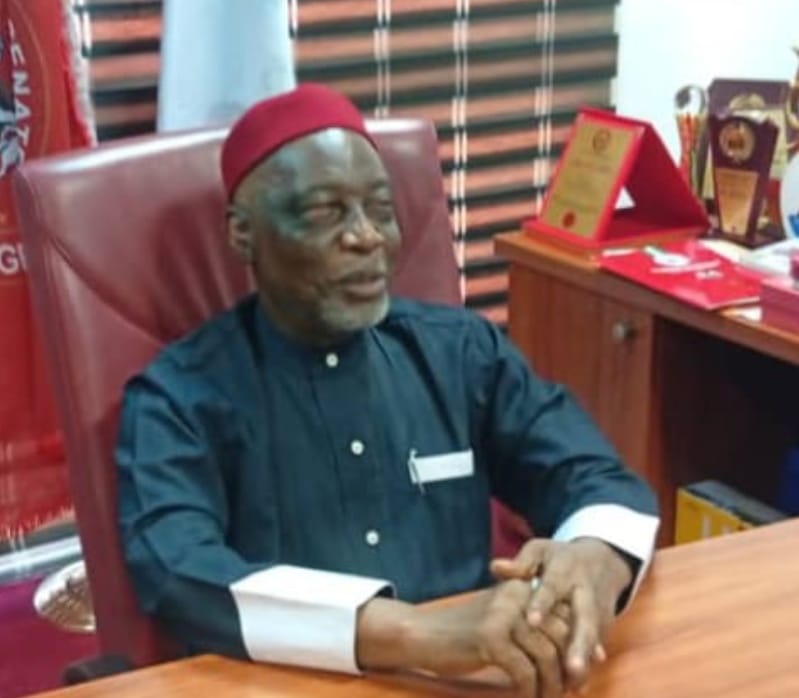
As Senator Patrick Abba Moro marks another birthday, it is fitting to celebrate a distinguished statesman, visionary leader, and compassionate philanthropist whose life has been defined by selfless service, exemplary leadership, and an unwavering commitment to the advancement of humanity.
A proud son of Okwungaga in Ugbokolo District, Okpokwu Local Government Area of Benue State, Senator Moro has continued to distinguish himself as one of the most accomplished sons of Idomaland. Okpokwu Local Government has produced many outstanding men and women who have served the nation with honour and distinction, and Senator Moro remains one of its finest ambassadors.
After his meritorious service as a Minister of the Federal Republic of Nigeria, Senator Moro returned home with an unwavering determination to improve the lives of his people. Rather than retreat into personal comfort after years in public office, he chose the path of sacrifice by dedicating himself to education, youth empowerment, community development, and support for the less privileged.
Through his leadership and representation, numerous developmental projects have been executed across Benue South Senatorial District. These include the provision of potable water, healthcare facilities, educational support, road infrastructure, agricultural equipment, and empowerment programmes for youths, women, and the elderly. These interventions have positively transformed lives and will continue to benefit generations to come.
Senator Moro’s impact extends far beyond physical infrastructure. During his tenure as Minister, he facilitated opportunities for many qualified young Nigerians to serve their country. His mentorship, encouragement, and commitment to human capital development have positively influenced countless lives, not only in Benue South but across Benue State and Nigeria as a whole.
The English philosopher Herbert Spencer once observed, “The great aim of education is not knowledge but action.” Senator Patrick Abba Moro has consistently demonstrated throughout his public life that genuine leadership is measured not by promises but by meaningful action and lasting impact.
To me, Senator Patrick Abba Moro is far more than a respected elder statesman and accomplished politician. He is a mentor, a role model, and a source of inspiration to everyone who believes that leadership is rooted in selfless service to humanity.
By the grace of God, I aspire to emulate his example by dedicating my life to serving humanity, empowering young people, and contributing meaningfully to the development of Benue South Senatorial District, Benue State, and Nigeria.
As you celebrate another year today, I pray that Almighty God grants you continued good health, divine wisdom, renewed strength, and many more years of impactful service to our nation and humanity.
May your remarkable legacy of leadership, education, philanthropy, and community development continue to inspire the present generation and those yet to come.
Your life remains a shining reminder that true greatness is not defined by the offices one occupies but by the positive difference one makes in the lives of others.
Happy Birthday, Distinguished Senator Patrick Abba Moro. May your tomorrow be greater than today, and may God’s abundant blessings continue to rest upon you.
Signed:
Comrade Michael Ojonigwu Agbaji
News Editor, Dargic Online Media

93 percent of inmates are State offenders, half don’t need jail — Tunji-Ojo

BBNaija season 11 to debut July 26 with N160m grand prize

Corruption Charges: Ex-CCT Chairman Umar gets N100m bail as trial begins Oct 29




-

 News21 hours ago
DAY 26 of Projects Commissioning in the FCT:
-
 News19 hours ago
Senate Moves to Amend Electoral Act After Dozens of Incumbent NASS Members Lose Party Tickets
-

 News19 hours ago
Appeal Court reserves verdict on derecognition of ADC, four parties
-
 News20 hours ago
Akpabio Declares Open National Assembly Open Week, Charges Parliament on Transparency
-
 Sports18 hours ago
Arsenal legend, Henry reacts to France World Cup defeat, says Spain was far more superior
-
 News13 hours ago
Angry Wife Bites Husband’s Manhood After Filing Her Teeth To Make It Sharper
-
 News19 hours ago
Taraba APC dispute: Electoral victories should not breed arrogance, exclusion – Kefas tells candidates
-

 News17 hours ago
Tinubu’s Govt Makes Fresh Appointment