Economy
CBN Reports: Nigeria Records $4.6bn BOP Surplus, Reserves Hit $42.7bn
- /home/naijuinz/public_html/wp-content/plugins/mvp-social-buttons/mvp-social-buttons.php on line 27
https://naijablitznews.com/wp-content/uploads/2024/02/Olayemi-Cardoso.jpg&description=CBN Reports: Nigeria Records $4.6bn BOP Surplus, Reserves Hit $42.7bn', 'pinterestShare', 'width=750,height=350'); return false;" title="Pin This Post">
- Share
- Tweet /home/naijuinz/public_html/wp-content/plugins/mvp-social-buttons/mvp-social-buttons.php on line 72
https://naijablitznews.com/wp-content/uploads/2024/02/Olayemi-Cardoso.jpg&description=CBN Reports: Nigeria Records $4.6bn BOP Surplus, Reserves Hit $42.7bn', 'pinterestShare', 'width=750,height=350'); return false;" title="Pin This Post">
Nigeria recorded an overall Balance of Payments (BOP) surplus of $4.60 billion in the third quarter of 2025, reversing the deficit recorded in the preceding quarter, the Central Bank of Nigeria (CBN) said in data released on Friday. The turnaround was driven by a sustained current account surplus, stronger export receipts, resilient remittance inflows and increased participation by foreign investors.

The current account posted a surplus of $3.42 billion, underpinned by an improved goods account which remained in surplus at $4.94 billion as higher export earnings lifted the trade balance. Total goods exports during the quarter amounted to $15.24 billion, with crude oil exports rising to $8.45 billion. Exports of refined petroleum products rose sharply—up 44 percent—to $2.29 billion, while imports of refined petroleum products declined by 12.7 percent. The CBN said these developments point to progress in domestic refining capacity and a gradual shift away from net import dependence in refined fuels.
Secondary income flows also made a material contribution to the external position. The secondary income account recorded a surplus of $5.50 billion, which included $5.24 billion in remittances from Nigerians in the diaspora. The sustained level of workers’ remittances provided a predictable source of foreign exchange during the quarter.

Financial account developments further supported the overall outcome, with the country posting a net lending position of $0.32 billion. Foreign direct investment rose to $0.72 billion, while portfolio investment remained robust at $2.51 billion, reflecting continued non-resident participation in domestic financial instruments and improved investor sentiment toward Nigerian assets.
External buffers strengthened markedly over the quarter. Gross external reserves increased to $42.77 billion at end‑September 2025, up from $37.81 billion at end‑June, according to the CBN. The bank attributed the accretion in reserves to the combined effects of reforms in the foreign exchange market, monetary policy implementation and developments in the domestic energy sector.
“The Q3 2025 BOP outcome underscores strengthening external sector fundamentals, firmer investor confidence, and the continued impact of reforms,” Hakama Sidi Ali, Acting Director of Corporate Communications at the CBN, said in a statement. The institution framed the results as evidence of improved external stability and growing policy space.
Analysts said the mix of higher commodity export proceeds, durable remittance inflows and renewed foreign portfolio participation should help moderate short‑term external vulnerabilities and support more predictable exchange rate dynamics, provided the policy stance remains consistent and the momentum in domestic refining and export diversification is sustained.

Economy
IMF questions Nigeria’s $5bn borrowing structure
The International Monetary Fund (IMF) has raised concerns over Nigeria’s plan to secure up to $5 billion in external financing through a derivatives-based arrangement with the First Abu Dhabi Bank in the United Arab Emirates.
The warning was issued by Christian Ebeke, the IMF’s resident representative in Nigeria, who told journalists that such financial structures are often complex and lack transparency in their terms.
According to him, similar transactions in other countries have raised red flags due to limited disclosure and difficulty in fully assessing the obligations involved.
“Our view is that the transaction in these types of structures carry risks. Usually they are opaque, so the terms are not always very transparent when we reviewed these instruments across countries,” Ebeke said.
He advised that Nigeria consider more conventional funding options, including Eurobonds or concessional loans, which he said tend to offer clearer terms and lower risk exposure for sovereign borrowers.
The development comes as Nigeria continues to ramp up external borrowing to finance its fiscal needs and infrastructure plans. On March 31, the National Assembly approved President Bola Tinubu’s request for $6 billion in external loans.
As part of the approval process, the president specifically sought backing for a structured Total Return Swap (TRS) arrangement of up to $5 billion with First Abu Dhabi Bank.
The federal government has argued that the funds would support budget implementation, infrastructure development, and the refinancing of more expensive domestic and external debts.
However, the IMF’s comments add to ongoing global scrutiny of complex sovereign financing arrangements, particularly those involving derivatives-based instruments that can obscure the true cost of borrowing.
Nigeria’s public debt stock currently stands at about $110.3 billion (approximately N159.2 trillion as of December 2025), underscoring concerns about debt sustainability as new borrowing plans expand.
Economy
OPEC+ approves fourth oil output increase since Hormuz closure
The Organisation of Petroleum Exporting Countries and its allies, also known as OPEC+, has approved the fourth oil output increase since the Hormuz closure crisis.
The decision followed renewed commitments by Saudi Arabia, Russia, Iraq, Kuwait, Kazakhstan, Algeria and Oman to support market stability.
In a statement issued at the weekend, OPEC stated: “The seven OPEC+ countries, which previously announced additional voluntary adjustments in April and November 2023, namely Saudi Arabia, Russia, Iraq, Kuwait, Kazakhstan, Algeria and Oman, met virtually on June 7, 2026, to review global market conditions and outlook.
“In their collective commitment to support oil market stability, the seven participating countries decided to implement a production adjustment of 188,000 barrels per day from the additional voluntary adjustments announced in April 2023.
“This adjustment will be implemented in July 2026. The additional voluntary adjustments announced in April 2023 may be returned in part or in full, subject to evolving market conditions and in a gradual manner.
“The countries will continue to closely monitor and assess market conditions and, in their continuous efforts to support market stability, reaffirmed the importance of adopting a cautious approach and retaining full flexibility to increase, pause or reverse the phase-out of the voluntary production adjustments, including reversing the previously implemented voluntary adjustments announced in November 2023.
“The seven OPEC+ countries also noted that this measure will provide an opportunity for the participating countries to accelerate their compensation.
“The seven countries reiterated their collective commitment to achieving full conformity with the Declaration of Cooperation, including the voluntary production adjustments, which will be monitored by the Joint Ministerial Monitoring Committee (JMMC).
“They also confirmed their intention to fully compensate for any overproduced volumes since January 2024. The compensation period will be extended until the end of December 2026.”
It added: “The seven OPEC+ countries will hold monthly meetings to review market conditions, conformity and compensation. The seven countries will meet on July 5, 2026.”
Economy
Naira depreciates to N1,397/$ in parallel market
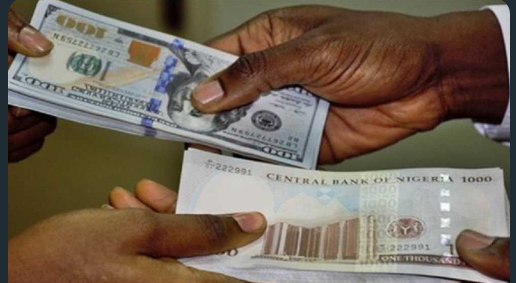
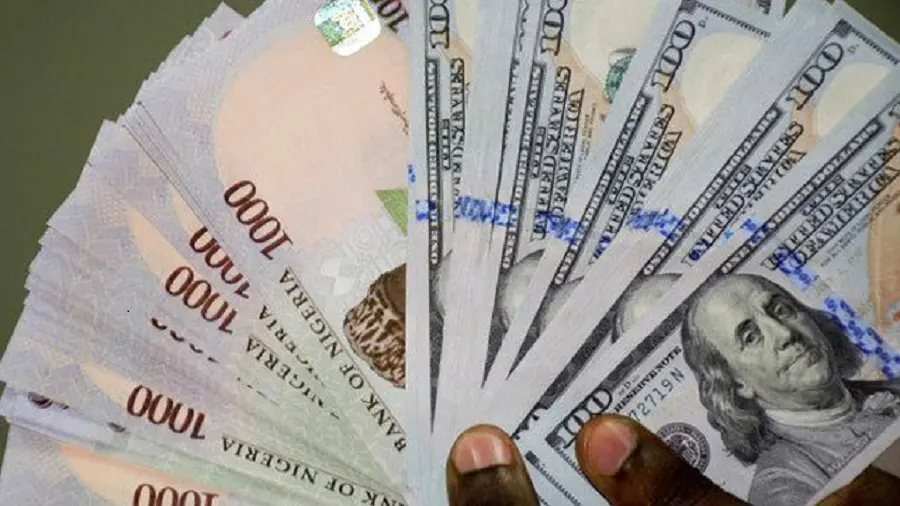
The naira on Friday depreciated to N1,397 per dollar in the parallel market from N1,390 per dollar on Thursday.
Likewise, the naira depreciated to N1,365 per dollar in the Nigerian Foreign Exchange Market, NFEM.
Data from the Central Bank of Nigeria, CBN, showed that the indicative exchange rate for the market rose to N1,365 per dollar from N1,359.75 per dollar on Thursday, reflecting N5.25 depreciation for the naira.
Consequently, the margin between the parallel and official markets widened to N32 per dollar from N30.25 per dollar on Thursday.
The turnover in the interbank foreign exchange market recorded its fourth daily decline by 42.5 per cent to $73.6 million from $128.2 million on Thursday.
This week, the naira strengthened by N1 per dollar in the official market, with turnover in the interbank foreign exchange market climbing to N683.2 million, representing a 76.7 per cent rise compared to N386.54 million recorded the previous week.
However, the local currency weakened in the parallel by N2 against the greenback.
-
News23 hours agoBinani Air Celebrates First Month in the Skies, Eyes Bigger Future
-
News16 hours agoKano Screens 720 Couples for State-Sponsored Mass Wedding Programme
-
News16 hours agoAlleged N2bn scam: EFCC tells Court how Sirika hired Ethiopian Airlines aircraft for three-day exhibition
-
News16 hours agoEx-NNPCL Boss Kyari Challenges Senate Over Arrest Warrant, N210trillion Probe, Cites Medical Trip Abroad
-
News12 hours agoSenate Orders Kyari’s Arrest Over Alleged ₦210 Trn NNPCL Financial Infractions
-
News16 hours agoNationwide protest to begin on Democracy Day as insecurity continue to escalate
-
Economy15 hours agoIMF questions Nigeria’s $5bn borrowing structure
-
News16 hours agoPastor Kumuyi Explains Why None of His Sons Will Inherit Deeper Life Church