
News
Atiku And Other Northern Muslims Reject INEC 2027 Elections Dates

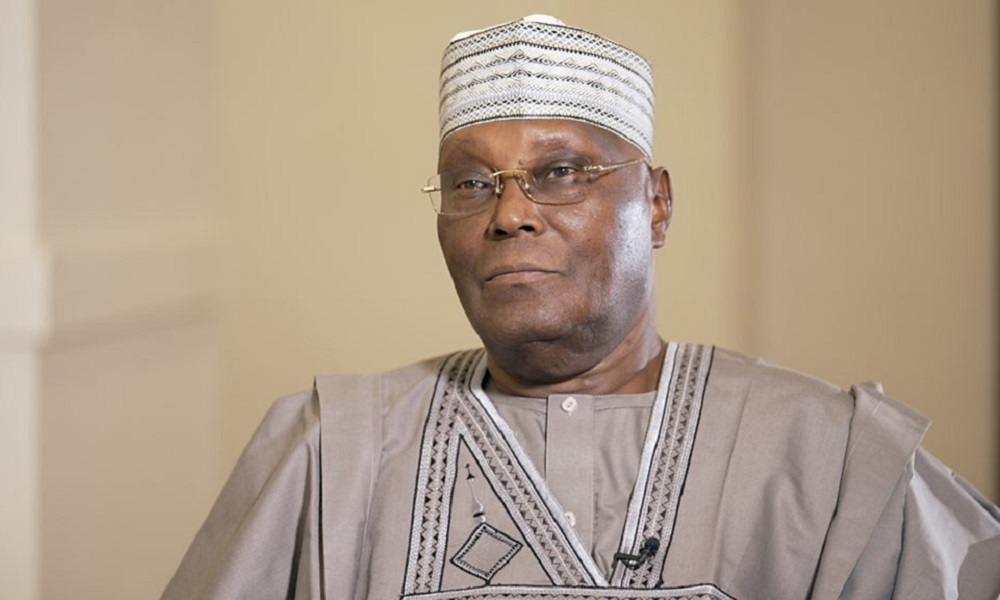


The announcement by the Independent National Electoral Commission (INEC) fixing dates for the 2027 general elections has sparked widespread criticism, particularly among northern Muslim leaders and political figures who argue that the schedule coincides with the Islamic holy month of Ramadan.
Former Vice President Atiku Abubakar has demanded an immediate change of the date released by the Independent National Electoral Commission for the 2027 general elections, stating it falls within the Ramadan period.
“The Independent National Electoral Commission (INEC) must urgently reconsider the February 20, 2027 date it has announced for the general elections,” Mr Abubakar said in a statement on Friday. “That date falls squarely within the Ramadan period (February 7 – March 8, 2027), a sacred season of fasting, reflection, and spiritual devotion for millions of Nigerian Muslims.”
INEC had earlier released the official elections timetable, outlining dates for campaigns, voters’ registration, political parties’ primary elections and general elections.
However, Mr Abubakar blasted INEC for fixing the elections within the holy month of Ramadan, accusing the electoral umpire of poor judgement and insensitivity to the country’s socio-religious realities.
“Elections are not mere administrative rituals; they are national exercises that demand maximum participation, physical endurance, and collective focus. Fixing such a critical civic exercise in the middle of a major religious observance reflects poor judgment and a troubling lack of sensitivity to the nation’s socio-religious realities,” the ADC chieftain said.
While noting that inclusive planning was fundamental, the former vice president said INEC’s poor handling of election timing casts doubt on the capacity of the body to deliver free and fair elections to Nigerians.
“In a diverse country like Nigeria, inclusive planning is not optional, it is fundamental. Something as basic as choosing a broadly acceptable date should not be mishandled. It speaks to competence, foresight, and respect for citizens.
“If INEC struggles with getting a simple matter of timing right, Nigerians are justified in asking: what assurance do we have that it will competently deliver free, fair, and credible elections in 2027?” Mr Abubakar stated.
We have recently deactivated our website’s comment provider in favour of other channels of distribution and commentary. We encourage you to join the conversation on our stories via our Facebook, Twitter and other social media pages.
Ramadan is a sacred period in Islam marked by fasting from dawn to sunset, increased prayers, and spiritual reflection. For many Muslims, the month involves physical restraint, heightened devotion, and communal religious activities that can be physically demanding.
Critics argue that conducting national elections during this period could suppress voter turnout, especially in predominantly Muslim regions of northern Nigeria. They maintain that elections require physical endurance, long hours at polling units, and active participation in vote protection and monitoring — activities that may prove challenging while fasting.
A statement circulating online described the move as “a troubling lack of sensitivity to Nigeria’s socio-religious realities,” emphasizing that election planning in a diverse country must take religious observances into account.
In Nigeria, where religion plays a significant role in public life, stakeholders insist that inclusive planning is not optional but fundamental to democratic credibility.
Atiku and Other Northern Voices React
Another northern commentator, Hamma Hayatu, declared confidently on social media that “the date for elections 2027 just released shall be changed,” reflecting a growing sentiment among critics that public pressure may force a review.
Several social media users echoed similar concerns, with one post reading: “There’s no way the Muslim majority will participate in the casting and protection of votes during Ramadan.”
Questions About Consultation and Planning
Observers say the controversy raises broader questions about the consultative process that preceded the announcement.
In past election cycles, INEC has often engaged political parties, civil society organizations, and security agencies in discussions around logistics and scheduling. However, critics argue that the Ramadan overlap suggests either insufficient consultation with religious and community leaders or an oversight in evaluating the socio-cultural implications of the dates.
Some commentators have framed the issue as a test of INEC’s foresight and administrative competence.
“If INEC struggles with getting a simple matter of timing right, Nigerians are justified in asking what assurance we have that it will competently deliver free, fair, and credible elections in 2027,” one political analyst wrote.
The concern is not merely symbolic. Analysts warn that even a marginal decline in voter turnout in key regions could influence electoral outcomes and fuel post-election disputes.
Risks to Voter Participation and Credibility
The primary fear expressed by critics is the potential suppression of voter turnout among Muslims observing the fast. During Ramadan, many adherents limit strenuous activities, especially under the hot sun, which characterizes much of Nigeria’s dry season in February and March.
Long queues at polling units, delays in accreditation, and potential security challenges could further discourage participation.
Election observers also note that reduced turnout in certain demographics may affect perceptions of legitimacy. In a country already grappling with concerns about voter apathy and trust in electoral institutions, any factor that appears to limit participation could undermine public confidence.
Moreover, Ramadan evenings are often dedicated to special prayers known as Taraweeh, meaning extended polling delays could clash with religious commitments.
Broader Political Implications
Beyond religious considerations, the controversy comes at a politically sensitive time as parties begin early maneuvering ahead of the 2027 race.
The northern region remains a crucial voting bloc in presidential elections. Any perception that its predominantly Muslim population is disadvantaged could become a major campaign issue.
Political strategists suggest that opposition parties may seize on the controversy to question INEC’s neutrality or competence, potentially escalating tensions.
At the same time, some voices have urged calm, noting that Ramadan does not automatically preclude civic participation and that Muslims in other countries have voted during the holy month. However, they acknowledge that Nigeria’s logistical and climatic realities differ significantly.
Pressure Mounts on INEC
As criticism intensifies, pressure is mounting on INEC to review the announced dates. Civil society groups and commentators argue that adjusting the calendar now would demonstrate responsiveness and strengthen public trust.
So far, INEC has not issued a formal statement addressing the Ramadan concerns. The Commission’s leadership may face increasing calls to clarify whether alternative dates were considered and what consultations informed the decision.
Election experts emphasize that revising the schedule at this early stage would not pose significant logistical challenges, given that 2027 is still over a year away.
A Test of Inclusivity
Ultimately, the debate over the 2027 election dates underscores Nigeria’s delicate balance of religion, politics, and democracy.
In a multi-ethnic, multi-religious society, national institutions are expected to demonstrate sensitivity to diverse realities. Critics insist that something as fundamental as election timing should reflect inclusive planning.
Whether INEC will reconsider its decision remains to be seen. However, the immediate public outcry signals that the issue resonates deeply, particularly among northern Muslim communities.
As the 2027 elections approach, the controversy serves as an early reminder that beyond logistics and ballots, the credibility of Nigeria’s democracy rests heavily on public trust — and that trust often begins with decisions that show respect for the nation’s diversity.

The husband of a woman accused of killing their two-year-old son stood by her in court on Thursday as she pleaded not guilty to a first-degree murder charge.
Corie Walsh, 40, appeared briefly before a judge on September 24 during a preliminary hearing in the case involving the death of her son, Barrett Walsh.
Walsh appeared in a bright red jail uniform with her hair tied back during the roughly three-minute hearing. She stood beside her attorney, who told the court that the defence had subpoenaed her treatment records from the jail.
The records, attorney Andrea Lyon later said, were requested to determine whether Walsh was receiving the mental-health treatment she needs.
The defence is also seeking to have Walsh released before trial to a hospital for treatment, despite a judge rejecting an earlier request this month.
Walsh’s husband, Michael Walsh, sat in the public gallery during Thursday’s hearing alongside an elderly couple who appeared visibly emotional.
As Walsh was led from the courtroom after the hearing, she made eye contact with her husband.
Outside the courthouse, friends comforted Michael, with one supporter telling him, “She will get through this, she’s strong.”
Michael was later heard telling another supporter that he had been “packing up” the family home.
Speaking to reporters outside court, Lyon said Walsh’s family remained firmly behind her.
“Her whole family is here today — her husband, mother, mother’s best friend,” the attorney said.
“They love her and this is not — she’s never been violent… she was psychotic. They all know that and want her to get better. This is not who she is,” Lyon added.
According to court documents, Walsh’s two older children discovered Barrett with a rope around his neck and his feet off the ground in the basement of the family’s home in Frankfort, a suburb about 30 miles southwest of Chicago.
The children reportedly ran to a neighbour’s house for help.
The neighbour called 911 and attempted CPR on the toddler, but he had no pulse and was cold to the touch. Barrett was pronounced dead at the scene.
An autopsy determined that the child, affectionately known as “Bear,” died from “asphyxia due to ligature compression of the neck,” according to court records.
Police later found Walsh fully clothed in a bathtub containing bloodied water. Investigators allege that she had attempted to kill herself by cutting her wrists and thighs with a dull kitchen knife.
Court documents further allege that Walsh confessed to killing her son and described him as the “anti-Christ” and “devil.”
The case has drawn particular attention because prosecutors allege Walsh had become intensely focused on the high-profile case of Lindsay Clancy, a Massachusetts mother accused of killing her three children.
Clancy’s defence argued that she suffered from postpartum psychosis and was legally insane when she fatally strangled her children with exercise bands. Her trial ended in a hung jury and mistrial.
According to Walsh’s defence team, she had discussed the Clancy case with neighbourhood friends shortly before Barrett was found.
During an earlier hearing, defence attorney Robert Kerr said Walsh had sent several “confusing” and “out of character” messages about the Clancy case.
Kerr told the court that Walsh had initially expressed one view about Clancy’s case before suddenly changing her position.
A witness reportedly described Walsh as abruptly saying that Clancy was “100% not guilty”, prompting friends to question whether she was okay and whether someone should check on her.
Walsh’s lawyers have argued that she was “severely mentally ill” and experiencing a psychotic episode when Barrett died.
The defence has also rejected suggestions that Walsh deliberately copied Clancy.
“Describing Corie to have copied Lindsay is to take an easy bait,” Kerr said during a previous hearing, according to a transcript.
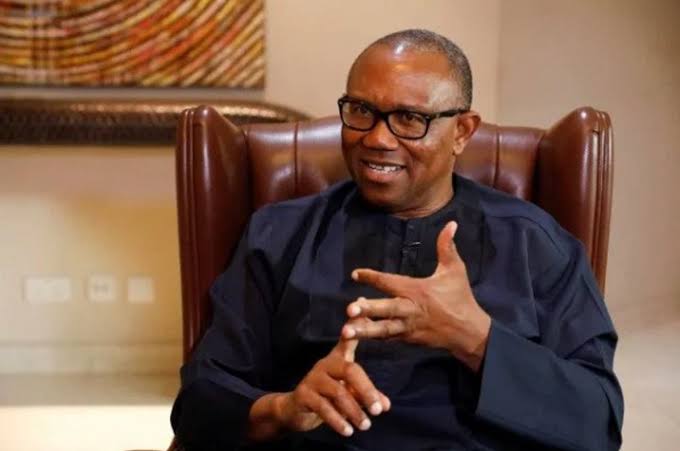
Presidential candidate of the Nigeria Democratic Congress (NDC), Peter Obi, has raised concerns about his personal safety ahead of the 2027 general elections, saying he is not certain he will be alive when Nigerians go to the polls.
Obi made the remarks during an interview on Arise TV on Thursday, where he discussed the political environment ahead of the election and called for a peaceful and democratic process.
The former Anambra State governor said he had been subjected to petitions and investigations in different places, adding that he remained uncertain about what could happen to him before the election.
“As I speak to you, I have also petitioned, I’ve been investigated everywhere. I still hear that I’m not even sure whether I’ll still be alive at the end of this,” Obi said.
He said he was relying on God for protection, while expressing uncertainty over the circumstances surrounding him.
“I’m praying to God for His protection because at this stage, I’m not sure what is happening,” he added.
Obi also appealed to political actors, particularly state governors, to create an environment where presidential candidates and other contestants can campaign freely ahead of the 2027 polls.
According to him, governors have the right to support candidates of their choice, but should not prevent candidates from opposing parties from carrying out their campaigns.
“Some of them will be campaigning for presidency tomorrow. They will be campaigning for other offices tomorrow. Let’s have peace,” he said.
The NDC candidate recalled his tenure as governor of Anambra State, saying he allowed politicians from other parties to campaign in the state, including those supporting candidates who were opposed to him.
Obi’s comments come amid increasing political activity and debate over the conduct and security of the 2027 elections. He has repeatedly called for a peaceful, credible and issue-based electoral process, while urging political actors to avoid actions that could undermine democratic participation.
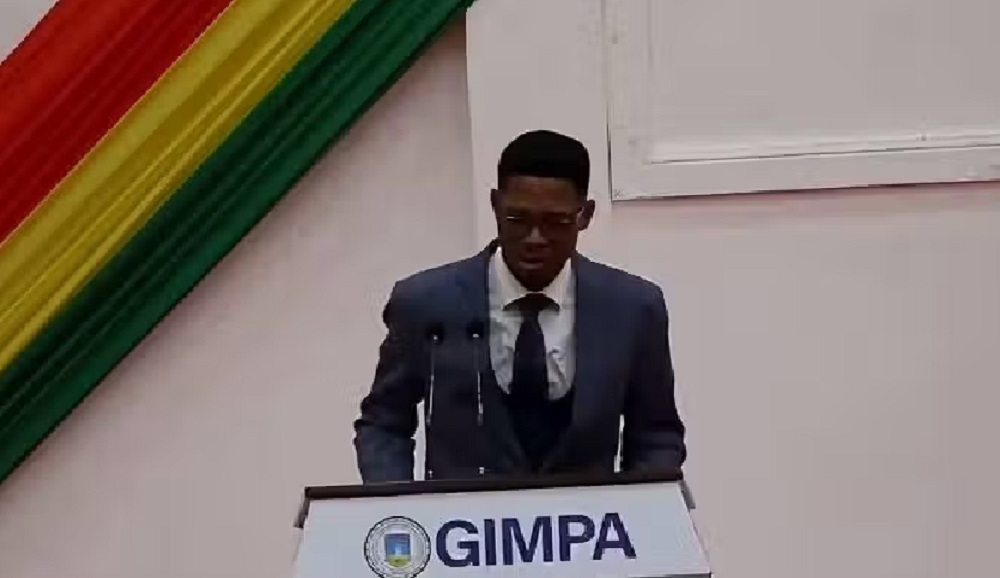
Francis-Xavier Sosu, Ghanaian member of parliament, collapsed on stage while delivering a speech.
Sosu was addressing students at the Ghana Institute of Management and Public Administration (GIMPA) in Accra on Thursday when he began to show signs of dizziness, according to video posted by Joy Online, a local media outlet.
Pausing his address, the lawmaker attempted to hold on to the podium but was unable to continue his speech or stand upright.
A man and a woman approached the podium from the side of the hall to assist the lawmaker, who later collapsed into their arms as they rushed him out of the building.
A statement issued by Ivan Dzakpasu, Sosu’s chief of staff, said the MP has received the necessary medical attention following the incident.
The statement did not provide details on the nature of the incident, the medical attention received or what may have caused the MP to become unwell.
The statement urged the public to remain calm and avoid relying on unverified reports or speculation about the lawmaker’s condition.

Husband Stands by Mum Accused of Hanging 2-Year-Old Son as She Faces Murder Trial

2027: Peter Obi Raises Alarm Over Safety, Says He May Not Be Alive for Election

Naira Marginally Gains At Official Market





-
 News22 hours ago
Video: Apo-Karshi road getting required finishing touches
-
 News22 hours ago
SAD! Four Teenage Girls Die As Boat Carrying Eight Capsizes In Jigawa
-
 News22 hours ago
US firm declares America won’t allow Tinubu rig 2027 polls in Nigeria
-
 Opinion22 hours ago
OF TEEJAY YUSUF, KOGI WEST SENATORIAL DISTRICT, AND RESPONSIVE SERVANTHOOD
-
 News21 hours ago
FG Cuts Late Tax Payment Interest as New Rate Takes Effect October 1
-
 Sports22 hours ago
FCT emerges winner of Abuja zone, book ticket to 1st Bank/Okwaraji U-16 finals