News
Election timetable: INEC reviews Ramadan conflict, vows to make amends
- /home/naijuinz/public_html/wp-content/plugins/mvp-social-buttons/mvp-social-buttons.php on line 27
https://naijablitznews.com/wp-content/uploads/2025/09/INEC.jpg&description=Election timetable: INEC reviews Ramadan conflict, vows to make amends', 'pinterestShare', 'width=750,height=350'); return false;" title="Pin This Post">
- Share
- Tweet /home/naijuinz/public_html/wp-content/plugins/mvp-social-buttons/mvp-social-buttons.php on line 72
https://naijablitznews.com/wp-content/uploads/2025/09/INEC.jpg&description=Election timetable: INEC reviews Ramadan conflict, vows to make amends', 'pinterestShare', 'width=750,height=350'); return false;" title="Pin This Post">
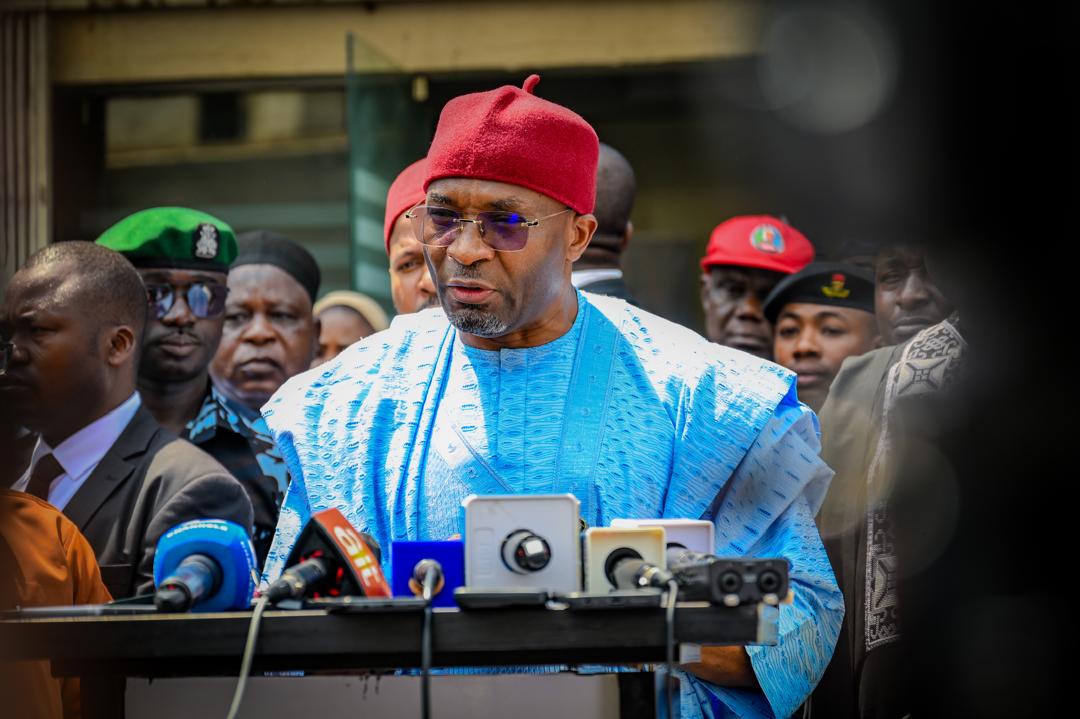
The Independent National Electoral Commission (INEC) has addressed concerns over its recently released Timetable and Schedule of Activities for the 2027 General Election, particularly regarding the dates fixed for the conduct of the elections.

Recall INEC had on Friday announced that the Presidential and National Assembly elections would hold on February 20, 2027, while the governorship and state assembly polls will be held on March 6, 2027.
The commission also fixed party primaries between May 22 and June 20, 2026, for the nomination of candidates.

However, concerns have arisen from some Nigerians, especially Muslims, over the date of the general election, as they noted it falls within the holy month of Ramadan. They emphasised that the physical demands of fasting may impact voter turnout, logistical, observers and electoral officers’ efficiency.
Notable among the voices is former vice president and a former presidential candidate of the Peoples Democratic Party (PDP), Atiku Abubakar, who urged the commission to reconsider the February 20, 2027 date, citing concerns over its overlap with the Muslim fasting period of Ramadan.
In a post via his official X (formerly Twitter) handle on Friday, Atiku said the proposed date falls “squarely within the Ramadan period (February 7 – March 8, 2027), a sacred season of fasting, reflection, and spiritual devotion for millions of Nigerian Muslims.”
A former presidential aide, Bashir Ahmad, also urged INEC to reconsider the dates.
Tagging INEC, his post on X partly read: “If the intention is to encourage full and inclusive participation in the electoral process, scheduling such a critical national exercise during Ramadan may present challenges for a large segment of the population. Many Muslims tend to reduce engagement in demanding worldly activities during this period in order to focus on religious obligations.
Given the significant Muslim population in this country, it may be worthwhile to reconsider the timing to ensure broader participation and convenience for all citizens.
“I do hope this observation will be taken in the spirit of inclusiveness and national cohesion.”
However, INEC, in a statement issued on Friday by the National Commissioner and Chairman of the Information and Voter Education Committee, Mohammed Haruna, said the timetable was developed in strict compliance with the timelines contained in the Constitution of the Federal Republic of Nigeria, 1999 (as amended), the Electoral Act, 2022, and the INEC Regulations and Guidelines for the Conduct of Elections, 2022.
Haruna stated that the INEC Regulations and Guidelines for the Conduct of Elections, in effect since 2019, fixed the dates elections are to be held.
He quoted paragraph two of the regulation as stating: “Election to the office of President and Vice President, as well as National Assembly, shall hold on the third Saturday of February of any general election year, while election to the office of Governor and Deputy Governor and the State Houses of Assembly shall hold two (2) weeks thereafter.”
He said, “Accordingly, and in faithful observance of these extant legal and regulatory provisions, the Commission fixed Saturday, February 20, 2027, for the Presidential and National Assembly Elections and Saturday, March 6, 2027, for the Governorship and State Houses of Assembly Elections.
“Notwithstanding the foregoing, the Commission has taken due notice of concerns expressed by stakeholders regarding the coincidence of the scheduled dates with certain nationally recognised holidays and observances.
“The Commission wishes to assure the public that it remains sensitive to all legitimate concerns that may impact electoral participation and the overall conduct of elections.”
He stressed that, in view of the developments, “the Commission is currently undertaking consultations and may, where necessary, seek appropriate legislative intervention to address the concerns raised, while ensuring that any adjustment remains consistent with constitutional and statutory requirements.
“INEC reiterates its unwavering commitment to transparency, inclusivity, and the credible conduct of the 2027 General Election. The public will be duly informed of any further developments.”
News
FG ready to review N70k Minimum Wage-Gbajabiamila reveals
The presidency has officially confirmed that plans are underway to alter the current national minimum wage configuration because the current economic situation has made the baseline salary unsustainable.
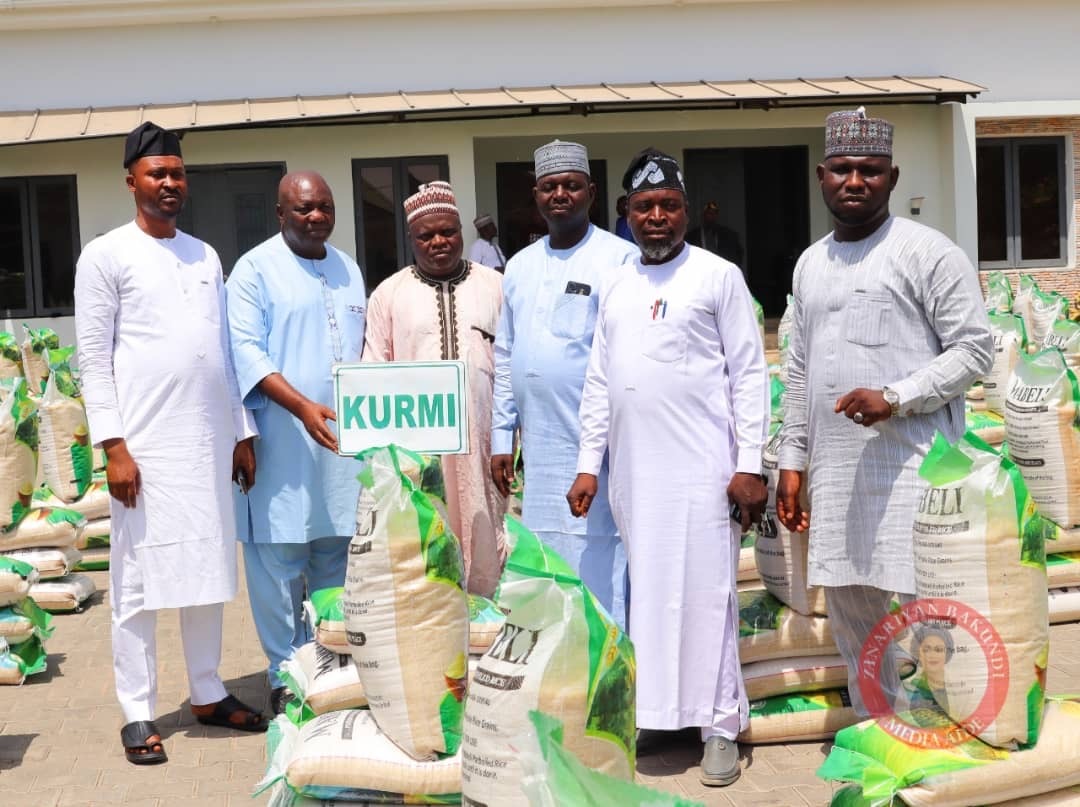
Chief of Staff to the President, Femi Gbajabiamila, made this disclosure while speaking in Abuja on Thursday during an event organized by a group called Working People United.
According to the former Speaker of the House of Representatives, the present N70,000 threshold established under President Bola Tinubu’s administration in 2024 is no longer capable of meeting the practical economic demands faced by citizens across the nation.
Addressing the gathering, the president’s representative pointed out that the current fiscal environment necessitates a thorough re-evaluation of what constitutes a living baseline for Nigerian workers.
He noted that the “N70,000 wage, which was a milestone in 2024 must be honestly reassessed against today’s realities,” signaling a strong commitment from the executive arm to reopen discussions surrounding statutory labor compensation.
Gbajabiamila assured organized labor groups that the administration does not view workers as adversaries but rather as key contributors to the progress of the country.
He emphasized that the government plans to approach the upcoming negotiations with a high level of empathy and cooperation.
“I can confirm to you that when the time comes to begin the process of reviewing the national minimum wage, this administration will approach that endeavor not as an adversary of Labour, but as a partner,” he said.
He further re-iterated the commitment of the president to human capital development and fair treatment of the workforce.
“President Tinubu has said time and again that the custodians of the nation’s machinery deserve a fair and commensurate wage, and as you all well know by now, this is the president who means precisely what he says and does exactly what he means,” Gbajabiamila stated, defending the president’s record on labor issues.
While urging trade unions and workers to maintain a peaceful posture, the Chief of Staff maintained that sustainable national growth requires an ongoing collaboration rather than perpetual conflict.
He mentioned that “It must be said that good governance is not a performance stage by government for the benefit of a passive audience, it’s a partnership between those who govern and those who are governed.”
He also emphasized that the relationship between the ruling political class and the working population remains the most crucial foundation for industrial harmony.
“No where is that partnership more vital than the relationship between government and the working people of Nigeria,” he added.
Concluding his address, the former lawmaker appealed directly to union leaders to choose the path of dialogue over strikes and industrial actions, which often cripple the national economy.
“It is with this understanding in mind that I ask the leaders of organized labour and the members of working people united to remain what you have so often been at your finest, partners in progress rather than antagonist in perpetuity, let us choose to dialog over disruption, because as we have proved again and again, we achieve far more when we visit together than when we retreat, retreat to our separate corners,” Gbajabiamila remarked.
News
We’re rebuilding Abuja, building trust, restoring hope in governance – Tinubu (Photos)
President Bola Tinubu has reiterated that his administration was rebuilding the Federal Capital Territory (FCT) to build trust and restore citizens hope and confidence in government.
Tinubu made the remarks in Abuja on Thursday, while inaugurating the newly constructed Interchange at the intersection between Arterial Road N16 with the Ring Road II, linking Jahi District to Gwarinpa District.
Represented by the Senate President, Senator Godswill Akpabio, the President noted that “Abuja is changing.”
He said: “One interchange at a time, one road at a time, we are rebuilding trust and restoring hope. Together, we will build a country where every citizen can move freely, live safely, and prosper.
“This intersection used to choke Abuja. Gridlock stretched from Maitama to Gishiri, from Jahi to Gwarimpa. Hours were lost, fuel was wasted and businesses were delayed.
“Today, that story ends. This interchange opens up critical districts of the FCT and connects them smoothly to the rest of the territory.”
Tinubu described infrastructure as the foundation of prosperity and roads as the arteries of a nation saying, “when we connect districts, we connect destinies.
“That is the logic of the Renewed Hope Agenda: build the roads, unlock the economy, and let Nigerians thrive. The Jahi/Gwarimpa Interchange is proof that Nigeria is not beyond redemption”.
The President commended FCT Minister, Nyesom Wike, for making Abuja work again, pointing out that from roads to bridges, from city centre to satellite towns, the minister is domesticating renewed hope across the FCT.
“Nigerians can see it, critics can see it and residents feel it in their daily lives. Well done,” he said.
In his remarks, Wike said that the project was awarded, a few days before Tinubu was sworn into office, with no mobilisation. But to show leadership, you made funds available to continue the project awarded by your predecessors.

“Mr President, you have shown that government is continuum. It doesn’t matter who awarded the project. What is important is to complete the project for the betterment and the development of society.
“This is what differentiated the current government and the previous administrations.
“Thank you Mr President for giving us the opportunity to be part of history in changing the narrative as far as the development of Abuja is concerned.”
Reacting to the claim by the African Democratic Congress, alleging that Tinubu government is building only roads while Nigerians are hungry, the minister described the assertion as misleading.
He recalled that just two days ago, Mr President inaugurated the Karu Water Supply Network, adding that another water network would be inaugurated in Bwari in July.
“Let me say that it is not correct that we are only doing roads. It is not correct,” he said.

He, nonetheless, thanked the ADC for acknowledging the road infrastructural stride in the FCT and other parts of the country.
On her part, FCT Minister of State, Dr Mariya Mahmoud said that beyond traffic management, the interchange serves as a critical link connecting communities, businesses, and opportunities across Abuja.
Mahmoud said that the completed interchange would significantly reduce travel time, improve access to commercial centres, facilitate the movement of people and goods, and support the growing demands of the FCT’s expanding population.

Earlier, Mr Richard Dauda, acting Executive Secretary, Federal Capital Development Authority, said that the project was awarded in May 2023 for the full-scope development of Arterial Road N16 from Ring Road II to Ring Road III with two interchanges.
Dauda said that one of the Interchanges was at the intersection between Arterial Road N16 and Ring Road II, which was being inaugurated.
“The Arterial Road N16 is being developed in stages, with the Phase I section completed, that is the Maitama section. The Katampe section, which is the Phase II section, was also completed up to Wole Soyinka Way (Arterial N20) and inaugurated.
“The Jahi District section is still under construction, while the Phase III section, which is the project we are in now, has attained significant progress with the completion of this interchange,” he said.
He said that the rest of the project up to Ring Road III, a total length of 7.25 kilometres in length, would be completed in due course.
News
Middle East: Iran warns against Hormuz passage without authorisation
Iran’s Revolutionary Guards on Thursday warned against any crossings of the Strait of Hormuz without authorisation, saying vessels not complying “will be dealt with”.
The future of the strait, a vital route for energy shipments that was blockaded by Iran during the war, is a key sticking point in negotiations between Tehran and Washington.
Tehran has said it plans to impose what it calls maritime service fees, as opposed to tolls, while the United States argues it is an international waterway and therefore should not be charged.
“The only authorised route for passage through the Strait of Hormuz is the route announced by the Islamic Republic of Iran,” said the Revolutionary Guards, the ideological arm of Iran’s military.
Any crossing without authorisation is “unacceptable and extremely dangerous”, they warned in a statement.
They also denounced what they said was a new route through the waterway announced by “certain authorities”.
The statement did not elaborate but it appeared to be a response to an announcement overnight of a temporary corridor by Oman, which also borders the strait.
Omani authorities released a map of a route running close to the Omani coast that they said was coordinated with the International Maritime Organisation, a UN agency responsible for marine safety.
The only route currently authorised by Iran runs through a corridor that follows the Iranian coast.
Hormuz is a narrow stretch of water between Iran and the Gulf countries through which roughly 20 percent of the world’s crude oil and liquified natural gas normally transits.
At its narrowest it is only about 30 kilometres (18 miles) wide.
A memorandum of understanding signed last week by Tehran and Washington to end their war stipulated that commercial ships may transit the strait free of charge for the next 60 days.
With Iran and the US in negotiations, it is unclear what arrangements will be in place after that period.
Iran and Oman announced on Tuesday that they would study the “costs” to be charged for services related to administration of the strait.
But US Secretary of State Marco Rubio, visiting neighbouring Gulf countries this week, said Washington would not accept any tolls or fees.
AFP
-
News13 hours ago2027: Be Prepared to struggle for power, Wike tells PDP candidates
-
News5 hours agoXenophobic attacks: FG evacuates another 66 citizens from South Africa
-
News6 hours agoViral ‘Sign-Out’ Video: Ondo Govt Withholds WAEC Results of 17 Students
-
News2 hours agoDAY 12 of Projects Commissioning in the FCT: Watch Arterial Road N16 – Ring Road Il Intersection linking Jahi to Gwarimpa District
-
News21 hours agoSokoto High Court slams death sentence on 3 men, including foreign national for terrorism , arms trafficking
-
Metro14 hours agoArmed Men Are Vigilantes And Hunters – Police Dismiss Viral Katsina Video
-
News14 hours agoSenate passes bill to double police trust fund allocation to 1%
-
News1 hour agoSoldiers Reject Fresh Move To Deploy ‘Repentant’ Terrorists In Military Operations, Fear Sabotage, Intelligence Leaks