Connect with us

Opinion

Why Federal High Court Chief Judge John Terhemba Tsoho must go, By Sufuyan Ojeifo

Published

on

ADVERTISEMENT
Zoom Ad
ADVERTISEMENT
Zoom Ad

The Bench cannot sit in judgement of the law while standing outside it.

In a nation where the rule of law is ostensibly the bedrock of democracy, the allegations that the Chief Judge of the Federal High Court, John Terhemba Tsoho, has operated undeclared bank accounts in blatant violation of the Code of Conduct for Judicial Officers is nothing short of a seismic betrayal.

This is not mere administrative oversight. It is not a filing error. It is a calculated affront to the principles of transparency and accountability that Nigerians demand from their custodians of justice.

The findings, unearthed by a meticulous investigation by Premium Times, paint a picture of judicial hubris that must not be tolerated. Justice Tsoho must resign immediately, and the statutory bodies entrusted with upholding the law, namely the Code of Conduct Bureau (CCB), the National Judicial Council (NJC), and anti-corruption agencies, must enforce the letter of the law without delay or favour. Anything less would mock the very ethos of Nigerian jurisprudence, where the scales of justice are meant to balance without the weight of personal impunity.

Advertisement

The facts as uncovered are damning enough. On 29 April 2024, Justice Tsoho submitted his asset declaration form to the CCB, a requirement of all public officers to guard against corruption’s insidious creep. Yet, in this document, he omitted several bank accounts.

These are not trifling omissions. They represent a direct breach of Section 15 of the Code of Conduct Bureau and Tribunal Act, which mandates full disclosure of all properties, assets, and liabilities.

It is worth repeating that this is not a clerical oversight. It is not a procedural error that can be blamed on a hapless clerk somewhere. It is a direct affront to the legal architecture that underpins public trust in the Nigerian state. And it demands an immediate and unequivocal response.

It has to be said once again without equivocation: Justice Tsoho must resign.

Advertisement

Not eventually. Not after endless procedural hedging. Not after opaque internal deliberations conducted behind the protective curtains of judicial bureaucracy. He must resign now, because the continued occupancy of his office under the shadow of such grave infractions inflicts daily damage on the credibility of the judiciary itself.

And to avoid any misunderstanding, let it be plainly stated here that this is not about presumption of guilt. It is about preservation of institutional integrity. We shall return to this later.

Moreover, if we are being honest, Nigeria has seen this film before. It did not end well then, and it will not end well now because the law is unequivocal: any false statement in such declarations constitutes a violation, and undeclared assets are presumed unlawfully acquired unless proven otherwise through legitimate income, gifts, or lawfully obtained loans.

Justice Tsoho’s silence in the face of repeated queries from investigative journalists is deeply troubling. Silence in such circumstances inevitably erodes public confidence.

Advertisement

● The Ghost of Onnoghen

Nigeria does not lack precedent in this matter. The parallels with Walter Samuel Nkanu Onnoghen are unmistakable. In 2019, Nigeria’s sitting Chief Justice was removed from office after being convicted by the Code of Conduct Tribunal for failing to declare certain bank accounts.

The lesson from that episode was meant to be unambiguous. No judicial officer, however senior, stands above the law. To now tolerate a similar scenario involving another judicial head without decisive action would amount to institutional hypocrisy of the most damaging kind.

It would signal that accountability in Nigeria is selective. That enforcement depends not on law, but on convenience. That rules exist for enforcement against some, but accommodation for others.

Advertisement

Such a signal would be devastating. Because judicial authority rests on moral authority. Courts do not command armies. They do not possess economic power. Their authority rests on something more fragile and more profound: Trust.

When a judge speaks, citizens comply not because they fear coercion, but because they believe in the legitimacy of the institution speaking through him. This legitimacy is not automatic. It is earned and sustained through visible adherence to the highest ethical standards.

The moment that adherence is credibly questioned, judicial authority begins to erode. Lawyers begin to question rulings privately. Citizens begin to doubt outcomes publicly. The perception of neutrality weakens. Cynicism spreads.

Eventually, the institution itself becomes diminished. Nigeria cannot afford such erosion.

Advertisement

The Federal High Court, under Justice Tsoho’s stewardship, handles some of the nation’s most sensitive cases, from electoral disputes to anti-corruption trials. How can Nigerians trust verdicts from a bench led by a man who flouts the very codes designed to ensure probity? The hypocrisy is stark; it undermines the moral authority that judges must wield to command respect in a society grappling with endemic graft.

● The Unaffordable Cost of Silence

The responsibility now shifts decisively to Nigeria’s statutory accountability bodies.

The Code of Conduct Bureau must act without hesitation or favour. Its mandate exists precisely for moments such as this. It must initiate a transparent investigation, free from political influence or institutional timidity.

Advertisement

The National Judicial Council must likewise discharge its constitutional responsibility with urgency and clarity. Judicial discipline is not optional. It is the mechanism through which the judiciary protects itself from internal decay.

Delay would be interpreted, correctly, as protection. And protection would be interpreted, correctly, as complicity. And complicity in the face of such a devastating scandal bears an unaffordable cost to the Nigerian judiciary as an institution.

Nigeria has suffered too long from a culture where institutions hesitate to enforce the law against their own senior members. This culture has done incalculable damage to public confidence in governance. It must end here.

● Resignation is not admission of guilt. It Is recognition of responsibility

Advertisement

Now, we return to a persistent misunderstanding in Nigerian public life. Resignation is often seen as a confession. Let us be exceedingly clear: it is not.

Resignation, in circumstances such as this, is an act of institutional preservation. It protects the office from the reputational damage attached to the office holder. It allows investigations to proceed without institutional contamination. It demonstrates respect for the system. It affirms that no individual is more important than the institution he serves.

Justice Tsoho may ultimately contest the allegations. He may present explanations. He may seek to clear his name. That is his right. But he cannot credibly do so while simultaneously presiding over the very judicial structure whose integrity is now in question. That duality is untenable. Resignation is the only responsible course.

●The greater implication for Nigeria

Advertisement

Nigeria’s struggle with corruption is not merely a struggle against theft. It is a struggle against impunity. Impunity is the belief that rules apply to others but not to oneself. It is the quiet assumption that status confers exemption. It is the cancer that weakens states from within.

Nigeria’s progress depends on dismantling this belief, especially at the highest levels of public authority.

This moment presents a test: A test of whether Nigeria’s institutions exist to enforce the law or merely to recite it.
A test of whether accountability is real or rhetorical. A test of whether the judiciary is willing to hold itself to the standards it demands of others.

The answer must be unmistakable.

Advertisement

Once again, for the avoidance of doubt, Justice Tsoho must resign.

The Code of Conduct Bureau must act now.

The National Judicial Council must act now.

The law must be obeyed not selectively, not symbolically, but fully and faithfully.

Advertisement

Nigeria’s judiciary cannot afford ambiguity. Its authority depends on clarity.

And right now, clarity requires Justice Tsoho’s resignation.

● Sufuyan Ojeifo is a journalist and publisher of THE CONCLAVE online newspaper. www.theconclaveng.com

Advertisement
Continue Reading
Advertisement

Opinion

DIAMOND DISTINCTIONS FOR THE PEOPLE’S MAN; DR. CHIDO ONUMAH

Published

on

ADVERTISEMENT
Zoom Ad
ADVERTISEMENT
Zoom Ad

BY BOLAJI AFOLABI

Wednesday April 8, a few minutes to six in the evening, while putting final preparations to a three-day trip, the phone beeped. First thought; it could be an advisory from friends or family members on the need for vigilance as a result of the shenanigans perpetrated by notorious bandits on major highways across the country. How wrong! The WhatsApp message was an invite from the irrepressible, inimitable Dapo Olorunyomi – fondly called Dapsy, and Uncle Dapsy by friends, colleagues, and mentees. The carefully worded, simple looking but aesthetically beautiful card was to attend a Symposium in honour of Dr. Chido Onumah; a serial award winner, versatile journalist, rights activist, published author on his 60th birthday. Though the writer does not have any personal relationship with the celebrant, but to have Olorunyomi as the Chief Host speaks volumes about the credibility, integrity, and stewardship of Onumah.

The clash of the timings of both events – Onumah’s and the trip, was not a good discovery by the writer. Thoughts of missing out on an occasion that will see the convergence of heroes and heroines of civil society and journalism; who as true activists and professionals sacrificed selflessly for democracy and good governance in the ’80s and ’90s, was painful. Given the importance of the trip, one had to communicate to Olorunyomi reason for not attending the unique event. Though not physically present, the coverage of proceedings by national newspapers, electronic media, and numerous online media platforms was useful. Perhaps, the choice of a national discourse to celebrate an ideologue who, for over three decades has weaved every of his life odysseys on fairness, probity, justice, ethics, and morality is fitting and proper.

William Shakespeare, in one of his timeless books, ‘Hamlet’ wrote; “this above all, to thine own self be true.” Here, humanity is advised to be honest, truthful, and pursue self-dignity. Indeed, honesty with oneself provides light and equanimity. From the testimonials of people, this encapsulates Onumah; who pursues wholeheartedly whatever he believes in, and stays focused even if he is the last man standing. Conscious that honesty is a wealth that doesn’t wither with time, as it attracts respect, trust, and belief from people, he clothes himself with these virtues which brings greatness. In many ways, his attributes, activities, and contributions to life and humanity confirm Shakespeare’s words in ‘Twelfth Night’ that, “be not afraid of greatness. Some are born great, some achieve greatness, and some have greatness thrust upon them.” No doubt, with the right attitude, hard work, and fidelity, Onumah has achieved greatness in diverse ways.

Advertisement

From reports, the symposium, themed, “Formation or Nation Building: Nigeria’s Quest for a Modern Federal Republic” which took place at the historical Shehu Musa Yar’Adua Centre, Abuja, was graced by many notable personalities from the media, academics, public service, and politics from far and near. Comments by many people attested to his unwavering commitment to the attainment of good governance, and unrestrained passion for national development. His loyalty to friendship and relationships were variously highlighted. Mallam Nuhu Ribadu, the National Security Adviser, who was the Special Guest of Honour said, “Chido is special and means a lot to me. He was part of my life at the most critical moments, and (he) went through the most difficult period with me.” His Excellency, Dr. Kayode Fayemi, former Governor of Ekiti State, who chaired the event, acknowledged Onumah’s sacrificial, and consistent contributions to the fights against military rulership, and the country’s struggles for democracy.

Generally described as a people’s man who is largely accessible, reliable, and dependable, Onumah is deeply loved for his courage, commitment, and consistency in pursuing noble causes that will improve the general well-being of the people. Imbued with an uncommon indomitable spirit, he is a perfect exemplar of true social activism built on principles, high moral standards, and selflessness – million miles different from what we have these days. Without a doubt, he remains one of the best, and has carved an enviable niche for himself as the compass for assessing activists in Nigeria. Not driven by pecuniary benefits, showmanship, and human accolades, his penchant for cross-fertilization of ideas, and public discourse; at all times geared towards ensuring national cohesion, growth, and development remains unequivocal. This may have further informed the choice of a symposium to mark his landmark birthday.

Onumah’s professional resume, human interests-driven calling, and development engagements are replete with qualitative services within the country, in Africa, Europe, and the United States of America. As a journalist, though he started out with The Guardian newspapers, Onumah, at various times was at Sentinel Magazine – late Dr. Stanley Macebuh was the Managing Director; The News Magazine; AM News; Thisday Newspapers; Weekly Insight, Ghana, as the Associate Editor; Africanews Service, Kenya; and African Observer, New York, USA. For decades, Onumah has emerged as a prominent figure, and major voice in media and information literacy.

As the Co-ordinator of the African Centre for Media & Information Literacy (AFRICMIL) – he has been able to promote media literacy to foster democracy, accountability, good governance, and combat misinformation in Africa through research,advocacy, and training programmes. To expand the frontiers of excellence, he co-founded the Media & Information Literacy and Intercultural Dialogue (MILID) Foundation, with special emphasis on media literacy in governance and education. Through AFRICMIL, and the Yar’Adua Foundation, Onumah launched the Corruption Anonymous (CORA); a whistleblowing platform to facilitate anonymous reporting and bolster accountability in governance.

Advertisement

Given his passion for good governance, Onumah, through the Whistleblowing Advocacy Coalition of West Africa (WACOWA); and the Advocacy for Whistleblowers Protection Laws has covered parts of the continent. Appreciable mileage has been achieved towards regional cooperation on whistleblower protection; adopting the policy as a veritable instrument for exposing crimes; and deepening governance across Africa. Similarly, Onumah’s broad-based advocacy and activism are well documented through his involvement with numerous bodies such as the West African Human Rights Committee (WAHRC); Pan-African Alliance for Media and Information Literacy (PAMIL); Global Alliance for Partnerships on Media and Information Literacy (GAPMIL); Whistleblowing International Network (WIN); United Nations Educational Scientific Cultural Organization (UNESCO); and the Panos Institute, USA.

Indeed, Onumah’s decades-long involvement, contributions to Nigeria’s democratic journey, and the emplacement of probity in the public service deserves mention. He functioned as the Head, Civil Society Unit; and Coordinator, Fix Nigeria Initiative at the Economic and Financial Crimes Commission (EFCC), under the Chairmanship of Ribadu. He, among other things contributed to drafting templates that translated international anti-corruption laws into accessible tools for citizens; collaboration with various groups on integrity and accountability; training of journalists in investigative reporting; and workshops for judges, law enforcement agencies, and the media.

His varied contributions to the media, human rights, democracy, and good governance has earned him several local and global recognitions including the Kudirat Initiative for Democracy Awards; William C. Heine Fellowship for International Media Studies; Jerry Rogers Writing Award; and the Clement Mwale Prize for Courage. Despite his busy schedules, Onumah has authored some books including Time To Reclaim Nigeria; Nigeria Is Negotiable; and We Are All Biafrans. Many of his friends, colleagues, and associates applaud his de-tribalized credentials; described as a true nationalist. Born on the 10th of April, 1966, Onumah attended the Army Children School, Apapa; and Awori Ajeromi Grammar School, Lagos. He graduated from the University of Calabar with a B.A Philosophy. He earned his Masters and Doctorate degrees in Journalism, and Communications & Journalism at the University of Ontario, Canada, and the Universitat Autonoma de Barcelona, Spain, respectively.

* BOLAJI AFOLABI, a Development Communications specialist was with the Office of Public Affairs, The Presidency, Abuja.

Advertisement
Continue Reading

Opinion

Why PDP Should Pick Dr Olotu Akpodiete as Candidate for Ughelli North, South and Udu Federal Constituency

Published

on

By

ADVERTISEMENT
Zoom Ad
ADVERTISEMENT
Zoom Ad

By Comrade. Amb Emmanuel Kpoharor_

To secure victory in Ughelli North, South and Udu Federal Constituency, the Peoples Democratic Party (PDP) needs a tested, grassroots-oriented candidate who has demonstrated real capacity for mobilization, loyalty, and community impact.

As the PDP prepares for the forthcoming House of Representatives election, stakeholders across the three local government areas are calling on the party to field Hon. Dr. Olotu Akpodiete JP as its candidate.

Dr. Akpodiete is widely credited with reviving the PDP in the constituency at a time when mass defections had left the party’s structure severely weakened. He reactivated dormant ward executives, bankrolled logistics for meetings, financed mobilization drives, and spearheaded reconciliation efforts that brought back aggrieved members while attracting new ones across Ughelli North, South and Udu. According to party chieftains, his swift intervention restored stability and re-established the PDP as the dominant political force in the area.

Advertisement

His influence goes beyond party administration. Dr. Akpodiete initiated and personally sponsored the U3 Youth, Women, and Executive Empowerment programme. The initiative has provided startup grants, vocational training, and business support to hundreds of beneficiaries in the constituency. It has been commended for reducing unemployment and boosting household incomes across the three LGAs.

To strengthen political engagement, he also floated two strategic pressure groups: the U3 Media Ambassadors and the U3 Legislators Forum. The Media Ambassadors have expanded the PDP’s message and improved voter education at the grassroots. The Legislators Forum brings together past and present PDP-aligned legislators in U3 to mentor emerging politicians, harmonize party positions, and drive community consultations. Together, the two groups have created a permanent, community-rooted campaign structure for the party.

Dr. Akpodiete’s humanitarian record through the Olotu and Ekuogbe Rowland Akpodiete Foundation also sets him apart. Since its establishment, the Foundation has focused on sustainable development, education, healthcare, security support, charity, social welfare, and empowerment.

Key activities of the Foundation since 2018 include:
– Annual Empowerment Programs: The Foundation conducts yearly outreach for vulnerable groups. On April 9, 2026, it held a widow empowerment program at Iwhreko Community Town Hall, Ughelli, where over 100 widows from Ughelli North, South and Udu received cash, gifts, and wrappers during the 31st remembrance of Late Chief Ekuogbe Rowland Akpodiete. Dr. Akpodiete has pledged to sustain the program annually and extend it to other segments of society.
– Education Support: The Foundation awards scholarships and provides learning materials and school support to indigent students across the constituency to improve access to quality education.
– Healthcare Interventions: It runs medical outreaches and supports community health initiatives for underserved populations in the three LGAs. The Foundation has registered over 500 Deltans for health insurance across Delta State.
– Youth and Sports Development: The Foundation hosts an annual novelty football match in honor of Late Chief Ekuogbe Rowland Akpodiete at Clifford Cassidy Play Ground, General Field, to discover and nurture young football talents. The 2026 second edition ended 1-1 between children and grandchildren of the late chief, with cash gifts presented to team captains. The Foundation has also trained over 700 youths in vocational and digital skills.
– Community Development and Security: The Foundation supports community projects such as water boreholes across Delta and backs security initiatives including conflict resolution capacity building and donation of security gadgets to various communities to improve safety and social cohesion.
– Recognition of Service: Through Life Achievement Awards, the Foundation celebrates individuals for outstanding service to humanity. In 2026, recipients included Olorogun Miller Uloho and Chief Morrison Obaseki Olori.

Advertisement

Party faithfuls maintain that Dr. Akpodiete combines loyalty, proven mobilization strength, and a verifiable humanitarian record. His work in rebuilding the PDP, empowering constituents, building enduring political structures, and sustaining philanthropy through his Foundation makes him the most electable and prepared aspirant to represent Ughelli North, South and Udu in the House of Representatives come 2027.

Continue Reading

Opinion

DESPITE JUDICIAL FINALITY, SCIENTIFIC EVIDENCE SETS THE PATHWAY FOR THE FUTURE OF JUSTICE AND PEACE FOR WESTERN BAKASSI

Published

on

ADVERTISEMENT
Zoom Ad
ADVERTISEMENT
Zoom Ad

Maritime Law and Continental shelf entitlements are entirely reliant on the Interpretation of Scientific Processes.
And where any Body of Law is dependent on Scientific Processes, then emerging scientific findings will naturally reshape the Law

In what may become one of the most consequential developments in Nigeria’s oil and gas sector in recent years, new scientific, hydrographic, and geospatial evidence is reshaping long-standing assumptions about maritime boundaries, resource ownership, and national economic security in the Gulf of Guinea..

At the center of this unfolding narrative is Cross River State, which, following years of exclusion from oil derivation revenues, is now poised for a historic re-entry into Nigeria’s league of oil-producing states.

A Turning Point Beyond the Courts:

Advertisement

For over two decades, the status of Cross River State as a non-oil-producing state has been largely anchored on the 2002 International Court of Justice (ICJ) judgment, which ceded parts of the Bakassi Peninsula to Cameroon.

This was further compounded by the 2008 oil wells dichotomy implementation map, which ultimately reassigned 76 oil wells to Akwa Ibom State in 2012.

While these legal outcomes remain binding, emerging scientific findings suggest that judicial finality does not necessarily equate to geological finality.

Governor Senator Prince Bassey Edet Otu of Cross River State, drawing from a detailed problem statement and situation analysis, initiated a bold and comprehensive investigation aimed at re-examining the subsurface realities beneath the disputed maritime terrain.

Advertisement

Science Steps In Where Law Stopped
The Cross River Economic Intelligence Team (CREIT), under the Governor’s directive, conducted a multi-layered validation survey—incorporating subsurface geology, geodesy, hydrography, and advanced geospatial mapping—across the Nigeria–Cameroon maritime corridor.

The study extended from the Cross River Estuary through the Akwayefe River Estuary into Cameroon waters, reaching as far as the G-Point and the strategic tripartite boundary with Equatorial Guinea and São Tomé and Príncipe.

What emerged is a compelling body of evidence pointing to continuous sedimentary and hydrocarbon systems stretching from Nigeria’s inland rivers into the deep offshore continental shelf.

The Cross River Estuary system—fed by the Cross River, Calabar River, and Great Kwa River—discharges over 800 million cubic litres of water into the Atlantic Ocean, transporting sediments across a span of approximately 280 nautical miles.

Advertisement

These sediments have formed rich hydrocarbon-bearing structures across the extended continental shelf.

Strategic Geography, Renewed Advantage
Geographically, the estuary’s proximity to the Atlantic Ocean—just 4.8 nautical miles—combined with a natural draft depth exceeding 22 meters and access to 200-meter isobath zones, places Nigeria in a strategically advantageous position to assert extended continental shelf rights under international law.

Crucially, the findings indicate that significant portions of the western Bakassi maritime corridor were never ceded, and remain within Nigeria’s legitimate economic and geological domain.

New Discoveries, New Possibilities:

Advertisement

The implications of the CREIT investigation are profound:
Over 186 oil wells identified for potential recovery

238 newly mapped oil well coordinates

49 transboundary reservoirs straddling Nigeria and Cameroon

Recovery of approximately 780 hectares of maritime territory

Advertisement

Within OML 114 (Abana Field) and adjoining offshore zones, these reservoirs represent a significant untapped energy resource.
Additionally, the broader Cross River maritime axis—covering Akpabuyo and Odukpani—is now estimated to hold:
4.1 trillion cubic feet of natural gas
45 million barrels of crude oil

These figures signal the emergence of a new energy frontier capable of transforming Cross River State into a major hub within Nigeria’s oil and gas ecosystem.
National Security and Strategic Imperatives
This development is not merely economic—it is deeply strategic.

As far back as 2006, former President Olusegun Obasanjo had warned, in a national security policy brief, of the risks associated with losing control over unceded territories within western Bakassi and the Cross River Estuary.

Today, those warnings appear prescient.
CREIT now frames the issue as an urgent national security intelligence risk, emphasizing the need to safeguard Nigeria’s maritime corridors, protect offshore infrastructure, and assert sovereign economic rights.

Advertisement

A Window for Diplomatic Innovation
For President Bola Ahmed Tinubu, the findings present a rare opportunity for strategic leadership.

Rather than reopening settled legal disputes, experts advocate a forward-looking approach anchored on:

Joint development and production sharing agreements with Cameroon

Cooperative exploitation of transboundary reservoirs

Advertisement

Strengthening Nigeria’s claim to its extended continental shelf

Such arrangements could unlock production levels of up to 300,000 barrels per day, while reinforcing regional stability and economic cooperation.

From Rivalry to Partnership
Perhaps most significantly, the new evidence offers a pathway to resolve the long-standing tensions between Cross River and Akwa Ibom States.

Both states stand to benefit immensely from the newly identified resources. Federal guidance encouraging collaborative frameworks for derivation sharing has been widely welcomed as a pragmatic solution.
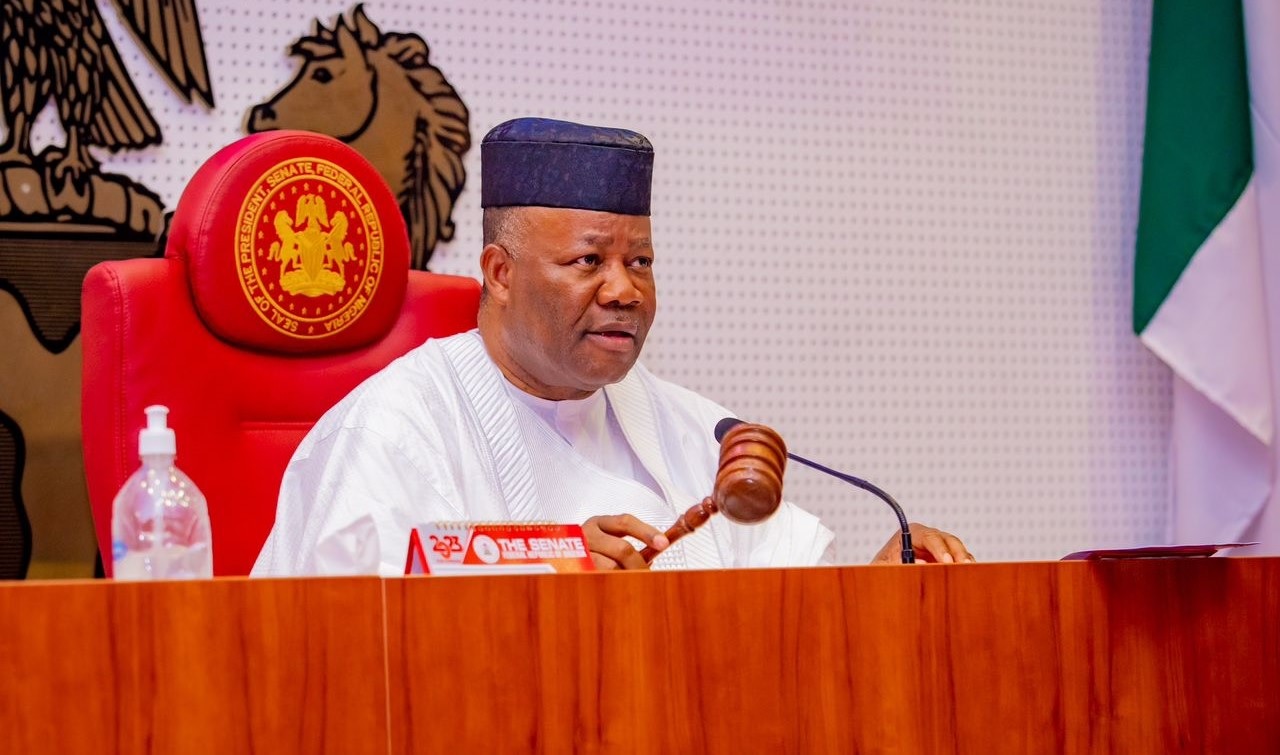
Under the leadership of Senate President Godswill Akpabio, calls for unity and mutual benefit are gaining traction.

Advertisement

The emerging consensus is clear: the future lies not in contest, but in cooperation.

No Victor, No Vanquished.

While the Supreme Court’s decisions remain legally binding, science has introduced a new dimension—one that transcends boundaries drawn on maps and speaks to the realities beneath them.
In this evolving context, justice is no longer defined solely by legal verdicts, but also by equity, evidence, and shared national interest.

As CREIT succinctly puts it:
“This is not about reversing history, but about redefining the future. Science has provided the bridge—what remains is the will to cross it together.”

Advertisement

Conclusion.
Nigeria stands at the threshold of a transformative moment.
The convergence of science, policy, and diplomacy offers a unique opportunity to reclaim economic value, strengthen national security, and foster regional harmony.

For Cross River State, it signals a long-awaited restoration of status and dignity. For Nigeria, it represents a bold step toward maximizing its natural endowments in a complex geopolitical landscape.
And for both Cross River and Akwa Ibom States, it marks the beginning of a new chapter—one defined not by division, but by a shared vision of justice, peace, and prosperity.

No victor. No vanquished. Only a nation moving forward.

By CREIT- March 2026.
Cross River Economic Intelligence Team

Advertisement
Continue Reading

Trending

Copyright © 2024 Naija Blitz News