
News
World Cup: NFF says we’re still hopeful, no word from FIFA yet

- /home/naijuinz/public_html/wp-content/plugins/mvp-social-buttons/mvp-social-buttons.php on line 27
https://naijablitznews.com/wp-content/uploads/2026/03/Screenshot_20260305-140824.jpg&description=World Cup: NFF says we’re still hopeful, no word from FIFA yet', 'pinterestShare', 'width=750,height=350'); return false;" title="Pin This Post">
- Share
- Tweet /home/naijuinz/public_html/wp-content/plugins/mvp-social-buttons/mvp-social-buttons.php on line 72
https://naijablitznews.com/wp-content/uploads/2026/03/Screenshot_20260305-140824.jpg&description=World Cup: NFF says we’re still hopeful, no word from FIFA yet', 'pinterestShare', 'width=750,height=350'); return false;" title="Pin This Post">


By Kayode Sanni-Arewa
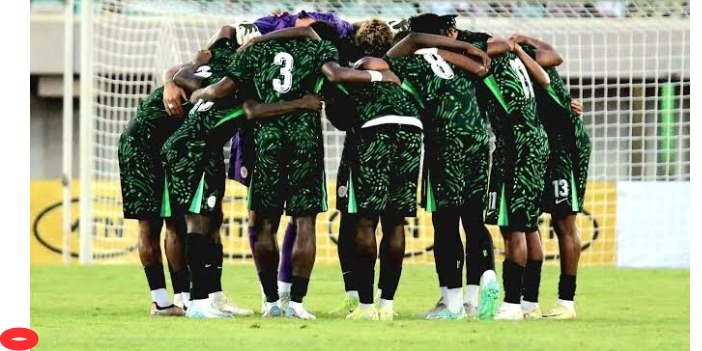
Nigeria’s chances of qualifying for the 2026 FIFA World Cup are still open, the Nigeria Football Federation (NFF) has said, rejecting claims that the country has already been eliminated from the race.
The federation explained that it has not received any official message from FIFA concerning the dispute over the eligibility of some players who featured for the DR Congo national team.
Speaking on Wednesday, the Director of Communications of the NFF, Ademola Olajire, said the reports circulating online were based on an old FIFA publication and not a new decision regarding Nigeria’s complaint.
The NFF have not received any formal communication from FIFA whatsoever. No information can be shared with journalists without first coming to the federations involved,” Olajire said.
He added that the federation is still waiting for FIFA’s response on the matter.
“Yes, our wait is ongoing. We are still expecting formal communication from FIFA. Let those posting the old quotes continue posting them.”
Earlier reports had claimed that DR Congo had already secured Africa’s place in the inter-confederation play-offs, which would mean Nigeria no longer had a chance to qualify.
Those claims were based on a FIFA statement that read: “All of the six teams have now been decided, with Bolivia, Congo DR, Iraq, Jamaica, New Caledonia and Suriname confirmed as qualifiers.”
However, that statement was originally released on November 18, 2025, before Nigeria submitted its protest. It referred to the teams that had qualified at that time and did not address Nigeria’s complaint about the match.
The dispute began in November 2025 after DR Congo defeated Nigeria in the CAF play-off final. The match ended 1–1 before DR Congo won through a penalty shootout, earning Africa’s place in the inter-confederation play-offs.
Nigeria later filed a formal protest in December, claiming that DR Congo used players who were not eligible to represent the country. Among the players mentioned were Aaron Wan-Bissaka and Axel Tuanzebe, both of whom previously represented England at youth level.
At the time, NFF General Secretary Mohammed Sanusi explained why the federation raised the complaint.
“The Congolese rule says you cannot have dual nationality, but some of their players have European and French passports. Our contention is that FIFA was deceived into clearing them,” Sanusi said.
The Congolese Football Federation has denied the accusation. It described Nigeria’s protest as an attempt to “win via the back door.”
FIFA has confirmed that it received the complaint and that the matter is being examined. However, the football governing body has not announced when a final decision will be made.
The delay has increased tension as the inter-confederation play-offs approach. The competition will take place from March 26 to 31 in Guadalajara and Monterrey, Mexico. DR Congo are currently expected to face either Jamaica or New Caledonia.
Nigeria are hoping to avoid missing two consecutive World Cups after failing to qualify for the 2022 FIFA World Cup in Qatar. The current Super Eagles squad includes notable players such as Victor Osimhen, Ademola Lookman and Alex Iwobi.
African football analyst Mamadou Gaye advised fans to remain calm while waiting for FIFA’s verdict.
“We should wait for FIFA to make the decision. Remember that Bafana Bafana had points taken away right at the last minute. Nigeria should remain calm and prepared,” he said on Soccer Africa.

The African Democratic Congress has given reasons why its presidential flag bearer Atiku Abubakar was absent at the G100 summit in Abuja.
ADC spokesperson, Bolaji Abdullahi, gave the explanation on Tuesday during an interview saying the summit focused on cooperation among political parties rather than individual candidates.
He said the ADC was fully represented at Monday’s meeting, with four of its vice chairmen in attendance, making Atiku’s physical presence unnecessary.
The summit, held at the Shehu Musa Yar’Adua Centre in Abuja, brought together representatives of major opposition parties to discuss possible cooperation ahead of the 2027 elections.
News
“Go Back and Repair Our Road!” — Enugu Residents Turn APC Campaign Ground Into Assessment Session(Video)

Drama unfolded in Enugu North when a man reportedly campaigning for the APC in Peter Mbah-branded clothing was confronted by residents over the condition of their community.
Instead of the expected campaign applause, residents turned the encounter into an impromptu accountability hearing.
Community: “As you were coming here, how did the road look?”
APC Supporter: “It is very terrible.”
Community: “Go and tell the people who sent you to come and construct the road for us.”
APC Supporter: “I will inform them.”
The residents did not stop there.
Community: “Is that not a primary school your community members attend? How is it?”
APC Supporter: “It is bad.”
And just like that, the campaign rally became a road-and-school inspection.

The Defence Headquarters has said the reported withdrawal of about 200 United States personnel from Nigeria will not affect the country’s security cooperation with the US, describing the development as a routine adjustment tied to specific operational objectives.
The Director of Defence Information, Maj Gen S. Uba, stated this on Tuesday while addressing journalists at the joint security spokespersons briefing.
Uba said the withdrawal should not be interpreted as a breakdown or termination of the longstanding security partnership between Nigeria and the United States.
“The Armed Forces of Nigeria wishes to clarify that the reported withdrawal of about 200 United States personnel should not be interpreted as a breakdown or termination of the Nigeria-United States security partnership,” he said.
According to him, the relationship between both countries remains “strong, enduring, and mutually beneficial,” noting that the deployment of American personnel was linked to specific operational and counterterrorism objectives.
“The decision to draw down personnel is therefore part of the evolving nature of that engagement. Elements of the United States security partnership, particularly intelligence cooperation, training and information sharing, will continue,” Uba added.
He stressed that the responsibility for defending Nigeria and protecting its citizens remained primarily with Nigerian security forces, while noting that cooperation with the US aimed to strengthen the capabilities of the Nigerian military.
“The Armed Forces of Nigeria has consistently maintained that the responsibility for the defence of Nigeria and the protection of its citizens rests primarily with Nigerian security forces,” the DDI said.
He explained that the bilateral security partnership covered intelligence sharing, training, technical assistance and other forms of professional military cooperation.
“Our cooperation with the United States is designed to strengthen our capabilities through intelligence sharing, training, technical assistance, and other forms of professional military cooperation,” he said.
Uba said that when Nigeria and the US jointly assessed the need for additional interventions, including joint strikes, they carried them out.
“Where it is jointly assessed that additional efforts, including joint strikes, are required, we do that,” he stated.
The defence spokesman said the partnership had continued to yield positive results in the fight against terrorism and other transnational security threats.
“Indeed, the Nigeria-United States partnership has continued to produce valuable outcomes in the fight against terrorism and other transnational security threats,” he said.
Uba urged the media and members of the public not to interpret the adjustment in the presence of foreign military personnel as an indication of weakening security cooperation or Nigeria’s defence capacity.
“We equally call on the media and the Nigerian public to avoid interpreting a routine or mission-specific adjustment in foreign military presence as evidence of a collapse in Nigerian security cooperation or national defence capability,” he said.
He reiterated that the Nigeria-US security relationship remained enduring and that cooperation in areas of mutual interest was expected to continue.
The clarification came after US officials said most of the additional forces deployed for the Lake Chad operation had returned following the completion of their mission, while intelligence sharing and broader security cooperation with Nigeria would continue.

90,000 km fiber and the digital divide

ADC gives reasons why Atiku was absent at G100 opposition summit
“Go Back and Repair Our Road!” — Enugu Residents Turn APC Campaign Ground Into Assessment Session(Video)




-

 News24 hours ago
Just in: Court fires 2027 APC candidate, orders fresh primaries
-

 News23 hours ago
Intoxicated Pilot Crashes Stolen Plane Near Nuclear Site
-

 News24 hours ago
Breaking Dangote Refinery stops sales of petroleum products to Matrix, AA Rano, others
-
 News23 hours ago
Strange Island Appears And Then Vanishes In Canadian Reservoir
-
 News19 hours ago
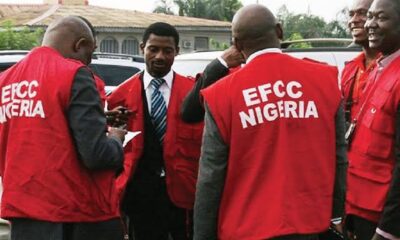
EFCC summons Timipre Sylva over Queries After Fresh Allegations
-

 Economy23 hours ago
See Black Market Dollar To Naira Exchange Rate Today 1st September 2026
-
 News24 hours ago
30 Years after: Former Gang Leader ‘Keffe D’ Davis Found Guilty Of Tupac’s Murder
-
 News23 hours ago
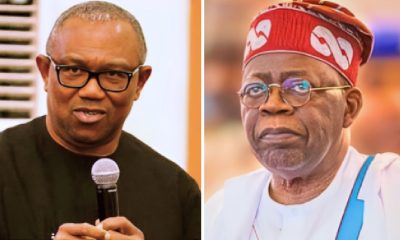
Peter Obi Berates Tinubu For Asking U.S. Court To Withhold Records