News
Energy Transition Opens Door to Jobs and Investment in Nigeria – GWEC Africa
- /home/naijuinz/public_html/wp-content/plugins/mvp-social-buttons/mvp-social-buttons.php on line 27
https://naijablitznews.com/wp-content/uploads/2026/03/IMG-20260305-WA0003-1000x600.jpg&description=Energy Transition Opens Door to Jobs and Investment in Nigeria – GWEC Africa', 'pinterestShare', 'width=750,height=350'); return false;" title="Pin This Post">
- Share
- Tweet /home/naijuinz/public_html/wp-content/plugins/mvp-social-buttons/mvp-social-buttons.php on line 72
https://naijablitznews.com/wp-content/uploads/2026/03/IMG-20260305-WA0003-1000x600.jpg&description=Energy Transition Opens Door to Jobs and Investment in Nigeria – GWEC Africa', 'pinterestShare', 'width=750,height=350'); return false;" title="Pin This Post">
By Gloria Ikibah
Experts have said that Nigeria’s transition toward a low-carbon economy can unlock major economic opportunities, including job creation, increased investment and broader economic diversification.
Africa Director of the Global Wind Energy Council, Wangari Muchiri, stated this during a decarbonisation dialogue that brought together members of the House of Representatives of Nigeria and other key stakeholders to examine the country’s pathway toward reducing carbon emissions.

She stressed that decarbonisation is becoming increasingly important for Nigeria, particularly because major sectors of the economy such as oil and gas as well as agriculture account for a significant share of the country’s carbon footprint. According to her, transitioning to cleaner energy systems is not only an environmental necessity but also a strategic economic move.
The dialogue formed part of ongoing efforts to bring government agencies, industry leaders and development partners to the same table to identify realistic strategies for cutting emissions while also creating new economic value.
Muchiri pointed out that the global momentum toward cleaner energy systems presents Nigeria with a unique opportunity to reposition its economy. By embracing emerging opportunities within the growing carbon economy, the country could strengthen its development prospects while contributing to global climate action.
She said: “The decarbonisation agenda for Nigeria is really critical. Many sectors in Nigeria, including oil and gas and agriculture, are very carbon-heavy. But in today’s global economy, this presents a big opportunity for Nigeria to capitalise on the carbon economy, create jobs, and bring new income into the sector”.
Muchiri said the ongoing engagement with lawmakers and development partners is intended to deepen national discussions on decarbonisation and promote coordinated action across sectors.
She noted that Nigeria has already shown a willingness to pursue the transition to cleaner energy, pointing to remarks made by President Bola Ahmed Tinubu at major international climate platforms, including the United Nations Climate Change Conference.
In her view, the government’s stance has helped to build confidence among international partners and private sector actors, many of whom are now showing greater interest in supporting Nigeria’s shift towards a cleaner and more sustainable energy future.
“I think one of the things we are seeing is that Nigeria is ready. The President has said on several occasions, including at COP last year, that Nigeria is prepared for a decarbonisation agenda. We are excited to see many partners ready to walk this journey with the country,” she said.
She called on development partners, investors, and technical experts to provide stronger support to Nigeria in areas such as financing, knowledge transfer, and technical capacity.
Muchiri stressed that decarbonisation remains a relatively new field in many developing economies and that greater awareness is needed to highlight the economic and employment opportunities it offers.
“Decarbonisation is still a new field, and not many people fully understand what it means for different sectors or how it can create jobs and opportunities in the Nigerian economy. That is why support — both technical and financial — is very important at this stage,” she added.
Drawing from her experience in Kenya, Muchiri said the energy transition has already begun to unlock significant opportunities in other African countries, expressing optimism that Nigeria could experience similar gains.
“I’m Kenyan, and I’ve seen the opportunities that decarbonisation has created in Kenya. The same potential exists for Nigeria. I believe this is the beginning of something very exciting for the Nigerian economy,” she noted.
She also commended the policy direction of the current administration, saying there has been encouraging buy-in from government institutions, lawmakers, and industry stakeholders.
According to her, major oil and gas companies operating in the country are also beginning to align with the decarbonisation agenda.

News
WATCH: This is Remodelled Abuja City Gate
Remodelled Abuja City gate will be unveiled today.
#ProjectsFCT2026
#FCT31DaysCommissioning
News
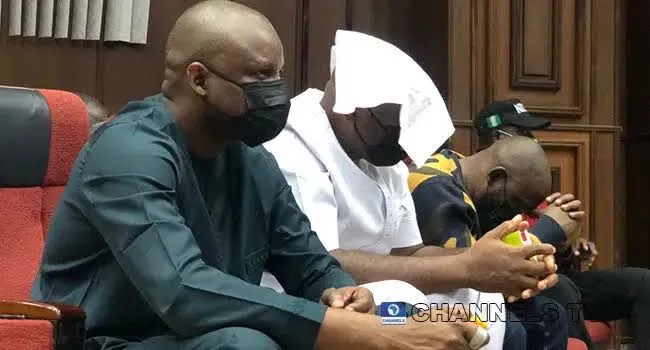
Court orders EFCC to pay N10m fine for defaming ex-Power Minister, Agunloye
A High Court of the Federal Capital Territory (FCT) sitting at Maitama has ordered the Economic and Financial Crimes Commission (EFCC) to pay a fine of N10million for defaming a former Minister of Power, Dr. Olu Agunloye, through a libelous publication on its social media handles.
The court, in a judgment delivered by Justice Peter Kekemeke, found that the anti-graft agency damaged the claimant’s reputation.
Agunloye, in a N10billion defamation claim he filed before the court, insisted that the publication the EFCC carried on its website and X (formerly Twitter) handle, titled: “EFCC arraigns Agunloye over $6billion fraud,” tarnished his image and occasioned reputational damage against him.
In the writ of summons marked FCT/HC/CV/1199/2024, which he filed through his team of lawyers led by Mr. Adeola Adedipe, SAN, he claimed that the agency dented his good name and dragged his integrity into the mud.
He told the court that the commission accused him of being a corrupt and fraudulent individual through the defamatory post it shared on its official website and other allied online platforms.
He prayed the court to declare that the post was false and defamatory.
Besides, he sought an order for EFCC to retract the publication against him and tender an unreserved apology.
He equally sought the award of N1billion to him as general and exemplary damages.
Delivering judgment in the matter on Wednesday, Justice Kekemeke held that the publication the claimant complained about had all the ingredients of defamation.
He held that the publication made by the EFCC was in permanent form with the name of the claimant mentioned.
The court further held that EFCC’s sole witness in the case, an Assistant Commissioner of Police, Umar Hussain Babangida, despite initially denying knowledge of the said publication, later admitted that it was from the defendant’s media department.
According to the judge, the case did not challenge EFCC’s power to investigate economic and financial crimes as claimed by the defendant.
He noted that having gone through the charge in the criminal case against the claimant before the Apo Division of the FCT High Court, there is nowhere in it that alleges fraud, contrary to the EFCC’s publication.
The court added that the issue of fraud is not in any of the exhibits tendered before it in the course of hearing the case, as stated in what it described as a “sensational headline” in the publication.
The judge held that EFCC failed to prove the truth of the said publication.
Stressing that the EFCC is not a news outlet but an investigative agency, Justice Kekemeke held that the commission knew that Agunloye was not involved in a fraud of $6billion.
The court held that the claimant successfully proved that the publication against him was accentuated by malice, and resolved issues one and two in favour of the former minister.
The court declared that the contentious publication on EFCC’s official website and X handle was false and defamatory.
It ordered the commission to retract the publication and offer a public apology to the claimant on its website and in two other national dailies.
The court further issued an order of perpetual injunction restraining EFCC from defaming the former minister.
Meantime, reacting to the judgment on Wednesday, counsel for EFCC, Dr. Wahab Shittu, SAN, said the commission would file an appeal to challenge it.
Shittu, SAN, contended that the case was premature, as the claimant’s criminal charge had yet to be concluded and judgment delivered.
“Though the court has delivered its judgment, we are definitely going to appeal the court’s decision,” he added.
News
Defence minister orders troops to shoot bandits on sight
Christopher Musa, minister of defence, has ordered security personnel deployed to combat banditry and terrorism to take immediate action against armed criminals.
He warned that any operative who fails to engage bandits or terrorists under the guise of awaiting orders would be regarded as an accomplice.
Musa issued the directive on Wednesday in Sokoto during the commissioning of 62 operational vehicles and security equipment valued at N27.127 billion, procured by the Sokoto State government to strengthen security operations across the state.
Addressing troops and other security personnel, the defence minister stressed that operatives already deployed to conflict zones have the authority to confront armed criminals without waiting for further directives.
“Once you are deployed, do not wait for any order from anybody to shoot any bandit or any terrorist.
“Anybody who refuses to shoot or kill any bandit or terrorist in the name of waiting for an order, we will treat you like a bandit,” Musa said.
His remarks come amid renewed efforts by the federal government to intensify military operations against armed bandits and terrorist groups operating across the North-West and other parts of the country.
Musa described the commissioning of the security assets as more than the unveiling of equipment, saying it reflected strategic leadership and a shared commitment to strengthening Nigeria’s security architecture.
“This event is not merely the unveiling of security assets. It is a demonstration of strategic leadership, responsible governance and our collective determination to strengthen the security architecture of Sokoto State and Nigeria as a whole,” he said.
The minister commended Ahmed Aliyu, the governor, for sustaining logistical support to security agencies, describing the governor’s investment in security as a model worthy of emulation.
Identifying himself as “a proud son of Sokoto”, Musa said the state had remained relatively peaceful because of strong collaboration among the government, security agencies and local communities.
He noted that the newly commissioned armoured vehicles and tactical equipment would enhance operational mobility, intelligence gathering and force protection in the ongoing campaign against banditry, terrorism and kidnapping.
The defence minister also urged security agencies to ensure proper maintenance and effective deployment of the newly acquired assets.
“This equipment costs billions of naira. We don’t want to hand them over and then you throw them away or mishandle them. They must serve the purpose for which they were procured,” he said.
While calling for decisive action against criminal groups, Musa reminded security personnel to uphold professionalism and respect the rights of law-abiding citizens.
“You are not to go there and extort or harass the people. You are there to protect them and work with them to eliminate bandits and terrorists operating within your area,” he added.
Earlier, Aliyu said the latest procurement formed part of his administration’s sustained investment in improving security since assuming office.
According to him, the state purchased bulletproof vehicles, Buffalo Armoured Personnel Carriers (APCs), 320 motorcycles, 3,200 security gadgets, 2,000 bulletproof helmets and protective vests, 200 night-vision goggles, thermal devices and other tactical equipment.
“In all, we are distributing 62 vehicles and the security equipment highlighted above. These vehicles and security equipment cost the Sokoto State Government N27.127 billion,” the governor said.
Aliyu disclosed that his administration had already committed more than N36 billion to security interventions, including the construction of military and police barracks, procurement of operational vehicles and motorcycles, establishment of the Sokoto State Community Guard Corps and support for the Nigerian Air Force Base in the state.
The governor also revealed that his administration had transmitted a bill to the Sokoto State House of Assembly seeking tougher penalties for informants who aid bandits and other criminal elements.
“The bill is currently before the State House of Assembly, and once it is passed, we will sign it without any further delay,” he said.
He further announced the approval of a Command and Control Centre aimed at strengthening surveillance, intelligence sharing and coordination of security operations across Sokoto.
Aliyu appealed to residents to continue providing credible intelligence to security agencies, stressing that defeating insecurity requires active collaboration between the government, security forces and the public.
“Security is a collective responsibility, and together we shall overcome every security challenge confronting our state,” he said.
-
Economy15 hours agoCBN Clarifies Status Of ₦100 Notes In Nigeria
-
News10 hours agoVideo: DAY 22 of Projects Commissioning in the FCT
-
News16 hours agoRowdy Reps Clash Over Bid to Summon Tinubu on Budget Delays
-
News16 hours agoSad: Kola Olawuyi’s widow, Abimbola, is dead
-
News20 hours agoPFIPC: Adeyemi ready to submit documents to security operatives
-
News10 hours agoTinubu Sends Two Key Bills to Reps, Rejects Two National Assembly Amendments
-
News15 hours agoPhotos: Abuja’s Transformation Mirrors Nigeria’s Renewed Hope Agenda, Tinubu
-
News10 hours agoOkowa at 67: Ibegbulem hails former Governor as exceptional leader, patriot