

News
APC Rift Deepens in Bauchi as Bala Mohammed Defection Bid Sparks Showdown
By Gloria Ikibah
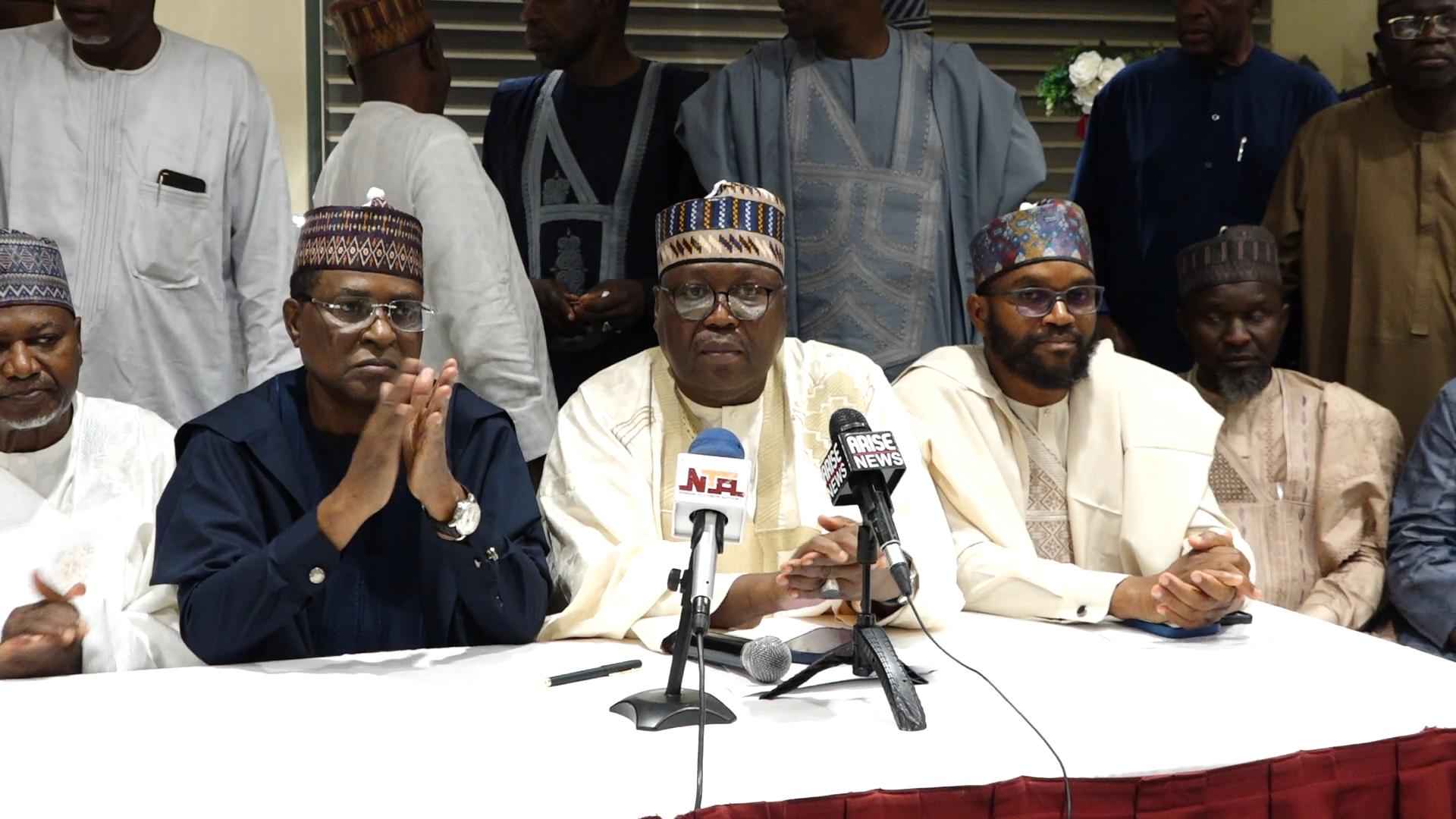
The Bauchi State caucus of the All Progressives Congress (APC) is grappling with internal tensions following moves to bring Governor Bala Mohammed into the party.
The cracks became evident during a meeting in Abuja, where members aired sharply opposing views over the political consequences and structural impact of the governor’s possible defection.

In a bid to manage the growing disagreement, the caucus agreed to set up a high-level committee to chart a way forward.
Acting Secretary of the caucus, Hon. Dabo Ismail, said the panel will define the group’s position ahead of any decision by the party leadership. He explained that the committee had been tasked with outlining expectations and conditions that would guide any eventual admission of new entrants.
He noted that the body will also consult widely with key stakeholders, represent the caucus in ongoing discussions around defections from the PDP-led administration, and keep members informed on developments.
Despite the tensions, Ismail maintained that the governor remains welcome to join the APC, while stressing the need for broader consultation. He urged the party’s national leadership to involve stakeholders within the state in any negotiations.
He described the move as a “democratic mechanism” aimed at managing differences without weakening party unity.
Meanwhile, Senator Sama’ila Dahuwa, who represents Bauchi North and chairs the caucus, voiced frustration over what he called the absence of prior engagement with local party figures.
According to him and other members, bypassing state stakeholders on such a critical matter risks undermining internal democracy, inclusiveness, and respect for established party structures.
“The omission is unacceptable,” the caucus stated, warning against imposing decisions without broad-based engagement with key stakeholders at the state level.
He disclosed that the committee comprised top-ranking party figures, including a serving minister, former governors and two senators.
The caucus resolved to formally communicate its position and grievances to the APC national leadership, insisting on strict adherence to due process and internal consultation.
The Caucus warned that poorly managed integration of new entrants could alienate loyal party members and weaken cohesion within the party.
Naijablitznews.com recalled that on March 31, 2026, Governor Mohammed, disclosed plans to defect to the African Democratic Congress (ADC), amid increasing political realignments ahead of future elections.
His position gained further attention after a recent visit by the APC National Chairman, Nentawe Yilwatda, alongside Kano State Governor, Abba Yusuf, to the Bauchi Government House for a closed-door meeting.
News
Photos: Appellate Court Advocacy Demands Precision, Discipline — Wike
Minister of the Federal Capital Territory (FCT), Barr. Nyesom Wike, on Tuesday, stressed the need for discipline, precision and sound legal reasoning in appellate advocacy, describing appellate practice as a critical pillar for strengthening Nigeria’s justice system.
Wike stated this at the public presentation of the book, “Ukala’s Manual on Appellate Practice,” authored by Senior Advocate of Nigeria (SAN), Emmanuel C. Ukala, held at the Bola Ahmed Tinubu International Conference Centre, Abuja.
The former Rivers State governor described the publication as a timely and significant contribution to the legal profession, particularly for young lawyers seeking to develop competence in appellate litigation.
According to him, advocacy at the appellate level differs fundamentally from trial proceedings and requires a higher level of intellectual discipline and mastery of legal procedures.
“We are all aware that advocacy at the appellate level is of a fundamentally different character from proceedings at trial. It calls for a higher degree of discipline, clarity of thought, precision in expression, and a deep, assured command of both substantive law and procedural rules,” Wike said.
He noted that the manual would serve as a practical guide for lawyers and judges by bridging the gap between legal theory and courtroom practice.
“It serves as a vital bridge between legal theory and courtroom practice, offering guidance that is especially beneficial to younger members of the Bar as they develop the confidence and competence required to navigate the demands of appellate litigation,” he added.
Wike, who recalled his background in legal practice, said he personally appreciated the value of appellate adjudication, having prosecuted and defended several cases before appellate courts over the years.
“I myself am a direct beneficiary of the work done at the appellate level, having had the privilege, as a party in numerous disputes, to prosecute and defend many cases before appellate courts,” he stated.
The minister also revealed that he once worked briefly in Ukala’s law firm, noting that the experience shaped his professional values and appreciation for excellence in legal advocacy.
“I cut my teeth in the firm of Mr. Ukala, SAN, albeit for a relatively short time. The exposure and values I imbibed during that period discipline, attention to detail, respect for the craft of advocacy, and an unwavering commitment to excellence have continued to shape my professional outlook to this day,” he said.
Wike described the publication as a “legacy work” that would remain relevant to legal practitioners and judicial officers for years to come.
According to him, the book does not merely seek to impress readers academically but provides practical guidance on critical aspects of appellate litigation, including notices of appeal, compilation of records, interlocutory applications, briefs of argument, and oral advocacy.
“What I particularly appreciate about this manual is its practicality. It does not attempt to impress; it seeks to guide. It brings clarity to areas that many practitioners struggle with but rarely admit,” he said.
The FCT minister urged young lawyers to make effective use of the book in refining their professional skills and pursuit of excellence.
“To my colleagues, especially the younger lawyers, do not just celebrate this book, use it. Let it challenge you. Let it refine you. Let it remind you that excellence in this profession is a deliberate pursuit,” he added.
The event was attended by high-ranking judicial officers, including the President, National Industrial Court, Hon. Justice Benedict Bakwaph Kanyip, other heads of court, former Attorney General of the Federation and Minister of Justice, Chief Kanu Agabi, Justices of the Supreme Court, Justices of the Court of Appeal, Senior Advocates of Nigeria, members of the Body of Benchers, legal practitioners and other dignitaries from across the country, while Joseph B. Daudu (SAN) and Ferdinand O. Orbih (SAN), reviewed the book.
News
2027: My opponents are arming terrorists against me — Tinubu
President Bola Tinubu has declared his intention to seek re-election in 2027, saying critics exploiting the country’s security challenges were doing the bidding of his political opponents.
Tinubu made the remarks while receiving Plateau State Governor Caleb Mutfwang and other stakeholders from the state, telling them that hostile forces were weaponising insecurity to undermine his administration.
“You are playing to the hand of agents, including my own enemies, who want to use insecurity to get rid of me,” he said, adding that he would not be deterred.
“I’m a very stubborn politician. I just refuse to go. And I will campaign for my second term.”
The declaration comes amid sustained pressure on the Federal Government over attacks by armed groups, kidnappings, and killings across several states, with opposition figures and civil society organisations demanding stronger federal action.
NDLEA raids 3 illicit drug warehouses, recovers N16.9bn worth of opioids
Tinubu has consistently defended his administration’s security record, maintaining that agencies are being adequately supported to restore stability.
The President took office in May 2023 and is constitutionally eligible to seek a second four-year term when Nigerians go to the polls in 2027.
News
Lawmakers Move To Establish Military Strategy Hub
…proposal aim to strengthen coordination and innovation across the Armed Forces
By Gloria Ikibah
The House of Representatives has passed for second reading a proposal to set up a Joint Doctrine and Warfare Centre, envisioned as a high-level strategic hub to improve coordination, efficiency and overall performance within Nigeria’s Armed Forces.
The bill, sponsored by the Speaker, Tajudeen Abbas, is titled “A Bill for an Act to Establish the Joint Doctrine and Warfare Centre to Enhance the Coordination and Effectiveness of Military Operations of the Armed Forces of Nigeria by Integrating the Capabilities of Its Respective Services; and for Related Matters (HB 2741).”
It progressed to the next stage following debate by lawmakers on Wednesday during plenary.
The planned centre is intended to serve as a focal point for defence research, development of military doctrine, strategic planning and innovation in warfare, with particular attention on fostering closer collaboration among military and paramilitary bodies.
Commencing debate on the general principles of the legislation on behalf of the Speaker, Rep. Daniel Asama said, “the initiative is designed to bridge critical gaps in Nigeria’s defence framework, particularly the lack of a dedicated institution for developing and coordinating joint military doctrines.”
“The centre would establish a structured system for the formulation, validation and dissemination of joint doctrines, while also promoting interdisciplinary research on multi-domain operations”.
Asama further observed that Nigeria’s increasingly complex security landscape demands a more integrated and strategic military response.
“Nigeria faces complex security challenges, including terrorism, insurgency and cyber warfare, which require coordinated doctrinal responses among the Armed Forces.
“The absence of a dedicated institution for joint doctrine development has created operational gaps and limited interoperability among the services”, he said.
According to him, the proposed centre will serve as both a think-tank and a centre of excellence for doctrine formulation and warfare strategy.
“This bill provides the legal and institutional framework for the Joint Doctrine and Warfare Centre as a think-tank and centre of excellence for doctrine development and warfare strategy.
“It addresses the need for integrated doctrine development, unified command thinking and joint operational planning”, he added.
He described the bill as timely, the lawmaker said it would strengthen Nigeria’s capacity to respond to evolving threats while enhancing cooperation among the Army, Navy and Air Force.
He explained that the proposed centre would provide a standing platform for defence research, simulation exercises and policy coordination, with the aim of strengthening the long-term sustainability of the country’s security efforts.
The institution is expected to draw together major players in the security architecture, including the Ministers of Defence, service chiefs and specialists from the private sector.
Its responsibilities would cover aligning warfare strategies, monitoring emerging threats, reviewing operational requirements and offering strategic guidance for defence activities.
The centre would also work closely with defence institutions, universities, international allies and research organisations to advance joint doctrine development, simulation tools and contemporary warfare practices.
Among its core aims are improving Nigeria’s capacity to respond to hybrid and asymmetric threats, enhancing cooperation among the armed services, promoting defence research and expanding both regional and global security partnerships.
Asama expressed optimism that the proposal would markedly strengthen the nation’s military preparedness and strategic depth.
“The Joint Doctrine and Warfare Centre will serve as the intellectual and operational hub for defence coordination, doctrine formulation and integrated warfare planning,” he said.
Following its passage for second reading, the bill was referred to the House Committee on Defence for further legislative consideration.
When passed into law, the piece of legislation is expected to provide a solid institutional framework for advancing joint military operations and improving Nigeria’s response to current and emerging security challenges.
-
Metro17 hours agoDelta police arrest officer who shot handcuffed suspect to death in Effurun
-
Metro18 hours agoGunmen invade Ekiti church, k!ll pastor, abduct members during revival
-
Sports18 hours agoPSG Beat Bayern Munich In Historic 9-Goal UCL Semifinal Thriller
-
News17 hours agoEx-Zamfara Senator Marafa Joins NDC, Citing Court Cases Within ADC
-
News9 hours agoCourt bars INEC from recognising ADC congresses conducted by Mark-led C’ttee
-
News5 hours agoReps back digital overhaul of election petition procedures
-
News9 hours agoUnbelievable: Police say officer who publicly executed handcuffed Delta man was under “spiritual attack”
-
Foreign18 hours agoTrump Calls US Elections “Rigged,” Warns There Could Be No More America