

Connect with us

News

ECOWAS Parliament must evolve or risk irrelevance amid falling trust, rising instability – Speaker Abbas warns

Published

on

ADVERTISEMENT
Zoom Ad
ADVERTISEMENT
Zoom Ad

By Gloria Ikibah

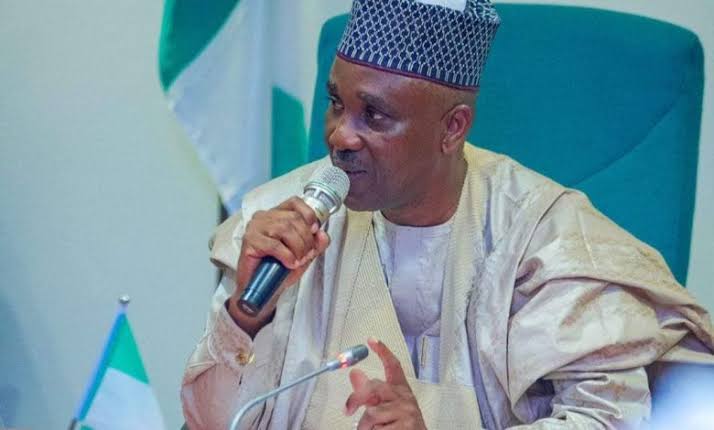
Nigeria’s Speaker of the House of Representatives, Rt. Hon. Tajudeen Abbas, has issued a stark warning that democracies across West Africa are under growing pressure to justify themselves through real results or face deepening instability.

Speaking at the opening of the 2026 First Ordinary Session of the ECOWAS Parliament in Abuja on Monday, Abbas said the region stands at a critical juncture, marked by declining voter turnout, eroding public confidence, and a worrying return of unconstitutional changes of government.

“This session brings together parliamentary leaders and representatives from across our sub-region at a time when the choices before us are both consequential and immediate.

Advertisement

“The concern is no longer limited to the conduct of elections. It extends to whether democratic governance is producing outcomes that citizens can recognise and trust,” he said.

He pointed to a growing sense of frustration among citizens, noting that although military rule remains widely rejected, patience with democratic systems is wearing thin.

“The issue is not whether democracy remains the preferred system of governance. Evidence across the region continues to show that citizens reject military rule. The issue is whether democratic systems are delivering sufficiently to sustain that preference. This places a premium on performance. Electoral legitimacy must be matched by governance outcomes.

“Security, economic stability, and fairness in public administration are no longer aspirational goals. They are the basis on which citizens evaluate the state’s credibility. Where these are absent, the space for disruption expands. Within this context, the role of the ECOWAS Parliament becomes increasingly important. It must function not only as a deliberative body, but as a platform for aligning democratic practice with the expectations of citizens across member states,” Abbas warned.

Advertisement

The Speaker argued that the ECOWAS Parliament can no longer afford to remain a largely advisory body, urging reforms to strengthen its legislative weight, oversight reach, and role in regional decision-making.

“It is important to acknowledge that this question of relevance is not new. Over the years, there have been sustained efforts within the Community to strengthen the mandate of the Parliament, including proposals to move it from an advisory body towards one with enhanced legislative authority, greater oversight capacity, and a more direct role in regional decisionmaking.

“Discussions around direct elections into the Parliament, expanded budgetary scrutiny, and clearer mechanisms for enforcing Community protocols have reflected a shared recognition that the institution must evolve in line with the demands placed upon it. These efforts have not yet been fully realised.

“However, the current moment makes their urgency clearer. A Parliament with limited influence cannot adequately respond to a region facing democratic reversals, security pressures, and economic uncertainty.

Advertisement

“Strengthening the powers, relevance, and operational capacity of this institution is therefore not a procedural ambition. It is a strategic necessity for regional stability. A more empowered Parliament would enhance accountability within the Community, deepen citizen representation at the regional level, and provide a stronger democratic anchor in times of stress”, he stated.

Abbas also highlighted the pivotal role of national legislatures, describing them as the primary link between governance and the everyday experiences of citizens.

“National parliaments are central to this effort. They are the institutions through which laws are made, executive action is scrutinised, and public resources are allocated. Their effectiveness determines, in practical terms, how citizens experience governance. Where parliaments are active and responsive, democratic systems are strengthened. Where they are passive, institutional balance is weakened.

“In Nigeria, the National Assembly has sought to respond to these responsibilities with a clearer sense of purpose. Under my leadership, the House of Representatives has prioritised legislative productivity, oversight discipline and public engagement.

Advertisement

“Mechanisms have been introduced to expand transparency and access, while legislative interventions have been aligned with national priorities in areas such as economic reform, security and social protection. A specific area of focus has been the strengthening of Parliamentary Friendship Groups.

“These platforms facilitate structured engagement with legislatures in other countries, enabling the exchange of experiences, coordination of positions, and the development of shared approaches to common challenges”, he stated.

Defending Nigeria’s recent economic reforms, Abbas described the removal of fuel subsidies and the unification of exchange rates as difficult but necessary decisions taken within a democratic framework.

“These measures have required adjustment, but they reflect a deliberate approach to reform within a democratic framework. Early indicators suggest that these changes are beginning to yield results.

Advertisement

“Fiscal inflows to states have increased, enabling greater investment in infrastructure and social services. Efforts to strengthen revenue administration and reduce leakages are ongoing.

“In the security sector, coordinated operations have been intensified across multiple regions. While challenges remain, the direction of policy is clear and anchored in constitutional order. The significance of this approach extends beyond Nigeria. It demonstrates that democratic systems can undertake difficult reforms without recourse to extra-constitutional measures.

“This is a critical point in a sub-region where the temptation to substitute constitutional processes with military intervention has re-emerged. Experience shows that such interventions do not resolve underlying governance challenges”, Abbas stressed.

He urged West African legislatures to become more assertive on the global stage, taking cues from regional parliamentary bodies that have expanded their influence beyond advisory roles.

Advertisement

Abbas outlined three priorities for the region: ensuring democratic systems deliver measurable outcomes, strengthening accountability in political leadership, and turning regional agreements into sustained action.

“Parliaments will be central to restoring public confidence in democracy across the sub-region.

“This session of the ECOWAS Parliament provides an opportunity to reinforce that direction. It is an opportunity to align our collective efforts with our citizens’ expectations and strengthen the foundations of democratic governance across West Africa”, he stated.


Advertisement
Continue Reading
Advertisement

News

BREAKING: Senators turn to sprinters as fire engulfs section of Senate wing

Published

on

ADVERTISEMENT
Zoom Ad
ADVERTISEMENT
Zoom Ad

A fire erupted on Wednesday in the Senate wing of the National Assembly complex in Abuja, prompting immediate concern and response from lawmakers and staff on the premises.

In a Footage circulating on social media, including from Africa Independent Television (AIT), shows thick smoke billowing from a room as senators and other personnel gathered nearby.

The video also captures hazy conditions inside adjacent areas, including what appears to be a pantry or kitchen space with chairs stacked and smoke visible.

According to preliminary reports, the incident occurred in a section of the Senate wing. Senators were described as being actively involved in efforts to put out the fire. No immediate reports of casualties have emerged, and those present appear to have evacuated or moved to safer areas within the complex.

Advertisement
Continue Reading

News

FCT Projects Commissioning: Tinubu Urges Abuja Residents to pay Ground Rent, Other Taxes To Enjoy More Developmental Projects(Photos)

Published

on

ADVERTISEMENT
Zoom Ad
ADVERTISEMENT
Zoom Ad

President Bola Ahmed Tinubu has urged residents and business owners in the Federal Capital Territory (FCT) to fulfil their civic obligations by paying taxes, land charges and ground rents, saying such compliance would enable government to deliver more infrastructure projects across the territory.

Tinubu made the call on Wednesday during the commissioning of the full-scope development of Arterial Road N5 (Obafemi Awolowo Way), stretching from Life Camp Junction to Ring Road III in Dape District, Abuja.

Represented by Vice President Kashim Shettima, the President said infrastructure development must be driven by a partnership between government and citizens.

“To the residents and business owners enjoying this transformation, I urge you to meet your obligations. Pay your taxes. Clear your land fees and ground rents. Your compliance gives the FCT Administration the strength to build more roads like this one,” he said.

The President described the newly completed road as a critical economic corridor that would ease traffic congestion, improve connectivity and unlock investment opportunities within the nation’s capital.

Recalling the commissioning of the Gwarinpa I District section of the road in June 2025, Tinubu said his administration had fulfilled its promise to complete the remaining section.

“On that day, we made a pledge to you. We promised not to leave this vital artery half-done. Because the Renewed Hope Agenda is not about abandoned projects; it is about delivery from start to finish.

“And so today, we are back. We are back to close the circle. We are back to commission the Dape District Section of Arterial Road N5, from Life Camp Junction to Ring Road III,” he stated.

The President stressed that the project was conceived, funded and completed under his administration, noting that it was awarded to Julius Berger Plc with a strict 15-month completion timeline after it was flagged off in October 2024.

According to him, the era when major infrastructure projects lingered for years without completion is over.

Advertisement

“We conceived it, we funded it, and we delivered it. In the past, projects like this became permanent budget lines ten, fifteen years of excuses. Not under this administration,” Tinubu declared.

He commended the Minister of the Federal Capital Territory, Barr. Nyesom Wike, describing him as the administration’s “Engine of Execution” and applauded Julius Berger for delivering quality work within schedule.

“Minister Wike, you and your team have shown what happens when political will meets accountability. We fund projects to see results, not to listen to grammar,” he added.

Tinubu noted that the completion of the N5 corridor would significantly reduce travel time for commuters and provide seamless connectivity among Dape, Karmo, Gwarinpa I, Kado, Idu and Mbora districts.

He further explained that the road would provide direct access to the Idu Industrial District, thereby lowering logistics costs, attracting investments and creating jobs.

“Beyond that, this road opens a direct gateway to the Idu Industrial District. That means lower logistics costs for businesses, new investment, and more jobs for our people,” he said.

Advertisement

The President also called on traditional rulers, community leaders and residents to protect public infrastructure from vandalism and ensure proper maintenance of drainage systems and streetlights.

Earlier, FCT Minister Barr. Nyesom Wike said the commissioning marked the second day of a 31-day project inauguration programme organised to commemorate the third anniversary of the Tinubu administration.

According to him, the scale of infrastructure delivery in the FCT has increased steadily since the administration came into office.

“On June 24, 2024, when we had the first-year anniversary of Mr. President, we took nine days of commissioning of projects. In the second year anniversary, we took 19 days. To the glory of God, in this third year, we are touching 31 days of commissioning of projects,” Wike said.

Advertisement

The minister credited Tinubu for providing the political support needed to transform the FCT, saying the Renewed Hope Agenda had translated into visible infrastructure development across Abuja and the satellite towns.

“For the first time, development has been taken to the satellite towns in the Federal Capital Territory. This is unprecedented. Before this period, satellite towns did not know what they call government. Today, they can feel the impact and presence of government,” he stated.

Wike praised Julius Berger for completing both sections of the project within record time, revealing that the Gwarinpa section was delivered within seven months.

He also defended the FCT Administration’s handling of compensation issues during the road construction, insisting that all affected property owners whose structures were demolished were duly compensated.

Advertisement

“We paid. If you are saying that because you are from that place and development has passed and government did not dash you money, we don’t dash money when we are carrying out development,” he said.

The minister dismissed protests by some individuals at the event, insisting that infrastructure projects across the territory had demonstrated the administration’s commitment to governance and development.

Earlier in her remarks, Minister of State for the FCT, Dr. Mariya Mahmoud, described the project as another milestone under the Renewed Hope Agenda and a reflection of President Tinubu’s commitment to improving connectivity, stimulating economic growth and enhancing residents’ quality of life.

Mahmoud paid tribute to Wike for what she described as his purposeful leadership and unwavering commitment to transforming Abuja through the delivery of critical infrastructure.

Advertisement

She also thanked traditional rulers, community leaders and residents of Life Camp, Dape District and neighbouring communities for their cooperation throughout the execution of the project.

The minister expressed confidence that the newly commissioned road would improve transportation, boost commercial activities and support sustainable urban development in the Federal Capital Territory.

Continue Reading

News

INSECURITY: Vice principal two others killed as bandits invade Kogi community, attempt to kidnap WAEC candidates

Published

on

ADVERTISEMENT
Zoom Ad
ADVERTISEMENT
Zoom Ad

Panic engulfed Iluke Bunu, a community in Kabba-Bunu Local Government Area of Kogi State, on Wednesday morning after suspected bandits launched a deadly attack that left three people dead, including a school vice principal.

The bandits, who reportedly invaded the community in large numbers, were said to have targeted students sitting for the ongoing West African Senior School Certificate Examination (WASSCE), sparking fears of a mass abduction.

According to local sources, the gunmen stormed the area in the early hours of June 10, unleashing gunfire that sent residents and students scrambling for safety. The incident disrupted normal activities in the community and created widespread panic among residents.

A community member who spoke about the attack described the situation as terrifying, revealing that the sound of sustained gunfire echoed across the area as people fled to avoid being caught in the violence.

Advertisement

He said we woke up to heavy gunfire this morning. The bandits entered the community and there was confusion everywhere.

Residents were running in different directions for safety, while students writing their WAEC examinations became terrified,” the source said.

The source further revealed that the attackers appeared determined to abduct students and school personnel but were thwarted by the swift intervention of security operatives and local vigilantes.

According to him, soldiers stationed at a nearby military formation responded quickly after receiving distress calls and engaged the gunmen in a fierce exchange of gunfire.

Advertisement

He explained that if not for the prompt response of the soldiers and local vigilante groups, many students could have been kidnapped.

The security forces confronted the attackers and eventually forced them to retreat.

During the attack, three people reportedly lost their lives. Among the victims was Mr. Gani Anifowose, Vice Principal of Government Secondary School, Aharha-Bunu. Two other individuals were also killed in the violence, although details about their identities were not immediately available.

Another resident expressed concern over the deteriorating security situation in the area, noting that many community members remain traumatised by the incident.

Advertisement

According to him, our community is facing serious security challenges. The gunshots lasted for a long time, and people are still searching for some residents whose whereabouts remain unknown,” the resident said.

Sources within the community stated that troops from the Nigerian Army formation in Suku-Kiri Bunu led the response operation.

The soldiers reportedly engaged the attackers in a gun battle, preventing them from carrying out their mission.

During the confrontation, one of the suspected bandits was allegedly shot dead, while several others escaped into nearby forests and bushes.

Advertisement

The attack has renewed concerns over insecurity in parts of Kogi State, particularly in rural communities where residents have repeatedly faced threats from armed criminal groups. It has also raised fresh questions about the safety of students and educational institutions amid ongoing national examinations.

Residents have called on the government and security agencies to strengthen security presence in vulnerable communities and take decisive action to prevent future attacks on schools and innocent civilians.

Continue Reading

Trending

Copyright © 2024 Naija Blitz News