Connect with us

Foreign

Three women found dead in sea off Brighton beach

Published

on

ADVERTISEMENT
Zoom Ad
ADVERTISEMENT
Zoom Ad

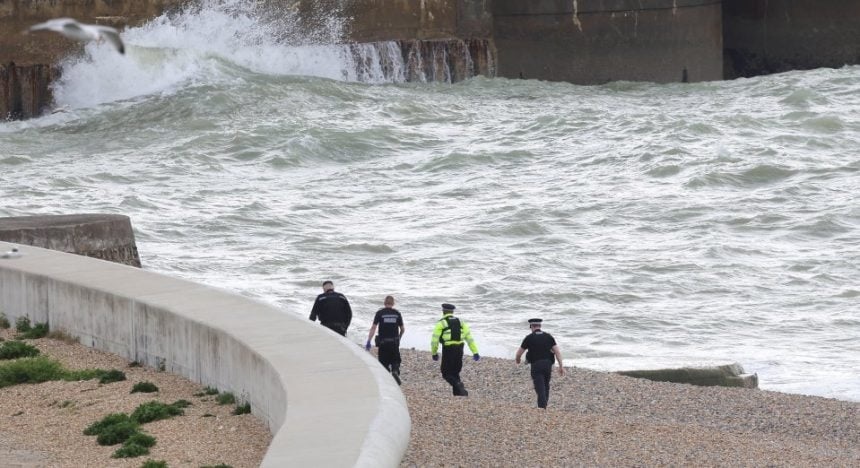
Three women have been found dead with their bodies recovered from the sea off Brighton in the United Kingdom (UK).


According to the police, a search started at 05:45 BST after worries about a person’s welfare in the sea were voiced. The women’s identities are unknown.

The Coast Guard has concluded its search and stated it is not searching for anyone else, though it is still unclear how the women ended up in the water.

“This is a tragic incident. We are at the very early stages of our enquiries.” Chief Supt Adam Hays said.

Advertisement

According to the BBC, the bodies were pulled from the water near Madeira Drive, which runs along the beachfront.

According to Sussex Police, a sizeable cordon was erected around Black Rock Beach, and it will stay in place until at least this evening.

Sussex police and crime commissioner, Katy Bourne, has asked the public to “refrain from speculation”.

Bourne said in a post on X that her thoughts were with the friends and loved ones of the three women who died.

Advertisement

“We must allow police to investigate and refrain from speculation at this time,” she added.

The BBC reports that most of the emergency services had left the scene by the afternoon, with three police vans remaining, and disclosed that many people in the community expressed shock after the incident.

Jilly Francis, a regular sea-swimmer in the area, said, “I live very close by, and this is the worst I think I’ve heard of anything happening.

“Today is very rough, so I’d be surprised if they were regular swimmers. I wouldn’t swim today because it’s too rough, but I normally swim in the summer when it’s calmer.

Advertisement

“There can be rips or currents, but most of the time this particular bit of the beach is quite safe.”

Pam Hinchliffe, a resident who was visiting the beach, said, “It’s tragic. My understanding is it was very early in the morning, so you start thinking, ‘what could possibly have caused that?’ It’s a tragedy.”

Hays added, “Our priority right now is to identify all three women and contact their next of kin.”

“I know this incident will be highly distressing for the community, and we are working hard with our partners to understand exactly what has happened.”

Advertisement

Brighton Kemptown and Peacehaven MP Chris Ward said it was “understandably very concerning for our community and everyone affected”.

The leader of Brighton & Hove City Council, Bella Sankey, said she was “shocked and deeply saddened.

“My heart goes out to the friends and family of these women, and on behalf of Brighton & Hove, I send sincere condolences.”

Sian Berry, MP for Brighton Pavilion, said: ‘Unbearably sad news this morning. My thoughts are with the families and friends of these three women.”

Advertisement

(BBC)

Continue Reading
Advertisement

Foreign

Strait of Hormuz: US doesn’t need China’s help – Trump

Published

on

By

ADVERTISEMENT
Zoom Ad
ADVERTISEMENT
Zoom Ad

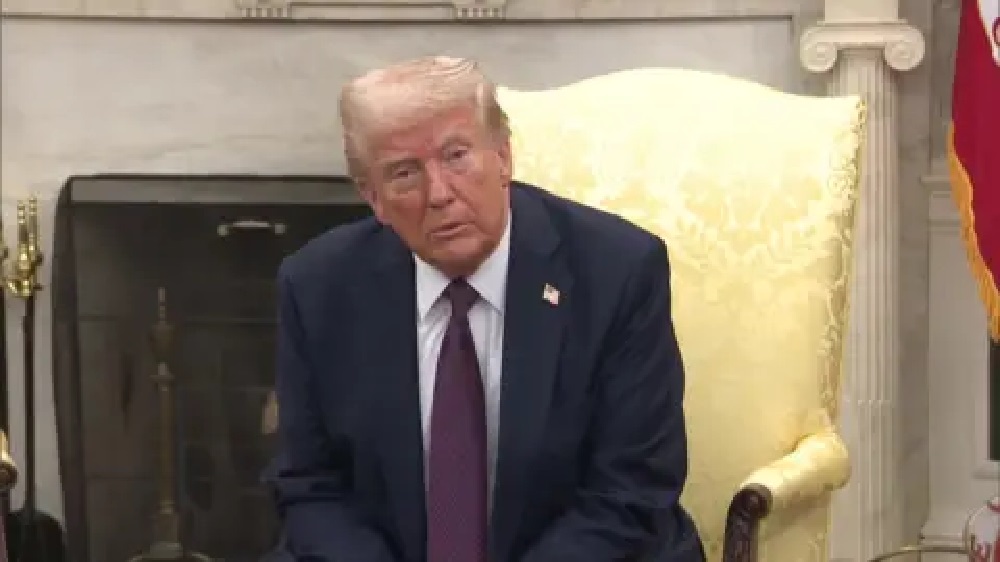
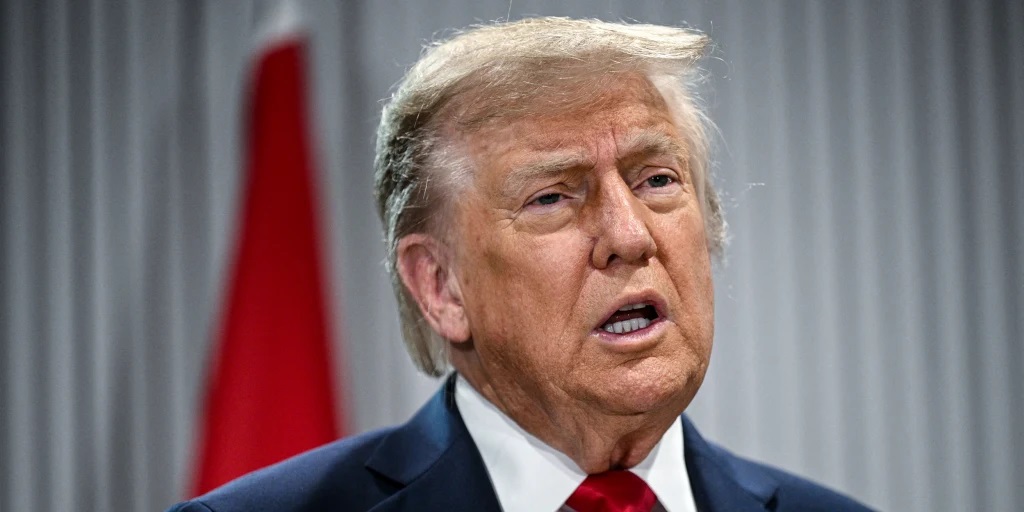
U.S. President Donald Trump on Wednesday said Washington does not expect to need Beijing’s help to end the war with Iran and ease Tehran’s ‌grip on the Strait of Hormuz.

Trump is in ​China for a high-stakes summit with President Xi Jinping.

Speaking before departing from Washington, Trump played down the role China could have in resolving the conflict, in which both sides have blocked maritime traffic through a waterway that normally carries one-fifth of the world’s oil supplies.

“I don’t think we need any help with Iran. We’ll win it one way or the other, peacefully or otherwise,” he told reporters.

Advertisement

More than one month after a tenuous ceasefire took effect, U.S. and Iranian demands to end the ​war remain far apart.

Washington has called for Tehran to scrap its nuclear programme and lift its chokehold on the strait, while Iran has demanded compensation for war damage, an end to ​the U.S. blockade and a halt to fighting on all fronts, including in Lebanon where Israel is battling Iran-backed Hezbollah.

Trump has dismissed those positions as “garbage.”

Iran, ⁠meanwhile, has appeared to firm up its control over the Strait of Hormuz, cutting deals with Iraq and Pakistan to ship oil and liquefied natural gas from the region, according to sources with knowledge ​of the matter.

Advertisement

A Chinese supertanker carrying two million barrels of Iraqi crude was attempting to sail through the strait, ship-tracking data showed on Wednesday.

If successful, the voyage would mark the third known passage by a ​Chinese oil tanker through the channel since the U.S. and Israel launched strikes on Iran on February 28.

Other countries are exploring similar shipping arrangements with Iran, sources said, potentially entrenching Tehran’s control of the waterway through which fertilisers, petrochemicals and other bulk commodities vital to global supply chains normally flow.

The Trump administration on Tuesday said senior U.S. and Chinese officials had agreed in April that no country should be able to charge tolls on traffic through the region, ​in an effort to project consensus on the issue ahead of the summit.

Advertisement

China, a major buyer of Iranian oil that maintains close ties with Tehran, did not dispute that account.

As the ​costs of the conflict mount, Trump said Americans’ financial struggles were not a factor in his decision-making on the war.

Data released on Tuesday showed that U.S. consumer inflation accelerated in April, with the annual rate posting its largest gain in ‌three years ⁠as food, rent and airfares rose.

Asked to what extent the economic strain on Americans was motivating him to strike a deal, Trump replied: “Not even a little bit.”

Advertisement

“I don’t think about Americans’ financial situation. I think about one thing: We cannot let Iran have a nuclear weapon’’ Trump said before leaving for China.

The remarks are likely to draw scrutiny as cost-of-living concerns remain a top issue for voters ahead of November’s midterm elections.

The International Energy Agency said the conflict is weighing heavily on global energy markets with more than one billion barrels of Middle ⁠East supply already lost.

According to IEA, global oil supply will fall by around 3.9 million barrels per day across 2026 and undershoot demand due to disruptions caused by the Iran ​war.

Advertisement

Brent crude futures edged down slightly to around 107 dollars per barrel, after a three-day rally driven by the Hormuz deadlock.

U.S. Central Command said the aircraft carrier Abraham Lincoln was in the Arabian Sea enforcing a maritime blockade, redirecting 65 commercial vessels and disabling four others.

The Pentagon put the cost of the war ​at 29 billion so far, an increase of four billion dollars from an estimate provided in April.

Iran has demanded security guarantees for Lebanon as part of its proposal to end the wider war, but despite a U.S.-mediated ceasefire announced in April, Israel has continued to strike Hezbollah.

Advertisement

Israeli airstrikes on a highway south of Beirut ⁠killed eight people, ​including two children, according to Lebanon’s health ministry.

In Tehran, Iranian officials remained defiant.

Iran had expanded its definition of the Strait of Hormuz into a zone stretching from the coast of the city of Jask in the east to Siri Island in the west.

In the capital, where a series of ​small earthquakes were reported overnight, the Guards held drills centred on preparation to confront the enemy.

Advertisement

(Reuters/NAN)

Continue Reading

Foreign

Trump to suspend US gas tax as Iran war raises prices

Published

on

By

ADVERTISEMENT
Zoom Ad
ADVERTISEMENT
Zoom Ad

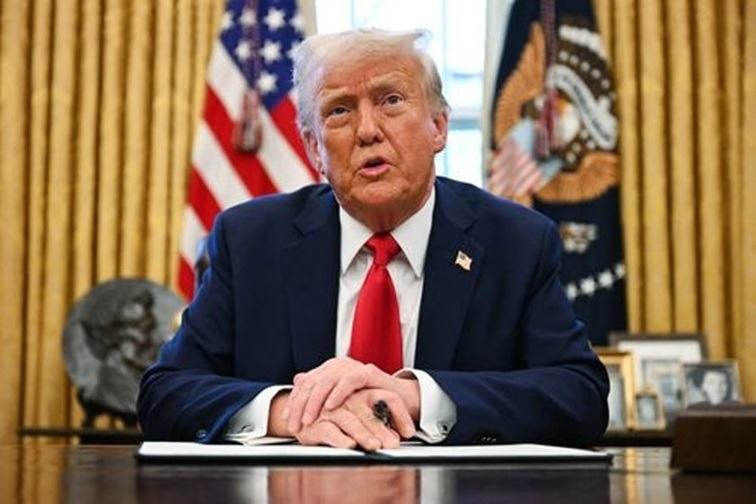
US President Donald Trump said on Monday that he plans to suspend a federal gasoline tax as consumers deal with surging energy prices in the wake of the Iran war.

Responding to a reporter’s question at the White House, Trump said he would be taking the step, with the suspension to remain in place “till it’s appropriate.”

“It’s a small percentage, but you know it’s still money,” he said.

US federal taxes on gasoline amount to 18.4 cents per gallon on gasoline and 24.4 cents per gallon for diesel, according to the US Energy Information Administration (EIA).

Advertisement

Suspending the tax would require an act of Congress, where Trump’s Republican party holds a razor-thin majority in both houses.

Trump ally Senator Josh Hawley said he would introduce legislation to do so on Monday. In the House, Republican Anna Paulina Luna made a similar pledge to introduce a bill “this week.”

US fuel prices have skyrocketed since Trump launched the war on Iran, with gasoline and diesel both up about 50 percent since late February.

Iran’s retaliatory action has included virtually closing the key Strait of Hormuz, through which about a fifth of the world’s oil and natural gas passes.

Advertisement

On Monday, the average price of a gallon of regular gasoline in the United States was $4.52, with diesel at $5.64, according to the AAA motor club.

Suspending the federal fuel tax would bring those prices down by about four percent.

State taxes on fuel, which average 32.61 cents per gallon for gasoline and 34.76 cents for diesel according to the EIA, would be unaffected by the move.

AFP

Advertisement
Continue Reading

Foreign

Iran responds to US peace proposal as drones hit Gulf

Published

on

By

ADVERTISEMENT
Zoom Ad
ADVERTISEMENT
Zoom Ad

Iran responded to Washington’s latest peace proposal on Sunday, after drones threatened several Gulf region targets and Tehran warned it would not hold back from retaliating against any new US strikes.

The long-awaited answer came as Israeli Prime Minister Benjamin Netanyahu — whose forces launched the war on Iran in tandem with the US on February 28 — insisted the conflict wasn’t over until Iran’s enriched uranium was removed and its nuclear facilities dismantled.

But Tehran maintained its defiant line, even as behind-the-scenes diplomacy towards a deal continued.

“We will never bow down to the enemy, and if there is talk of dialogue or negotiation, it does not mean surrender or retreat,” Iranian President Masoud Pezeshkian said on X Sunday.

Advertisement

According to state broadcaster IRIB, Tehran’s response to the US plan, passed to Pakistani mediators, focuses on ending the war “on all fronts, especially Lebanon” — where Israel has kept up its fight with Iran-backed Hezbollah — as well as on “ensuring shipping security”.

It offered little in the way of detail, though the US proposal had reportedly focused on extending the truce in the Gulf to allow for talks on a final settlement of the conflict and on Iran’s contested nuclear programme.

Netanyahu said on Sunday that Iran’s stockpile of enriched uranium must be removed before the US-Israeli war against Iran could be considered finished.

“It’s not over, because there’s still nuclear material — enriched uranium — that has to be taken out of Iran. There’s still enrichment sites that have to be dismantled,” Netanyahu told CBS’s “60 Minutes”.

Advertisement

– No Hormuz ‘interference’ –

Iran imposed a blockade on the vital Strait of Hormuz early in the war, sending global oil prices soaring and rattling financial markets.

It has since set up a payment mechanism to extract tolls from shipping crossing the strait, but US officials have stressed it would be “unacceptable” for Tehran to control an international waterway and the route for a fifth of the world’s oil.

The US Navy, meanwhile, is blockading Iran’s ports, at times disabling or diverting ships heading to and from them.

Advertisement

Britain and France are leading efforts to create an international coalition to secure the strait after a peace deal is secured, with both countries sending vessels to the region in advance.

But Iran insisted on Sunday that they would meet “a decisive and immediate response” should they deploy their ships to the strait.

“Only the Islamic Republic of Iran can establish security in this strait and it will not allow any country to interfere in such matters,” Deputy Foreign Minister Kazem Gharibabadi posted on X.

French President Emmanuel Macron later insisted that his country had “never envisaged” a naval deployment in the Strait of Hormuz, but rather a security mission “coordinated with Iran”.

Advertisement

Qatari Prime Minister Sheikh Mohammed bin Abdulrahman Al Thani, meanwhile, “stressed that freedom of navigation is a firmly established principle that is not open to compromise, and that closing the Strait of Hormuz or using it as a pressure card only serves to deepen the crisis”.

– ‘Restraint over’ –

Fresh drone attacks in the Gulf on Sunday were the latest to rattle the ceasefire after a string of flare-ups in recent days.

The United Arab Emirates said its “air defence systems successfully engaged two UAVs launched from Iran” in what would be, if confirmed, only the second strike on a Gulf country since the start of the month-old truce.

Advertisement

Iran’s neighbour Kuwait reported an attempted attack as well.

“At dawn today, the armed forces detected a number of hostile drones in Kuwaiti airspace, which were dealt with in accordance with established procedures,” the military posted.

And Qatar’s defence ministry said a freighter arriving in its waters from Abu Dhabi was hit by a drone off the port of Mesaieed.

The United Kingdom Maritime Trade Operations centre said the bulk carrier reported being struck by an unknown projectile.

Advertisement

“There was a small fire that has been extinguished, there are no casualties. There is no reported environmental impact,” it said.

There was no immediate claim of responsibility, but Iran’s Fars news agency reported that “the bulk carrier that was struck near the coast of Qatar was sailing under a US flag and belonged to the United States”.

In a social media post on Sunday, the spokesman for the Iranian parliament’s national security commission warned the United States: “Our restraint is over as of today.”

“Any attack on our vessels will trigger a strong and decisive Iranian response against American ships and bases,” Ebrahim Rezaei said.

Advertisement

Iran’s Revolutionary Guards had threatened the day before to target US interests in the Middle East if its tankers came under fire — as they did on Friday when a US fighter jet fired on and disabled two Iran-flagged vessels in the Gulf of Oman.

Tehran’s military chief Ali Abdollahi also met the country’s supreme leader Mojtaba Khamenei and received “new directives and guidance for the continuation of operations to confront the enemy”, according to Iranian state television.

AFP

Advertisement
Continue Reading

Trending

Copyright © 2024 Naija Blitz News