
Economy
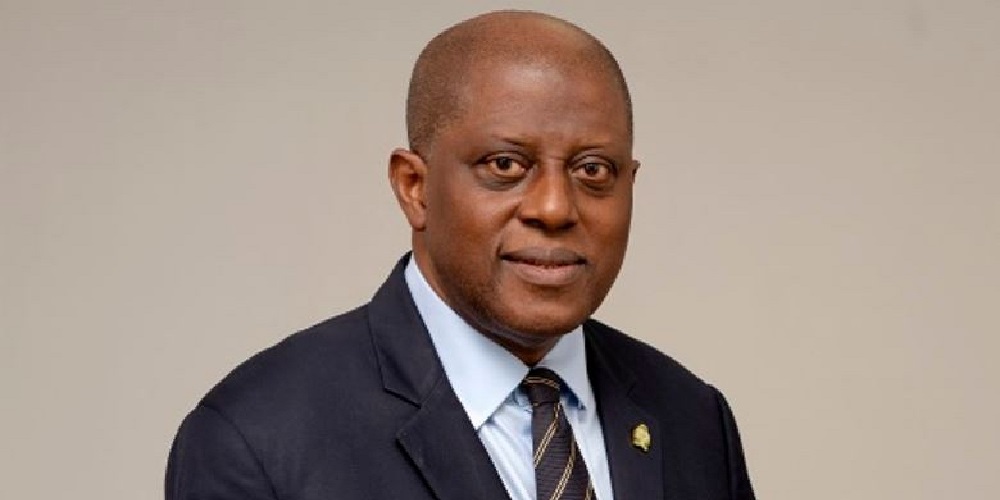
Cardoso rejects calls for CBN to return to intervention programmes

- /home/naijuinz/public_html/wp-content/plugins/mvp-social-buttons/mvp-social-buttons.php on line 27
https://naijablitznews.com/wp-content/uploads/2024/02/Olayemi-Cardoso.jpg&description=Cardoso rejects calls for CBN to return to intervention programmes', 'pinterestShare', 'width=750,height=350'); return false;" title="Pin This Post">
- Share
- Tweet /home/naijuinz/public_html/wp-content/plugins/mvp-social-buttons/mvp-social-buttons.php on line 72
https://naijablitznews.com/wp-content/uploads/2024/02/Olayemi-Cardoso.jpg&description=Cardoso rejects calls for CBN to return to intervention programmes', 'pinterestShare', 'width=750,height=350'); return false;" title="Pin This Post">


The Governor of the Central Bank of Nigeria, Olayemi Cardoso, has defended the apex bank’s return to orthodox monetary policy and warned against renewed calls for interventionist programmes, saying such measures previously distorted the institution’s balance sheet and weakened policy effectiveness.
Cardoso made the remarks during the opening session of a Monetary Policy Committee workshop held on May 21, 2026, according to a statement issued by the CBN on Sunday.
The statement said the governor reaffirmed the bank’s commitment to orthodox monetary policy, transparency and evidence-based decision-making, describing the ongoing reforms as critical to restoring confidence in the Nigerian economy and strengthening macroeconomic stability.
The workshop, themed “Strengthening Monetary Policy Effectiveness Towards Sustainable Macroeconomic Stability,” brought together MPC members, deputy governors, directors and other stakeholders to discuss ways of improving monetary policy effectiveness amid evolving domestic and global economic conditions.
According to the statement, Cardoso reflected on Nigeria’s recent monetary policy history and highlighted the challenges facing the bank when the current administration assumed office. These, he said, included weakened institutional autonomy, reduced policy credibility and reliance on unorthodox monetary tools.
The statement read, “According to him, these challenges blurred the distinction between fiscal and monetary responsibilities, reduced transparency, and limited the effectiveness of policy interventions. He also observed that the foreign exchange market was opaque and inefficient, while weak fiscal-monetary coordination further constrained economic outcomes.”
The CBN noted that these structural weaknesses contributed to rising inflationary pressures, exchange-rate volatility and an erosion of investor and public confidence.
However, the statement said reforms introduced by the current leadership had begun reversing those trends.
It explained that the apex bank had restored a more orthodox approach to monetary policy under the current MPC framework, with renewed emphasis on conventional instruments and the Monetary Policy Rate as the primary signalling tool.
The statement added that improvements in liquidity management, forward guidance and policy communication had enhanced transparency and helped anchor expectations among households, businesses and investors.
“As a result, the Governor noted that inflation, while still elevated and requiring close monitoring, has begun to moderate, and exchange-rate stability has improved. Enhanced transparency in the foreign exchange market has also supported more efficient price discovery and reduced volatility, contributing to a gradual restoration of confidence,” the statement read.
The apex bank further stated that the economy’s growing resilience to external shocks, including recent geopolitical developments in the Middle East, reflected the impact of ongoing reforms and improved policy coordination.
Beyond monetary policy outcomes, the statement highlighted progress in strengthening the institution’s internal processes.
It noted that decision-making within the bank was increasingly anchored on data-driven analysis and structured deliberation, while communication practices had become more consistent and predictable.
According to the statement, those efforts align with the CBN’s medium-term objective of transitioning to a more explicit inflation-targeting framework, a process that will require deeper institutional reforms, stronger collaboration and sustained technical work.
The statement also quoted Cardoso as describing the recently concluded banking recapitalisation exercise as evidence of effective policy coordination, extensive stakeholder engagement and the diligence of the bank’s financial-sector supervision teams.
Reiterating the bank’s commitment to orthodox monetary management, Cardoso cautioned against a return to interventionist measures.
“The Governor reiterated the Bank’s focus on orthodox monetary policy and cautioned against renewed calls for interventionist measures, noting that such programmes had previously distorted the Bank’s balance sheet. He stressed that the institution’s renewed credibility over the past two and a half years has largely stemmed from its disciplined reliance on conventional policy tools,” the statement read.
The governor also reaffirmed the bank’s commitment to transparency, evidence-based policymaking and institutional strengthening, stressing the importance of continuous learning and adaptation in achieving sustainable macroeconomic stability.
According to the statement, he expressed confidence that the workshop would generate practical insights to strengthen the implementation of monetary policy and support sustainable economic growth.
Earlier in his welcome address, the Deputy Governor for Economic Policy, Dr Muhammad Abdullahi, emphasised the importance of broad-based participation in monetary policy discussions.
The statement quoted Abdullahi as saying that facilitators at the workshop were drawn from policy, research and professional practice, adding that the diversity of perspectives was essential for informed dialogue, rigorous analysis and collaborative engagement.
He explained that the workshop was designed to provide a platform for structured dialogue, technical exchange and shared learning.
According to the statement, Abdullahi noted that the workshop theme was particularly relevant in the current environment, where monetary policy is influenced by evolving domestic economic conditions, global spillovers and heightened uncertainty.
He added that the theme reflected the bank’s commitment to continuous improvement in policy formulation and implementation and expressed optimism that the outcomes of the workshop would support ongoing efforts to strengthen policy analysis and execution within the CBN.
The two-day event featured technical sessions led by experts with practical experience in monetary policy and financial markets. Discussions focused on policy transmission mechanisms, financial market development, analytical frameworks and institutional processes tailored to Nigeria’s economic environment, the statement added.

Nigeria’s pension assets have risen by 51 per cent over the past two years, from N 20. 7 trillion to N 31. 48 trillion, while nearly one million new contributors have joined the Contributory Pension Scheme, Omolola Oloworaran, Director- General of the National Pension Commission (PenCom), said on Tuesday.
Oloworaran attributed the growth to renewed public confidence in the nation’s pension system, saying reforms introduced by the President Bola Tinubu administration had strengthened the industry’s credibility and expanded participation.
She disclosed this while briefing journalists at the Meet the Press session organised by the Presidential Communications Team at the Presidential Villa, Abuja.
According to her, pension assets increased by N 10. 7 trillion over the period, reflecting what she described as restored trust in the system.
“Every successful pension system on Earth is built on a simple foundation: confidence—confidence that contributions are safe, confidence that institutions work, confidence that after decades of honest labour, retirement will bring security, not uncertainty. Two years ago, that confidence needed restoring. Today, the verdict is in.
“Pension assets have grown from N 20. 7tn to N 31. 48tn as at this month. That is a 51 per cent increase, representing N 10. 7tn in new retirement wealth.
“Let me say plainly what those numbers mean: confidence is back, and the system is growing,” she said.
The PenCom boss noted that the growth was driven not only by improved investment performance but also by increased enrolment, with 938, 938,229 new contributors joining the Contributory Pension Scheme over the past 24 months.
She said the commission had also prioritised translating the growth in pension assets into improved welfare for retirees.
According to Oloworaran, aggregate monthly pension payments have risen by 22 per cent, increasing from N 12. 2 billion to N 14. 9 billion.
She further disclosed that following the implementation of the new national minimum wage, the Federal Government approved a N 32, 000 monthly consequential pension adjustment for eligible retirees of treasury- funded Ministries, Departments and Agencies who retired on or before July 29, 2024.
She said more than 195, 195,000 pensioners have already benefited from the upward review, describing it as part of the administration’s commitment to improving the welfare of retired public servants.

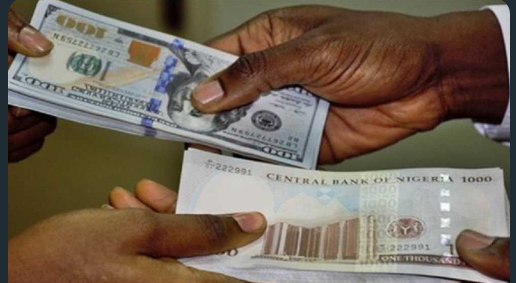
The Black Market Dollar-to-Naira Exchange Rate for 14th July 2026 Can Be Accessed Below.
IMPORTANT NOTE: The exchange rate changes hourly. It depends on the volume of dollars available and the Demand. This means…you can buy or sell 1 dollar at a certain rate, and the price can change (high or low) within hours.
The official naira black market exchange rate in Nigeria today, including the Black Market rates, Bureau De Change (BDC), and CBN rates.
Please note that the exchange rate is subject to hourly fluctuations influenced by the supply and demand of dollars in the market.
What’s the dollar to naira black market today, 14th July 2026?
The exchange rate for a dollar to naira at Lagos Parallel Market (Black Market) players sell a dollar for ₦1425 and buy at ₦1410 on Tuesday, 14th July, 2026, according to sources at Bureau De Change (BDC).
Please note that the Central Bank of Nigeria (CBN) does not recognize the parallel market (black market), as it has directed individuals who want to engage in Forex to approach their respective banks.
Dollar to Naira Black Market Rate Today
Dollar to Naira (USD to NGN) Black Market Exchange Rate Today
Selling Rate ₦1425
Buying Rate ₦1410
Dollar to Naira CBN Rate Today
Dollar to Naira (USD to NGN) CBN Rate Today
Highest Rate ₦1381
Lowest Rate ₦1378
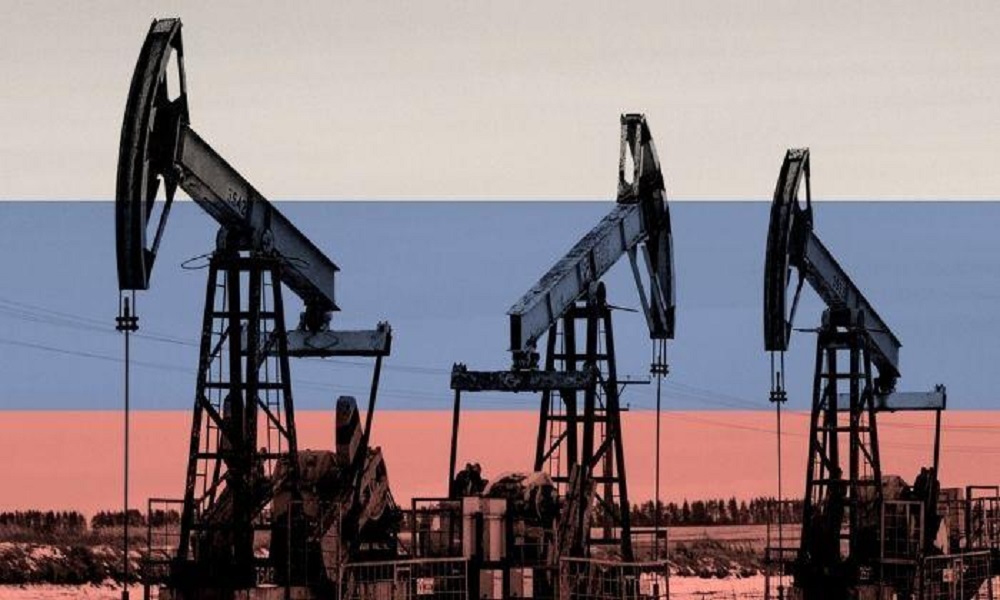
Nigeria’s crude oil production has climbed to its highest level in more than six years, with the country exceeding its Organisation of the Petroleum Exporting Countries production quota for the fourth consecutive month, buoyed by improved operational stability and fewer disruptions to oil infrastructure.
Latest figures released on Sunday in Abuja by the Nigerian Upstream Petroleum Regulatory Commission showed that the country’s average crude oil production rose to 1.56 million barrels per day in June 2026, while condensate output stood at 0.18 million barrels per day, bringing total crude oil and condensate production to 1,735,398 barrels per day.
The production level represents 104 per cent of Nigeria’s 1.5 million barrels per day crude oil production quota approved by OPEC and marks the country’s highest crude oil output since April 2020, making it a 74-month high.
The figures, contained in the commission’s latest production report and conveyed in a statement issued by its Head of Media and Corporate Communications, Eniola Akinkuotu, showed that June also marked the fourth consecutive month of production growth, reinforcing the recovery of Nigeria’s upstream oil sector after years of production losses caused by crude theft, pipeline vandalism and operational disruptions.
The statement read, “Nigeria’s crude oil and condensate production soared to an average of 1,735,398 barrels per day in the month of June 2026, representing positive growth for a 4th consecutive month. In the month under review, crude oil production hit 1.56mbpd while 0.18mbpd of condensates was produced. This means Nigeria met 104 per cent of the 1.5mbpd crude oil production quota set by the Organisation of Petroleum Exporting Countries.”
According to the commission, total crude oil and condensate production increased from 1.700 million barrels per day recorded in May to 1.735 million barrels per day in June, representing a 2.2 per cent month-on-month increase.
The report showed that combined production had earlier stood at 1.483 million barrels per day in February before rising steadily to 1.564 million barrels per day in March, 1.663 million barrels per day in April, 1.701 million barrels per day in May and 1.735 million barrels per day in June.
The NUPRC attributed the improved performance to stable production activities across major oil-producing assets and the absence of significant pipeline outages during the review period.
“The improved performance was primarily driven by stable production operations across most producing assets and the absence of any major pipeline outages during the period under review.
“This enhanced operational stability supported improved production uptime and crude evacuation efficiency. Although a limited number of assets experienced short-duration operational shutdowns, the overall impact on national production was minimal.
“In addition, scheduled turnaround maintenance activities were effectively managed and completed without significant disruption to production operations.
“The sustained growth recorded in June reflects the continued commitment of operators and industry stakeholders towards improving operational efficiency, maintaining asset integrity, and enhancing production reliability across the Nigerian upstream petroleum sector,” the statement added.
The commission also disclosed that Nigeria’s highest daily combined crude oil and condensate production during the month reached 1.89 million barrels per day, while the lowest daily production stood at 1.57 million barrels per day.
The peak production level underscores Nigeria’s growing potential to achieve the Federal Government’s medium-term ambition of producing two million barrels of oil per day, a target that has remained elusive for years due to insecurity in oil-producing communities, crude theft and ageing infrastructure.
An analysis of production by export terminals showed that Bonny Terminal retained its position as Nigeria’s highest-producing terminal, recording an average daily production of 318,280 barrels, compared with 293,880 barrels in May.
Forcados Terminal ranked second with 306,360 barrels per day, up from 289,900 barrels recorded in the previous month.
However, production at Qua Iboe Terminal declined to 164,730 barrels per day from 173,360 barrels per day in May.
Similarly, Escravos Terminal recorded a slight increase to 138,030 barrels per day, compared with 135,470 barrels per day in the previous month, while Bonga Terminal maintained steady output, producing 103,660 barrels per day, slightly above the 102,540 barrels per day recorded in May.
The sustained production growth is expected to strengthen Nigeria’s oil export earnings, improve foreign exchange inflows and provide additional fiscal revenues for the Federal Government at a time authorities are seeking to increase crude output and attract fresh investment into the upstream sector.
Nigeria has struggled in recent years to meet its OPEC production allocation because of widespread crude oil theft, pipeline vandalism, underinvestment and prolonged operational challenges.
However, reforms introduced under the Petroleum Industry Act, enhanced security around critical oil infrastructure and closer collaboration between government agencies and oil producers have contributed to the gradual recovery in production.
Maintaining production above the OPEC quota and sustaining operational stability will be critical if Nigeria is to realise its target of producing two million barrels per day and maximise the benefits of favourable global oil market conditions.

Arsenal legend, Henry reacts to France World Cup defeat, says Spain was far more superior

Taraba APC dispute: Electoral victories should not breed arrogance, exclusion – Kefas tells candidates

Appeal Court reserves verdict on deregnition of ADC, four parties




-
 News21 hours ago
VIDEO: DAY 25 of Projects Commissioning in FCT: Watch Wike’s brief dancing steps
-
 News21 hours ago
Shettima reveals how he shed tears beside Buhari during his last moments on earth
-
 News24 hours ago
Reps Demand Answers Over N5.3trn CBN Debt, Query OAGF on Deductions from MDAs’ Accounts
-
 News21 hours ago
Tinubu Commissions Bwari Water Project, Pledges Clean Water for All FCT Satellite Towns(Photos)
-

 Economy19 hours ago
See Black Market Dollar To Naira Exchange Rate Today 14th July 2026
-
 News19 hours ago
BREAKING: PFIPC scam: Police nab Prince Adeniyi Adeyemi
-

 News17 hours ago
NSITF presents 78 beneficiaries with prostheses
-

 News23 hours ago
Oyedele Sets Up Advisory Committee to Turn Economic Reforms into Results