
Economy
FG plans cooking gas export ban to crash price

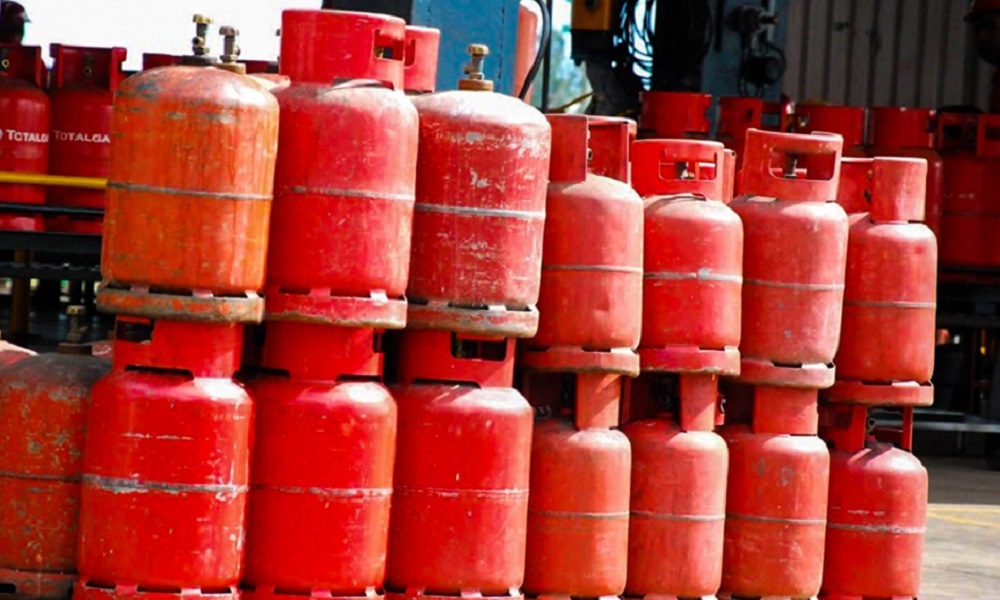


The Federal Government is to stop the exportation of Liquefied Petroleum Gas, popularly called cooking gas, in a bid to increase its volume domestically so as to warrant a crash in price.
It stated on Thursday that LPG producers in Nigeria and key stakeholders in the industry had been told to stop exporting the commodity out of Nigeria, following the recent jump in the cost of cooking gas.
Although the volume of LPG consumption in Nigeria depends on the specific timeframe, figures obtained from the Nigerian Midstream Downstream Petroleum Regulatory Authority indicated that in 2022, the total cooking gas consumption across the country was 1.4 million metric tonnes.
Data from the agency put total domestic production during the review period as 600,000MT, while imports accounted for 800,000MT.
In 2021, total consumption was estimated at around 800,000MT, as domestic production was about 300,000MT, while the volume that was imported in that year was put at 500,000MT.
Cooking gas consumption has been increasing significantly, with ambitious targets to reach five million metric tonnes by 2029, as LPG dealers stated that though Nigeria exports the commodity, the country relies heavily on imports to meet domestic demand.
This implies that the Federal Government could stop the export of over 600,000MT of cooking gas based on its drive to crash the price of the commodity locally.
Findings showed that the cost of refilling a 12.5kg cylinder of cooking gas in Abuja, Lagos, Kano and some other states had climbed to about N18,000. It was specifically N17,500 in Abuja on Thursday, a product that sold for less than N9,000 in November last year.
LPG dealers under the aegis of Nigerian Association of Liquefied Petroleum Gas Marketers had predicted mid last year that a 12.5kg cylinder would cost N18,000 going by the incessant hikes in its cost.
To tackle this, the Minister of State for Petroleum Resources (Gas), Ekperikpe Ekpo, constituted a committee in November 2023, headed by the Chief Executive of the Nigerian Midstream and Downstream Petroleum Regulatory Authority, Farouk Ahmed.
But up till today (Thursday), the cost of the commodity has maintained a northward movement, as many LPG users are gradually shifting to the use of charcoal.
But while speaking on the sidelines of the internal stakeholders’ workshop in Abuja on Thursday, Ekpo stated that the Federal Government had asked LPG producers to stop exporting the commodity.
He named some international oil companies including Mobil, Shell and Chevron as producers, stressing that the government was interfacing with them to crash cooking gas prices.
In November 2023, a kilogram of cooking gas was about N700, but the product is now sold at about N1,400/kg. Some operators stated that the cost would increase further if the government fails to intervene.
Ekpo said, “With the issue of gas, you have seen the demonstration of the Federal Government by withdrawing all taxes and levies from the importation of gas related equipment. It is a big incentive.
“On the issue of LPG (cooking gas), we are interacting with the critical sectors to ensure that there is no exportation of LPG. All LPG produced within the country will have to be domesticated. And when this is done, the volume will increase and, of course, the price will automatically crash.
“I’m in contact with the regulator, NMDPRA, we have meetings almost on a daily basis and with the producers of the gas like Mobil, Chevron and Shell. So there is that hope that things will turn around.
“And that is also why we are having this engagement to know exactly what the problems are, so that we can address them once and for all.”
When told that the removal of Value Added Tax on LPG seems not to be reflecting on the cost of the commodity, the minister stated that cooking gas investors were trying to maximise their profit from the sale of the product.
“Excuse me, it is not going to reflect that way. We are dealing with human beings. A policy has been put in place and these people, the investors, want to maximise the profit that they are going to get from it all.
“So at the end of the day we had to come in, which is why you have the regulator. We are interfacing with them to make sure they crash the price. We are meeting with them on a daily basis,” Ekpo stated.
It was reported in December 2023 that the Federal Government had exempted the importation of LPG and its equipment from the payment of customs duty and Value Added Tax, as the move was expected to result in a drop in the cost of cooking gas across the country.
This was disclosed by the Federal Ministry of Finance in a letter (dated November 28, 2023) to the Special Adviser to the President on Energy; Comptroller-General of the Nigeria Customs Service; and the Chairman of the Federal Inland Revenue Service.
The Minister of Finance and Coordinating Minister of the Economy, Wale Edun, signed the letter.
Meanwhile, when asked on Thursday to state when government vehicles would start running on Compressed Natural Gas as always championed by the government, the gas minister stated that he would speak on this later.
“The Presidential Initiative on CNG was set up before the inauguration of the ministers, but I’m interfacing with them. The Federal Government committee is working towards realising the goals. So the moment I get a clearer picture about it I will address you accordingly,” Ekpo stated.
Nigeria has over 208 trillion standard cubic feet of gas reserves and is now viewed as a gas-rich nation.
But most of the country’s gas resources remained untapped due to several reasons such as lack of investments in the sector, the shift from fossil fuels, policy issues, among others.
Ekpo was also asked whether the government would allow operators in the sector to run most of their transactions in naira, as against the popular practice of dollar transactions, and he said the matter would be discussed at the meeting by stakeholders.
“If you were there when the director on gas was presenting what we discussed during the stakeholders meeting on February 6, 2024, it (the concern) was presented, and I will have the views of the implementers and regulators today. Then from there we can take a decisive decision on how to address it,” the minister stated.
Earlier during his speech at the workshop, he said the aim of the event was to reposition the Nigerian gas sector for optimal performance, in line with President Bola Tinubu’s agenda to unlock Nigeria’s abundant gas resources for economic development and poverty eradication.
“This is the second in a series of engagements with stakeholders in the gas sector, the first being the consultative meeting I held with external stakeholders in the gas sector on February 6, 2024 which provided a platform for me to hear from the various associations and groups operating across the gas value chain with a view to understanding the pain points of the industry operators.
“It is my expectation that having heard from the operators in our industry, we as policymakers, regulators and policy implementers will internalise the feedback from our stakeholders and customers to proffer workable solutions to tackle the issues bedevilling our nation’s gas sector.
“With over 208 trillion standard cubic feet in proven gas reserves, Nigeria has no business with energy poverty, and it is imperative for us to rise up as a people to tackle these challenges head-on,” Ekpo stated.
He stated that as part of efforts to ensure a high level of performance and accountability within the Federal Government, the President, through the office of the Special Adviser on Policy and Coordination, had released the Presidential Priorities and Ministerial Deliverables for 2023 – 2027 to create a performance tracking mechanism for the Minister of Petroleum Resources and relevant agencies.
“The theme for this workshop – ‘Harnessing Nigeria’s Proven Gas Reserves for Economic Growth and Development,’ is very apt and provides a platform for us to galvanise action and take the necessary steps to release this nation’s abundant gas reserves to accelerate our industrialisation and develop the economy for the good of our teeming population,” Ekpo stated.
The Chief Executives of the Nigerian Midstream and Downstream Petroleum Regulatory Authority, Ahmed Farouk, and the Nigerian Upstream Petroleum Petroleum Regulatory Commission, Gbenga Komolafe, were in attendance at the internal stakeholders’ workshop on Thursday.
Representatives from other agencies under the petroleum ministry such as the Nigerian National Petroleum Company Limited, Petroleum Technology Development Fund, directors from the Federal Ministry of Petroleum Resources, among others, were also in attendance.


The Nigeria Deposit Insurance Corporation (NDIC) has commenced the final phase of winding down 89 defunct Microfinance Banks (MFBs) and Primary Mortgage Banks (PMBs) across the country following their acquisition by new operators under its resolution framework, it emerged on Wednesday.
The Corporation said the move follows the earlier revocation of licences by the Central Bank of Nigeria (CBN) in May 2023, which affected 179 microfinance banks and four primary mortgage banks.
Under the Purchase and Assumption (P&A) model, according to Hawwau Gambo, the Head of Communication and Public Affairs, 89 new institutions were subsequently licensed to take over the assets and liabilities of the failed banks and have since commenced operations under new identities.
NDIC, acting as liquidator, the statement noted, will now approach various divisions of the Federal High Court to obtain formal orders dissolving the defunct entities and discharging the Corporation from its liquidation responsibilities, in line with its enabling law.
A breakdown of the affected institutions shows that Lagos accounts for the highest number, with 27 banks undergoing the process.
This is followed by Osun with seven, Anambra with six, the Federal Capital Territory (FCT) with five, while Akwa Ibom, Ogun, and Adamawa recorded four each.
Oyo, Kaduna, Edo, and Niger recorded three each.
Other states affected include Benue, Delta, Imo, and Ondo, with two each, while Abia, Ekiti, Enugu, Rivers, Plateau, Nasarawa, Kano, Kwara, Jigawa, and Katsina recorded one each.
The Corporation said the exercise aims to bring closure to the resolution process while ensuring depositors’ interests remain protected, and the financial system remains stable.
The NDIC added that the transition under the P&A arrangement has allowed continuity of banking services in affected locations, as the acquiring institutions have fully taken over operations of the defunct banks.

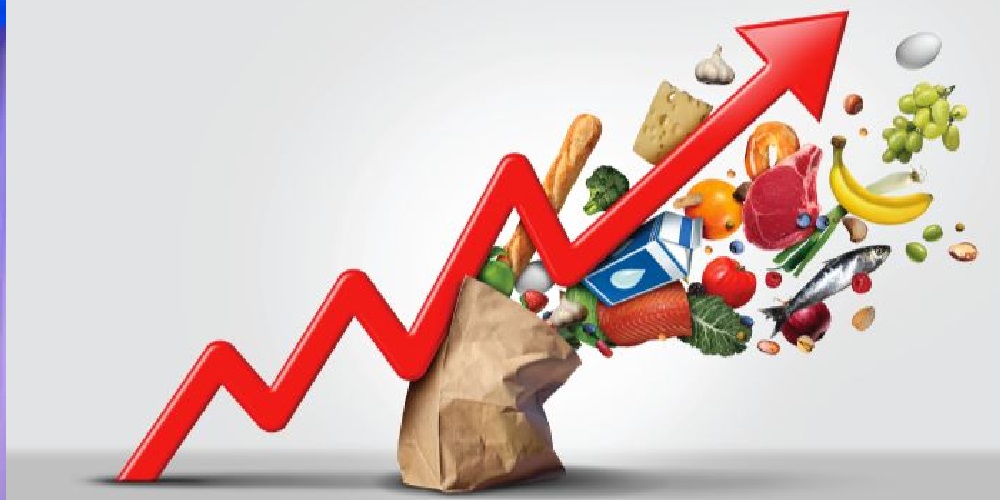
Nigeria’s headline inflation rate rose to 15.38% in March 2026, reflecting a modest increase from the 15.06% recorded in February.
This is according to the latest data from the National Bureau of Statistics (NBS).
The Consumer Price Index (CPI) increased to 135.4 in March 2026, reflecting a 5.4-point increase from the preceding month (130.0).
In March 2026, the headline inflation rate rose to 15.38%, up from 15.06% in February 2026 and stood 27.35% in the same month of the preceding year (March 2025).
Looking at the movement, the March 2026 headline inflation rate showed an increase of 0.32% compared to that recorded in February 2026.
However, on a month-on-month basis, the rate in March 2026 was 4.18%, which was 2.17% higher than the rate recorded in February 2026 (2.01%).
The percentage change in the average CPI for the twelve months ending March 2026 over the average for the previous twelve-month period was 20.05%, showing a 1.48% increase compared to 18.58% recorded in March 2025.
On a year-on-year basis, in March 2026, the Urban inflation rate was 14.64%. On a month-on-month basis, the Urban inflation rate was 3.16% in March 2026, up by 0.61% compared to February 2026 (2.55%).
The corresponding twelve-month average for the Urban inflation rate was 20.04% in March 2026. This was 0.06% points lower compared to the 20.10% reported in March 2025.
Rural inflation rate in March 2026 was 17.22% on a year-on-year basis.
On a month-on-month ba sis, the Rural inflation rate in March 2026 was 6.73%, up by 6.02% compared to February 2026 (0,71%).
The corresponding twelve-month average for the Rural inflation rate in March 2026 was 19.74%. This was 2.93% points higher compared to the 16.81% recorded in March 2025.
The food inflation rate in the month under review was 14.31% on a year-on-year basis and stood at 25.22% in the same month of the preceding year (March 2025).
However, on a month-on-month basis, food inflation rate in March 2026 was 4.17%, down 0.52 percentage points from February 2026 (4.69%).
The drop was attributed to the rate of change in the average prices of the following products: Yam, Ginger (Fresh), Cassava Tuber, Groundnuts (Shelled), Irish Potatoes, Avenger (Ogbono/Apon) – Dried Ungrinded, Toma toes (fresh), Cassava Flour sold loose, etc.
NBS said average annual rate of Food inflation for the twelve months ending March 2026 over the previous twelve-month average was 18.21%, which was 17.81% points lower compared with the average annual rate of change recorded in March 2025 (36.02%).
The “All items less farm produces and energy” or Core inflation, which excludes the prices of volatile agricultural produce and energy, stood at 16.21% in March 2026 on a year-on-year basis; a decline of 10.91% points when compared to the 27.12% recorded in March 2025.
On a month-on-month basis, the core inflation rate was 4.03% in March 2026, up by 3.14% points compared to Feb ruary 2026 (0.89%).
The average twelve-month annual inflation rate was 21.09% for the twelve months ending March 2026, which was 6.25% points lower than the 27.34% recorded in March 2025.
On a state level, headline inflation was highest in Bayelsa Year-on-Year with (27.37%), Sokoto (26.03%), and Bauchi (23.67%), while Osun (5.25%), Kano (9.85%), and Kaduna (10.38%) recorded the lowest rise.
On a Month-on-Month basis, however, March 2026 recorded the highest increases in Zamfara (10.77%), Bauchi (9.37%), and Sokoto (9.05%), while Lagos (1.54%), Akwa Ibom (1.80%), and Rivers (1.89%) recorded the lowest rise in the Month-on-Month inflation.
Food inflation was highest in Bayelsa (33.35%), Sokoto (28.02%), and Adamawa (21.67%), while Kano (4.29%), Oyo (4.86%), and Katsina (7.48%) recorded the slowest rise on a Year-on-Year basis.
On a Month-on-Month basis, however, March 2026 food inflation was highest in Sokoto (11.78%), Niger (8.59%), and Gombe (8.10%), while Katsina (0.09%), Ogun (0.77%), and Adamawa (1.30%) recorded the slowest rise in Food inflation on a Month-on-Month basis.
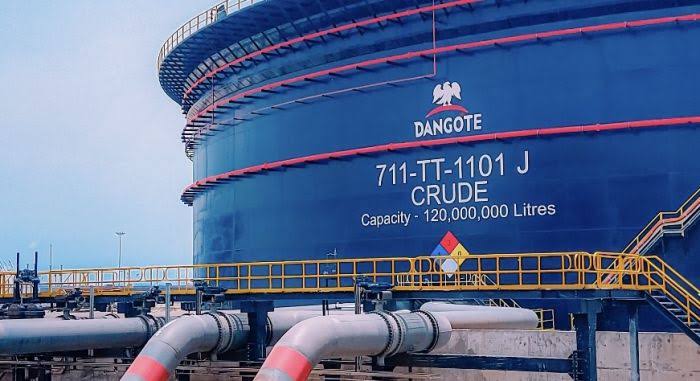
Nigeria has reached a historic milestone in its downstream oil sector, emerging as a net exporter of petrol for the first time, largely driven by increased production from the Dangote Petroleum Refinery.
Industry data shows that the 650,000 barrels-per-day facility exported about 44,000 barrels per day (bpd) of petrol in March 2026, resulting in a surplus of roughly 3,000 bpd for the month.
The development marks a major turnaround for a country that has long relied heavily on imported refined petroleum products.
The shift from import to export reflects a structural transformation in Nigeria’s oil trade, with positive implications for foreign exchange earnings, energy security, and regional fuel supply dynamics.
In a significant expansion of its export reach, the refinery also delivered a 317,000-barrel cargo of petrol to Mozambique—its first shipment to East Africa. Another consignment is expected to be delivered to Beira in April, underscoring growing regional demand as buyers seek alternatives to Middle Eastern supplies amid ongoing geopolitical tensions.
Data from Kpler further revealed that Nigeria’s petrol imports plunged to 41,000 bpd in March, the lowest level on record, highlighting the rapid displacement of imports by local refining.
It would be recalled that in September last year, President of the Dangote Group, Aliko Dangote, projected that the refinery would turn Nigeria into a net exporter of fuel while ending decades of fuel scarcity.
“We have been battling fuel queues since 1975, but today Nigerians are witnessing a new era,” he said.

Reps Open Fresh Probe into N1.12tn Farm Scheme, Summon Insurers Over Gaps

Reps Back N248bn Lifeline for Power Firms, Unveil Debt Shake-Up Plan

Kalu Drives Global Backing for New Post-Conflict Peace Blueprint at IPU Assembly




-

 News17 hours ago
PDP approved appointment of Wike as minister – APC
-

 News17 hours ago
See Black Market Dollar To Naira Exchange Rate Today 16th April 2026
-
 News16 hours ago
BBC to fire 2,000 workers to make £500m savings
-

 Opinion13 hours ago
DIAMOND DISTINCTIONS FOR THE PEOPLE’S MAN; DR. CHIDO ONUMAH
-

 News11 hours ago
BREAKING : Gunmen kidnap JAMB candidates, others in Benue
-

 News17 hours ago
Terrorists plotting massive attacks on Abuja International Airport, Correctional Centres, military detention centre — AP Report
-

 News16 hours ago
Presidency mocks Atiku over 2027 ambition, calls him serial loser, advises Obi to leave ADC
-

 News12 hours ago
Wike: Atiku a serial contestant, loser, he will still contest in 2031 (PHOTO)