Connect with us

News

Electricity tariff: Speaker Abbas to sponsor bill for compulsory NASS, stakeholders consultation

Published

on

ADVERTISEMENT
Zoom Ad
ADVERTISEMENT
Zoom Ad

Electricity tariff: Speaker Abbas to sponsor bill for compulsory NASS, stakeholders consultation

..says critical problems in power sector, value chain must be addressed

By Gloria Ikibah

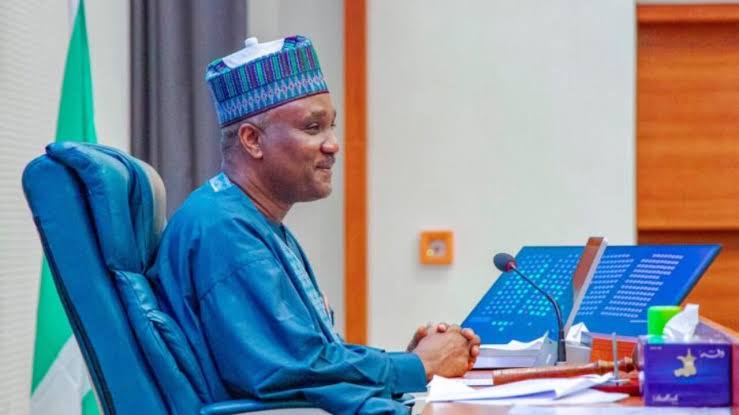
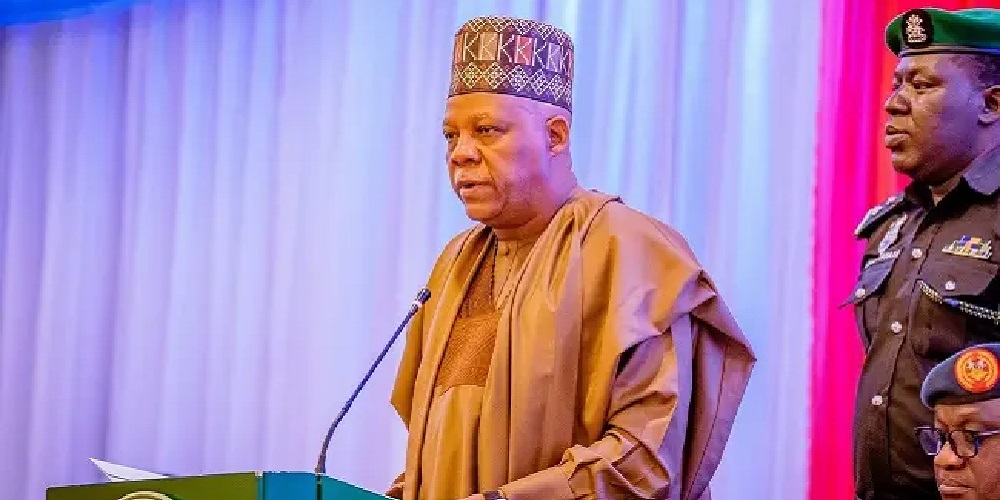
The Speaker of the House of Representatives, Hon. Abbas Tajudeen, has announced plans by him to propose a law that would make it mandatory for the relevant Federal Government bodies to consult the National Assembly and other stakeholders before fixing Electricity tariff.

Advertisement

“Accordingly, I will sponsor a bill to provide administrative procedures that entrench proper consultation and legislative review of process for tariff setting in Nigeria’s electricity and other public services,” he said while declaring open a power sector stakeholders interactive dialogue/workshop organised by the House Committee on Power.

The event was themed: ‘Confronting Nigeria’s Power Challenge as the Nation Migrates to a Multi-Tier Electricity Market: A Legislative Intervention.’

The intervention by the Speaker is coming at a time when Nigerians are criticising the recent electricity tariff increment.
The Nigerian Electricity Regulatory Commission had earlier in April approved an increase in electricity tariff for customers under the Band A classification, with the customers paying N225 kilowatt per hour, up from N66.

Band A customers are those who enjoy not less than 20 hours of electricity supply daily. They represent 15 per cent of the 12 million electricity customers in the country.

Advertisement

The Speaker said he would have expected that the forum and extensive consultations would have preceded the implementation of the new multi-tier electricity system.

“Having this consultation now appears to be an afterthought and goes contrary to the Electricity Act, 2024, which mandates consultation with all relevant stakeholders in determining just and fair tariffs,” he stated.

Speaker Abbas cited Section 33 of the Electricity Act 2024 as establishing the National Electricity Regulatory Commission (NERC) as a public agency subject to the oversight responsibility of the National Assembly under Sections 80-88 of the Constitution.

He stated that Section 34 of the Act specifically empowers the NERC ‘to ensure that the prices charged by the licensee are fair to consumers and are sufficient to allow licensees to finance their activities and to allow for reasonable profit for efficient operation’ and to ‘ensure that regulation is fair and balanced for customers, licensee, investors and other stakeholders.’

Advertisement

Speaker Abbas said: “I hope this forum allows all stakeholders to interrogate whether the new system meets the criteria outlined in the Act.

“The fundamental principles of just and fair pricing of electricity as laid out by a leading authority in this field are (1) simplicity, (2) understandability, (3) acceptability, (4) non-controversial, (5) stability, and (6) non-discriminatory. The question before you today is whether the new tariff model meets these principles.
“In framing the way forward, we can look towards best practices and successful models from other countries that have implemented similar market structures. Notable strategies include strong regulatory oversight to ensure fairness and transparency across all tiers.”

The Speaker stressed the need to address the problems bedevilling the power sector and electricity value chain in Nigeria.
Speaker Abbas also stated that the House’s commitment to “transforming the power sector into a model of efficiency and sustainability is unwavering.”

He said despite the challenges, together as stakeholders, a reformed power sector that drives national growth and enhances the quality of life for all Nigerians is achievable.

Advertisement

Speaker Abbas noted that discussions at the forum were set against the backdrop of the significant challenges and remarkable opportunities within our power sector.

He said: “The government’s objective is clear – to foster a resilient, efficient, and sustainable power sector capable of supporting our nation’s ambitious economic and developmental goals.

“Historically, the Nigerian power sector has grappled with challenges that have stifled its growth and hampered its efficiency. These challenges include inadequate generation capacity, dilapidated infrastructure, frequent disruptions in power supply, and financial inefficiencies that have eroded the sector’s viability.

“Moreover, the inadequate metering and the consequent revenue losses have perpetuated a cycle of debt and underinvestment that has undermined the sector’s potential.”

Advertisement

The Speaker said as the nation navigates these challenges, the stakeholders must foster collaborative efforts that leverage both public and private sector expertise and resources. “This dialogue embodies such collaboration and is crucial in charting a forward path,” he said.

Speaker Abbas also said the shift towards a multi-tier electricity market represents a strategic pivot in our approach to power sector reform. He added that this model envisaged a structured market segmentation that allows for differential pricing and service levels tailored to diverse consumer needs and capacities.
He stressed that it promised enhanced efficiency through competitive practices, encouraged investment by delineating clear market segments, and improved reliability and service delivery across the board.

The Speaker noted: “However, this is just one side of the coin. Despite the much-touted benefits, the transition to a multi-tier market is challenging. These include regulatory complexities, the need for substantial capital investment, the risk of market segmentation leading to disparities in service quality, and resistance from different stakeholder groups due to changes in tariff structures.

“We must acknowledge that numerous stakeholders and industry experts have expressed concerns that the proposed increase in electricity tariffs could lead to significantly higher utility bills. This increase could reduce disposable income for consumers, escalate operational costs for businesses, and increase the prices of goods and services, disproportionately affecting low-income earners in Nigeria. Some experts argue that these changes might drive more individuals into poverty, especially as inflation and foreign exchange issues continue to strain households and businesses.

Advertisement

“Additionally, critical problems within the electricity value chain need to be addressed. Technical and commercial losses, which have not been effectively tackled, add inefficiencies that consumers are indirectly forced to cover, contributing to the cost recovery efforts. These losses amount to billions of naira.”

Speaker Abbas commended the government under President Bola Ahmed Tinubu, GCFR, for its “unwavering commitment and robust drive towards overhauling the power sector.”

He recalled that the first bill to be signed into law by the President, barely a few weeks after his inauguration, was the Electricity Act (Amendment) Bill, 2024, which authorised states, companies, and individuals to generate, transmit and distribute electricity. He noted that the law repealed the Electric Power Sector Reform Act (EPSRA) signed by President Olusegun Obasanjo in 2005.

The Speaker also commended Chairman of the House Committee on Power, Hon. Victor Nwokolo, and members of the committee for their relentless commitment and leadership in spearheading the legislative framework that supports the transformative agenda of the President.

Advertisement

“This is in line with our Legislative Agenda, which prioritises economic growth and transformation of key sectors of the economy, especially power,” he said.

At the event were Minister of Power, Chief Adebayo Adelabu, and heads of agencies under the ministry; former Minister of Power and Chairman of Geometric Power Ltd., Prof Bartholomew Nnaji; former Minister of Information and National Orientation, Prof. Jerry Gana; Group Managing Director of Sahara Group, Kola Adesina; Generating Companies (GenCos), Distribution Companies (DisCos), among others stakeholders.

Continue Reading
Advertisement
Click to comment

Warning: Undefined variable $user_ID in /home/naijuinz/public_html/wp-content/themes/zox-news/comments.php on line 49

You must be logged in to post a comment Login

Leave a Reply

News

Senator Abba Moro moves motion demands heavy deployment of security to troubled communities in Otukpo

Published

on

ADVERTISEMENT
Zoom Ad
ADVERTISEMENT
Zoom Ad

The senator representing Benue South Senatorial District and Senate Minority Leader, Comrade Abba Moro, on Wednesday moved a motion on the renewed attacks on Benue South communities in the last few days.

Akpachi-Ugboju, Otukpo-Nobi and Ondo Ugboju communities of Otukpo Local Government Area were attacked by armed bandits on Friday, Sunday and Tuesday respectively resulting in the death of 20 persons, displacement of several persons and destruction of properties worth millions of naira.

In the motion titled, “The urgent needto stop the gruesome murder of inhabitants of Akpachi-IUgboju Otukpo-Nobi inhabitants and fresh attacks on Ondo Ugboju in Otukpo LGA of Benue State by suspected bandits”, Senator Moro lamented sustained attacks on defenceless constituents and called on government at all levels to secure the lives and properties of Nigerians, which is the primary responsibility of every government.

The motion reads;

Advertisement

“The Senate:

“Notes with utter dismay and heavy heart the horrific and unprovoked attacks on the peaceful, agrarian Communities of Akpachi-Ugboju, Otukpo-Nobi and Ondo Ugboju communities of Otukpo Local Government Area, Benue State, by suspected Armed Bandits between Friday, Sunday of last week and Tuesday this week;

“The primary responsibility of any government, as enshrined in Section 14(2)(b) of the 1999 Constitution of the Federal Republic of Nigeria (as amended), is the security and welfare of its citizens;

“Aware that the weekend assaults resulted in the tragic and gruesome murder of innocent, defenseless citizens, with a confirmed death toll of two (2) lives lost in Akpachi-Ugboju and sixteen (16) lives lost in Otukpo-Nobi, bringing the total number of fatalities in these two incidents to eighteen (18);

Advertisement

“Disturbed that aside from the lives lost, numerous members of these communities sustained varying degrees of life-threatening injuries and are currently admitted in various hospitals struggling for their lives, while properties and farmlands have been destroyed, forcing survivors to flee their ancestral homes;

“Alarmed by the sudden, coordinated, and fresh attack launched on Ondo Ugboju, July 14, 2026, which has thrown the entire local government area into a state of panic, widespread displacement, and severe humanitarian crisis with a confirmed death cases of two (2) lives lost in Ondo-Ugboju, Otukpo Local Government Area of Benue State;

“Concerned that the relentless and audacious nature of these attacks suggest a deliberate attempt to decimate these communities, and if urgent security interventions are not immediately deployed, the situation will degenerate into a complete breakdown of law and order, alongside a looming food crisis as farmers are forced to abandon their farmlands out of fear for their lives.

“Accordingly resolved to (PRAYERS):

Advertisement

“1. Observe a minute of silence in honor of the twenty (20) innocent citizens who were gruesomely murdered in Akpachi-Ugboju and Otukpo-Nobi, and others who may have lost their lives in the fresh attack on Ondo Ugboju.

“2. Condemn in the strongest possible terms the unprovoked killings and destruction of properties by suspected bandits in Ugboju and Otukpo Districts.

“3. Urge the Inspector General of Police (IGP), the Chief of Army Staff (COAS), and other relevant security agencies to immediately deploy a heavy security presence to Akpachi-Ugboju, Otukpo-Nobi, Ondo Ugboju, and surrounding communities to restore normalcy, protect lives, and prevent further attacks.

“4. Mandate the Inspector General of Police to conduct a thorough investigation into the attacks, track down the perpetrators, and ensure they are brought to justice to serve as a deterrent to others.

Advertisement

“5. Urge the National Emergency Management Agency (NEMA) and the Federal Ministry of Humanitarian Affairs and Poverty Alleviation to urgently mobilize and supply relief materials (including food, medical supplies, and shelter) to the displaced persons and the injured currently receiving treatment in various hospitals.

“6. Mandate the Senate Committees on Police Affairs, Defense, and National Security and Intelligence to interface with the heads of security agencies to evaluate their operational strategies in Benue South and ensure compliance with these resolutions.

“I so move.”

In his response, the President of the Senate, Senator Godswill Akpabio, GCON, sympathized with Senator Moro and the people of Benue South over the attacks. He said Nigerians deserved the right to sleep in their houses with their eyes closed and go about their lawful activities without fear.

Advertisement

He expressed optimism that the resolutions of the senate would be implemented to forestall future occurrence in the affected communities and indeed the entire country.

A minute silence was observed in honour of all those who died in the attacks.

Continue Reading

News

Tinubu’s Govt Makes Fresh Appointment

Published

on

ADVERTISEMENT
Zoom Ad
ADVERTISEMENT
Zoom Ad

The Federal Government has inaugurated a Ministerial Advisory Committee made up of economists, public finance experts and private sector leaders to strengthen economic policymaking and support the implementation of ongoing fiscal reforms.

Members of the committee include the Managing Director of Sterling Bank, Abubakar Suleiman; the Chief Executive Officer of Economic Associates, Dr Ayo Teriba; the President of the Capital Market Academics of Nigeria, Prof. Uche Uwaleke; and the Director-General of the Lagos Chamber of Commerce and Industry, Chinyere Almona, among others.

Speaking during the inauguration in Abuja, the Minister of Finance and Coordinating Minister of the Economy, Taiwo Oyedele, described the committee as a strategic partnership between the public and private sectors aimed at closing the gap between policy formulation and implementation.

He said the committee would provide independent, evidence-based advice to support government decisions and help ensure that ongoing economic reforms improve the lives of Nigerians.

Advertisement

According to Oyedele, the Tinubu administration has introduced major reforms, including the removal of fuel subsidy, the unification of the foreign exchange market and the implementation of tax reforms to improve fiscal sustainability.

He said the government’s priority is to ensure these reforms lead to job creation, lower inflation, improved business confidence and better living standards.

“The committee will serve as a bridge between policy design and implementation by providing practical, evidence-based recommendations that strengthen government decisions and anticipate emerging economic risks,” Oyedele said.
The minister explained that the committee would not exercise executive powers or replace any existing government institution but would provide objective analysis and practical policy recommendations.

He urged members to assess how government policies affect businesses and households and recommend adjustments where necessary.

Advertisement

According to him, the committee will focus on economic policy, public financial management, economic coordination and strategies to ensure reforms produce meaningful national results.

Oyedele also restated the Federal Government’s goal of achieving seven per cent annual economic growth and building a $1 trillion economy by 2030.

He praised the members for agreeing to serve without pay, describing their decision as an act of patriotism. He assured them that their recommendations would help shape ministerial decisions and government policies.

The minister also encouraged the committee to remain objective, challenge existing assumptions and base its recommendations on credible evidence rather than political considerations.

Advertisement

He urged members to engage with businesses, manufacturers and citizens so that government policies reflect the realities across the country.

Earlier, the Permanent Secretary of the Federal Ministry of Finance, Raymond Omachi, described the committee as a strategic platform for evidence-based economic policymaking.

Omachi said the advisory body consists of economists, public finance specialists, governance professionals, development experts and private sector representatives who will provide advice on fiscal reforms, government efficiency, stakeholder engagement and economic coordination.

He added that the committee would support efforts to strengthen fiscal sustainability, improve public confidence and advance Nigeria’s economic transformation agenda.

Advertisement

Omachi congratulated the members on their appointment and thanked them for offering their expertise in service to the country.

Speaking on behalf of the committee, its chairman, Abubakar Suleiman, assured that members would focus on practical and workable recommendations.

Continue Reading

News

Taraba APC dispute: Electoral victories should not breed arrogance, exclusion – Kefas tells candidates

Published

on

ADVERTISEMENT
Zoom Ad
ADVERTISEMENT
Zoom Ad

Governor Agbu Kefas of Taraba State has urged party members who secured the All Progressives Congress (APC) ticket ahead of the upcoming elections to demonstrate humility by reaching out to those who were unsuccessful, saying electoral victories should not breed arrogance or exclusion.

The governor made the appeal on Tuesday during a reconciliation dinner with APC stakeholders in Jalingo, describing the gathering as a “family meeting,” aimed at healing divisions, rebuilding trust, and strengthening the party.

He called on APC members in the state to put aside grievances arising from the party’s congresses and primary elections and work together ahead of future electoral contests.

Kefas acknowledged that the process leading to his defection from the Peoples Democratic Party (PDP) to the APC, as well as the ward, local government, and state congresses and subsequent primaries, had generated mixed feelings among party members.

Advertisement

He admitted that while some members were satisfied with the outcome of the exercises, others felt disappointed or excluded from the process.

“Wherever this happened, I sincerely regret the pain or misunderstanding that may have arisen,” the governor said, adding that his decisions were never intended to suppress legitimate political ambitions or diminish the contributions of party stakeholders.

“The decisions taken during the political process were aimed at preventing prolonged internal conflicts that could have weakened the party and divided the people of Taraba State,” Kefas said.

The governor stressed that reconciliation should now take precedence over political differences, noting that party contests should not create permanent enemies or destroy long-standing relationships.

Advertisement

He urged party members who secured the APC ticket to demonstrate humility by reaching out to those who were unsuccessful, saying electoral victories should not breed arrogance or exclusion.

“No candidate can succeed alone,” he said, urging successful aspirants to carry every stakeholder along, regardless of the outcome of the primaries.

Kefas also appealed to aspirants who did not emerge victorious to remain committed to the party, assuring them that political opportunities extend beyond a single election cycle.

He pledged to deepen consultations with party leaders and stakeholders across the state, saying reconciliation would not end with the dinner but would continue through sustained dialogue at the ward, local government, senatorial, and state levels.

Advertisement

The governor said reconciliation should go beyond appointments and political positions, stressing that respect, consultation, inclusion, and recognition were essential to building a stronger party.

He called for an end to divisions between old and new members of the APC, insisting that there should be “only one APC in Taraba State.”

Kefas further pledged to lead with humility, listen to constructive criticism, and broaden consultations in decision-making, while urging all stakeholders to place the collective interest of the party above personal grievances.

He reminded party members that politics should ultimately focus on improving the lives of citizens through better security, education, healthcare, infrastructure, electricity, employment, and agricultural development rather than internal disputes.

Advertisement

The governor urged party leaders, aspirants, and supporters to embrace forgiveness, rebuild trust, and unite ahead of future elections.

“Let tonight mark the beginning of a new chapter founded on respect, forgiveness, consultation, discipline, and shared purpose,” he said.

Kefas expressed confidence that a united APC would be better positioned to earn the confidence of the people of Taraba State and achieve electoral success while advancing peace, progress, and prosperity across the state.

Advertisement
Continue Reading

Trending

Copyright © 2024 Naija Blitz News