Connect with us

News

Reps Issue 14-Day Ultimatum For Dangote, Lafarge, Bua, Eagle, Asaka Cement Companies To Appear

Published

on

ADVERTISEMENT
Zoom Ad
ADVERTISEMENT
Zoom Ad
…say no receipt of court order restraining it from inviting organisations, individuals
…as Deputy Speaker assure House is working to establish appropriate legislation for industrialization, SMEs
By Gloria Ikibah
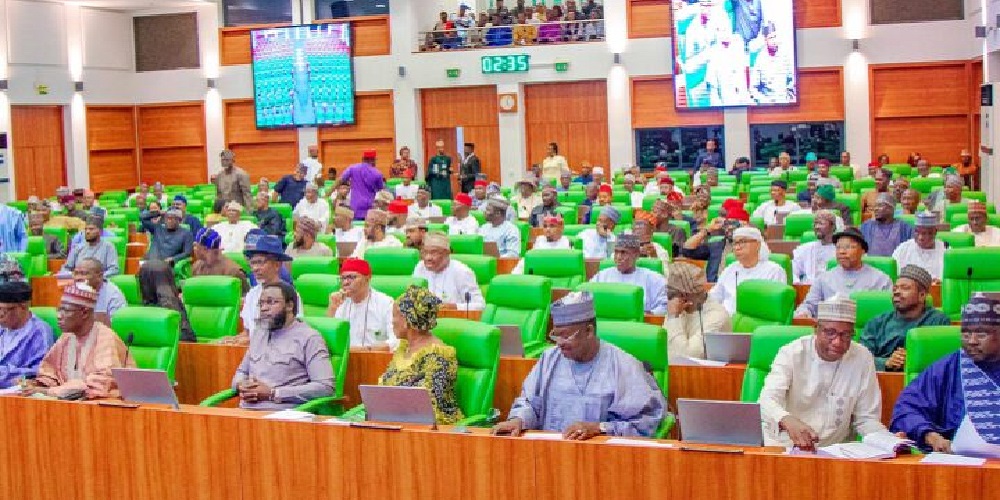
The House of Representatives has issued a 14-day ultimatum to Dangote Cement, Bua Cement, Lafarge Cement, Asaka Cement and Eagle Cement to appear before its joint committee and make their submissions on the arbitrary increment of Cement prices in Nigeria.
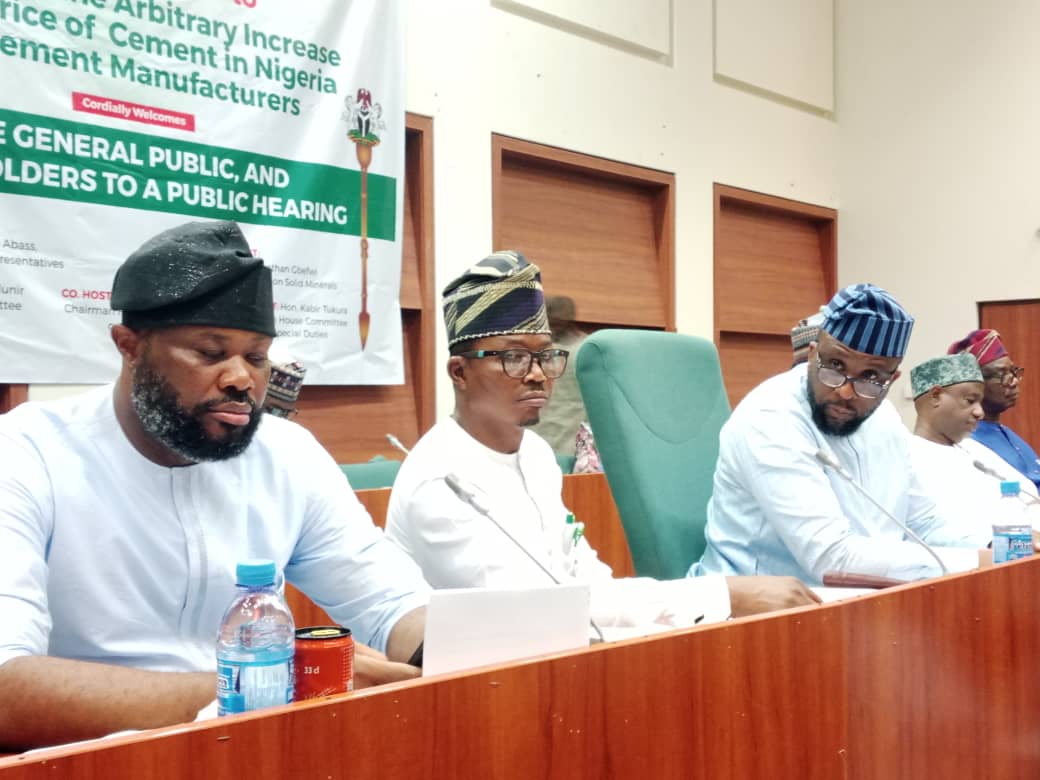
The Chairman House Committee on Solid Minerals, Rep. Gaza Gbefwi, gave the summon at a public hearing to Investigate the Arbitrary Increase in the price of cement in Nigeria by cement manufacturers, organised by House Joint Committees on Commerce, Industry, Special Duties and Solid Minerals on Tuesday in Abuja.
Naijablitznews.com recalled that on March 13, 2024, the House moved a motion on the “arbitrary increase in the price of cement by cement manufacturers in Nigeria”, and constituted the Joint Committee to investigate and report back.
But the five cement manufacturers in Nigeria namely Dangote Cement, Bua Cement, Lafarge Cement, Asaka Cement and Eagle Cement failed to appear and did not send any representative to make their submissions.
Speaking about the non appearance of all the cement manufacturers, Rep. Gbefwi said th House and National Assembly is not in receipt of any court order restraining it from inviting anybody for an investigation.
He said: “We are trying to see to the development of our country. Just as it was emphasized in the opening remarks cement to building is what air is to each and every human being. Let me sound this warning the House of Representatives and the National Assembly is not in receipt of any court order restraining us from inviting anybody.
“And to this end, in the human nature of the House, because we owe them a duty of care, because they are equally Nigerians we are giving them 14 days in which to make their submissions if not, as we have sworn to uphold the constitution we will use everything within our powers to make sure that Nigerians, number one: are not taken for granted and number two are not exploited. We will not sit back while some companies everyday declare billions in naira and dollars and our people can barely afford to get a decent roof over their heads.
“We saw in Lagos where you have Nigerians under the bridge and paying rent. Why? If this products were available, I do not believe we’d gave to go to those lengths. Moreover, that God gas blessed us with this resources in abundance.
So, as it is the resolution of this joint committee, we are giving them 14 days from now, and not 14 working days, 14 effective days to make sure that they make their submissions and appear before this House”.
In his opening remarks, the Deputy Speaker of the House, Rep. Benjamin Kalu, assured that the House is actively working to establish appropriate legislation that promotes and encourages industrialization, as well as supports small and medium enterprises.
Kalu explained that the hearing is as a result of the deep concern of the House for the people it represents and the need for transparent engagement with key stakeholders in the cement industry, particularly the manufacturers.
According to Kalu, the persistent increase in cement prices has had detrimental effect on the ‘built environment’ and Nigeria at large, which is evident in a huge housing deficit presently in Nigeria.
He said: “We are committed to collaborating with both cement manufacturers and end-users, believing this is the most effective way to improve the quality of life and standard of living for our citizens. We are
also dedicated to enacting laws that prevent a recurrence of the factors
that led to the current situation.
“Our goal is to inform Nigerians about the industry’s current state and collaboratively find solutions to navigate the challenges. The persistent rise in cement prices has had a detrimental impact not only on the built environment but also on the entire economy. Cement is a fundamental component used in construction projects like bridges, dams, houses, waterworks, and road infrastructure. This makes addressing this issue paramount.
“According to a study by researchers at the African Development Bank in the ‘Housing Market Dynamics in Africa’ book, there
is a housing deficit of up to 16.9 million units. According to the World Bank,
Lagos, Ibadan, Kano, and Abuja, have a 20 percent rise in housing needs yearly. The current total output in the formal housing sector is estimated at no more than 100,000 units”.
Deputy Speaker asserted that bridging this gap requires affordable and accessible cement prices for both the government and the private sector.
“While factors like exchange rates have contributed to the price increases
across various commodities, it is encouraging to see the positive results of
the “renewed hope” administration’s policies under the leadership of His Excellency, Bola Ahmed Tinubu. Notably, the Naira has shown remarkable strength against the dollar in recent weeks, and Fitch Ratings, a global credit rating agency, recently revised Nigeria’s credit outlook to positive
from stable”, he added.
Earlier in his welcome address, Rep.  Gbefwi said that Nigeria has high housing deficit of about 3 million houses and a huge  infrastructural deficit.
He said that the issue of cement prices increase is an all important issue that affects not just the building and construction industry but the economy and the generality of our citizens, .
He stated: “Indeed the recent events that led to the skyrocketing of the price of cement in Nigeria has been  worrisome and   of great  concern as its inflicting untold hardship on  Nigerians.
“To close this gab, both  Government and the private sector must be articulate and deliberate in puting the right policies and parameters in place that can help promote, induce and or encourage development.
Therefore, should price of cement which is a major component of our infrastructural development continues to soar uncontrollably, the tendency to stifle life out of that sector is high and the consequences are  dare and detrimental.
“It is in the light of this, that the parliament resolved to have critical stake holders like you to discuss elaborately on the causes for the high increase and the possible ways we can collectively navigate out to bring succor to our people.
“The Right Hon speaker in his wisdom did not only declare this event open but assured that this is not in anyway a whitch-hunt but an open discuss with a view to finding lasting solutions to our problem within the built environment. Permit me to emphasize on  the importance of this public hearing and the need to  de- emphasize  the notion created by some Companies relevant to this Investigation under the guise that committees of Parliament has no Powers to invite Private outfits to appear before it. It is on record that there is no Order of the Courts presented restraining the Committee from exercising its functions under section 88(2)(b) of the 1999 Constitution as Ammended.
“Our review of cement prices in other countries like Kenya, India and Zambia for 2021 alone shows that Nigeria has the highest price of cement using the official exchange rates for each Country. Nigeria’s price of cement doubles that of India at a difference of 69%, similarily the price is 29% higher than that in Kenya and 39% higher in Zambia.  Hence the need for us to come together and find out why.  In order to bring succor to our citizens while protecting investors alike”, the committee chairman said.
He said the concern of the House is for all legitimate businesses especially cement production Companies in Nigeria  to thrive and deliver their objective and services to  the people in such a manner that can foster development.
Other ministries, organisations expected to appear are the ministry of solid minerals, Central Bank of Nigeria, Nigeria Customs Service, ministry of trade and Investment, ministry of Petroleum Resources, ministry of Environment, Bureau for Statistics, Nigerian Export Processing Zone Authority, Council of Nigerian Mining Engineers,  Manufacturers Association of Nigeria, Cement manufacturers association of Nigeria, Nigeria building research institute, mines cadastral office, COREN and NJSC

Continue Reading
Advertisement
Click to comment

Warning: Undefined variable $user_ID in /home/naijuinz/public_html/wp-content/themes/zox-news/comments.php on line 49

You must be logged in to post a comment Login

Leave a Reply

News

Judges’ Welfare Key to Judicial Independence, Says FCT Chief Judge

Published

on

ADVERTISEMENT
Zoom Ad
ADVERTISEMENT
Zoom Ad

The Chief Judge of the Federal Capital Territory (FCT) High Court, Justice Husseini Baba-Yusuf, has described the welfare of judicial officers as an institutional necessity rather than a privilege, saying improved living and working conditions are essential for an independent and effective judiciary.

He spoke on Wednesday at the presidential commissioning of the newly completed 20-unit Judges’ Quarters in Abuja, where he said the project represents a strategic investment in the administration of justice and the strengthening of democratic institutions.

Justice Baba-Yusuf noted that the housing project, which was flagged off less than two years ago, was completed within record time, describing it as a demonstration of purposeful leadership and commitment to judicial reforms.

“What started as a vision, nurtured and driven by the relentless dedication of the Honourable Minister of the Federal Capital Territory, has finally unfolded into something extraordinary,” he said.

Advertisement

According to him, the commissioning goes beyond the unveiling of residential buildings, as it reflects deliberate efforts to preserve the dignity of judicial office and reduce the anxieties associated with poor living conditions and post-service welfare.

“The welfare of judicial officers is not a privilege. It is an institutional necessity that promotes stability, enhances productivity, safeguards personal security and preserves the dignity that must accompany judicial office,” he stated.

The Chief Judge said a strong judiciary remains central to democratic governance, noting that judges can only discharge their constitutional responsibilities with courage, independence and impartiality when provided with adequate institutional support.

He stressed that judicial independence cannot be guaranteed solely through constitutional provisions but must also be reinforced through quality infrastructure, proper welfare arrangements and conducive working conditions.

Advertisement

“The provision of these quarters is a significant contribution to judicial independence. Judicial officers require adequate infrastructure and dignified welfare arrangements to perform their adjudicative responsibilities efficiently, courageously and with complete fidelity to the rule of law,” he added.

Justice Baba-Yusuf expressed appreciation to President Bola Ahmed Tinubu for supporting the project, saying the initiative demonstrates the Federal Government’s commitment to justice sector reforms and institutional strengthening.

He also commended the Minister of the Federal Capital Territory, Nyesom Wike, for conceiving and delivering the project, describing it as a landmark intervention in the nation’s judicial infrastructure.

On behalf of judges and staff of the FCT Judiciary, he pledged continued commitment to upholding the Constitution and dispensing justice without fear or favour.

Advertisement

The Chief Judge, however, appealed to the FCT Minister to extend similar housing projects to the FCT Sharia Court of Appeal and the Customary Court of Appeal, noting that both institutions are integral components of the FCT judiciary.

He observed that similar projects had already been inaugurated for the National Industrial Court and the Code of Conduct Tribunal, while housing initiatives had also benefited the Court of Appeal, Federal High Court, Body of Benchers and the Nigerian Law School.

Justice Baba-Yusuf said the commissioning comes at a time when the FCT High Court is facing increasing responsibilities as Abuja continues to expand as Nigeria’s political, administrative and commercial hub.

He assured residents of the Federal Capital Territory that the judiciary would remain steadfast in protecting the rule of law and delivering justice fairly and impartially despite the growing demands on the courts.

Advertisement
Continue Reading

News

Oyo kidnappings : Senate donates N50m to families of slain teachers, soldiers

Published

on

ADVERTISEMENT
Zoom Ad
ADVERTISEMENT
Zoom Ad

The Nigerian Senate has approved a donation of N50 million to the families of five individuals who lost their lives in the abduction of pupils and teachers from schools in the Oriire local government area of Oyo State.

Senate President Godswill Akpabio announced the donation during plenary on Wednesday, describing their deaths as a painful sacrifice in the nation’s fight against insecurity.

Akpabio lauded the Nigerian Armed Forces and other security agencies for the successful rescue of the abducted victims after nearly two months in captivity.

According to him, N10 million would be given to each of the families of the two teachers murdered by the abductors and the three soldiers who died during the rescue operation.

Advertisement

Akpabio stated that the gesture was aimed at providing some support to the bereaved families and recognising the sacrifices made by the deceased in the course of the tragic incident.

Continue Reading

News

Reps demand Full List of N34tn Customs Waivers, Probe Revenue Discrepancies

Published

on

ADVERTISEMENT
Zoom Ad
ADVERTISEMENT
Zoom Ad

…as committee orders CAC to explain ₦13.9bn operating surplus debt

By Gloria Ikibah

The House of Representatives has directed the Nigeria Customs Service (NCS) to submit a detailed account of the nearly ₦34 trillion worth of import duty waivers granted in 2025, demanding the identities of beneficiaries, the legal basis for the concessions and the specific purposes for which they were approved.

The directive was issued on Tuesday during an oversight session of the House Committee on Finance with the management of the Nigeria Customs Service as part of the National Assembly’s ongoing review of revenue-generating agencies.

Advertisement

Chairman of the committee, Rep. James Faleke, said the lawmakers were not opposed to the government’s waiver policy but had a constitutional duty to ensure that such concessions were transparent and served the country’s economic interests.

According to him, the committee wants clarity on who benefited from the waivers and whether the incentives achieved their intended objectives.

Faleke said: “Waiver is good. It is not a bad thing to grant waiver. But we want to know those who benefited from the waiver and the purpose for such waiver. It is okay if you grant waiver on medical and agricultural products.

“If you grant waiver, it is aimed at helping the economy to grow. For example, if you grant waiver on agricultural products, it is aimed at reducing the cost of food. So, we are not against waiver. But we want to know the beneficiaries of this ₦34 trillion waiver”.

Advertisement

The committee also questioned Customs over what lawmakers described as inconsistencies in its revenue reports, despite the agency consistently surpassing its collection targets.

Faleke observed that while the Service recorded impressive revenue performance, the financial records submitted did not sufficiently explain how the additional revenue above approved targets was realised.

“We are not going to applaud your efforts now because your account books are not balanced. We know that you want to be transparent, but you have not told us how the excess money you are reporting came about.

“I can see that in some months, you under-declare your revenue collection and in other months, you overshoot the collection. We want to know what is responsible for this. You have to provide these little details that will help us properly assess your performance”, he stated.

Advertisement

Deputy Chairman of the committee, Rep. Saidu Abdullahi, argued that the Federal Government should consider raising revenue targets for agencies such as the Nigeria Customs Service, noting that the Service had repeatedly exceeded expectations.

“I personally believe that they can do more than the target we give to them.

“I think we are not pushing them enough. That is why they will always come up with excesses. In 2024, you were given a target of ₦5 trillion and you generated N6.1 trillion. In 2025, you were given a target of about ₦6 trillion and you generated N7.2 trillion. I believe that if we push you enough, you can do better”, he said.

Responding on behalf of the Comptroller-General of Customs, Bashir Adeniyi, the Deputy Comptroller-General in charge of Finance, Administration and Technical Services, Kikelomo Adeola, clarified that the Nigeria Customs Service does not approve import duty waivers.

Advertisement

She explained that the Service only implements approvals granted by the Federal Ministry of Finance in line with existing laws and government policy.

Adeola also advocated greater investment in inland dry ports across the country, saying the facilities would ease congestion at seaports and speed up cargo clearance.

“I will encourage all state governments to invest in inland dry ports. That will have a lot of impact on our operations. Any cargo that is marked for such inland port will not be delayed at the main port.

“The container will be transported directly to the inland port where it will be examined. That will reduce the pressure at the nation’s ports and increase trade facilitation in the states”, she said.

Advertisement

She further assured lawmakers that Customs’ scanning equipment was largely operational, with only a few units currently undergoing repairs.

However, committee member Rep. Ifeanyi Uzokwe urged the Service to hold officers accountable whenever negligence leads to equipment failure or unnecessary delays in cargo clearance.

The committee also scrutinised the Corporate Affairs Commission (CAC), directing the agency to submit comprehensive records of all registered companies and businesses in Nigeria, including the fees paid during registration.

Lawmakers further queried the commission for failing to submit its audited financial statements to the Fiscal Responsibility Commission (FRC) since 2019, contrary to statutory requirements.

Advertisement

The committee ordered the CAC to reconcile its records with the Fiscal Responsibility Commission without delay.

A representative of the Fiscal Responsibility Commission told lawmakers that the Corporate Affairs Commission owed the Federal Government N13.9 billion in unremitted operating surplus accumulated over several years.

Responding, the Registrar-General of the Corporate Affairs Commission disclosed that the agency had already begun reconciling its accounts with the Fiscal Responsibility Commission and had agreed to settle the outstanding liability through quarterly payments of N500 million.

Advertisement
Continue Reading

Trending

Copyright © 2024 Naija Blitz News