News
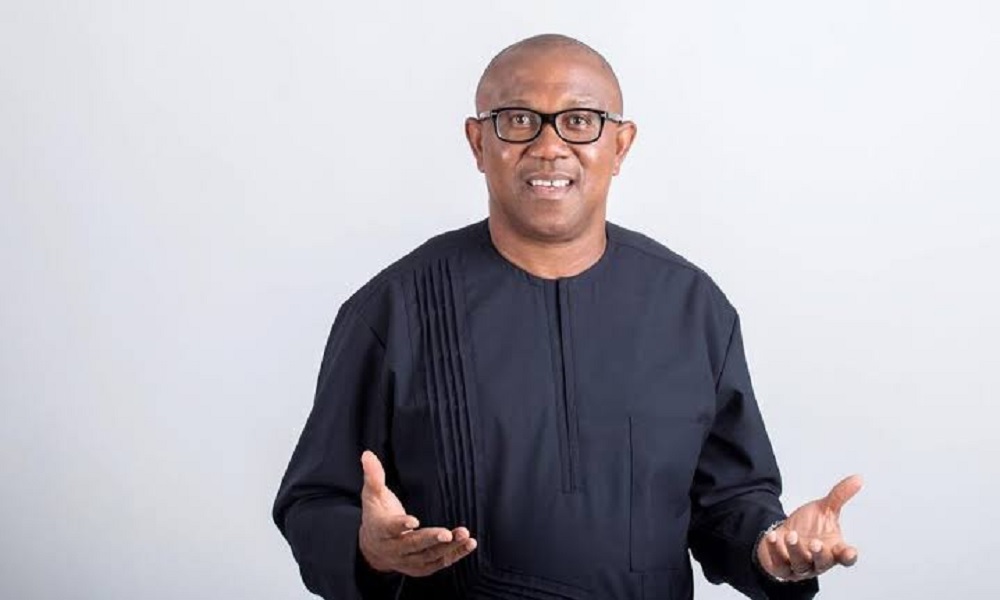
Judiciary, not INEC, is the headache with Nigeria’s democracy-Peter Obi

- /home/naijuinz/public_html/wp-content/plugins/mvp-social-buttons/mvp-social-buttons.php on line 27
https://naijablitznews.com/wp-content/uploads/2024/05/Peter-Obi-1.jpg&description=Judiciary, not INEC, is the headache with Nigeria’s democracy-Peter Obi', 'pinterestShare', 'width=750,height=350'); return false;" title="Pin This Post">
- Share
- Tweet /home/naijuinz/public_html/wp-content/plugins/mvp-social-buttons/mvp-social-buttons.php on line 72
https://naijablitznews.com/wp-content/uploads/2024/05/Peter-Obi-1.jpg&description=Judiciary, not INEC, is the headache with Nigeria’s democracy-Peter Obi', 'pinterestShare', 'width=750,height=350'); return false;" title="Pin This Post">


By Kayode Sanni-Arewa
Peter Obi, presidential candidate of the Labour Party (LP) in the 2023 election, says the judiciary is the biggest threat to the nation’s democracy — and not the electoral umpire.
Obi said this while delivering a keynote speech at the fifth memorial of late Justice Anthony Aniagolu at the Godfrey Okoye University in Enugu.
The former Anambra governor said justice in Nigeria “goes to the highest bidder” and has become “commodified”.
“While the judiciary, today, still boasts of a few outstanding judges, there is an undeniable decline in our judicial system,” he said.
“This decline poses a significant threat to the future of Nigeria. Justice is increasingly commodified, and delivered in favour of the highest bidder.
“Whenever democracy is discussed, fingers point to the Independent National Electoral Commission (INEC) as the problem. But INEC is not the problem, instead, the judiciary is. The judiciary is the biggest threat to Nigeria. If our judiciary is effective, our businesses will thrive.
“When the rule of law is compromised, the most vulnerable members of society are disproportionately affected, and the fabric of our society begins to fray. The integrity of our institutions, the protection of human rights, and the stability of our nation are all jeopardised.

By Gloria Ikibah
The ECOWAS Commission has called for tougher measures against member states that fail to implement agreed policies designed to support the growth of Micro, Small and Medium-sized Enterprises (MSMEs), warning that the region’s economic ambitions will remain out of reach without effective implementation.
The position was presented on Monday during the ongoing delocalised meeting of the ECOWAS Parliament’s Joint Committee on Industry and Private Sector, Macroeconomic Policy and Economic Research, Administration, Finance and Budget, and Public Accounts in Cotonou, Republic of Benin.
Speaking during a presentation on “Trade Facilitation, Regulatory Reforms and Formalisation,” Dr Tony Luka Elumelu of the ECOWAS Business Council Secretariat argued that the region already has sufficient policies, protocols and legal instruments to drive private sector growth, stressing that the real challenge lies in implementation rather than policy formulation.
He urged member states to shift their attention from producing new frameworks to creating a business-friendly environment that allows enterprises to flourish.
According to him, “We have very good policies, protocols, legal instruments in terms of the private sector development. We also have the MSME Charter. We have created an enabling environment in this particular document for development and growth of the MSMEs but, in summary, my recommendation is that we should implement what we adopt.
“We should make sure that we create an enabling environment for these businesses to thrive and not keep adopting policies. What we need to do is enforce those policies that we have adopted and remove every bottleneck that impedes MSMEs from thriving.”
Elumelu noted that West Africa must become more competitive, especially as the African Continental Free Trade Area (AfCFTA) opens new opportunities across the continent.
He said governments should prioritise investments in transport infrastructure and eliminate unnecessary barriers that continue to frustrate legitimate businesses operating across borders.
He also identified the proliferation of roadblocks and multiple checkpoints across the region as major obstacles to trade and economic integration.
“We need to make sure that we have the necessary infrastructure that our goods will use in terms of moving from one country to another. We also need to look at the vision that we have signed under the AfCFTA protocol.
“In fact, we already know that we are going to compete with other regions, which means that we need to make sure that we do not disturb our people who are trading legitimately, so that at the end, our region will benefit from the economic development and the benefits inherent in the AfCFTA trade.
“The multiple checkpoints, roadblocks, and also the practicality of what we are doing in the region… every legal instrument will always pass through the ECOWAS Parliament before adoption, which means that there should be strategy to put in timelines in terms of implementation. There should also be strategy to be conscious about implementation”, said.
Also speaking, the Principal Programme Officer in charge of Enterprise and Business Promotion at the ECOWAS Commission, Dr Olalekan Afolabi, stressed the importance of moving more businesses from the informal economy into the formal sector.
He said many enterprises across the region remain unregistered, limiting their ability to access finance, markets and government support, and urged parliamentarians to champion policies that encourage formalisation.
Afolabi also called for the effective implementation of the European Union-funded African Trade Competitiveness and Market Access Programme, valued at €50 million.
“How do we implement the African Trade Competitive and Market Access Program of the European Union, which is a 50 million euro project? Some of the responses we give to them include: one, going at the national level and seeing that these policies are properly domesticated. These policies are legislated at the national level and also coming to hold us accountable at the regional level, because we need to report periodically to the Parliamentarians.
“They need to monitor the implementation of some of those projects and this forum, of course, presents an opportunity for things like this”, he noted.
Discussions at the meeting centred on the need for stronger political commitment to implementing existing ECOWAS policies, with participants maintaining that sustained reforms, improved infrastructure and the removal of trade barriers are essential if MSMEs are to become key drivers of economic growth, regional integration and job creation across West Africa.

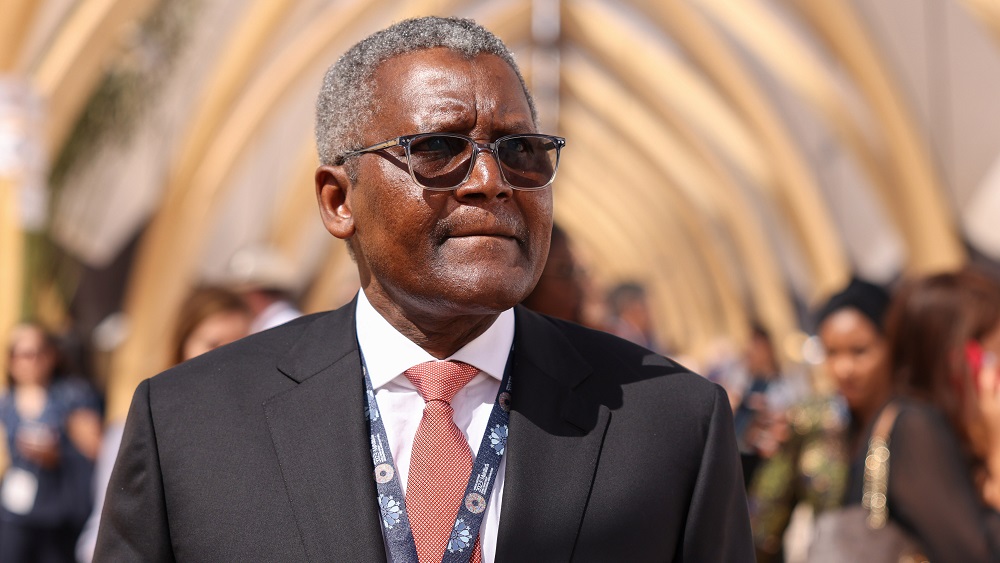
Africa’s richest man, Aliko Dangote, plans to donate one-third of his wealth to charity as part of his succession plan, his daughter, Halima Dangote, has revealed.
Halima, a trustee of the Aliko Dangote Foundation, revealed the arrangement in an interview with Bloomberg published on Tuesday, saying the billionaire had secured his family’s support to dedicate 33 per cent of his estate to philanthropy.
According to the Bloomberg Billionaires Index, Dangote’s net worth is estimated at $35.1 billion, meaning one-third of his current fortune would amount to about $11.7 billion if maintained at that level.
Explaining the decision, Halima said her father considers philanthropy central to his legacy and has embedded it into the family’s long-term succession plans.
“He sort of put all the structure in place whereby we focus a lot on health and education. He actually donated 25 per cent to the foundation. If you look at it, it is what we call in Sharia Code in Islam; it means he has donated 33 per cent of his whole inheritance to his foundation,” she said.
“That is how important it is to him because philanthropy needs to be in existence generation after generation.
“So giving back is part and parcel of what we do. We believe we’re here, that our business is successful because of the giving back and because of the philanthropic aspect. That is why the 33 per cent is important.

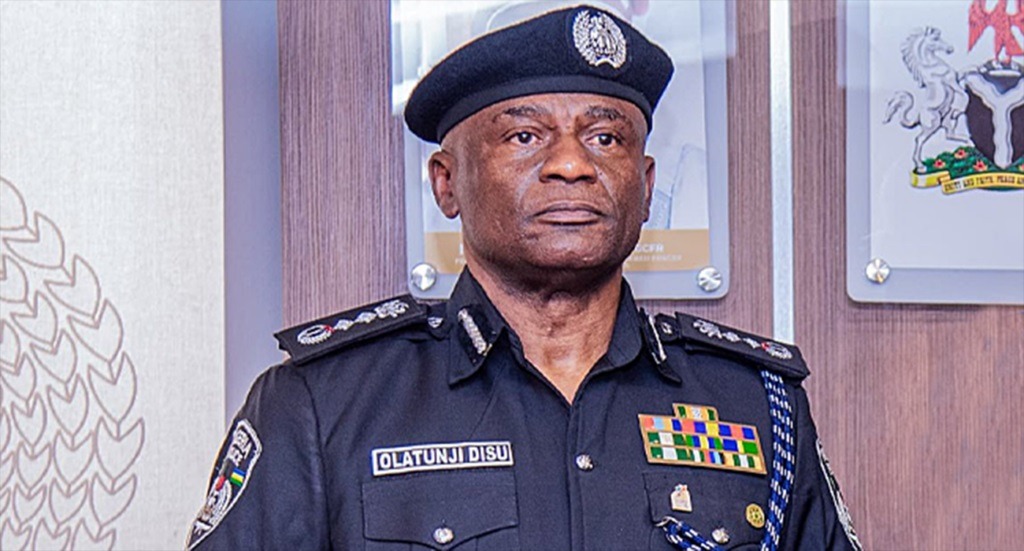
The International Society for Civil Liberties and the Rule of Law (Intersociety) has raised an alarm over what it described as the repeated harassment, arbitrary arrest and detention of leaders of the Ozomagana Building Materials Market in Onitsha, petitioning the Inspector-General of Police (IGP) to intervene in what it insisted is a civil dispute that has been criminalised.
The rights group alleged that the ongoing property dispute involving Modebe Enterprises Limited and the Ozomagana Building Materials Market Association had been turned into a channel for intimidation, warning that the continued use of police officers to intervene in the matter was escalating tensions instead of resolving the crisis.
In the petition, Intersociety said it was “deeply disturbed by the dangerous criminalisation of a purely civil matter,” adding that the situation had resulted in “series of arbitrary police arrests, unlawful detentions and acts of intimidation.”
According to the organisation, the dispute centres on the implementation of a lease agreement between Modebe Enterprises Limited and the market association over several properties on Modebe Avenue, Onitsha.
The group, however, argued that disagreements arising from the agreement ought to be resolved through lawful civil processes rather than police action.
It alleged that officers attached to the IGP’s Special Investigation Unit in Abuja had repeatedly arrested and detained market leaders under the guise of investigating alleged threats to life.
“The matter has become a conduit pipe for intimidation and extortion by some senior police officers from the IGP’s Special Investigation Unit and their subordinates,” the organisation alleged.
It added: “The crisis has led to repeated police harassment, arbitrary arrest and detention, and criminalisation of what is circumstantially a civil matter.”
Intersociety claimed that since November 15, 2025, more than six separate arrests had been carried out against leaders of the market.
It specifically named former Chairman of the Ozomagana Building Materials Market, Obiora Okoro, alongside Ikechukwu Aneke, a former Assistant Secretary, and Chigozie Ejiofor, a former Treasurer, as among those allegedly arrested and detained.
The organisation further alleged that some of those arrested were subjected to unlawful detention and possible custodial extortion.
According to the group, “court cases have arisen and pronouncements made by a Nnewi High Court in April 2026 have allegedly been flouted with impunity.”
It warned that the continued use of law enforcement agencies in the dispute could undermine confidence in the justice system.
“The poor handling of the issue has led to denials and counter-denials associated with the lease agreement and its implementation, to the extent that criminalisation and harvest of extortion have been brought into it and escalated,” Intersociety stated.
The organisation urged the Inspector-General of Police to immediately review the actions of officers involved in the matter and prevent further arrests over what it described as a commercial disagreement.
It maintained that the dispute should be allowed to run its course through the courts rather than through police intervention.
“Using allegations of threats to life as a pretext to repeatedly arrest and detain parties in a civil dispute only worsens the crisis and deepens public distrust,” the group said.
Intersociety also appealed to relevant authorities to ensure that all parties involved respect ongoing judicial proceedings and seek lawful means of resolving the conflict.
The organisation reiterated that “justice must not only be done but must be seen to be done,” warning that continued intimidation of market leaders could further heighten tension within the commercial community in Onitsha.
It called for an end to what it described as the misuse of security agencies in private disputes, insisting that the rule of law must prevail.

ECOWAS Seeks Sanctions for Member States Ignoring MSME Policies

Just in: Dangote gives ₦18.7 trn of his ₦56.2trn wealth to help the needy

Kaduna gov, Sani dumps Muslim -Muslim ticket nominates Jerry Adams as running mate



-
 News17 hours ago
UK Eases Student Visa Rules for Three African Nations
-
 News17 hours ago
Stolen BVAS, PVCs Will Be Replaced, Osun Election Safe – INEC
-
 News11 hours ago
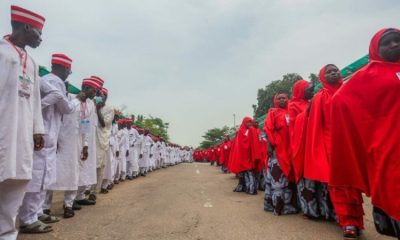
Kebbi Weds 600 Couples, Pays ₦250k Dowry Each
-
 News17 hours ago
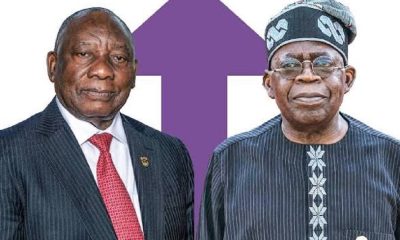
Nigeria, South Africa Set for Fresh Diplomatic Talks Amid Xenophobia Concerns
-
 Sports11 hours ago
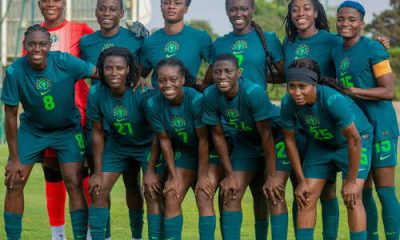
Super Falcons start title defence today at 2026 WAFCON
-
 News16 hours ago
Nigeria Customs Unveils Final List of Successful Applicants, Opens Portal for Next Stage
-
 News16 hours ago
Senate Denies Introducing Fresh Ban on Preaching in Commercial Vehicles
-
 Opinion16 hours ago
Mutfwang’s Apology Was Statesmanship, Not Historical Revisionism
Warning: Undefined variable $user_ID in /home/naijuinz/public_html/wp-content/themes/zox-news/comments.php on line 49
You must be logged in to post a comment Login