Foreign
Biden suggests to allies he may limit evening events to get more sleep
- /home/naijuinz/public_html/wp-content/plugins/mvp-social-buttons/mvp-social-buttons.php on line 27
https://naijablitznews.com/wp-content/uploads/2024/07/Joe-Biden.jpg&description=Biden suggests to allies he may limit evening events to get more sleep', 'pinterestShare', 'width=750,height=350'); return false;" title="Pin This Post">
- Share
- Tweet /home/naijuinz/public_html/wp-content/plugins/mvp-social-buttons/mvp-social-buttons.php on line 72
https://naijablitznews.com/wp-content/uploads/2024/07/Joe-Biden.jpg&description=Biden suggests to allies he may limit evening events to get more sleep', 'pinterestShare', 'width=750,height=350'); return false;" title="Pin This Post">
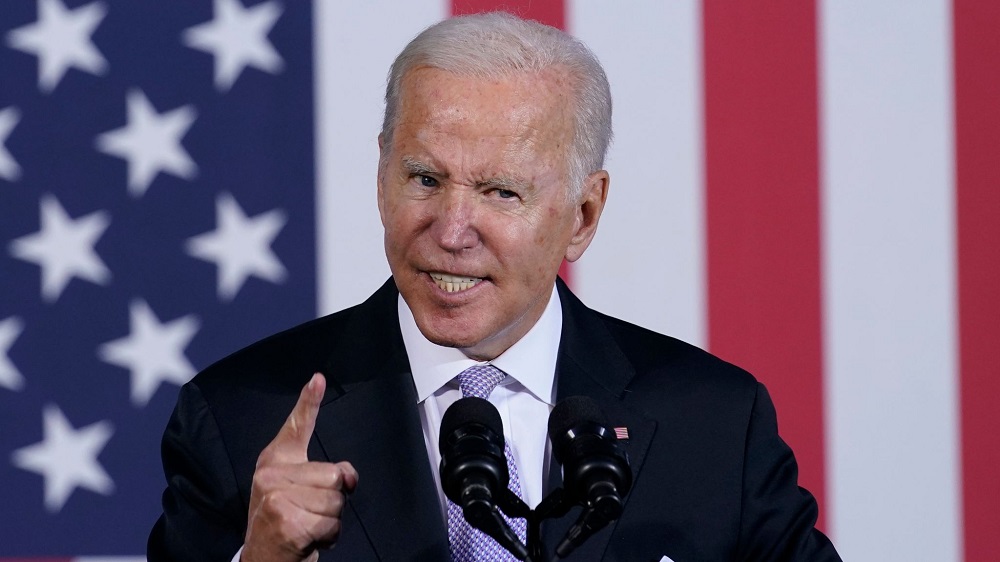
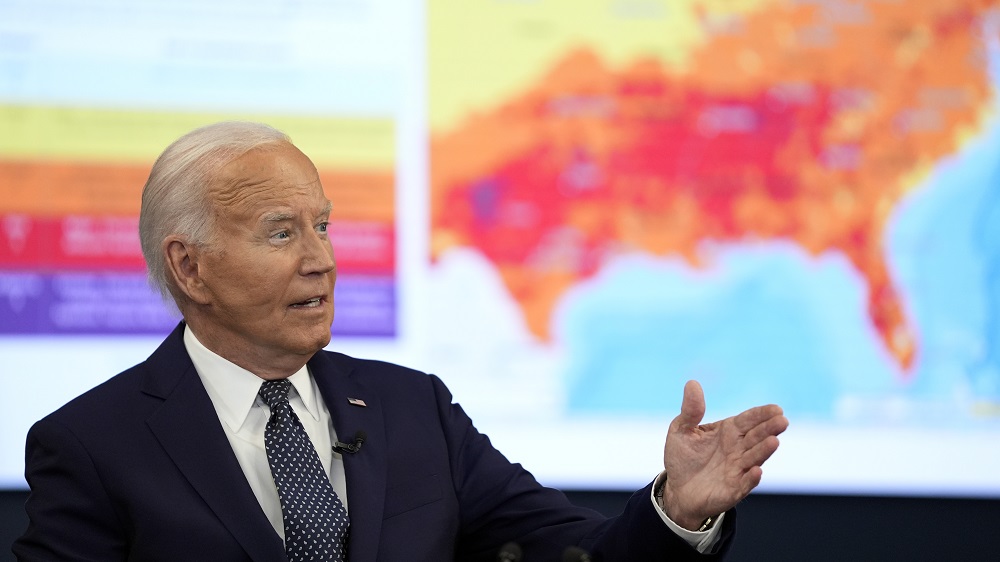
President Joe Biden suggested to Democratic governors that he may limit evening events after 8 p.m. so he can get more sleep, according to two sources familiar with the exchange.

Biden met with the governors on Wednesday evening as he sought to assuage allies’ concerns after a disastrous debate performance left Democrats anxious about the president’s ability to serve and campaign for re-election.
He also joked that while his health was fine, “it’s just my brain,” one source told NBC News.

The remarks were first reported by The New York Times and are part of a stream of leaks about the contents of the meeting, which was not attended by staff for the governors, the White House or the campaign. He also said he’d seen a doctor after the debate, contradicting a White House claim from earlier.
California Gov. Gavin Newsom, a Biden surrogate who was on the call and is viewed as a potential future Democratic presidential candidate, said Biden’s 8 p.m. comment was not “literal.”
“It was more of a rhetorical framework of just being fit and rested because he was burning at both ends, you know, that last 10 or so days. And I think that was sort of what he was reflecting, is just a more steady focus on being his energetic self,” Newsom said.
A fourth person with knowledge of the meeting downplayed the president’s comments about needing more sleep, adding that Biden acknowledged generally he does need to be better at finding time to rest.
The Biden campaign defended the remarks, saying presidents need a balanced schedule.
“President Bush went to bed at 9, and President Obama made dinner at 6:30. Normal presidents strike a balance, and so does Joe Biden,” campaign spokesman Kevin Munoz said in a statement. “Hardly the same rigor as Donald Trump who spends half of his day ranting on Truth Social about plans that would cause a recession and other half golfing.”
In the week since the debate, Democrats have expressed frustration over both Biden’s debate performance and how he and White House staff have handled allies’ response to it.
The president is expected to do damage control in an interview with ABC News on Friday morning that will air that evening, but some doubt it will be enough.
“One interview is not going to fix this,” said Rep. Debbie Dingell, D-Mich., on MSNBC Thursday. “He’s got one thing to do, which is to get up and go out to prove to people that he can do the job, will do the job, and has the stamina.”
California Rep. Scott Peters, a Democrat, questioned Biden’s ability to win in November in an interview with a local CBS affiliate and said he wasn’t sure he could support the president at this point.
“The campaign has been very, I think, arrogant in its response,” he said, arguing they needed to turn around the numbers in swing states. “If they don’t have a plan, then I think we have to move in a different direction.”
But Peters and Dingell stopped short of calling for Biden to step aside as the party’s nominee for president. Just two House Democrats have publicly said Biden should leave the race.
Still, some allies are maintaining staunch support.
Newsom hit the campaign trail in Michigan on Thursday, touting the governor’s meeting.
“I mean this with absolute conviction,” he said of the meeting. “That was the Joe Biden I remember from two weeks ago. That was the Joe Biden that I remember from two years ago. That’s the Joe Biden that I’m looking forward to reelecting President of the United States.”

Foreign
Seven PMs In 10 Years: Britain’s Decade Of ‘Change’
Britain will have its seventh prime minister in 10 years after Labour leader Keir Starmer was ousted on Monday by his own party.
The party’s self-inflicted wound was a trend set by the Conservatives when they were in office.
Starmer announced his resignation on Monday following months of nose-diving poll ratings and manoeuvring by his own MPs.

Veteran Labour politician Andy Burnham has confirmed he will seek to replace him.
The main opposition Tories went through five prime ministers between 2016 and July 2024 when Starmer swept to power in a landslide general election victory.
The rapid turnover at the top prompted Starmer — before he became prime minister — to call for an end to the “chaos” of chopping and changing leaders.
After less than two years, Starmer has now met a similar fate himself.
Here’s what happened to his predecessors:
David Cameron (May 2010 to July 2016)

Britain’s decision to leave the European Union ended Cameron’s second term as prime minister.
After the country voted to leave in a June 2016 referendum, Cameron, who had campaigned to remain in the bloc, resigned.
Theresa May (July 2016 to July 2019)

Tolga AKMEN / AFP
May took over amid the fallout from the Brexit referendum after a long tenure in the notoriously difficult post of interior minister.
She called a snap election the following year to strengthen her hand in Brexit negotiations, but the move backfired when her party emerged as the biggest in parliament but without a majority.
Unable to get her Brexit deal through parliament, the Conservatives suffered a drubbing in European Parliament elections in May 2019, leading to her resignation.
Boris Johnson (July 2019 to September 2022)

Johnson, a maverick politician famed for making a career out of breaking the rules, had to navigate the coronavirus pandemic and Britain’s departure from the European Union.
He led the Conservatives to victory in the December 2019 snap general election.
But weakened by scandals, he was eventually forced to step down following a cascade of resignations by ministers and aides.
Liz Truss (September 2022 to October 2022)

Truss was prime minister for just 49 days, the shortest on record, before being ousted over her disastrous tax-cutting mini-budget.
Her economic agenda spooked the markets and took the UK to the brink of financial meltdown, losing her the support of her own party.
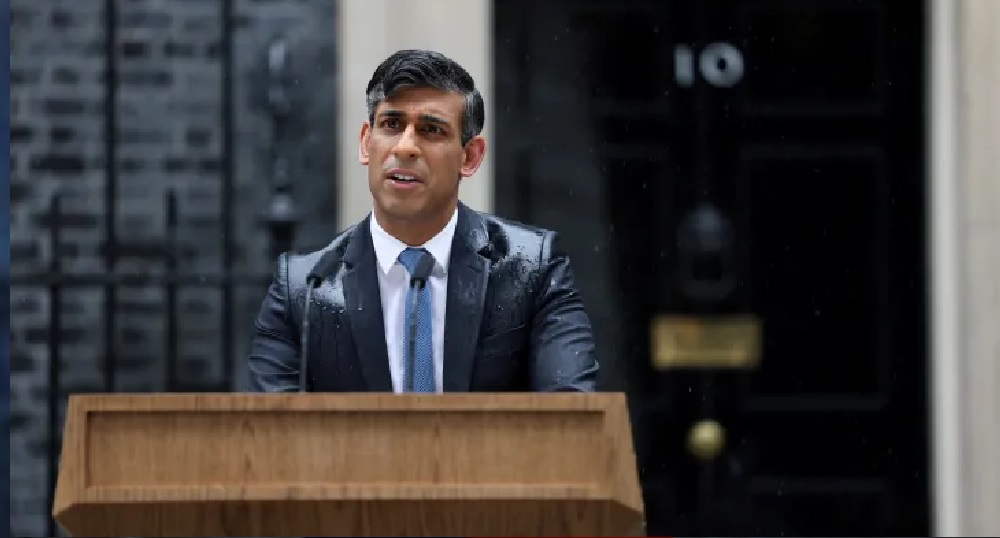
Rishi Sunak (October 2022 to July 2024)

Sunak was at the helm for 20 months before losing the 2024 general election to Starmer, bringing to an end 14 years of Conservative rule.
He brought some stability following the Truss debacle but failed to stop bitter Tory infighting.
The privately wealthy former financier ultimately failed to connect with regular voters struggling with a cost-of-living crisis.
AFP
Foreign
Trump To End HIV Funding For South Africa Over Violence
The US government says it will stop funding programmes in South Africa intended to tackle the spread of HIV and Aids.
More than eight million South Africans are living with HIV – the highest number of any country in the world.
The US State Department appeared to link the decision to South Africa’s alleged failure to protect the white-minority Afrikaner community – an allegation the South African government has repeatedly rejected.
South Africa’s health ministry responded by saying that though it had not been informed of this decision, it had “long been working on a self-reliance plan”.
Until 2025, the US was supporting South Africa’s efforts to deal with the virus with an estimated $400m (£300m) a year through the President’s Emergency Fund for Aids Relief (PEPFAR).
But since the inauguration of President Donald Trump, relations between the two countries have increasingly soured.
Shortly after he came into office, Trump issued an executive order alleging that “countless” South African policies dismantled equal opportunities and fuelled violence “against racially disfavored landowners”.
This is disputed by the South African government, which says its Black Economic Empowerment policy is needed to correct economic inequality dating from the apartheid era.
The executive order also highlighted South Africa’s case against Israel at the International Court of Justice and its links to Iran.
The White House said that given these “unjust and immoral practices”, further aid to South Africa would not be provided.
Trump has also falsely alleged that there is a “white genocide” taking place in South Africa, which has led to the administration setting up a refugee programme for Afrikaners – descendants of Western Europeans who settled in southern Africa in the 17th Century.
They are now just about the only refugees being allowed into the US.
The genocide claim has been widely discredited.
Pepfar funding, which had been providing about a fifth of South Africa’s total spending on HIV programmes, got a reprieve last October with what was called a “bridge plan”.
But a US State Department official has confirmed that a “phased drawdown” of Pepfar funding would now start.
This was because of “South Africa’s failure to make demonstrable progress on policy requests by the administration”, the official said.
The US government intended to “foster self-reliance” and reduce dependency on American funding, they added, pointing out that “South Africa is a middle-income country and is more than capable of supporting its own health programs”.
South Africa’s health ministry has said that while Pepfar contributed to the country’s HIV programme, the provision of life-saving antiretroviral drugs was funded entirely separately, with most coming from the government.
Attempts to mend US-South Africa relations have floundered. These include a high-profile White House meeting between Trump and South African President Cyril Ramaphosa just over a year ago, when the US president confronted his counterpart with his claims of white persecution.
The US also boycotted the G20 meeting, a gathering of the world’s major economies, hosted by South Africa last November.
Foreign
Israel, Hezbollah Agree Ceasefire As US-Iran Deal Under Strain
Israel and Hezbollah agreed a ceasefire on Friday, a US official said, after deadly exchanges between the two sides in Lebanon put a deal to end the Middle East war under strain, less than two days after it was signed.
Talks that were scheduled to take place between the US and Iran in Switzerland on Friday to build on the deal and work towards a lasting settlement were postponed amid the fighting, with no new date announced.
Tehran’s top negotiator warned it would not bend on its red lines and that its finger was still “on the trigger”, even as shipping appeared to pick up in the Strait of Hormuz, which had essentially been closed during the war.
The deal signed this week by President Donald Trump and his Iranian counterpart Masoud Pezeshkian aims to end a war that began on February 28 with US-Israeli strikes that killed supreme leader Ayatollah Ali Khamenei.
The agreement was also meant to halt the fighting in Lebanon, which Iran has always insisted should be covered under any accord, turning Israel’s ongoing campaign there into a source of frustration for Washington.
Israel’s military said Friday that it had struck more than 80 Hezbollah targets in Lebanon and killed dozens of members of the Iran-backed group.
‘Permanent war’
Lebanon said 47 people were killed and 97 others wounded in Israeli strikes on Lebanon Friday. Israel’s military reported four troops were killed.
But a US official told AFP a truce between Israel and Hezbollah, beginning immediately, had been brokered by US and Qatari mediators following talks with Israel and Iran. A Gulf diplomat confirmed the ceasefire.
Yet even after the truce was announced, Lebanese state media reported an Israeli airstrike on the country’s south in the Jezzine region.
A previous truce nominally agreed in April did nothing to stop attacks by either side, and Prime Minister Benjamin Netanyahu had said just hours earlier that the Israeli army would stay in Lebanon “as long as necessary” and would make Iran-backed Hezbollah pay a “heavy price” for its attacks.
Far-right Israeli National Security Minister Itamar Ben Gvir went even further, saying after the soldiers’ deaths that “all of Lebanon must burn”.
Iran’s Foreign Minister Abbas Araghchi accused Israel of only being interested in “permanent war”.
‘No urgency’
Preparations had been made to host Iranian and US delegations led by Tehran’s top negotiator Mohammad Bagher Ghalibaf and US Vice President JD Vance at the Swiss resort of Burgenstock, overlooking Lake Lucerne.
The talks were due to kick off a two-month period of negotiations to discuss outstanding issues not covered by the initial deal, notably Iran’s nuclear programme.
Switzerland’s foreign ministry confirmed the discussions had been postponed but said it “remains ready to facilitate these talks”.
Quoting diplomats, the Financial Times said Israel’s strikes on Lebanon had led to the postponement but there was no immediate confirmation.
Iranian foreign ministry spokesman, Esmaeil Baqaei, said there was “no urgency to hold the meeting” but that it was planned “in the coming days”
‘Crushing response’
Ghalibaf said on Friday that talks with the United States would remain bound by Tehran’s “red lines”.
“If the enemy seeks to be excessive, we have proven that our fingers are on the trigger and we have no hesitation in giving a crushing response to the enemy,” he said, in remarks published by the official IRNA news agency.
Vance, meanwhile, has expressed a degree of exasperation with the Israeli government rare for a top US official, telling the New York Times “you can’t just kill your way out of solving every single national security problem that you have”.
A key aspect of the deal was the immediate re-opening of the Strait of Hormuz, the key shipping bottleneck whose closure caused global energy prices to rise.
A total of 25 commercial vessels crossed the newly-reopened strait on Thursday, the highest number since mid-April, according to data from maritime tracking firm AXSMarine published on Friday.
American forces on Thursday lifted their parallel naval blockade of Iranian ports, the US military said, noting that American warships “will remain in the general area”.
Iran’s maritime authority said on Friday that all ships seeking to cross the Strait of Hormuz should submit a transit request “48 hours in advance”, despite its reopening.
AFP
-
News24 hours agoTrafficked Nigerian Girl D!es In Mali
-
News23 hours agoEx-Justice Minister to relax in jail for 25 Years
-
News22 hours agoCourt sends Sowore to Kuje Prison
-
Sports18 hours agoEgypt’s historic World Cup win over New Zealand, will be remembered for a long time-Sallah
-
News22 hours agoNigeria Needs Policy and Legislative Resilience to Turn Reforms into Results, Says Hajiya Fatima Usman-Katsina
-
News21 hours agoNigeria-Côte d’Ivoire Reaffirm Strong Ties as Ambassador Nwaobiala Presents Credentials
-
News18 hours agoDAY 9 of Projects Commissioning in the FCT: Watch moment Wike arrives Karu(Video)
-
News7 hours agoWait for 2027, Presidency Tells Peter Obi Amid Calls for Tinubu’s Resignation

Warning: Undefined variable $user_ID in /home/naijuinz/public_html/wp-content/themes/zox-news/comments.php on line 49
You must be logged in to post a comment Login