Economy
Four banks open bid to raise N1tr from capital market
- /home/naijuinz/public_html/wp-content/plugins/mvp-social-buttons/mvp-social-buttons.php on line 27
https://naijablitznews.com/wp-content/uploads/2024/02/Olayemi-Cardoso.jpg&description=Four banks open bid to raise N1tr from capital market', 'pinterestShare', 'width=750,height=350'); return false;" title="Pin This Post">
- Share
- Tweet /home/naijuinz/public_html/wp-content/plugins/mvp-social-buttons/mvp-social-buttons.php on line 72
https://naijablitznews.com/wp-content/uploads/2024/02/Olayemi-Cardoso.jpg&description=Four banks open bid to raise N1tr from capital market', 'pinterestShare', 'width=750,height=350'); return false;" title="Pin This Post">
Banking recapitalisation got unto the fast-lane with four banks jostling to raise more than N1 trillion in the first cluster of offers.

This is expected to be hallmark of the two-year plan.
Four commercial banks with international license – Fidelity Bank Plc, Access Holdings Plc, Guaranty Trust Holding Company (GTCO) Plc and FCMB Group Plc – which altogether needed to increase their capital base to N2 trillion, are seeking to raise about N1 trillion in the first phase of intense competition for investors’ funds.

The first cluster of offers came as the Central Bank of Nigeria (CBN) at the weekend said the ongoing recapitalisation will produce resilient and fit-for-purpose banks with more ability to grow the economy.
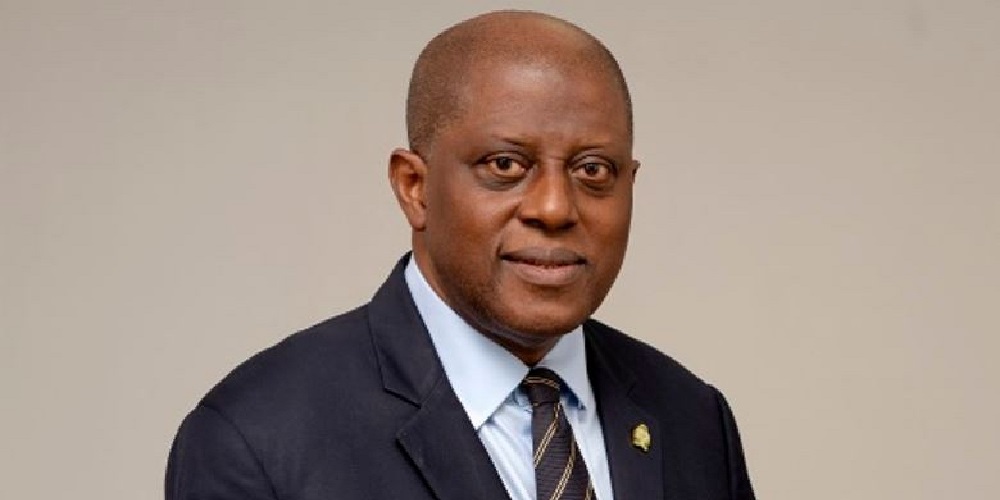
CBN Governor, Olayemi Cardoso, said banks recapitalisation will further strengthen the financial system and make it robust to be able to withstand economic headwinds.
Regulatory reports yesterday indicated that three other banks- Access Holdings, GTCO and FCMB have gotten approval to join Fidelity Bank in the capital market, with the four offers’ periods expected to overlap.
The four banks, which have combined share capital and share premium of N644.995 billion, need to raise N1.355 trillion to meet the new minimum capital requirement of share capital and share premium of N500 billion each, for a bank with international license.
Access Holdings will today open acceptance list for a N351 billion rights issue. Access Holdings is offering about 17.773 billion ordinary shares of 50 kobo each to existing shareholders at N19.75 per share. The rights are pre-allotted on the basis of one new share for every two ordinary shares held as at June 7. The offer is scheduled to close on Wednesday, August 14.
Fidelity Bank had launched a N127.1 billion hybrid offer including a rights issue of 3.2 billion ordinary shares of 50 kobo each at N9.25 per share and a public offer of 10 billion ordinary shares of 50 kobo each at N9.75 per share.
The acceptance and application lists for Fidelity Bank’s combined offer, which opened on June 20, are scheduled to close on July 29. The rights issue was pre-allotted on the basis of one new ordinary share for every 10 existing ordinary shares held as at the close of business on January 05.
In the largest of the fund raising so far, GTCO is launching a N400.5 billion public offer by 9.0 billion ordinary shares of 50 kobo each at N44.50 per share. GTCO, which had secured approval of the Nigerian Exchange (NGX), will meet with capital market stakeholders today to outline facts behind its offer, preparatory to the opening of formal application list.
FCMB Group has also secured approval for a N113.98 billion public offer. The group is offering 15.197 billion ordinary shares of 50 kobo each at N7.50 per share.
The current capital raisings by Access Holdings and GTCO are more than enough to meet their new capital requirements.
However, Fidelity Bank and FCMB Group are implementing multi-layered recapitalisation plans that may see the banks coming to the market as many times as needed to meet their capital requirements. There is indication that Fidelity Bank may raise more than N127.1 billion under the ongoing combined offer, given the generally positive investors’ sentiment around the bank. The board of Fidelity Bank has already launched a regulatory process that will allow the bank to absorb excess funds in the event of potential oversubscription.
Under the current recapitalization process, the Central Bank of Nigeria (CBN) is using a distinctive definition of minimum capital as addition of share capital and share premium, rather than the entirety of shareholders’ funds used under the 2004 recapitalisation plan. With the distinctive definition, nearly all banks need to raise funds to retain their banking license.
Access Holdings has share capital and share premium of N251.81 billion; FCMB, N125.29 billion; Fidelity Bank, N129.705 billion and GTCO, with N138.187 billion.
Speaking at the weekend during the launch of a new book: “The Power of One Man- How the Soludo-Engineered Consolidation Transformed Nigerian Banks to Global Players”, Cardoso said it was important that banks are recapitalised to the levels, where they will be able to absorb any shocks that come and also be able to grow the economy. The book was written by renowned journalist, Dr. Ray Echebiri.
Cardoso, who was represented by Deputy Governor, Financial System Stability, Phillip Ikeazor, said the apex bank had kept close touch with former CBN Governor and Governor of Anambra State, Prof. Chukwuma Soludo in the course of recapitalisation.
He said the decision taken by Soludo 20 years ago on banking consolidation was a very bold one at that time with banks’ capital base of N2 billion raised to N25 billion.
“That is about 12 and half times. Incidentally, the current management of CBN has embarked on another round of banking consolidation. Why was it necessary then, Prof Soludo wanted to make the banks robust, resilient and fit for purpose to grow the economy, and that is exactly the reason why we are embarking on a similar journey today.
“I think by coincidence, if you check the amount of the minimum capital levels that we required, it is pretty similar because international banks are moving from N50 billion to N500 billion, which is 10 times, similar to Soludo’s 12 and half times. Our national banks are moving from N25 billion to N200 billion, roughly about 10 times. When you do consolidation, you would look at the microeconomic headwinds, the microeconomic conditions on ground and of course apply your stress test.
“And when you apply your stress test today, which I am sure all of the big banks have done, they would have second-guessed where the capital levels are going to land. If you compare the bank assets in Nigeria to Gross Domestic Product (GDP) and compare it with similar economies in Africa, you can see that we are way, way behind,” Cardoso said.
Providing more reasons why bank recapitalization was crucial, he said: “Remember that when the current administration came into place, there were unification of forex rates, and removal of petrol subsidy. And the impact on the economy and manufacturing sector has started manifesting in 2024 and will continue over the next few years. So, it is important that the banks are recapitalized to the levels, where they will be able to absorb any shocks that come and also position the banks to be able to grow the economy”.
Addressing the consistent hike in interest rates, he said although the jury is out and everyone debating what it should be, Cardoso insisted on the need to tame and control inflation to ensure the economy does not go into hyperinflation.
He explained that hyperinflation is very difficult to reverse and takes several years to get out of it.
“There is a South American country that still has quite significant oil reserves but is facing hyperinflation. Everybody is aware of what is happening in that economy. We have our brothers in East Africa, who are also facing hyperinflation and we know how hard they are struggling to come out of it,” Cardoso said.
On how long the CBN will sustain the hike in interest rate, he said the apex bank will continue to maintain high interest rate, as long as it is able to control and reverse galloping inflation.
He explained that Western countries, have also raised interest rates for long, and are yet to lower the rates, at present.
“So, it is important that we tighten and hold on for a little while, and in no distant future, we will be able to be slowing down on the rate hikes,” Cardoso said.

Economy
VAT collections rise to N2.42tr in Q1 2026 – NBS
The National Bureau of Statistics (NBS) has reported that Value Added Tax (VAT) collections rose to ₦2.42 trillion in the first quarter of 2026 (Q1 2026), up from ₦2.20 trillion recorded in Q4 2025.
According to the VAT Q1 2026 report, the figure represents a 9.98 per cent increase on a quarter-on-quarter basis.
The bureau stated that of the total revenue collected during the period, local payments accounted for ₦1.11 trillion, while foreign VAT payments stood at ₦830.47 billion. Import VAT contributed ₦477.55 billion.
“Value Added Tax (VAT) in Q1 2026 was ₦2.42 trillion, showing an increase of 9.98% on a quarter-on-quarter basis from ₦2.20 trillion in Q4 2025.
“Of the total VAT collected, local payments stood at ₦1.11 trillion, foreign VAT payments were ₦830.47 billion, while import VAT contributed ₦477.55 billion during the quarter,” the NBS stated.
The report further showed that sectors such as food services and accommodation recorded ₦13.20 trillion, while arts, entertainment, and recreation contributed ₦8.98 trillion to VAT-generating activities.
Economy
Nigeria exceeds OPEC quota as crude production hits 11-month high
Nigeria’s crude oil production surged to an 11-month high in May 2026, with the country exceeding its Organisation of the Petroleum Exporting Countries (OPEC) production quota.
The average crude oil production recorded during May represents 102 per cent of Nigeria’s 1.5mbpd of production quota allocated by OPEC.
The production report released by the Nigerian Upstream Petroleum Regulatory Commission (NUPRC) on Thursday disclosed that Nigeria’s oil production averages 1,530,354 barrels of crude oil and 170,446 barrels of condensates per day (bpd).
According to the report, this brings the total combined production to 1,700,800 barrels per day and consolidates Nigeria’s position as Africa’s largest oil producer.
The report said the production performance during the review period remained robust, with combined crude oil and condensate output ranging from a low of 1.51 million bpd to a peak of 1.86 million bpd.
It said the May 2026 production figures represented the highest recorded by Nigeria since July 2025, when output surged to 1,712,282.
“In strict crude oil terms (excluding condensates), the 1.53 million barrels recorded in May 2026 represents the highest Nigeria has witnessed since January 2025, when crude oil production hit 1.538mbpd.
“The latest crude oil production statistics thus represent a 15-month high on a month-on-month basis, production rose by 2.77 per cent in May 2026 as against 1.48mbpd in April,” it said.
The report said the broader production trend over the last five months had also remained positive.
It said combined crude oil and condensate output increased from 1.48 million bpd in February to 1.54 million bpd in March, 1.66 million bpd in April, and 1.7 million bpd in May, underscoring sustained growth in Nigeria’s hydrocarbon production.
According to the report, among production streams, Bonny Terminal led the pack with a total blend of 293,870 bpd, closely followed by Forcados Terminal at 289,900 bpd, Qua Iboe ranked third with 173,360 bpd, while Escravos Oil Terminal contributed 135,470 bpd.
It said the Odudu (Amenam Blend) accounted for 63,250 bpd across the top five production streams during the month under review.
The NUPRC attributed the rise in production to sustained positive momentum, as operations remained stable throughout the reporting period, with no significant pipeline or facility outages recorded.
It added that all previously scheduled turnaround maintenance activities had been completed, thereby improving operational reliability and production efficiency.
(NAN)
Economy
CBN proposes stricter regulation of banks, affiliated companies’ business dealings
The Central Bank of Nigeria (CBN) has issued draft guidelines that would impose stricter controls on transactions between banks, financial institutions and their affiliated entities as part of efforts to protect depositors’ funds, strengthen consumer protection and reduce risks within the financial system.
The proposed ‘Guidelines on Ring-Fencing Operations of Closely Linked Entities in the Nigerian Financial System’ seek to establish clear operational and functional boundaries among entities under the same corporate group and prevent the commingling of activities across different licence categories.
In a circular signed by the Director of the Financial Policy and Regulation Department, Dr Rita Sike, the apex bank said the framework was developed to promote a safe, sound and stable financial system, safeguard consumer interests and strengthen regulatory oversight.
According to the CBN, the guidelines prescribe requirements relating to governance, intra-group transactions, segregation of customer funds and data, operational independence, recovery and resolution planning, and consolidated supervision.
“The guidelines are intended to strengthen consumer protection, enhance transparency and accountability, mitigate contagion risks among closely linked entities, and preserve financial stability while supporting innovation and fair competition within the financial services sector,” the bank stated.
Under the proposed framework, boards of closely linked entities would be required to ensure that such entities operate independently and maintain separate governance, risk management and control structures. Each entity would also be expected to have a dedicated board and establish policies that ring-fence its operations from those of affiliated companies.
The CBN also proposed limits on overlapping leadership roles within financial groups, stating that the number of directors serving simultaneously on the boards of closely linked entities should not exceed 20 per cent of the total board membership.
To strengthen oversight, the draft guidelines require external auditors to certify annually the effectiveness of board-approved policies and processes designed to ensure operational independence.
The apex bank further proposed that all intra-group transactions must be conducted on arm’s-length terms and reported to the regulator on a quarterly basis.
It also stated that no closely linked entity should extend a loan to, or guarantee the obligations of, another affiliated entity without prior written approval from the CBN.
“The boards of closely linked entities shall ensure that transactions between such entities are conducted at arm’s length and are properly documented,” the draft stated.
The guidelines place significant emphasis on customer onboarding and consumer protection. Where customers choose services offered by an affiliated company, the receiving entity would be required to establish a direct business relationship with the customer, conduct its own KYC verification and provide account or wallet details where necessary.
The draft also requires affiliated entities to remain adequately capitalised at all times and ensure that critical functions are managed independently.
To reduce operational risks, the CBN proposed restrictions on the use of shared technology infrastructure , as entities would not be allowed to use their information technology platforms to offer services outside the scope of their licences or process transactions on behalf of affiliated entities.
The regulator said it could require the separation of data centres where necessary to reduce contagion risks and ensure that each entity can operate independently.
The framework further seeks to protect customer funds by requiring strict separation of accounts belonging to affiliated entities and daily reconciliation of balances, with discrepancies corrected within 24 hours.
Customer funds would not be permitted for intra-group lending, servicing debts, proprietary trading activities, external borrowings or operational expenses of related entities.
The CBN also proposed tighter controls on customer data, requiring data to be stored independently and prohibiting its sharing among affiliated entities without the explicit consent of customers, except as permitted under the Nigeria Data Protection Act.
“Sharing of customer data between closely linked entities without explicit consent of the customer is prohibited,” the draft guidelines stated.
The proposed framework further requires promoters of closely linked entities to establish a non-operating holding company structure. Such holding companies would be required to maintain regulatory capital at least 20 per cent above the combined minimum capital requirements of their subsidiaries.
However, shareholders unwilling to establish a holding company may choose to merge affiliated entities into a single business, subject to regulatory conditions, including the surrender of excess licences.
The CBN has exposed the draft guidelines for public review and invited stakeholders to submit comments before July 9, 2026.
-
Sports18 hours agoJust in: Thomas Partey to miss Ghana’s World Cup opening match
-
Metro18 hours agoSad democracy Day as bandits kill 17 farmers in Zamfara
-
Entertainment18 hours agoVeteran Nollywood Actor Is Dead
-
Entertainment19 hours ago“Do Not Ever Use My Music” – Ariana Grande Slams The White House For Using Her Song
-
News19 hours ago2027: We’re Focused On Taking Aso Rock – NDC Dismisses ‘Crisis’ Reports
-
Sports18 hours agoTransfer: Arsenal eye €40m move for Christos Tzolis amid interest in Morgan Rogers
-
News18 hours agoGombe Rep Yaya Bauchi Tongo dies
-
News19 hours agoUzodinma Releases N300 Million Support For South Africa Returnees, Imo Law Students

Warning: Undefined variable $user_ID in /home/naijuinz/public_html/wp-content/themes/zox-news/comments.php on line 49
You must be logged in to post a comment Login