Connect with us

Economy

Nigeria’s foreign reserves hit $49bn

Published

on

ADVERTISEMENT
Zoom Ad
ADVERTISEMENT
Zoom Ad

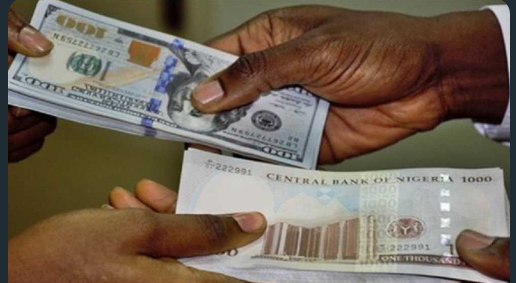
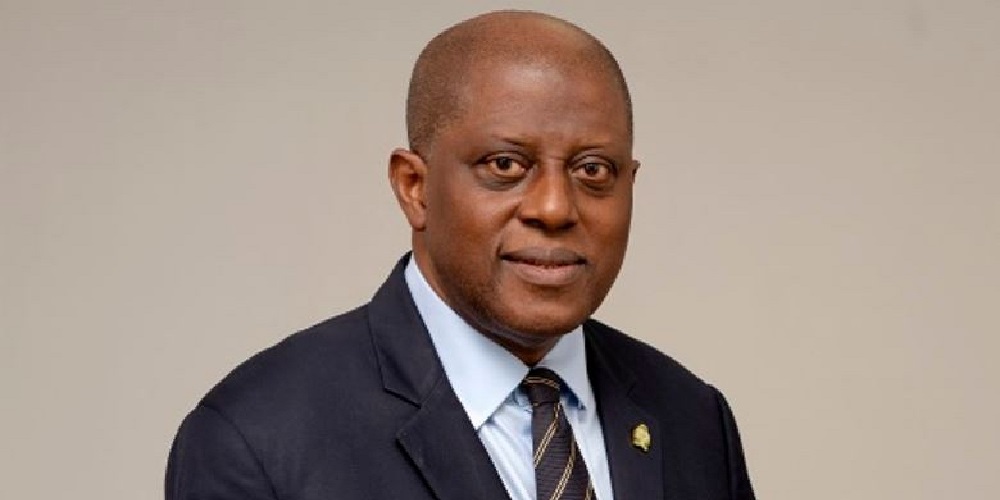
The Governor of the Central Bank of Nigeria (CBN), Mr. Olayemi Cardoso, has disclosed that Nigeria’s external reserves have risen to about $49 billion as of February 5, 2026, describing the development as a clear sign of improving confidence in the country’s economy.


Cardoso spoke on Monday in Abuja at the second edition of the National Economic Council (NEC) Conference, where he explained that the growth in reserves represents a 4.93 per cent increase from the last figure of $46.7 billion which marks a major turnaround from what the country faced when the current CBN leadership took over.

“This is obviously a very important statistic,” Cardoso said. “When we took over, the net reserve figure was about $3 billion. As at the end of last year, the net reserve figure had gone up strongly into the 30s. And as I said, as of February 5, 2026, it is $49 billion. We are now net buyers.”

He explained that the CBN now allows the foreign exchange market to largely determine prices, while the Bank steps in to buy foreign exchange when necessary. According to him, this approach has helped to close the gap between the official and parallel market exchange rates. “The premium between the official and parallel market rates has collapsed to under two per cent,” he said.

Advertisement

Cardoso said remittances from Nigerians living abroad have played a major role in boosting the country’s foreign reserves. He noted that Nigerians in the diaspora come from all parts of the country and are keen to support the economy by sending money home.

“Remittances have made a big difference to how we have grown our reserves,” he said. “The diaspora come from every single state represented here. We have engaged with them and made it easier for them to remit money back to Nigeria.”

He added that the cooperation of state governors and other leaders would be crucial in sustaining this progress in the coming years.

The CBN governor said recent reforms have also made foreign exchange more accessible to ordinary Nigerians, especially those travelling abroad.

Advertisement

“When people travel now, you don’t have to look for foreign exchange to travel,” he said. “You use your naira card and pay for whatever you want. Now the naira is more competitive and people are not afraid to hold naira.”

Cardoso recalled that in the past, the naira was widely rejected in parts of the West African sub-region, but said that situation has changed. “In those days, if you went around West Africa and gave them naira, nobody wanted to touch it,” he said. “That has all gone now. There is predictability and you can plan.”

He warned Nigerians who are holding foreign currency without real need that such actions could lead to losses. “Those holding unnecessary foreign exchange reserves are losing money every day,” he said.

On the banking sector, Cardoso said ongoing recapitalisation efforts are strengthening banks and positioning them to support Nigeria’s long-term economic goals, including the ambition to build a $1 trillion economy.

Advertisement

“We all know how important the banking system is,” he said. “Banks are recapitalising, investors are earning positive real returns, and equity markets are recovering due to improved earnings and stability.”

He said the CBN is also working on clear succession rules to ensure smoother leadership transitions in banks and greater resilience during periods of uncertainty.

Cardoso said recent economic data shows signs of stability, pointing to GDP growth of 3.98 per cent, a strong current account position, and a $3.42 billion surplus recorded in the third quarter of 2025. “We haven’t had this kind of current account strength in a very long time,” he said.

He also noted that inflation has moderated to about 15.15 per cent, adding that the figures show that recent reforms are producing results.

Advertisement

According to him, the CBN has developed a roadmap for the period from 2026 to 2030, aimed at using macroeconomic stability to drive productivity and growth. “Without stability, there will be no growth,” Cardoso said. “If there is something positive that has come out of this, it is the fact that we now have stability.”

He explained that the roadmap focuses on reducing inflation, normalising the foreign exchange market, and strengthening the financial system. In simple terms, he said, the CBN plans to stay on course with current policies. “We will continue doing the things we have done,” he said.

Cardoso said key priorities include price stability through a gradual move towards inflation targeting, strengthening external reserves, and protecting the value of the naira. “We will do whatever it takes to safeguard the value of the naira,” he said.

He, however, warned that there are still risks that must be carefully managed. One of them, he said, is excess liquidity in the system. “There is still a lot of liquidity in the system and we must manage it very carefully,” he said. “We are not out of the woods yet.”

Advertisement

He also pointed to the election cycle as a possible risk, noting that large spending during election periods could threaten economic stability if not properly managed.

Cardoso stressed that monetary policy alone cannot solve all economic problems. “Monetary policy is necessary, but it is not enough on its own,” he said. “No central bank can sustainably deliver low inflation where issues like food supply shocks, high energy costs, and poor infrastructure continue to push prices up.”

He said lasting stability requires fiscal discipline, supply-side reforms, and strong cooperation among government institutions. “Monetary stability requires fiscal discipline and credibility,” he said. “Policy coherence is a strong anchor for stability.”

Cardoso said the CBN will continue to maintain a disciplined interest rate path, while fiscal authorities are expected to support policies that improve revenue, manage debt responsibly, and modernise public financial management.

Advertisement

He also stressed the importance of state governments, saying subnational governments control a large share of public revenue and can strongly influence inflation, growth, and overall economic stability. “Subnational governance can significantly affect macroeconomic outcomes,” he said.

The CBN governor urged state governments to align with national stability goals by investing in infrastructure, managing debt responsibly, and working with the financial system to expand access to credit and promote financial inclusion.

Looking ahead to 2030, Cardoso said success would mean single-digit inflation, growing foreign exchange reserves supported by non-oil exports, foreign investment, and remittances, as well as a strong and inclusive financial system. “Our view is that the future is looking bright,” he said.

In his welcome address, the Minister of Budget and Economic Planning, Senator Abubakar Atiku Bagudu, praised President Bola Ahmed Tinubu for the reforms carried out so far, saying they have improved the financial position of states and local governments.

Advertisement

“Today, a more united federation is gathered here because of the choices you made,” Bagudu said. “Your reforms have improved the fiscal condition of states and local governments, while much of the burden is borne by the Federal Government.”

He said the President’s focus on grassroots development reflects true federalism and has encouraged states to support national reforms.

Bagudu said members of the National Economic Council, representing the 36 states and the Federal Capital Territory, have actively participated in shaping reform measures and largely support the direction of the government. “Most of them, regardless of party, believe you are pursuing what the country needs,” he said.

He added that governors have been working closely with the Federal Government on key national issues, including security, infrastructure, fiscal and monetary coordination, and efforts to boost domestic production and curb oil theft.
Advertisement
Continue Reading
Advertisement

Economy

Oil tops $100 as Iran vows to keep Hormuz closed

Published

on

By

ADVERTISEMENT
Zoom Ad
ADVERTISEMENT
Zoom Ad

Oil prices soared above $100 and stock markets extended losses as Iran’s new supreme leader ordered the Strait of Hormuz to be kept closed.

Concerns about a long, drawn out conflict were not assuaged by US President Donald Trump saying that stopping the Islamic republic’s “evil empire” was more important than crude prices.

Global markets have been roiled since the United States and Israel launched attacks on Iran. Tehran’s retaliatory strikes on shipping and Gulf neighbours have nearly cut off maritime traffic through the Strait of Hormuz, through which pass around a fifth of the world’s oil and liquefied natural gas.

“Oil prices are up by double-digit percentages again today, as the realisation sinks in that the US is not about to either end the war or institute some kind of convoy system in the region,” said analyst Chris Beauchamp at IG trading and investment platform.

Advertisement

Energy Secretary Chris Wright acknowledged the US military was currently “not ready” to escort tankers through the critical Strait of Hormuz.

Brent North Sea crude, the international benchmark contract peaked at $101.59 per barrel on Thursday.

At $100 per barrel, Brent is up around 38 percent from the eve of the conflict, which began on February 28 when the United States and Israel launched airstrikes against Iran. It is up nearly two-thirds from the start of the year.

Iran’s new supreme leader Mojtaba Khamenei called on Thursday for using “the lever of blocking the Strait of Hormuz”, which the country’s Revolutionary Guards vowed to carry out.

Advertisement

The call followed fresh attacks against Gulf energy targets: an attack on two oil tankers off Iraq killed at least one crew member, while a cargo ship caught fire after being hit by shrapnel.

Oil prices pared their gains after Iran’s deputy foreign minister said that Tehran had allowed ships from some countries to cross the Strait of Hormuz.

The International Energy Agency said the Mideast war “is creating the largest supply disruption in the history of the global oil market”, a day after its member countries agreed to unlock 400 million barrels of oil from their reserves — their largest release ever.

Analyst David Morrison at Trade Nation said that if the announcements of the release of oil from strategic reserves “were supposed to cap prices, then they failed dismally”.

Advertisement

The moves may have “suggested some panic as hostilities across the Middle East intensified”, he added.

The rise in energy prices could cause prices to rise throughout the economy.

“The longer the oil price remains elevated, the more damaging and long lasting the inflation shock will be for the global economy,” noted Kathleen Brooks, research director at trading group XTB.

Wall Street’s main stock indices were down more than one percent in early afternoon trading.

Advertisement

Europe’s leading equity markets closed lower, as did most Asian markets.

eToro US investment analyst Bret Kenwell said that while US equities had held up rather well to date, a long conflict would have a profound impact on businesses.

“If oil doesn’t retreat meaningfully, the pressure won’t just be felt at the pump — it will bleed into margins, spending, and potentially quarters of softer growth,” he said.

The dollar rose further against major rival currencies.

Advertisement

“The dollar has strengthened, driven by safe-haven demand, fears of inflation, and higher-for-longer interest rate expectations,” said Victoria Scholar, head of investment at Interactive Investor.

– Key figures at around 1630 GMT –

Brent North Sea Crude: UP 8.6 percent at $99.88 per barrel

West Texas Intermediate: UP 9.3 percent at $95.38 per barrel

Advertisement

New York – Dow: DOWN 1.2 percent at 46,871.01 points

New York – S&P 500: DOWN 1.2 percent at 6,698.16

New York – Nasdaq Composite: DOWN 1.4 percent at 22,389.89

London – FTSE 100: DOWN 0.5 percent at 10,305.15 (close)

Advertisement

Paris – CAC 40: DOWN 0.8 percent at 7,978.98 (close)

Frankfurt – DAX: DOWN 0.2 percent at 23,589.65 (close)

Tokyo – Nikkei 225: DOWN 1.0 percent at 54,452.96 (close)

Hong Kong – Hang Seng Index: DOWN 0.7 percent at 25,716.76 (close)

Advertisement

Shanghai – Composite: DOWN 0.1 percent at 4,129.10 (close)

Euro/dollar: DOWN at $1.1525 from $1.1574 on Wednesday

Pound/dollar: DOWN at $1.3355 from $1.3419

Dollar/yen: UP at 159.20 yen from 158.92 yen

Advertisement

Euro/pound: UP at 86.31 pence from 86.25 pence

Continue Reading

Economy

Dollar, Pound, Euro Rates in Nigeria Today – See Full Exchange for March 12, 2026

Published

on

ADVERTISEMENT
Zoom Ad
ADVERTISEMENT
Zoom Ad

Dollar to Naira Today March 12 – The Nigerian foreign exchange market continues to experience moderate fluctuations.

However, the spread between the official and parallel market rates has remained relatively narrow in recent days.
Below is a comprehensive snapshot of exchange rates for major global currencies as at Thursday, March 12, 2026.

Exchange Rates Table

Currency Official Market Rate (₦) Parallel / Black Market Rate (₦) Mid-Market / Indicative Rate (₦)
US Dollar (USD) ₦1,395 – ₦1,405 ₦1,405 – ₦1,418 ₦1,410
Euro (EUR) ₦1,520 – ₦1,540 ₦1,640 – ₦1,670 ₦1,655
British Pound (GBP) ₦1,820 – ₦1,845 ₦1,940 – ₦1,970 ₦1,955
Chinese Yuan (CNY) ₦190 – ₦195 ₦200 – ₦205 ₦202
Japanese Yen (JPY) ₦10.3 – ₦10.6 ₦10.8 – ₦11.2 ₦11.0
Canadian Dollar (CAD) ₦1,030 – ₦1,050 ₦1,080 – ₦1,110 ₦1,095
Swiss Franc (CHF) ₦1,540 – ₦1,560 ₦1,610 – ₦1,640 ₦1,625
Saudi Riyal (SAR) ₦370 – ₦375 ₦380 – ₦390 ₦385
UAE Dirham (AED) ₦375 – ₦380 ₦390 – ₦400 ₦395
Market Notes

Advertisement

The official rate reflects transactions in the Nigerian Foreign Exchange Market supervised by the Central Bank of Nigeria.

Meanwhile, the parallel market rate represents prices offered by Bureau De Change operators and informal forex traders across major cities.

The mid-market rate is the global benchmark used by international money transfer platforms and forex aggregators.

Exchange rates may vary slightly depending on location, demand, and transaction size.

Advertisement
Continue Reading

Economy

NNPCL increases fuel for second time in less than 24 hours

Published

on

By

ADVERTISEMENT
Zoom Ad
ADVERTISEMENT
Zoom Ad

The Nigerian National Petroleum Company Limited, NNPCL, and other filling stations have increased their Premium Motor Spirit (PMS) pump price for the second time in less than 24 hours following Dangote Refinery’s gantry price hike.

The state-owned oil firm on Sunday adjusted its pump price from N967 to N1,082 per liter in Abuja and its environs, representing a N115 increase per liter.

This followed an earlier adjustment from N960 to N967. With the latest hike, NNPCL retail outlets have raised petrol prices by N207 in less than a week.

The latest prices have been implemented across NNPCL retail outlets in Kubwa Expressway, Gwarimpa, Wuse Zone 6, Zone 4, and Lifecamp.

Advertisement

Similarly, other filling stations, including MRS, AA Rano Ranoil, and Empire Energy, have adjusted their fuel pumps at least twice, with prices now ranging between N1,092 and N1,150 per liter, up from around N960 to N980 per liter.

Speaking on the fuel price hike, the National President of the Petroleum Products Retail Outlets Owners Association of Nigeria, Billy Gillis-Harry, said the domestic petrol price increase is linked to global crude oil price volatility.

“The Dangote Refinery gantry petrol price hike and retail price adjustment are due to crude price volatility caused by the Iran–US–Israel conflict affecting the Gulf region,” he said.

He, however, called on oil sector regulators in Nigeria to intervene to prevent further petrol price volatility.

Advertisement

Recall that Dangote Refinery had increased its petrol gantry price by N121, from N874 to N995 per liter, as crude oil prices surged above $90 per barrel.

Continue Reading

Trending

Copyright © 2024 Naija Blitz News