Hunger protest: ophthalmologists caution against prolonged exposure to tear gas


*Says, it may cause blindness
By Francesca Hangeior 
Leading eye specialists have cautioned that prolonged exposure to tear gas could cause temporary blindness and other eye complications, which if left untreated could lead to permanent blindness.
They also noted that people without protective clothes and devices were at risk of cornea injuries and conjunctivitis when exposed to tear gas.
The ophthalmologists advised those exposed to tear gas to quickly rinse their eyes and affected body parts with water.
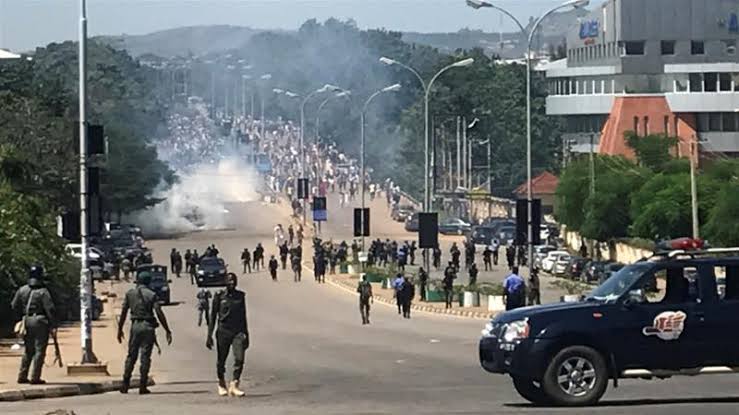
The experts’ warning and advice comes on the heels of the 10-day protest that began on August 1st and had been marred with security agents firing tear gas to disperse protesters.
Under the #Endbadgovernance and #Hungerprotests, several Nigerians in several states of the federation, have through placards and chants demonstrated their displeasure with the current economic hardship.
But the President, Bola Tinubu, in an address to the nation on Sunday, told protesters and the organisers to suspend any further protest and create room for dialogue.
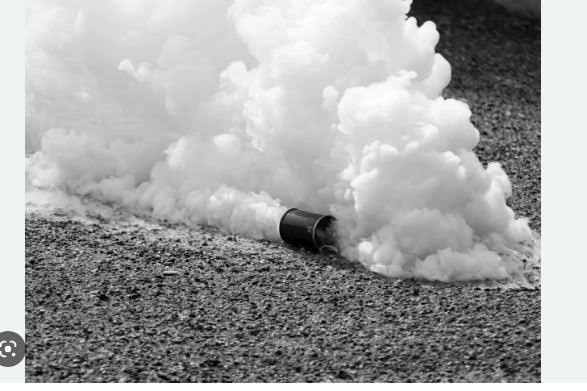
Tear gas is a riot control agent mostly used by law enforcement agents that temporarily constrain people by irritating the eyes, mouth, throat, lungs, and skin.
According to the Centre for Disease Control and Prevention, long-lasting exposure or exposure to a large dose of tear gas may cause blindness, glaucoma and respiratory failure possibly resulting in death.
However, a professor of Ophthalmology at the University of Benin, Edo State, Afekhide Omoti, stated that prolonged exposure to tear gas in an enclosed environment could cause blindness.
He, however, noted that the risk of blindness was reduced if the tear gas was used in an open environment.
The Chairman of the National Eye Health Committee said, “In the normal circumstances where tear gas is used in an open environment, it will not cause blindness.
“However, if there is prolonged exposure in a closed environment, it is possible that tear gas can cause blindness,” he said.
The researcher on Glaucoma and Anterior Segment Disorders further noted that physical exertion, such as running after contact with tear gas, makes the affected persons more susceptible to severe symptoms.
Omoti said, “As far as blindness is concerned, large doses may cause temporary blindness.
However, in very unusual circumstances, and depending on the delivery system, more prolonged damage can occur.
Explosive systems, particularly those used in the military, may cause thermal, chemical, and physical damage due to the blast. If left untreated, it can cause permanent blindness. But this is not the usual type used by the anti-riot police.”
The researcher on Glaucoma and Anterior Segment Disorders further noted that tear gas might worsen the conditions of persons with corneal problems but had no effect on those with cataracts and glaucoma.
He added, “Depending on the specific chemical agent used in the tear gas and the mode of delivery, tear gas can cause a variety of eye defects which include mild features such as blepharospasm, conjunctivitis and superficial keratitis.
“More severe complications which are very unlikely include corneal stromal opacities, corneal neovascularisation, neurotrophic keratopathy, conjunctival necrosis, and pseudopterygium. These are all problems with the cornea and conjunctiva, the surface structures of the eye.
“Ordinarily, those with glaucoma should not be at higher risk of blindness from tear gas use. However, if the explosive variety is used, and as I said earlier, this is not the usual type used in our civilian crowd control, then the physical effects may increase the intraocular pressure and worsen the glaucoma or even theoretically cause blindness in terminal stages. But I must again reiterate that this is not likely.”
The ophthalmologist asserted that if these eye defects were untreated, it could cause possible complications, which could lead to blindness.
“Untreated, possible complications which will cause blindness, especially in explosive cases include corneal neovascularisation, stromal thinning, ulceration, infection and perforation. Others include secondary glaucoma, cataract formation, vitreous haemorrhage and traumatic optic neuropathy which are physical complications of the explosive which are not normally used in civilian crowd control,” Omoti said.
Also, the President of the Ophthalmological Society of Nigeria, Dr Abiola Oyeleye, stated that tear gas affects the eyes and skin of those it comes in contact with, noting that when inhaled, it affects the lining of the mouth, nose, chest, lungs and the respiratory system.
The ophthalmologist emphasised that direct exposure of tear gas to the eyes could damage the eye structures and lead to blindness.
The Medical Director of the Eye Doctors Group of Clinics, said, “So if we are specific now about the eyes, what it does, it irritates the eye, and anything that irritates the eye causes tears, and that’s where the name tear gas is from. So the eye sends a message to the brain that something is irritating me and the brain now sends a message to the tear glands saying something is irritating the eye, send tears to the eye, the tear glands now function and send tears to the eye, so it’s a response to whatever agent has caused it, that’s where the name tear gas comes from. Pp