
News
Satellite to mobile services and connectivity disruption

- /home/naijuinz/public_html/wp-content/plugins/mvp-social-buttons/mvp-social-buttons.php on line 27
https://naijablitznews.com/wp-content/uploads/2024/02/Sonny-Aragba-Akpore.jpg&description=Satellite to mobile services and connectivity disruption', 'pinterestShare', 'width=750,height=350'); return false;" title="Pin This Post">
- Share
- Tweet /home/naijuinz/public_html/wp-content/plugins/mvp-social-buttons/mvp-social-buttons.php on line 72
https://naijablitznews.com/wp-content/uploads/2024/02/Sonny-Aragba-Akpore.jpg&description=Satellite to mobile services and connectivity disruption', 'pinterestShare', 'width=750,height=350'); return false;" title="Pin This Post">


Sonny Aragba-Akpore
Elon Musk’s ambition to conquer technology and everyday living got a boost early in January 2024 when his SpaceX which owns Starlink satellite communications announced that it was introducing satellite to mobile communications services across the world.
> Its plan primarily was to provide ubiquitous services around the globe and give a run for money to other mobile network operators and telecommunications companies (telcos).
With its communication satellites,Starlink introduced disruptive technologies and with satellite to mobile,the company creates further disruption in telecommunications ecosystem.
> Musk’s foray into Nigeria fetched him six licences with a full bouquet capable of operating in many spheres and first received two licences, out of the six in May 2022 .
These were for International Gateway and the Internet service provider (ISP) licences, and began to trade as Starlink Internet Services Nigeria Ltd.
> According to the Nigerian Communications Commission (NCC), the International Gateway licence has a 10-year tenure, while the ISP licence runs for five years. Both licenses took effect from May 2022 and may be renewed after the expiration.
Starlink came with disruptive technologies that are already making a world of difference for consumers and we looked on as if nothing was happening. The company came prepared.
> With a total of six licenses from the NCC and various permits and approvals to flag off the business of internet services via satellite and equally signing Memorandum of Understanding (MoU) and distribution agreements with Nigerian companies including, Technology Distribution Africa (TD),a big distributor of major technology brands and promoted by a restless technology czar ,Leo Stan Ekeh, Starlink showed it meant business.
The company didn’t stop there ,it decided to take services to even the unserved and under served communities in Nigeria and parts of Africa .
With its technology it said it will deploy nearly $30b over time for the Nigerian operations alone.
> The government is excited that with the entry of Starlink,it may achieve 70% broadband connectivity by 2025 as enshrined in the National Broadband Plan (NBP) 2020–2025.
> Starlink,s six licenses include that for ISP, Gateway Service Provider,international Data Access (IDA),Sales and Installation Major,Gateway Earth Station and Very Small Aperture Terminal (VSAT) thus making it a mega player and a big threat to other players in the industry.
Starlink officially announced its presence in Nigeria in January 2023. The company, which initially quoted its prices in dollars at $600 for the hardware and $43 for the subscription, changed to naira upon its official announcement.
> “Starlink satellites provide Direct to Cell capabilities and ubiquitous access to texting, calling, and browsing wherever subscribers may be on land, lakes, or coastal waters,” it said.
“Direct to Cell works with existing long term evolution ( LTE) or fourth generation (4G ) phones wherever you can see the sky. No changes to hardware, firmware, or special apps are required, providing seamless access to text, voice, and data,” the company added.
In January 2024,Elon Musk’s SpaceX launched its first set of Starlink satellites to provide cell phone service anywhere in the world.
The company announced a milestone the billionaire warned can’t compete with terrestrial networks but will help plug cellular dead zones and boost global mobile connectivity.
> Six of the 21 Starlink satellites launched in January 2024 are capable of connecting directly to cell phones, SpaceX said.
“They are the firm’s first ever direct-to-cell satellites and are designed to function as “a cellphone tower in space,” according to Starlink’s website.
SpaceX said the satellites were first used to test its Direct to Cell service in the United States, where the company has partnered with T-Mobile.
Once activated, the service began to connect with ordinary, unmodified phones without the need for extra equipment so long as they are 4G LTE-compatible, a standard T-Mobile covered the “vast majority of smartphones” already on its network back in 2022.
Starlink said it plans to roll out a text messaging service using the technology later this year and broader voice, data and IoT—the network of connected devices called the internet of things—services in 2025.
Musk celebrated the successful launch and said the satellites “will allow for mobile phone connectivity anywhere on Earth.” However, he noted there are limitations to the technology.
“While this is a great solution for locations with no cellular connectivity, it is not meaningfully competitive with existing terrestrial cellular networks,” Musk said, pointing to the relatively limited bandwidth that is spread over a large area.
Starlink also notes the satellites will let users connect “wherever you can see the sky.”
It has entered a working arrangement with Africa Mobile Networks (AMN) ,a mobile network operator that has deployed services in Nigeria and other countries in Sub-Saharan Africa.
AMN has been deploying rural base stations in Nigeria since 2018.
In 2023, AMN signed a deal with SpaceX to use Starlink’s satellite backhaul connectivity for its remote base stations in Africa.
AMN has connected over 100 rural base stations in Nigeria to Starlink’s Low Earth Orbit (LEO) satellite network. This has resulted in a 45% increase in traffic across these sites.
As at April 2024, AMN owned and operated more than 1,600 base stations nationwide. They increased that number to 2,000 by the end of June.
AMN’s ARN technology allows base stations to support up to five simultaneous carriers.
The combination of AMN’s ARN technology and Starlink backhaul has increased the capacity of Base Transceiver Stations (BTS) without requiring changes to the BTS software.
AMN is privately owned by 18 shareholders, including founders, angel investors, a VC fund, and one strategic investor.
Starlink’s constellation is now providing satellite backhaul to over 100 of Africa Mobile Networks’ rural base stations in Nigeria.
AMN also expects to double the number of base stations plugged into Starlink’s constellation in the country by the end of the year. The operator says on average traffic has increased by 45% across all sites that have been migrated to use Low Earth Orbit (LEO) backhaul.
AMN and Starlink signed a commercial agreement to use the satellites to connect the operator’s mobile network base stations with broadband services in 2023, and in April this year the first base station to do so went live in Yebu, Nigeria.
Since then more than 100 terminals to other rural villages across the country have been hooked up, and AMN says that this means it is ‘able to unlock the full capability of the AMN Radio Node (ARN) to support the ever-increasing amounts of bandwidth and data volumes demanded by subscribers.’
The ARN is a multi-carrier and multi-technology (2G/3G/4G) radio node which can operate up to 5 simultaneous carriers in either 2G+ 3G or 2G+4G configuration, we’re told, and by using LEO backhaul in conjunction with it, AMN says it has been able to increase the BTS capacity remotely with no change to the existing BTS hardware on site.
“These numbers are particularly impressive given that prior to the installation of AMN’s base station, communities did not have access to any mobile network,” explains the release.
“The mobile connectivity AMN provides changes lives. Farmers can find information about market prices, a healthcare provider can consult with doctors in a larger town, money can be sent safely and securely into the village, and businesses can expand beyond their own community.”
Starlink aims to provide satellite internet connectivity to underserved and remote areas worldwide, where internet access has traditionally been limited or non-existent. The global network of Starlink satellites in Low Earth Orbit (LEO) is already providing a new ‘Direct to Cell‘ service to deliver a 4G mobile service to standard Smartphones.
Once the Direct To Cell service is fully up and running, the number of satellites will have increased significantly, and more powerful SpaceX V2 satellites will have been deployed. In essence, users can always access satellite internet service directly from anywhere on earth (if you’re on land, at least – for internet on the ocean, Starlink says it’s offering a dedicated separate maritime service).
The full ‘Direct to Cell’ satellite phone service is set for launch soon and should be compatible with 4G handsets by 2025.
Direct to Cell works with existing LTE phones as well as IoT devices using common LTE standards. Apps and changes to phone hardware or firmware aren’t necessary to access 4G mobile text, voice, and data.
In 2024, only texting will be supported, and a year later voice and data services, as well as IoT functionality, will be added.
The technology aims to extend mobile coverage to areas where traditional cell towers are not present or are ineffective. Unlike traditional mobile networks that rely on a network of cell towers, Direct to Cell connects mobile phones directly to Starlink’s satellites in orbit.
This eliminates the need for ground infrastructure like cell towers in remote areas. It can significantly expand the coverage area of mobile networks, providing connectivity in places that were previously unreachable by standard cellular services. Mobile operators can partner with Starlink to extend coverage without having to build new infrastructure.
Starlink’s satellite network covers the entire globe, which means this technology has the potential to provide universal mobile connectivity, even in the most isolated regions. Starlink satellites with Direct to Cell capability have an advanced eNodeB modem onboard. This acts like a cell phone tower in space, allowing network integration comparable to what a standard roaming partner might provide.
Compared to previous satellite telephone networks, Starlink offers two big advantages: the satellites operate closer to Earth (around 550 km as opposed to as much as 1,400 km) and SpaceX can launch larger satellites. This makes it easier for phones to connect.
However, the precise extent of the service offering and coverage in each region depends on variable such as local regulations, carrier partnerships, and ground stations. SpaceX is looking for cell phone companies to work with on selling the services and is currently already working with T-Mobile (USA), Rogers (Canada), KDDI (Japan), Optus (Australia), One NZ (New Zealand), and Salt (Switzerland).

By Gloria Ikibah
As the world marks the 2026, World Hepatitis Day on July 28, Rotary leaders have called for stronger public awareness, wider access to testing and affordable vaccination against hepatitis, warning that the disease continues to pose a major public health threat despite receiving far less attention than other infectious diseases.
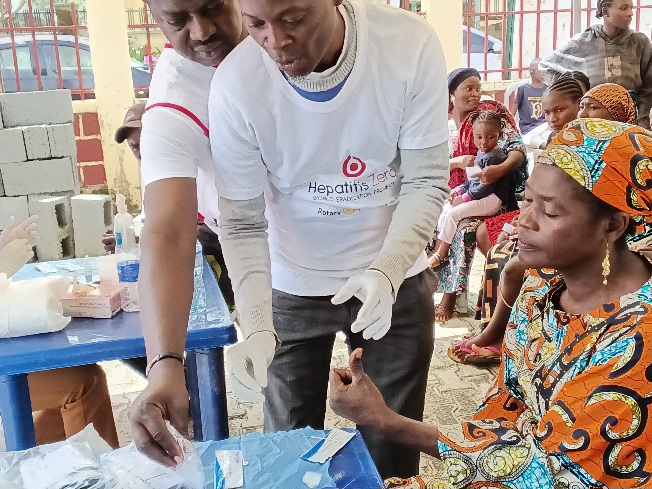
The call was made on Tuesday during a joint Maternal and Child Health and Hepatitis intervention organised by the Rotary Club of Abuja Apo Resettlement and the Rotary Club of Abuja Metro at the Apo Resettlement Primary Health Care Centre in Abuja to mark World Hepatitis Day.
The outreach combined free hepatitis screening and vaccination with maternal and child healthcare services, including the distribution of birth kits to pregnant women and nursing mothers.
Director of Community Service, Rotary Club of Abuja Metro, Rotarian Hauwa Abbas, said the collaboration was designed to expand Rotary’s impact by working alongside its partner club within its adopted community.
According to her, the project focused on healthcare education and hepatitis interventions, with this year’s World Hepatitis Day providing an opportunity to offer free counselling, testing and vaccination.
She said: “We are engaging in health projects, educational projects and environmental projects this year. Today is World Hepatitis Day. We are here to offer counselling, free testing and free vaccinations for those that seek medical intervention.
“We came to this community because it is the community of our adopted partners, the Rotary Club of Abuja Apo Resettlement. This is a partnership, so we decided to work together to enhance our intervention support.”
She disclosed that the project cost between N500,000 and N1 million, depending on the number of beneficiaries.
Highlighting the growing burden of hepatitis, Rotarian Abbas described the disease as an emerging public health concern that now deserves greater attention.
She urged government and development partners to invest more in awareness campaigns and make vaccination affordable for ordinary Nigerians.
“Hepatitis currently is really high in different communities.
“Of course, now it is more alarming than HIV because HIV has been there for a long time. A lot of awareness has been put into HIV through the government, through civil society, through NGOs and CBOs and other stakeholders. So now the focus should shift to hepatitis because there are lots of opportunistic diseases that can arise connected to hepatitis.
“First of all, we need to increase awareness. Awareness is really important because if there is no awareness, there will be no understanding of hepatitis.
“There are different types of hepatitis by the way. The second thing is to ensure that we get, whether it’s international sponsorship or corporate sponsorship, to ensure that the vaccination is subsidised.
“Two, three years ago, the vaccination, you could get it in government hospitals for N1,000 to N2,000.
“Now, to get vaccinated, one dose is between N5,000 to N8,000 in government hospitals. Remember, there are three doses. So you can imagine it’s capital intensive for families to be able to complete the doses.
“So what should we do? To ensure that we get partners and funders, whether it’s corporate organisations. Corporate organisations can tap into their CSR pockets to ensure that things are subsidised for community people”, Abbas explained.
President of the Rotary Club of Abuja Apo Resettlement, Rotarian Christian Njoku, disclosed that more than 100 residents had already turned out for hepatitis vaccination.
“Today we’re actually embarking on two projects.
“The first one is actually maternal and child health projects where we actually have 100 birthing kits we wanted to give to pregnant women and people that just delivered the baby.
“Then the second project is hepatitis. We’re actually giving out hepatitis vaccine for free. That’s the second project and they’re all ongoing.
“As it is now we are almost going above 100 and more people are still coming because we all know what hepatitis is.
“Hepatitis is actually a deadly disease that actually affects the liver and can actually take away someone’s life.
“Rotary decided to give us the vaccine for free and this vaccine is for three months, once in each month.
“So today, the next time we’ll be coming is by this time next month, August, then we’ll finish the remaining one by September”, he said.
Njoku explained that the vaccine provides long-term protection.
While acknowledging government efforts, he urged authorities to intensify awareness campaigns in rural communities.
“This vaccine lasts for 10 good years.
“Well, anyway, the government is actually trying their best and that is where Rotary also come in to help the government expand more, create more awareness.
“The government doesn’t have that time to go into the rural areas to create awareness and make sure that the people are taking this vaccine.
“So I only plead to the government, they should actually try as much as possible, see how they can go into the grassroots, go into the rural areas to create more awareness and to make sure there are enough facilities for hepatitis”, he stated.
Also speaking, Past Rotary International District Governor, Rotarian Ayoola Oyedokun described hepatitis as one of Africa’s silent killers, stressing that ignorance and poor testing remain major obstacles to controlling the disease.
“As we all know that hepatitis is one of the silent killers, which even kills faster than malaria in these sub-Saharan countries.
“And we have some that are prevalent in Africa, Nigeria, hepatitis B, hepatitis C and hepatitis D. And these are some of the silent killers, which is a liver infectious disease.
“And the major problem we have is that a lot of people are not being tested. And when you are not being tested, that means you do not know your status.
“And the moment we don’t know our status, we are not careful on how we know we prevent it from spreading to others”, he noted.
He explained that Rotary’s intervention centres on advocacy, screening and encouraging people to know their hepatitis status before complications develop.
“So why Rotary has come in and why the Rotary Action Group has also come in is in the place of advocacy and in the place of testing. And let people be aware about the fact that this disease exists and anybody can be a carrier of this disease.
“And when we know our status, then we can prevent it from spreading either by taking the vaccines to prevent us from getting this disease.
“Or if we know our status and we are positive, then we now know how to get the cure. Although it doesn’t have a cure, but it has a system in which it can reduce the rate of it being a killer disease.
“Because you know your status, then you know how you keep on treating it in that direction. So that’s where Rotary comes in”, he said.
Oyedokun noted that hepatitis screening has now become a regular feature of Rotary medical outreaches, although funding constraints continue to limit the scale of interventions.
“Rotary has taken it, not only today that it’s Hepatitis Day, but every other medical outreach, medical interventions that we are doing, we always include Hepatitis B, C and D testing in every of our interventions.
“Funding is one of the major problems that we always have.
“In polio, Rotary has taken it as a flagship project and it’s been 100% funded by Rotary.
“But in case of all these things, we leave it to action groups, we leave it to the district, we leave it to clubs to take it as part of the project.
“And that’s why the action group is working with every district, every club to see how we can partner with them.
“Let’s support you with testing kits. You make your investments in the vaccines because it’s not enough just being tested.
“If we get, you know, like today now we have tested over 100 people, we don’t know how many of them will be positive.
“And definitely when you know that there’s a positive person, you need to refer them to the next health care centre so that they can commence the treatment process”, he added.
General Secretary of the Rotarian Action Group for Hepatitis Eradication, Rotarian Oye Oyewo, said this year’s World Hepatitis Day theme underscores the urgency of acting now.
“Today is World Hepatitis Day. And the theme for this year is Hepatitis Can’t Wait. So we too should not wait. So you can imagine if you look at the theme for this year, Hepatitis Can’t Wait.
“So we, as promoter of Hepatitis Eradication, we too can’t wait. That is why we are here in this community to make sure that we give our best and make sure that people are vaccinated, tested. If they are negative then they get vaccinated. And make sure that we have a healthy community.
He described hepatitis as inflammation of the liver that often remains undetected until it is too late.
“And it will interest you to know that Hepatitis is just inflammation of the liver. And because it doesn’t have symptoms, that is why they call it silent killer.
“At any time that anybody have symptoms from Hepatitis, then it is too late. So that is why you see we are giving vaccines to make sure that we prevent, that there is prevention. And you know there are various types of viral hepatitis.
Explaining the different forms of the disease, Oyewo said:
“We have Health A, B, C, D, E.
“Hepatitis A, D, E are the ones that the body system can fight easily.
“But for B and C, B has a problem. B doesn’t have cure but it can be prevented. C has cure but has no vaccine. You understand the two ways that they have.
“B is not curable but it can be prevented with vaccine. C is curable but it doesn’t have vaccine. So that is why today we are screening people for B and C.
“So that is why we are in this community in Apo Resettlement”.
He commended Rotary’s achievements in the fight against polio but called for similar commitment towards hepatitis eradication.
“Rotary is doing well in the area of polio. We have done very well in eradicating polio in many countries except for the one that we are working on now. And you agree with me that we have done very well. We are this very close to eradicating polio. But we need to look at what next, what is the post polio engagement that Rotary is going to be looking at.
A lot of people were considering that. Let us look at malaria. And I made an argument, a strong argument about that. That if you say malaria, ordinary pills, ordinary doses, malaria is a parasite. Ordinary doses can take you off malaria level, take you off malaria.
According to him, hepatitis deserves greater priority because of its long-term impact on public health and productivity.
“But when you talk about Hepatitis it is not the same thing. You cannot say okay somebody has malaria and has Hepatitis and if you take pills for malaria it will go. But you cannot take pills for Hepatitis because it is a viral infection and it affects the liver.
“And study says that about 60-70% of liver cirrhosis, liver problems are caused actually by Hepatitis. And again there are other things that we look at when we are looking into Hepatitis. It is not only just standing alone, it can affect the liver and it affects the productivity of the population.
“And you may have to look at the transmission of Hepatitis too. It is a viral disease so that means it is spread, it is virus and it is spread through blood and body fluids. So through body fluids and the potency of the virus is such that it stays longer on the surface than even HIV. So that makes it very legal.
“So Rotary I would say is doing very well but we should do more because the only thing is that because Hepatitis does not have symptoms. So a lot of people that are carrying it can’t even know, awareness is very low.
“That’s why we are doing the campaign and on every 28th July, which is declared as World Hepatitis Day, we always join WHO, Federal Government and some other partners to make sure that we reach out to people in a logical manner”, he added.

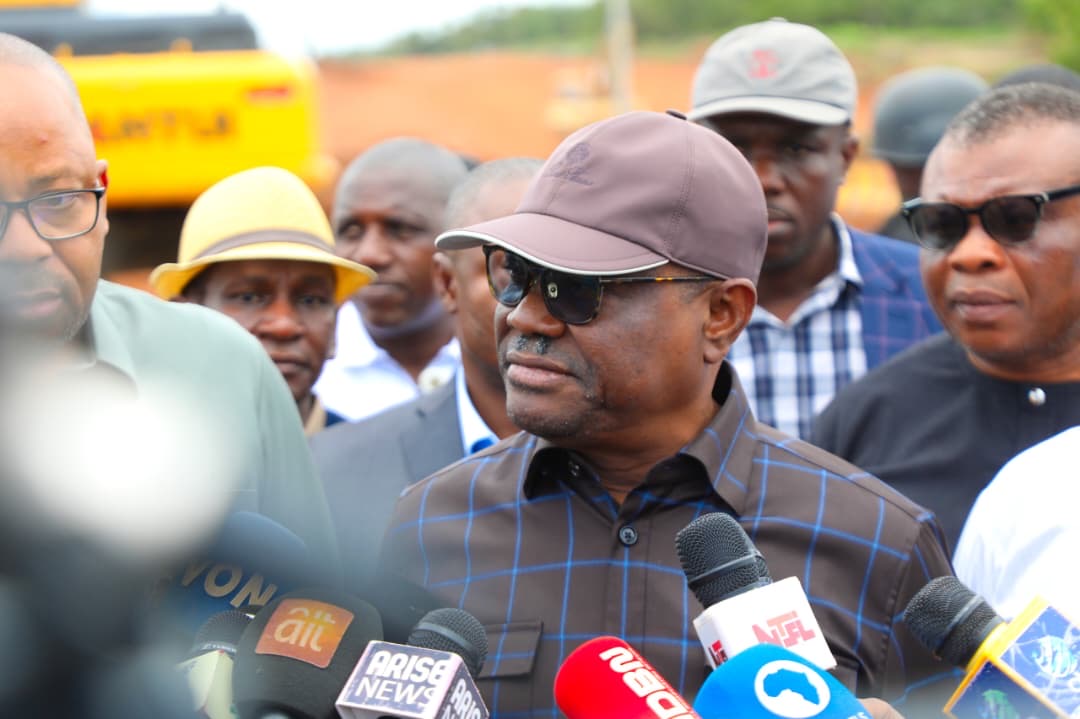
The Minister of the Federal Capital Territory (FCT), Mr Nyesom Wike has promised to deliver Inner Southern Expressway (Goodluck Jonathan Way) awarded in December 2014, and abandoned for 12 years in December.
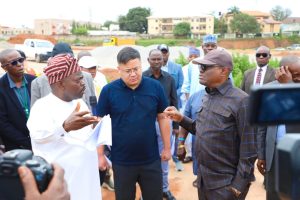
Wike gave the promise in Abuja on Tuesday, after inspecting the project, along with the ongoing construction of the service carriageways of the Southern Parkway in Gaduwa District.
He said that the 10-kilometre road project, awarded in 2014, began from the Southern Parkway to Ring Road II at Galadimawa, with five bridges.
According to him, the road was the only project, apart from the Apo-Karshi Road, awarded by previous administration that has not been completed by President Bola Tinubu administration.
He said that the contractor would complete the remaining six out of the 10-kilometre road and hand it over by end of December, subject to availability of funds.
The minister described the road as a “major road” that would change the landscape of the FCT, if completed, adding that talks were ongoing with Ministry of Finance to make the needed funds available.
“So we’ll continue to dialogue with the Minister of Finance to see how we’ll be able to access the funds and pay off the contractor for it to finish that project.
“It is very, very key to us and that of course will change the entire landscape of the FCT.
“Apo-Karshi Road awarded in 2010 is almost completed. We were there yesterday,” he said.
Wike said that completing the projects would fulfill Tinubu’s promise to complete all projects awarded by precious administrations from 2010 to 2023.
“It will be a remarkable achievement for this administration to finish all projects awarded by previous administration so that we don’t have abandoned projects everywhere.
“So, it’s a good development for us, continuity. So we’re happy with what we’ve done,” Wike said.
The minister also inspected the ongoing construction of two service carriageways of the Southern Parkway, spanning from Arterial Road S20 (Oladipo Diya Way) in Gaduwa District to Ring Road II.
The Southern Parkway serves as one of the most essential transportation corridors within Abuja’s southern development axis, linking multiple dense residential districts across Phases I to IV of the Federal Capital City.
“You know, this road was flagged-off during the inauguration of projexts to celebrate Tinubu’s third year in office. We have to come and see what they’ve done.
“The contractor promised to hand over the project by end of December and I believe them,” he said.
Reacting to Siminalayi Fubara of Rivers recent declaration that he has returned to the Rainbow Coalition and pledged complete loyalty to Tinubu’s re-election, Wike said “there is no sin in politics.
“If someone realises he made a mistake and decides to correct it, there is nothing wrong with that. What matters is recognising that you were on the wrong path and make the right decision”.
The minister said he has welcomed Fubara back into the political fold, insisting that the governor had “no other choice” than to return to the political family that brought him to power.
Wike said Fubara’s decision to publicly align with his political camp was a step in the right direction, adding that the reconciliation would strengthen support for Tinubu ahead of the 2027 general election.
“I said during my last media chat that he had no other choice but to return to the same political family that produced him,” he said.











Minister of Defense, General Christopher Musa, rtd, has said President Bola Tinubu will soon announce salary increment for personnel of the Nigerian Armed Forces.
In a statement by his media aide, Leah Katung-Babatunde, the minister said the move is part of the Federal Government’s sustained commitment to improving troop welfare and rewarding their sacrifices to the nation.
He recalled previous welfare benchmarks, noting that military pay was successfully raised from N49,000 to N100,000 during his tenure as Chief of Defence Staff.
General Musa stressed that active steps are currently underway to secure an even better package for the troops.
“I want to state here that a few weeks ago, I mentioned that soldiers are now receiving N100,000. When I was Chief of Defence Staff, soldiers were receiving N49,000.
About two years ago, I pushed for an increase to N100,000, and that was achieved. We are, however, making further efforts to increase it again,” Musa stated.

Rotary Steps Up Hepatitis Fight as Abuja Clubs Deliver Lifesaving Health Outreach

Photos: Wike Promises To Deliver Abandoned Goodluck Jonathan Way, Other New Roads In December

Further plans underway to increase salaries of military personnel -Defence Minister, Musa




-

 News12 hours ago
UK Eases Student Visa Rules for Three African Nations
-

 News23 hours ago
Fugitive drug kingpin, ex-int’l footballer bag 24 years jail term for cocaine importation(Photos)
-
 News23 hours ago
Reps Order IGP to Produce Alleged Fake Presidential Council DG as Probe Uncovers Fresh Forgery Claims
-

 News23 hours ago
AGF Reveals Alleged Hijacked State House Letter Helped Fake Agency Get Recognition
-

 News20 hours ago
Just in: Ahead 2027, Kano NDC Senators Meet Tinubu over Planned Defection to APC
-
 News12 hours ago
Stolen BVAS, PVCs Will Be Replaced, Osun Election Safe – INEC
-

 News7 hours ago
Kebbi Weds 600 Couples, Pays ₦250k Dowry Each
-
 News20 hours ago
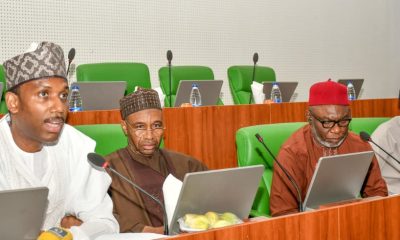
Reps Back President Tinubu’s Economic Reforms, Subject 13 Commerce Bills to Public Scrutiny
Warning: Undefined variable $user_ID in /home/naijuinz/public_html/wp-content/themes/zox-news/comments.php on line 49
You must be logged in to post a comment Login