Foreign
5 newest countries in the world
- /home/naijuinz/public_html/wp-content/plugins/mvp-social-buttons/mvp-social-buttons.php on line 27
https://naijablitznews.com/wp-content/uploads/2024/11/newest-nations-1000x576.jpg&description=5 newest countries in the world', 'pinterestShare', 'width=750,height=350'); return false;" title="Pin This Post">
- Share
- Tweet /home/naijuinz/public_html/wp-content/plugins/mvp-social-buttons/mvp-social-buttons.php on line 72
https://naijablitznews.com/wp-content/uploads/2024/11/newest-nations-1000x576.jpg&description=5 newest countries in the world', 'pinterestShare', 'width=750,height=350'); return false;" title="Pin This Post">
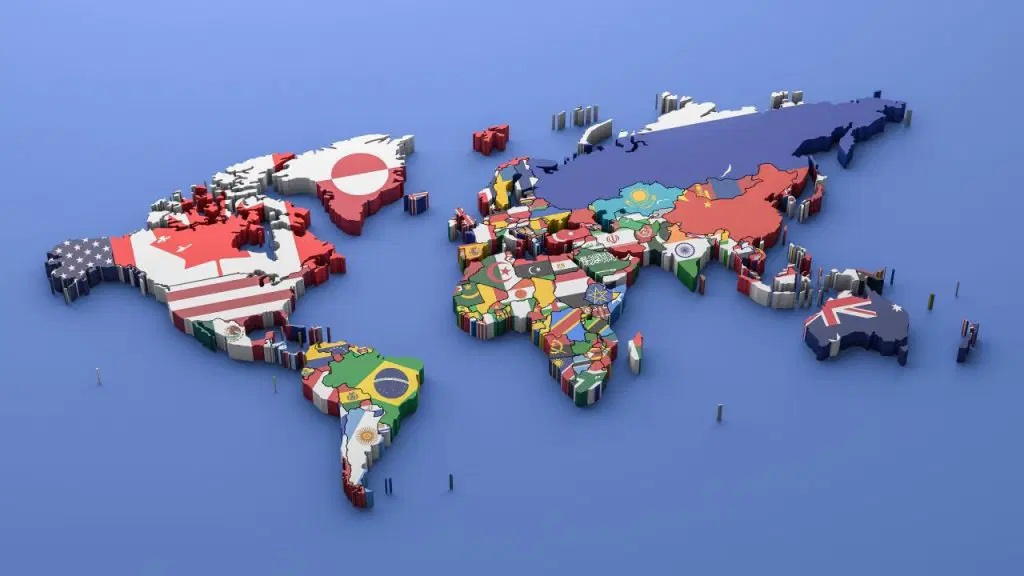
Today, the world has 195 recognised countries, including some of the newest nations to join the global community.

New countries often come from independence struggles, the breakup of larger nations, or international agreements. These countries face challenges like building stable governments, growing their economies, and creating a national identity. The newest country in the world, South Sudan, became independent in 2011.
Here are the five newest countries in the world:

South Sudan
South Sudan became independent on July 9, 2011, after years of conflict with Sudan. The Comprehensive Peace Agreement (CPA) in 2005 allowed South Sudanese to vote for independence in a 2011 referendum, where 98.83% chose to separate. Its capital is Juba, and it became the 193rd United Nations member state soon after. Despite independence, South Sudan has faced challenges, including a civil war from 2013 to 2020, causing a humanitarian crisis.
Montenegro
Montenegro declared independence on June 3, 2006, after a referendum where 55.5% of voters supported separation from Serbia. This ended the State Union of Serbia and Montenegro, which had replaced Yugoslavia. Montenegro’s capital is Podgorica, and it joined the United Nations on June 28, 2006, as the 192nd member state. Montenegro has worked toward joining the European Union and became the 29th member of NATO on 5 June 2017 when it deposited its instrument of accession to the
North Atlantic Treaty with the U.S. State Department in Washington, D.C.
On 7 June 2017, The Flag of Montenegro was raised at NATO Headquarters in a special ceremony to mark the country’s accession to NATO.
Serbia
Serbia became an independent state on June 5, 2006, after Montenegro’s decision to separate. Serbia, as the successor state of Serbia and Montenegro, retained membership in international organisations, including the United Nations. Its capital is Belgrade. Serbia is focused on economic growth and aims to join the European Union while dealing with the unresolved status of Kosovo, which declared independence in 2008.
Timor-Leste
Timor-Leste, also called East Timor, gained independence on May 20, 2002, after decades of Indonesian occupation. In a UN-backed referendum in 1999, most voters chose independence, despite violent resistance. Its capital is Dili, and it became the 191st United Nations member state in 2002. Timor-Leste is rebuilding its economy and infrastructure, relying heavily on oil and gas resources.
Palau
Palau became independent on October 1, 1994, after being a United Nations Trust Territory under U.S. administration. Its independence was formalised under a Compact of Free Association with the U.S., which provides financial aid and defense support. Its capital is Ngerulmud, and Palau joined the United Nations on December 15, 1994.

Foreign
Trump says Iran has 22% of missiles left
Iran still has “21, 22 per cent” of its missiles left, US President Donald Trump said Friday, in a week in which Tehran fired dozens of them toward regional neighbours, despite a sputtering ceasefire.
“They still have capacity. They have some missiles, they have some drones. I would say, percentage wise, maybe 21, 22 percent of their missiles,” Trump told NBC News in an interview.
That figure for Iran’s missile stockpile is higher than one of 18 per cent Trump gave in May. He has often claimed to have completely destroyed Iran’s war-fighting capacity.
Iran’s military said Friday it had fired “warning missiles” at two US destroyers in the Gulf of Oman — a claim promptly denied by the US military. Two days earlier, Kuwait said it had intercepted 30 ballistic missiles fired as part of “heinous Iranian aggression.”
AFP
Foreign
US, allies oppose Bolivia President Paz’s ouster as unrest grow
The United States and allies on Friday condemned the ongoing efforts to overthrow the elected government of President Rodrigo Paz in Bolivia.
The Shield of the Americas member states said “mob rule” cannot replace the decision that most Bolivians made at the ballot box to remove “two decades of corrupt governments.”
The U.S., Argentina, Bolivia, Chile, Costa Rica, Dominican Republic, Ecuador, El Salvador, Guyana, Honduras, Panama, Paraguay, and Trinidad and Tobago signed the joint statement.
They affirm support for the Paz administration as it resists “attempts to drag Bolivia backwards through cynical efforts to prevent the delivery of food, medicine and other vital supplies.”
“Those who are funding these protests with dirty money from drug trafficking and transnational crime should be held accountable,” the allies urged.
The governments encouraged people who have grievances to dialogue with the government, warning against abusing their causes to “regain power.”
President Paz admitted Bolivia has been pushed to a “breaking point” amid weeks of widespread protests and a blockade that has paralyzed major cities.
Farmers, miners, transport workers and teachers are demanding immediate measures to ease the country’s worst economic crisis in four decades.
Defence Minister Marcelo Salinas and Education Minister Beatriz Garcia resigned this week as demonstrators continue to demand Paz’s resignation, a call he rejects.
The government accuses ex-President Evo Morales of fuelling unrest, which opposition figures believe could end with a referendum to decide whether Paz should remain in office.
Foreign
Russia claims deadly drone strike varsity hostel killed 21 students
Russian authorities have accused Ukraine of carrying out a deadly drone attack on a university complex in Starobelsk, in the Russian-controlled Luhansk region, claiming that 21 students were killed in the strike.
According to a statement circulated by Russian officials, the attack occurred on the night of May 22 and targeted the academic building and dormitory of Lugansk State Pedagogical University.
Russian authorities alleged that 16 unmanned aerial vehicles (UAVs), including four heavy drones, were deployed in three waves during the operation.
Officials described the incident as one of the deadliest attacks on a civilian educational facility in the region since the outbreak of the Russia-Ukraine war, claiming that the victims were students residing in the university dormitory.
“Just a week ago, they were students with dreams, plans and a future. Today, all that remains are photographs, memories and unbearable grief,” the statement said.
The authorities further alleged that the strike was deliberate and targeted civilians rather than military infrastructure.
The claims could not be independently verified, and Ukrainian authorities had not publicly responded to the allegations at the time of filing this report.
Since the start of the conflict, both Russia and Ukraine have repeatedly accused each other of carrying out attacks on civilian infrastructure, allegations that are often difficult to verify independently due to ongoing hostilities and restricted access to affected areas.
The reported incident has renewed concerns among humanitarian organizations about the impact of the war on educational institutions and young people caught in the conflict.
The Russia-Ukraine war, now in its fifth year, has resulted in thousands of civilian casualties, widespread displacement and extensive damage to homes, schools, hospitals and critical infrastructure across both countries.
International observers have consistently called for independent investigations into attacks involving civilian casualties, regardless of the parties involved, to establish the facts and ensure accountability under international humanitarian law.
-
News20 hours agoLEADERSHIP AND INFRASTRUCTURE DEVELOPMENT IN NIGERIA: LESSONS FOR FUTURE LEADERS
-
News16 hours agoBreaking: Finally police rescue Adelabu’s sister, her twins
-
Metro10 hours agoISIS Bride And Her Mother Charged After They Helped Dad Buy 15-Year-Old S£x Slave For £7,500 For Purposes Of R@ping
-
Metro10 hours agoTragic End: Missing Port Harcourt Woman Confirmed De@d After Suspected ‘One-Chance’ Abduction
-
News19 hours agoFamous US actor stabbed to death in his apartment
-
News19 hours ago‘If You Can’t Halt Insecurity, Step Aside’ — Apostle Suleman
-
News15 hours agoGroup Urges NASS to Speedily Pass Child Online Safety Bill
-
Metro9 hours agoAbductors give conditions for release of ex-Defence spokesperson Rabe Abubakar, wife

Warning: Undefined variable $user_ID in /home/naijuinz/public_html/wp-content/themes/zox-news/comments.php on line 49
You must be logged in to post a comment Login