Economy
NLNG to replace steam-powered vessels with modern fleet in next 10 years
- /home/naijuinz/public_html/wp-content/plugins/mvp-social-buttons/mvp-social-buttons.php on line 27
https://naijablitznews.com/wp-content/uploads/2024/12/NLNG.jpg&description=NLNG to replace steam-powered vessels with modern fleet in next 10 years', 'pinterestShare', 'width=750,height=350'); return false;" title="Pin This Post">
- Share
- Tweet /home/naijuinz/public_html/wp-content/plugins/mvp-social-buttons/mvp-social-buttons.php on line 72
https://naijablitznews.com/wp-content/uploads/2024/12/NLNG.jpg&description=NLNG to replace steam-powered vessels with modern fleet in next 10 years', 'pinterestShare', 'width=750,height=350'); return false;" title="Pin This Post">
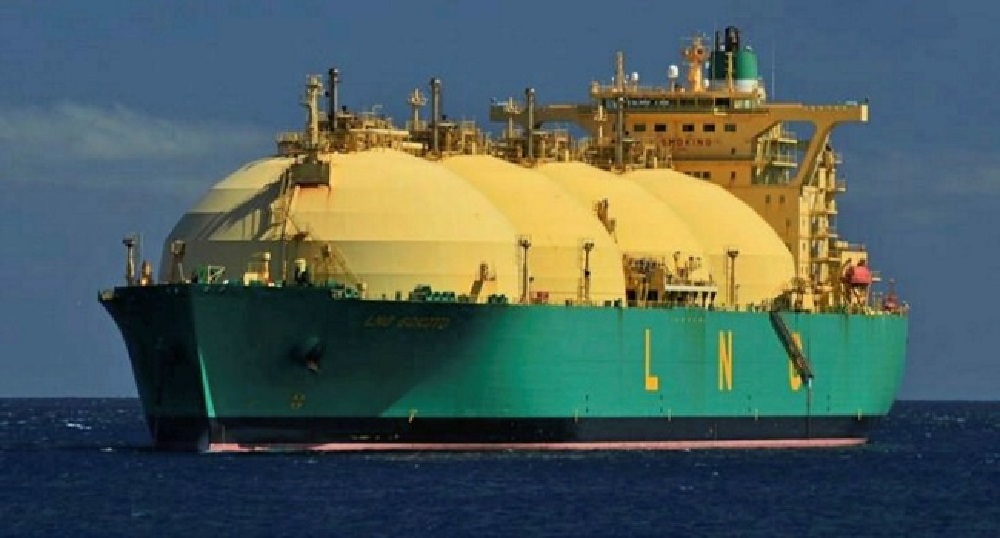
Nnamdi Anowi, general manager of production at Nigeria LNG (NLNG), says the company plans to replace all its steam-powered vessels with modern ships within the next decade.

Anowi announced the plans at the World Leaders’ Panel session on Tuesday in Berlin, Germany, as part of the 2024 World LNG Summit and Awards.
The 2024 summit is themed ‘Achieving the Balance Between Energy Security and Decarbonisation’.

“We are making significant strides in our shipping operations. Over the next 10 years, we aim to transition from our current steam-powered vessels to modern ships,” he said.
“Earlier this year, we took a major step by entering into a long-term chapter of our first modern ship Aktoras, and we are already planning to acquire a second ship next year.”
Anowi said NLNG’s target is to achieve net zero emissions by 2040.
He said the goal is attainable through the implementation of a combination of solutions that include operational efficiency, natural sinks/offset projects, carbon capture and storage (CCS), net zero expansion, digital solutions and shipping efficiency.
“Our pathway to net zero aligns with Nigeria’s target of reaching net zero by 2060, while many major players in the industry are aiming for 2050,” Anowi said.
“We are actively expanding our initiatives in this area, including several low-carbon projects.”
Furthermore, he said the company had committed 100 percent of its liquefied petroleum gas (LPG) production (propane and butane) to the Nigerian market.
The GM pointed out the urgent need for cleaner energy, citing a report which showed that not less than 100,000 Nigerians died yearly from smoke inhalation caused by cooking with firewood — predominantly affecting women and children.
“This underscores our commitment to sustainability. It’s important to recognise that about 80 percent of Africans lack access to cleaner energy,” Anowi said.
“When discussing sustainability, we can not overlook the necessity of providing energy to these communities.”
He noted that NLNG was working tirelessly to improve its production capacity from 23 million tonnes to 30 million tonnes through its ”Train 7 Project”.
“We are actively engaging with stakeholders and the government to ensure our LNG trains are filled by the end of next year,” he said.
On sustainability, Anowi explained that 75 percent of NLNG’s emissions result from its operations, with shipping activities accounting for the remaining 25 percent.
He highlighted the significance of measurement, reduction, avoidance, and mitigation strategies in their sustainability efforts.
Anowi said the company was also exploring carbon capture and storage (CCS) opportunities through collaboration with the government and other international oil companies.
“We are in the early stages of CCS implementation, assessing potential reservoirs for this purpose,” he said.
In terms of renewable energy, Anowi said NLNG was investigating solar power projects at its offices in Abuja and Port Harcourt as part of its broader sustainability initiatives.
Economy
Telcos to spend $76 billion CapEx in five years
Telecommunication operators in Nigeria and other parts of Africa are expected to inject over $76 billion as capital expenditure (CapEx) into their various networks in five years.
GSMA said this projection is for between 2025 and 2030. It, however, said that for the investment to translate into improved coverage, quality and capacity, there is a need for an improved regulatory and cost environment.
According to the telecom body, markets that have reduced rights-of-way costs, enabled infrastructure sharing and provided regulatory predictability are seeing faster and broader capital deployment.
Infrastructure-sharing models in particular are emerging as a structural solution for extending coverage into areas where individual operator economics alone cannot justify the investment, it said.
MTN Nigeria’s quarterly CapEx this year has been extremely aggressive, starting with N390.3 billion in Q1 and reaching N620.5 billion by H1, while Airtel Africa invested $389 million in Q1 2026 alone, its highest first quarter rollout.
Both operators are front loading investments to expand 4G/5G coverage and fibre infrastructure.
For FY 2025, MTN Nigeria’s CapEx surged to N1 trillion, more than doubling from N443.5 billion in FY 2024. This was driven by aggressive investment in broadband coverage and spectrum leasing.
CapEx intensity stood at 19.3 per cent of revenue, reflecting heavy reinvestment into infrastructure.
Airtel Africa CapEx rose to $884 million in FY 2026, a 31.9 per cent increase year-on-year. The company rolled out over 3,250 new sites and expanded fibre by 3,200 km, with plans to accelerate spending to $1.1 billion in FY 2027.
Both operators are scaling aggressively to meet surging data demand and smartphone penetration.
MTN’s investment intensity is higher relative to revenue, while Airtel is focusing on pan-African expansion with Nigeria as a key growth driver.
For FY 2026, Airtel reported 47.5 per cent constant currency revenue growth in Nigeria, showing strong returns on its infrastructure push.
Airtel Africa is balancing pan African expansion with Nigeria as a key growth driver. Its CapEx is more diversified across regions but still heavily weighted toward network densification.
Economy
NAICOM revokes Nigeria Reinsurance’s licence, appoints Muiz Banire as receiver/liquidator
The National Insurance Commission, NAICOM, has revoked the operating licence of Nigeria Reinsurance Corporation over its failure to meet the statutory Minimum Capital Requirement, MCR, and appointed Dr. Muiz Banire, SAN, as Receiver/Provisional Liquidator to wind up the company’s affairs.
The appointment took effect on August 3, 2026, following the cancellation of the corporation’s certificate of registration by the insurance regulator.
In a public notice dated August 4, 2026, Banire said he was appointed by NAICOM, in exercise of its statutory powers, to take charge of the receivership and liquidation of Nigeria Reinsurance Corporation (RR-002).
According to the notice, the company’s licence was revoked after it failed to comply with the prescribed Minimum Capital Requirement applicable to its category of licence within the stipulated compliance period, in accordance with the Nigerian Insurance Industry Reform Act (NIIRA) 2025 and other extant laws, regulations and guidelines.
Banire said his appointment empowers him to immediately trace, recover, secure and take possession of all assets belonging to the company, collate and settle its liabilities in accordance with the NIIRA 2025, liaise with NAICOM on matters relating to the liquidation, and submit periodic reports to the Commission.
He also directed banks, financial institutions, insurance policyholders and members of the public not to honour any instruction relating to the company except those issued by him or persons expressly authorised by him.
As part of the liquidation process, Banire announced that all bank accounts belonging to Nigeria Reinsurance Corporation had been frozen with immediate effect pending further directives from his office.
He warned that any transaction carried out without his authorisation would be at the risk of the parties involved.
“Members of the general public, banks and financial institutions in Nigeria are hereby informed that no financial transactions should be conducted pursuant to any instruction from anyone except those that I issue as the Receiver/Provisional Liquidator,” the notice stated.
According to him, only instructions bearing his official seal and stamp as a legal practitioner, or those issued by persons duly authorised by him, will be recognised throughout the liquidation process.
The regulatory action marks a significant enforcement measure by NAICOM and underscores the Commission’s resolve to ensure that insurance and reinsurance companies operating in Nigeria comply with statutory capital requirements designed to safeguard policyholders and strengthen the financial stability of the industry.
The liquidation process is expected to involve the recovery and realisation of the company’s assets, verification and settlement of valid claims and liabilities, and the orderly winding up of its affairs in accordance with the provisions of the law.
The public notice serves as formal notification to policyholders, creditors, banks and other stakeholders that all dealings concerning Nigeria Reinsurance Corporation must henceforth, be channelled through the Receiver/Provisional Liquidator until the liquidation process is concluded.
Economy
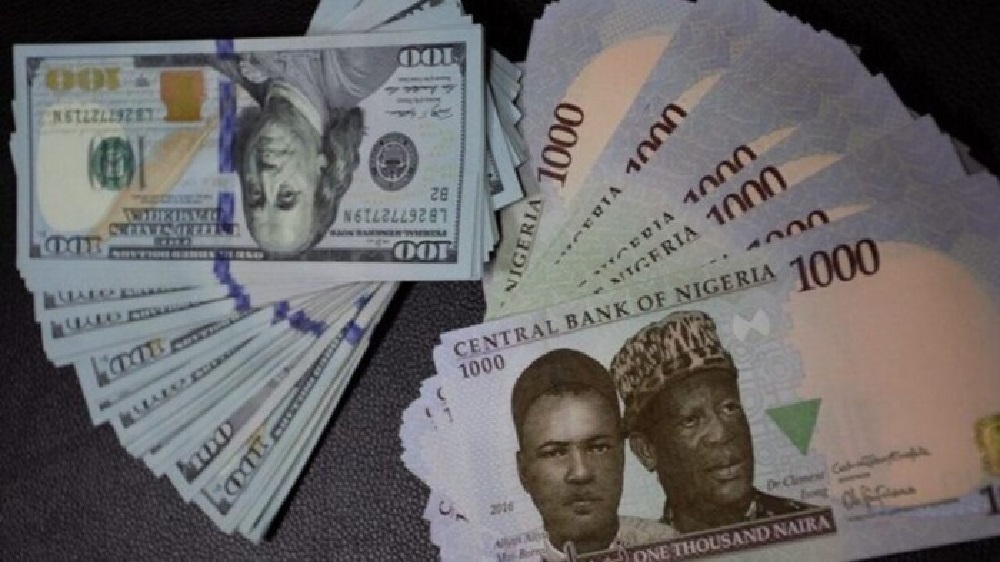
See Black Market Dollar To Naira Exchange Rate Today 5th August 2026
The Black Market Dollar-to-Naira Exchange Rate for 5th August 2026 Can Be Accessed Below.
NOTE: The exchange rate changes hourly. It depends on the volume of dollars available and the Demand. This means…you can buy or sell 1 dollar at a certain rate, and the price can change (high or low) within hours.
The official naira black market exchange rate in Nigeria today, including the Black Market rates, Bureau De Change (BDC), and CBN rates.
The exchange rate fluctuates hourly based on the supply and demand of dollars in the market.
What’s the dollar to naira black market today, 5th August 2026?
The exchange rate for a dollar to naira at Lagos Parallel Market (Black Market) players sell a dollar for ₦1425 and buy at ₦1410 on Wednesday, 5th August, 2026, according to sources at Bureau De Change (BDC).
Please note that the Central Bank of Nigeria (CBN) does not recognize the parallel market (black market), as it has directed individuals who want to engage in Forex to approach their respective banks.
Dollar to Naira Black Market Rate Today
Dollar to Naira (USD to NGN) Black Market Exchange Rate Today
Selling Rate ₦1425
Buying Rate ₦1410
Dollar to Naira CBN Rate Today
Dollar to Naira (USD to NGN) CBN Rate Today
Highest Rate ₦1364
Lowest Rate ₦1361
-
News21 hours agoAAU Celebrates Excellence: Olotu Akpodiete,VC Omonzejie Among Distinguished Awardees
-
News23 hours agoWAFCON 2026: Super Falcons to battle Cameroon in quarter-finals
-
News21 hours agoFayose To Be Inugurared REA Chairman Tomorrow (Photos)
-
News13 hours ago‘Anyone supporting Tinubu’s administration has been bribed’ — Odumeje
-
News13 hours agoICPC Uncovers Two More Fake Government Agencies, Recommends Prosecution Of Suspect
-
News23 hours agoMove to bus terminals or be shut down – FCTA tells transport operators
-
Entertainment13 hours agoTop Nollywood director, Dimbo Atiya is dead
-
Entertainment13 hours agoDavido reacts as President Tinubu calls his Uncle, Gov Adeleke, moments after he ordered EFCC to vacate court order freezing Osun state govt account

Warning: Undefined variable $user_ID in /home/naijuinz/public_html/wp-content/themes/zox-news/comments.php on line 49
You must be logged in to post a comment Login