…as he charged stakeholders at 14th Al-Hikmah inivarsity convocation lecture
By Gloria Ikibah
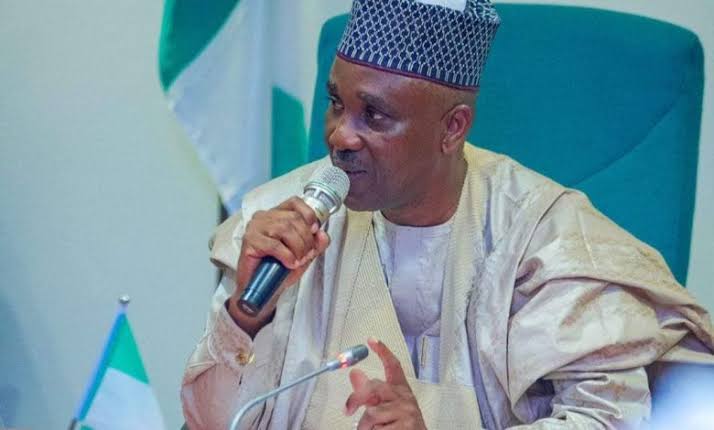
The Speaker of the House of Representatives, Rep. Abbas Tajudeen, has emphasised the urgent need for Nigeria to diversify the oil-dependent economy, warning that a further delay poses more challenges ahead for the country.
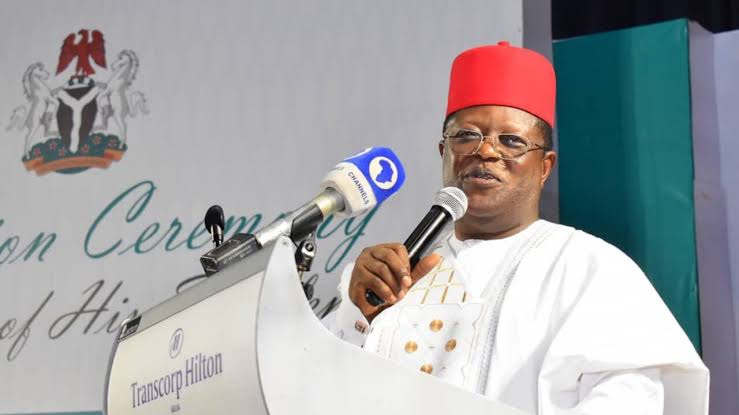
Speaker Abbas who stated this during the 14th Convocation Lecture of the Al-Hikmah University, on Monday, on Monday, called for deliberate and collective efforts by all stakeholders in the public and private sectors to chart a strategic way forward for the country economically.
Naijablitznews.com reports that was the first convocation lecture the Speaker personally delivered since his emergence in June 2023, Titled, ‘Beyond Oil: Exploring Alternative Revenue Potentials for Economic Growth and Sustainable Development in Nigeria’.
The Speaker, who expressed his delight for being the convocation lecturer at the first Islamic-based private University in Nigeria, noted that the topic was apt, as he considered it “a great challenge to the consciousness of our political leaders, policymakers, technocrats, and academicians on the need for strategic thinking and urgent collective action.”
While stating that the topic “speaks to one of the most pressing challenges confronting our nation,” Speaker Abbas stressed that “it becomes evident that our over-reliance on oil revenue has left us vulnerable to global market fluctuations, environmental degradation, and economic instability.”
Speaker Abbas listed the potential sectors for diversification in Nigeria as including agriculture, mining, manufacturing/industrialisation, ICT/digital economy, creative industries/tourism.
Speaker Abbas also noted that oil dependency has led to several economic, environmental, and strategic challenges. Economically, he said Nigeria faces significant volatility due to fluctuations in global oil prices.
The Speaker equally identified the challenges impeding diversification as including institutional weaknesses, infrastructural deficits, and global economic pressures.
The Speaker noted that the urgency of the discussion cannot be overstated, especially with dwindling oil revenues, global shifts toward renewable energy, and the increasing need for job creation.
“It is imperative that we chart a new course for economic transformation. This requires deliberate efforts to unlock the potential of other sectors, such as agriculture, solid minerals, technology, and the creative industries. Achieving this transformation will secure Nigeria’s economic future and address poverty, inequality, and unemployment—critical barriers to sustainable development,” he said.
Apart from that, he said oil dependency has contributed to severe environmental degradation, especially in the Niger Delta region, where most of Nigeria’s oil production occurs.
Furthermore, the Speaker said Nigeria faces the strategic challenge of adapting to the global transition towards renewable energy sources.
“As the world moves to reduce carbon emissions and adopt cleaner energy technologies, the demand for fossil fuels is expected to decline. This transition poses a long-term risk to Nigeria’s oil revenues and economic stability.
“Without a robust strategy for economic diversification, Nigeria may struggle to remain competitive in a changing global energy market. Addressing these challenges requires coordinated efforts to enhance economic resilience, protect the environment, and position Nigeria for sustainable growth in a low-carbon future,” he stated.
Recognising these challenges, Speaker Abbas equally noted that Nigeria has pursued economic diversification for over 30 years to reduce its dependence on oil revenues.
“Despite these efforts, Nigeria’s economy remains highly reliant on oil,” the Speaker, however, stated.
Speaker Abbas pointed out that economic diversification is vital for stability, job creation, and achieving the Sustainable Development Goals (SDGs). “Nigeria’s debt-to-GDP ratio of 34.6 percent necessitates prudent resource management. Investing in non-oil sectors can stimulate economic resilience and reduce dependence on volatile oil markets,” he stated.
The Speaker noted that President Bola Ahmed Tinubu’s administration has prioritised economic diversification through bold reforms, including removing fuel subsidies and implementing the Presidential Initiative on Compressed Natural Gas (CNG).
He said: “The administration’s tax reform programme aims to improve Nigeria’s tax-to-GDP ratio, currently at 10.9%, by streamlining administration and broadening the tax base (Nigeria Economic Data, 2024).
“Investments in infrastructure and human capital development, including a proposed N16 trillion allocation to infrastructure and N6 trillion for education, further demonstrate the government’s commitment to sustainable growth.”
The Speaker stated that embracing economic diversification is critical for Nigeria to navigate global energy transitions, meet climate commitments, address demographic pressures, and achieve economic stability.
He said: “Strategic investments in agriculture, manufacturing, solid minerals, tourism, and renewable energy will reduce dependence on oil, create jobs, and foster sustainable development. With visionary leadership and targeted policies, Nigeria can unlock its vast economic potential and secure a prosperous future.”
Speaker Abbas told the audience that the 10th House of Representatives, tagged the ‘People’s House,’ has demonstrated a strong commitment to addressing economic challenges through its Legislative Agenda. “This agenda prioritises unlocking economic growth and developing Nigeria’s vast human and natural resources, emphasising legislative reforms and strategic oversight to support diversification,” he noted.
Acknowledging the need for economic restructuring, Speaker Abbas disclosed that the House has supported legislation to reduce dependence on oil revenues, enhance agricultural productivity, and promote industrialisation.
“Constituency projects, including road construction, school renovations, and water supply schemes, have also contributed to job creation and economic empowerment at the grassroots level,” he said.
Speaker Abbas concluded by saying: “This lecture has laid bare the vulnerabilities inherent in Nigeria’s over-reliance on oil revenues, highlighting the economic, environmental, and structural challenges this dependence has created.
“We examined Nigeria’s historical trajectory as an oil-dependent nation and drew lessons from the successes and failures of other resource-rich countries.
“Notable examples such as Saudi Arabia, Malaysia, and the United Arab Emirates demonstrate that economic transformation is achievable through deliberate diversification strategies anchored on policy reforms, infrastructure investments, and human capital development.”
He added that the lecture has underscored “the urgency of harnessing Nigeria’s abundant natural resources, fertile agricultural lands, burgeoning creative industries, and vibrant technology sector to build a resilient economy.”
Speaker Abbas stressed: “Nigeria’s economic transformation demands collective responsibility. The government must lead with visionary policies, transparent governance, and strategic investments in infrastructure and education. Parliament should continue to enact enabling legislation and ensure rigorous oversight of policies and programmes aimed at diversification.
“Academia has a vital role in conducting research, generating data-driven insights, and developing skills essential for the new economy. Universities should strengthen collaborations with industries to drive innovation and entrepreneurship.
“The private sector must embrace investments in emerging industries, support small and medium enterprises, and leverage technology to boost productivity.
“As the backbone of Nigeria’s workforce, youths, including all of you in this hall, must seize opportunities in entrepreneurship, agriculture, digital technology, and creative industries to redefine Nigeria’s economic narrative.”