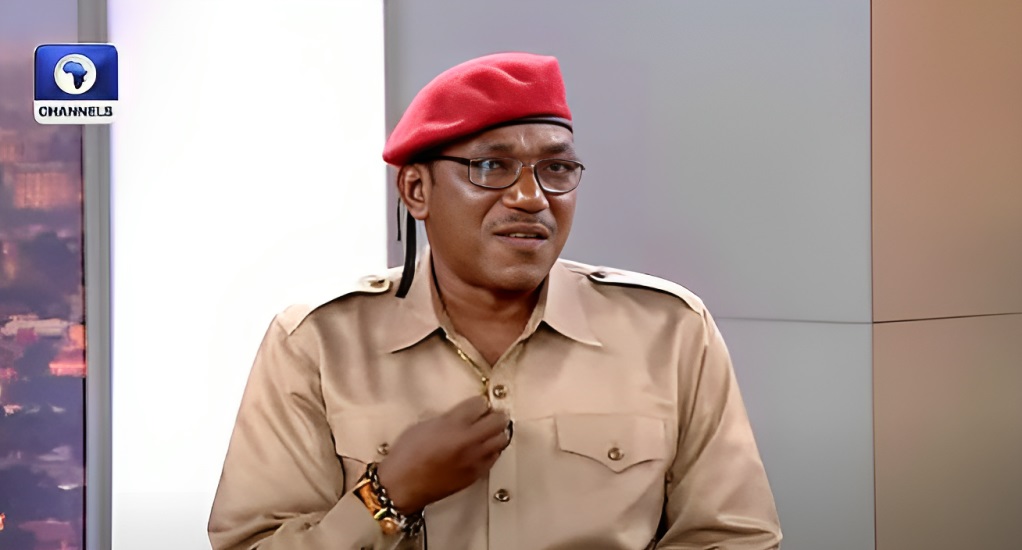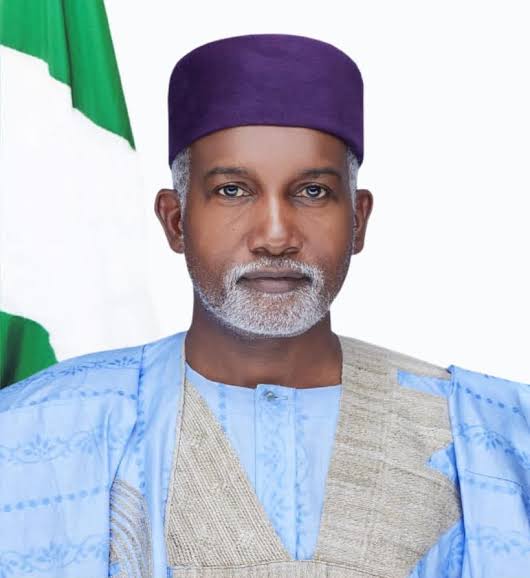
Nigeria’s foreign policy to promote peace and prosperity is a constitutional obligation as much as it is a considered and sensible manifesto pledge, writes Ambassador Yusuf Tuggar (OON) Minister of Foreign Affairs.
I was born in a civil war and was not able to vote for my leader until I was in my 30s. Nigeria is now a country guided by the rule of law and a constitution that clearly defines our system of government. This includes our foreign policy objectives, and rightly so, because in an interconnected world, we define our sovereignty in the context of certain, key principles: our right to self-determination; our right to defend our autonomy and secure our borders; and responsibility to respect our obligations under international law.
As foreign minister, I think these provisions are not just reasonable but vital – both for our own democracy, domestic peace and prosperity but also for a more just and stable international order. But the point is this: it is the Constitution of the Federal Republic of Nigeria, not the manifesto of a political party or predilections of a particular politician, that lays out these provisions. In a democracy, we have the privilege of healthy debate about our values, policies and performance. But if we are to live up to the responsibilities that come with democracy, that debate should be informed, fair and reasonable.
I respect the Constitution and its vision for Nigeria’s place in the international community, as do many of us. It has been an honour and a privilege to protect and promote those constitutional principles. They are the best guarantees for legitimacy, and the authority all governments need if they are to deliver. It is complex and time consuming. To our cost, we have learnt that there are no short cuts. Some Nigerians find fault in our Constitution, while others seek to amend it. There is always room for serious debate in a healthy democracy. But the fact remains it is the very document that President Bola Ahmed Tinubu and every public official has sworn to uphold since 1999.

Nigeria’s Constitution declares that sovereignty belongs to the people of Nigeria, from whom government, through this Constitution, derives all its powers and authority. The same Chapter of the Constitution goes on to state Nigeria’s five foreign policy objectives: promotion and protection of the national interest, African integration and support for African unity, promotion of international cooperation for peace and mutual respect, respect of international law and treaty obligations and promotion of a just world economic order. Those who suggest Nigeria does not have a foreign policy or those who agitate for a shift away from an Afro-centric foreign policy are wrong; either they are ill-informed, or deliberately disingenuous.
The irony of it all is that Nigerians are able to speak in support of our military-ruled neighbours, governed without constitutions, precisely because Chapter Four of our own constitution guarantees them these rights and freedoms. This is not the same for the citizens ruled by the very regimes for which they seek to cheerlead of those countries governed without constitutions. Nigerians who are older than 30 know this to be true because we have been there, done that. Somehow in the passage of time, some forget that the military regime here that despatched troops to restore democracy in Sierra Leone and Liberia in the 1990s had first – and by force – taken that same democracy and rule of law away from us – just as military regimes continue to do the world over.
The Constitution also makes clear why any responsible Nigerian government should be concerned when neighbours are governed without a constitution or codified rules. It goes without saying that the sovereignty of our neighbours is their business. They can grant powers to whatever governing structures they deem fit and should expect their autonomy to remain safeguarded. But when our Interdependence Sovereignty overlaps, we equally have a right to exercise control over our borders in those cases where neighbours face insurgencies that significantly comprise territorial integrity and state authority.
International Legal Sovereignty also becomes an issue when we consider that respect for international law and treaty obligations is one of our irreducible foreign policy objectives. This is not the Tinubu administration’s foreign policy; it is a constitutional provision that every Nigerian President and government official swears to uphold. Nigeria is a member of ECOWAS, which is founded on treaties and protocols to which our foreign policy objectives commit us. All 15 member countries are signatory to the treaties and protocols, which is why it was no surprise that President Tinubu, as one who swore to uphold the Constitution, abided by it when ECOWAS leaders collectively objected to Unconstitutional Changes of Government.
In reality, the contemporary nation-state system is highly competitive and Nigeria exists in a self-help world. Our Constitution and international laws are meant to serve as guard rails in navigating the system. And by virtue of our size, we have the additional responsibility of being the regional power. Regardless of how some may try to diminish our standing, it is the way other countries perceive us. Our Constitution further reifies this leadership role right from the preamble- dedicating ourselves to promoting inter-African solidarity, to the foreign policy objectives- promotion of African integration and support for African unity and elimination of discrimination in all its manifestations.
The Tinubu administration comes at a time when an interlocking suite of occurrences have made our neighbourhood less secure; implosion of Libya, failure of the EU Sahel Strategy, terrorism and criminal gangs, effects of climate change and population explosion. Nigeria did not create these challenges and was equally contending with its own domestic issue as these challenges escalated. Nigeria was not part of Operation Barkhane or the G5 in the Sahel, which were intended as efforts to fight terrorism and irregular migration but instead strengthened some irridentist Azawad/Tuareg groups that controlled border areas. This created a cauldron of disharmony between them and their national militaries, trained for a lifetime to keep their countries intact.
Nor was Nigeria part of the Partnership Framework with Third countries that conditioned aid and trade deals for Sahelian migration transit states in exchange for reducing the flow of migrants, with penalties for those who do not comply. In the case of Niger, a moment of truth was the passing of Law 2015-36 in May 2015 when its government, in consultation with the United Nations Office on Drugs and Crime and technical and financial support from the European Union and its member states, criminalized ancillary activities of the migration economy, such as providing transportation and accommodation to foreign nationals anywhere north of Agadez, in direct contravention of ECOWAS Protocol on the free movement of people. They were persuaded to use a blunt hammer to crack a delicate nut. There is a highly politicised migration crisis in parts of Europe, that together we can and should resolve. But it was reckless to seek to solve one problem by creating another.
There is a reason why we have free movement in West Africa; seasonal migration- referred to in Hausa as ‘Ci Rani’. Seasonal migration in the semi-arid Sahel can be a matter of life and death, which is why we have always had turbaned Tuaregs going as far as Lagos and Port Harcourt to work as Maigadis (security) during the dry months, only to return back north during the rainy season. The weaponisation of sub-Saharan migration in Europe as a political tool led to the securitisation of the Sahel region, further exacerbating the security situation by forcing many of those affected to turn to criminal activities and terrorism. European migration figures show majority of migrants are from Syria, Afghanistan and Central Asia, not sub-Saharan Africa.
Yes, we need to work with our Sahelian neighbours to fight terrorism, by maintaining a right of pursuit into each others territories. But it would be myopic to think of this in absolutist terms, because we can accede to all conditionalities laid by them, it would still not be enough to tackle the challenges without a lasting solution to the bifurcated Libyan State as a source of weapons, training and fighters, as well as the shadowy involvement of a range of other state and non-state actors.
To achieve a lasting peace in Libya and the Sahel, Nigeria needs to deal with all the countries in the neighbourhood as well as all the major powers. For this reason, it does not make sense to simply deduce that Nigeria has to distance itself from France because that is the prevailing trend in its former colonies. The fulcrum of the Tinubu administration’s foreign policy is Strategic Autonomy, providing us with the clarity to engage with any and all nations based on our national interests and not those of others. As a nation, Nigeria is adult enough and sophisticated enough to deal with countries without being unduly influenced, because that has been part of our historical and civic tradition. You cannot cure an illness by picking which symptoms to consider and which to ignore.
Nigeria and ECOWAS will continue diplomatic efforts towards Niger, Mali and Burkina Faso. At a minimum, we have shared interest in peaceful co-existence. President Tinubu has sent a number of high-level delegations that included a former Head of State, traditional rulers and religious scholars. President Tinubu pushed for the unconditional removal of ECOWAS sanctions imposed on Niger, Mali and Burkina Faso. What he has consistently asked of the countries in question is for them to come up with a timetable for the restoration of constitutional rule and, in the case of Niger, the release of ousted President Bazoum.
Their response was to declare their intention to leave ECOWAS. With the one-year notice period coming to an end in January 2025, President Tinubu further pushed for ECOWAS to extend the grace period for another six months whilst intensifying diplomatic efforts. The response to this initiative last month was evidence-free allegations that Nigeria was harbouring foreign soldiers and as sponsoring state terrorism. Whenever President Tinubu and other democratic leaders offer stoic statesmanship and an opportunity to work together towards our common interests, it is met by confected controversy designed to divert and distract from a failure to meet the basic responsibilities of public administration. I know why coup leaders might seek to do that: it’s harder to understand the motives of apologists closer to home.
On my part, since assuming the office of Minister of Foreign Affairs on 21st August 2023, I have engaged diplomatically without pause, proposing personal visits and inviting senior government officials and representatives. Response has been akin to a diplomatic cold shoulder. We constituted a ministerial advisory committee that visited Niger and Mali and facilitated the visit of the Nigerian CDS to meet with his counterpart in Niamey. I regret that a proposed return visit was suspended by Niger after a date had been set. But let there be no doubt: we will continue to pursue diplomatic efforts assiduously, with a Ministry of Foreign Affairs that has existed for 67 years.
Nigeria’s principle of strategic autonomy is one that abhors the presence of foreign forces and private military companies in our region, whether from east or west. Nigeria presently has troops on peace keeping operations in Guinea Bissau and Gambia, with Sierra Leone on the way, where it is also supporting the setting up of a logistics base in Lungi. Nigeria is also leading the actualisation of the ECOWAS standby force, all in an effort to fight terrorism and instability within our region under the rule of law. We work closely with our partners on sharing of intelligence in order to guarantee the same rights and freedoms are enjoyed by all the people of the region.
As several of my colleagues in the region remind me, we are the hegemon, whether we admit it or not. And global politics works almost like physics, with polarity, ordering principles, distribution of power, balancing, etc. Nigeria has never had expansionist tendencies, never been threatening towards our neighbours and always chosen the path of peace and conciliation. This in part may have to do with the makeup of our polity and social fabric. Being such a huge country, we are used to the virtues of principled compromise. It is not by accident that we are the only country on the continent with six former leaders living in peace and harmony within our borders. Diversity, not division, is our strength. This is as true for Nigeria as it is for the smallest of countries – and collectively for all of our region.