Connect with us

News

Why Obasa Was Impeached As Lagos Assembly Speaker After 10 years

Published

on

ADVERTISEMENT
Zoom Ad
ADVERTISEMENT
Zoom Ad

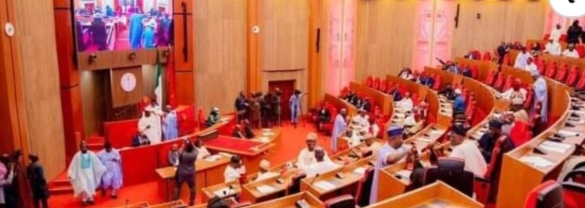
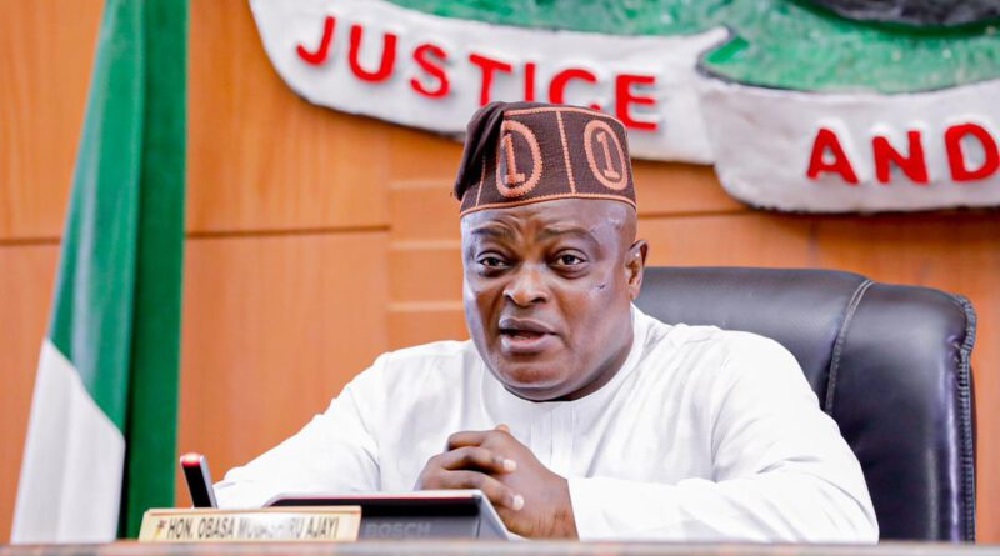
Amid wild jubilation, members of the Lagos State House of Assembly, yesterday, impeached the embattled Speaker, Mudashiru Obasa, over alleged financial misappropriation.


In his stead, the lawmakers chose his deputy, Mojisola Lasbat Meranda, representing Apapa Constituency I, making her the first female Speaker in the history of the House.

The Assembly also removed the Clerk, Olalekan Onafeko, and dissolved all House committees.
An elated Speaker Meranda, sworn in at 9 am, said she would unveil her plans next week, saying “I will not be able to talk now.”

Although the former speaker maintained that he was innocent of the accusations, the impeachment ended his 10 years reign as speaker, which makes him the longest speaker of the House since its inception in the Republic.

Advertisement

Obasa brought Onafeko to the assembly; they became close confidants and were behind the ban on journalists covering the activities of the House for over two years now.

Armed security personnel take over Assembly

Following Obasa’s removal, armed security personnel of the Rapid Response Squad, RRS, Lagos Taskforce, and Lagos Police Command, took over the premises and environs stopping every motorist and person from gaining access to the assembly.

Some miscreants, who tried to invade the complex were intercepted and arrested by vigilant security personnel and clamped into a waiting Black-Maria. Some charms and amulets were also recovered from the miscreants believed to be from Agege Constituency, which Obasa represents.

Advertisement

How Obasa was impeached

The lawmakers moved against Obasa over alleged misappropriation of funds and lack of transparency in the management of the Assembly via a motion under the Matter of Urgent Public Importance by Femi Saheed.

Saheed, citing Section 92(2) (C) of the Constitution, accused Obasa of gross misconduct and poor leadership, which included perpetual lateness to legislative sessions and meetings; high-handedness and lack of regard of honourable members; gross abuse of office and privileges; intimidation and oppression of honourable members by inciting members against one another among others.

He mentioned that Obasa also practiced an authoritarian and undemocratic leadership style in discharging his duties, and therefore moved the motion for his impeachment.

Advertisement

Following the adoption of the motion, the impeachment was made by 32 of the 40-member House through a voice vote.

Subsequently, they chose Meranda as the new speaker and Fatai Mojeed as deputy speaker.

Clerk, Onafeko removed, all committees dissolved

In a related development, the House also suspended the Clerk of the Assembly, Mr Olalekan Onafeko.
He has been replaced by Mr. Abubakar Taiwo Ottun as acting Clerk of the House.

Advertisement

Why we sacked Obasa

Subsequently, Abiodun Tobun, representing Epe Constituency 1, speaking with newsmen, explained why the members changed the leadership of the House.

“The Lagos State House of Assembly declared its decision to impeach Speaker Mudashiru Obasa. The impeachment was a unanimous decision by the lawmakers.

“The lawmakers agreed to take this step to safeguard our image and Lagos State. Change is inevitable, and we felt it was time for a new direction.

Advertisement

“All standing committees and principal office positions have been dissolved. We are determined to work together to elevate the Assembly and deliver on our responsibilities to Lagosians,” Tobun said.

He explained that the Constitution empowers the Assembly to regulate its proceedings, and members reached a consensus to end Obasa’s tenure.

The lawmakers assured the public of their commitment to the progress and stability of Lagos State under the new leadership.

Things to know about Lagos first female speaker, Meranda

Advertisement

Born to the noble family of late Chief Lawal Akapo (Ojora of Lagos) and Princess M. A. Lawal-Akapo of the royal families of Ojora, Aromire, Onitana, Oloto, and Oniru royal families, Mrs. Mojisola Meranda is a sibling to the Oniru of Irulaland, Oba Gbolhan Lawal.

She had her primary education at St. Charles Nursery and Primary school and later on at Randle primary school. She attended Anglican Girls Grammar school and Ansar-Ud-Deen secondary school both in Surulere where she held the posts of the library prefect and secretary press club, she obtained the West African school certificate (WASC) examination in the college.

Obasa’s ‘sins’

Obasa had been accused of financial mismanagement involving N44 billion allocated for vehicles and capital projects over two years.

Advertisement

This development has generated concerns and raised questions about transparency and accountability in the Assembly’s financial operations from critics, including lawmakers and residents.

Alleged vehicle allocations

A significant portion of the controversy had stemmed from the Assembly’s vehicle budget.

According to available official records on the Lagos House of Assembly Budget Performance, in 2023, N30.19 billion was allocated for vehicles, including official cars, utility buses, and backup vehicles. Another N13.33 billion was earmarked for vehicles in 2024.

Advertisement

However, investigations revealed that no vehicles were purchased in 2023, and only a small fraction of the 2024 allocation has been accounted for.

Other questionable capital projects include: N1.1 billion for properties in 2023; N126 million in 2024 for properties in Abuja; N15.65 billion for office construction in 2023 and 2024; and spending N17 billion on the fixing of complex gate.

In his reaction, Obasa described the allegations as “fake news, spurious and funny.”

This was in apparent reaction to claims by a group, Lagos State Anti-Corruption Coalition, accusing the Assembly of spending N17 billion to construct a gate.

Advertisement

Obasa reacts

Obasa said the allegation stemmed from the fear of some people over the 2027 polls which are still more than two years away.

The speaker further debunked the claim that the Assembly spent N200 million on its recently organised Thanksgiving Service for staff.

Obasa said: “It is so funny. How much is the allocation of the Assembly in the whole year that we will decide to spend N17 billion on a gate? They even claimed that we spent N200 million on thanksgiving that did not hold.”

Advertisement

Addressing further claims by the group about the alleged relationship between him and the Chairman of the Economic and Financial Crimes Commission, EFCC, Ola Olukoyede, Obasa denied attending the latter’s screening and confirmation by the National Assembly.

Build-up to impeachment

Tensions mounted during the recent 2025 budget presentation, when Obasa, in apparent show of power, left party leaders and Governor Bababjide Sanwo-Olu, his deputy, Dr. Obafemi Hamzat, in rude shock after subjecting them to a long wait.

During the screening of Governor Sanwo-Olu’s nominees for commissioners, Obasa spearheaded opposition to names of nominees which eventually led to rejection, subjecting the governor to ridicule.

Advertisement

It took the intervention of President Bola Tinubu, the Governance Advisory Council, GAC, and APC party leaders to save the situation from snowballing into a heated Executive, Legislative face-off.

How Sanwo-Olu received impeachment news

Meanwhile, Governor Bababjide Sanwo-Olu skipped yesterday’s Executive Council Meeting as the news of Obasa filtered in.

Vanguard gathered from a credible source that Sanwo-Olu, had stayed back at the state House, Marina, and delegated his deputy, Dr. Obafemi Hamzat, to take charge of the weekly EXCO meeting, while monitoring the impeachment saga as it was unfolding.

Advertisement

Sanwo-Olu, at press time, was yet to make any comment on the development but multiple sources told Vanguard that he welcomed the news with great optimism for a better working relationship after a frosty experience with Obasa’s leadership.

“Good riddance to bad rubbish,” the executive members were said to have echoed during the meeting which was brief as Hamzat adjourned the meeting.

Meanwhile, Sanwo-Olu, it was gathered is likely to meet the new speaker and other principal officers soon.

Advertisement

News

Japa on reverse lane as US releases names, photos of 112 Nigerians on deportation list

Published

on

ADVERTISEMENT
Zoom Ad
ADVERTISEMENT
Zoom Ad


Japa on reverse lane as the United States Department of Homeland Security, DHS, has updated its list of Nigerians facing removal from the country, reducing the number to 112 and publishing their names and photographs online.

The latest list features Nigerians from different parts of the country and was published through the DHS official website.

Among those listed are Cletus Onyali, Olaolu Alabi, Marcus Unigwe, Mkpouto Etukudoh, Blessing Uchanma, Olaniyi Ojikutu, Richard Ugbah, Oluwamuyiwa Olawoye, Anthony Asanya and Ebele Agbasiele

Advertisement

Others identified on the list include Izuchukwu Okoye, Olufemi Olufisayo Olutiola, Abiemwense Obanor, Chibuzo Nwaonu, Oluchi Jennifer Chimdimma Chime, Ifeanyi Okoro, Oluwaseun Kassim, Quazeem Adeyinka and Talatu Dada.

The complete list contains 112 names, with the photographs and details of the other individuals available through the DHS online portal.

The publication comes amid stepped-up immigration enforcement by the US government, particularly involving undocumented immigrants and individuals with outstanding removal orders.

It also comes against the backdrop of efforts by US authorities to obtain increased cooperation from foreign governments in receiving their nationals who have been ordered to leave the United States.

Advertisement

Nigeria has previously faced pressure from the US over the repatriation of its nationals subject to deportation.

The updated publication provides public access to the identities and photographs of the Nigerians currently identified by DHS for removal from the United States.

Continue Reading

News

Oyo kidnap: Five defendants plead not guilty to seven count charges

Published

on

ADVERTISEMENT
Zoom Ad
ADVERTISEMENT
Zoom Ad


The Department of State Services, DSS, on Thursday re-arraigned five men accused of complicity in the May 15 kidnap of pupils and teachers in Oriire Local Government Area of Oyo State and the subsequent killing of two of the victims.

They were arraigned on a seven-count amended charge marked FHC/ABJ/CR/438/2026, filed by the DSS on behalf of the Federal Government.

The defendants, accused of being members of the Jama’atu Ansarul Muslimina fi-Biladis Sudan (ANSARU) terrorist group, are Mahmud Muhammad (aka Abu Bara’a, Abbas Mukhtar); Abubakar Abbas (aka Isah Adam, Mallam Mahmuda Al-Nigeri); Abdulrazak Umar (aka Abu Khalifa/Abu Khalid); Yunusa Musa (aka Abu Yunusa Bin Musa); and Shamsu Adamu Sani (aka Abu Itisar).

Advertisement

All five defendants, however, pleaded not guilty to the charges when they were read to them by the Registrar of the court.

The Director of Public Prosecutions of the Federation (DPPF), Mr Rotimi Oyedepo, SAN, who led the DSS legal team, applied for the immediate trial of the defendants in line with the provisions of the Administration of Criminal Justice Act, 2015.

He also applied for the names of witnesses lined up to testify in the trial to be shielded and for them to be permitted to wear masks to ensure their protection.

Following no objection from counsel to the defendants, Bala Dakum, Justice Salim Ibrahim granted the request of the DSS counsel.

Advertisement

At the time of filing this report, arrangements for the full-scale trial were being put in place.

Continue Reading

News

Autopsy Confirms #EndSARS Journalist Pelumi Onifade Died From Gunshot Wound

Published

on

ADVERTISEMENT
Zoom Ad
ADVERTISEMENT
Zoom Ad


LAGOS — A post-mortem examination conducted by the Department of Pathology and Forensic Medicine at the Lagos State University Teaching Hospital (LASUTH) has confirmed that 20-year-old journalist Pelumi Onifade died from a penetrating firearm injury to the abdomen.

The finding is contained in a six-page autopsy report dated July 30, 2026, and submitted to the Lagos State Coroner’s Court investigating the circumstances surrounding the young journalist’s death during the October 2020 #EndSARS protests.

According to the report, Onifade died from massive haemoperitoneum, a severe accumulation of blood in the abdominal cavity, caused by a high-velocity projectile that penetrated his abdomen.

Advertisement

The forensic finding provides medical evidence establishing a gunshot injury as the cause of death, while the circumstances surrounding who fired the shot and the events that followed remain matters before the coroner’s proceedings.

How Onifade Died

Onifade was a 200-level History student of Tai Solarin University of Education (TASUED) and worked as an intern reporter with Gboah TV, a Lagos-based online news platform.

On October 24, 2020, during the nationwide #EndSARS protests against police brutality, he was assigned to cover an attempted looting at a government palliative storage facility in the Abattoir area of Oko-Oba, Agege, Lagos.

Advertisement

According to accounts presented by his family and colleagues, Onifade was wearing a press jacket and carrying reporting equipment when officers attached to the Lagos State Task Force opened fire while attempting to disperse the crowd.

He was reportedly struck by a bullet and subsequently taken away in a police van, commonly referred to as a Black Maria.

A colleague who was with him at the scene reportedly attempted to identify him as a journalist and explain that he was carrying camera equipment, but those efforts were unsuccessful.

Onifade was not seen alive again after that incident.

Advertisement

Family Searched Police Stations, Hospitals

Following his disappearance, his family and colleagues searched police stations, detention facilities and hospitals across Lagos in an attempt to establish his whereabouts.

According to the family, police authorities denied having him in custody.

Six days later, on October 30, 2020, the family located his body at the mortuary of Ikorodu General Hospital, where it had been registered as a “brought-in-dead” case under body number 1385.

Advertisement

The discovery triggered years of demands for an independent investigation into how the young journalist died and how his remains ended up in the mortuary.

DNA Test Identified the Body

The identity of the body was subsequently confirmed through forensic DNA testing.

Results from the Lagos State DNA and Forensic Centre established a match between the unidentified body bearing tag number 1385 and reference samples obtained from Onifade’s parents.

Advertisement

The DNA confirmation provided a crucial breakthrough after years of uncertainty surrounding the whereabouts and identity of the missing journalist.

Court Ordered Coroner’s Inquest

The search for accountability later moved into the courts.

In July 2024, Justice Ayokunle Olayinka Faji of the Federal High Court in Lagos ordered the Lagos State Government and the police to conduct a coroner’s inquest into Onifade’s death.

Advertisement

The objective of the inquest is to establish the circumstances surrounding his death and determine the facts surrounding the actions of the security personnel involved.

The ongoing proceedings before the Lagos State Coroner’s Court are being presided over by Magistrate Temitope Oladele.

Following the submission of the post-mortem report, the court has directed key witnesses, including police personnel who were on duty in the Oko-Oba area on October 24, 2020, to appear and testify.

Rights Groups Demand Accountability

Advertisement

Media Rights Agenda (MRA), which has supported the Onifade family in its legal efforts, has described the post-mortem findings as significant evidence in the case.

Rights activists, journalist unions, and the deceased’s family continue to demand the public prosecution of the police officers who fired the shot and those who supervised the deployment during the Lagos #EndSARS demonstrations.

Continue Reading

Trending

Copyright © 2024 Naija Blitz News