News
Discover the regions on Earth where snakes are not found
- /home/naijuinz/public_html/wp-content/plugins/mvp-social-buttons/mvp-social-buttons.php on line 27
https://naijablitznews.com/wp-content/uploads/2025/01/tgr.jpg&description=Discover the regions on Earth where snakes are not found', 'pinterestShare', 'width=750,height=350'); return false;" title="Pin This Post">
- Share
- Tweet /home/naijuinz/public_html/wp-content/plugins/mvp-social-buttons/mvp-social-buttons.php on line 72
https://naijablitznews.com/wp-content/uploads/2025/01/tgr.jpg&description=Discover the regions on Earth where snakes are not found', 'pinterestShare', 'width=750,height=350'); return false;" title="Pin This Post">
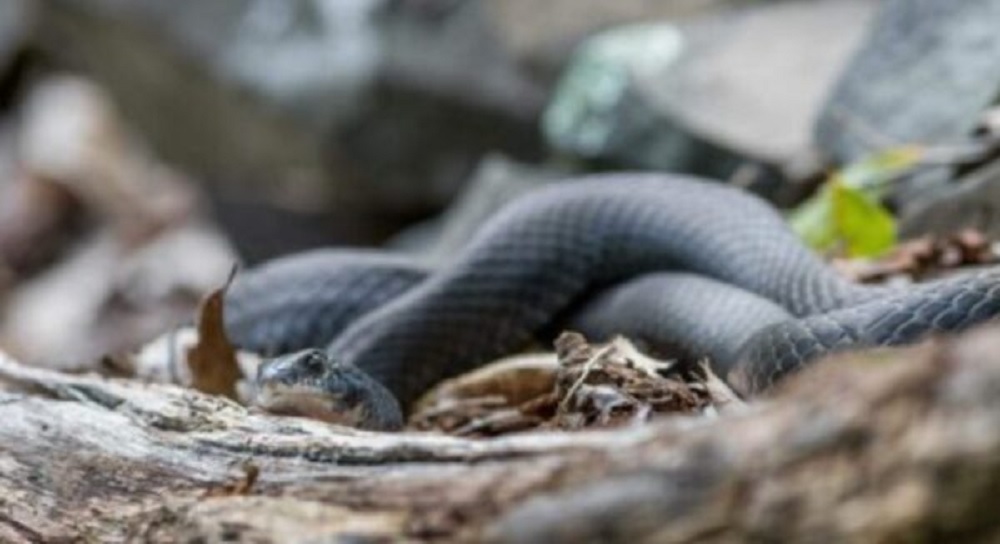
Snakes are the most versatile species, with over 3,000 species, and are found on almost all continents and almost in all kinds of environments from deserts to rainforests. They can thrive in most climates and various habitats. According to the reports, there are many parts of Earth that exhibit a remarkable absence of snakes, and this can be attributed to various factors such as geographic isolation, extreme climatic conditions, or adverse environmental conditions that make survival hard for them. The regions themselves are an exception to the rule since the conditions here cannot favor the existence of snakes.

Some such areas include Antarctica, New Zealand, Ireland, and most of the Pacific islands. In many of these regions, strong laws and the natural barriers in place have resulted in snakes never establishing themselves to begin with; thus, one finds unique ecosystems in danger of introduction of non-native species otherwise. Explore more about the places where snakes are not found.
Snake-free places on the Earth
Antarctica

Antarctica is the only continent that is snake-free on Earth as per reports. This is because the continent has an extremely cold climate. Thus, Antarctica is inadmissible for the snaky reptiles that are cold-blooded. Snakes are ectothermic, meaning that they regulate their body temperature through external sources of heat. Snakes could not survive in Antarctica since the environment has ice and snow, and the extreme coldness is such that reptiles would not be able to find warmth for them to work.
Antarctica does have other wildlife including seals, penguins, and marine mammals. However, this list does not include reptiles, which snakes belong to.
New Zealand
New Zealand is one of the very few countries in the world that is entirely snake-free, which is because it is relatively isolated in the South Pacific. Geographically, New Zealand is separated by huge oceans, and isolation did not allow snakes to naturally migrate to the island nation. Although sea snakes, including the Yellow Lipped Sea Krait and Yellow-Bellied Sea Snake, can occasionally be seen in the waters around New Zealand, they do not live on land.
New Zealand has very strict laws regarding the importation and keeping of snakes within the country, whether as pets or in zoos. This is to preserve the unique ecosystem of the country and to avoid any ecological imbalance that might be caused by the introduction of non-native species.
Ireland
Ireland is also one country that has no snakes, and fossil records show that snakes never colonized the island. Snakes are absent in Ireland because of its chilling climate and historical geographical separation from the main lands on the continent according to the reports. Snakes in their nature need warmer climates to conserve their body temperatures because Ireland has a temperate climate that is not healthy for snakes to survive. Snakes are not native to Ireland; however, some species exist in zoos or kept as pets but don’t occur naturally.
It is so interesting and mythical that snakes have never been found in Ireland, where popular legends or stories explain that might have been due to a historical event or because of Saint Patrick’s influence.
Greenland
Greenland is an Arctic country with no native snakes. Because it’s not favorable due to its unfriendly climate, long winters, and little sunshine that the snake species don’t find friendly because snakes are cold-blooded animals surviving well in warm conditions. Even though there is no snake species known to be originally found in the country of Greenland, people are permitted to keep domesticated snakes under local authority permissions.
This has resulted in stringent laws on importing and even owning the exotic pets to conserve the sensitive ecosystem of the Arctic and not have the alien species disturb the fragility of the ecosystem in that area.
Iceland
Snakes can’t be found in Iceland because the weather is extremely unforgiving and biting. Geothermal activities coupled with volcanic soil make most of the reptiles inapplicable to the environment of the island. However, there are some that call the sand snakes of Iceland. Actually, these are not snakes but mere wind formations on sand. Snakes could not survive the cold environment of Iceland, and no record of snakes exists in this island, neither as a native species nor an established population.
Alaska
Alaska, being very much north, lacks native snake populations. The winters are long, and the light is scarce here, making the survival of the cold-blooded animals like snakes extremely difficult. There have been instances of nonnative snakes, but they are a result of escapes from pets in some cases; they are never established populations. Snakes cannot be seen throughout the year in this harsh environment, and the only reptile species in Alaska is the sea turtle, which lives in warmer ocean waters. There are no snakes in Alaska because the state has a cold climate and there is no place there where snakes might live.
Hawaii
The other snake-less place is Hawaii. Hawaii is a group of islands located in the central Pacific. Snakes cannot access these islands through geographical isolation. The surrounding ocean barriers contribute majorly to how snakes do not reach these islands. Although some sea snakes occasionally appear offshore of Hawaii; they are non-land reptiles. Hawaii has also established very strict laws banning the importation and possession of snakes as it strives to protect its delicate ecosystem and ensure no non-native species is introduced into the system to cause a mismatch of the native wildlife.
Cook Islands
According to the reports, no snakes are found in Cook Islands, South Pacific. Isolation is one aspect that has seen many of the islands in the Pacific have no snakes. The flora and fauna diversity present on the islands vary from those of areas that comprise snakes. In the Cook Islands, the uniqueness of the place from the ecologic perspective emanates from their snakeless characteristic.
Cape Verde
Cape Verde is an island country off the west coast of Africa. It has no native species of snakes in its islands and is one of the few regions without snakes. Apart from having no snakes, Cape Verde has few venomous animals, making it a relatively safe destination for travelers. It has become a favorite tourist destination for people who want to have a snake-free holiday because of its lack of snakes and other dangerous wildlife.
Pacific Islands
Apart from the Cook Islands and Cape Verde, there are many other Pacific Islands, including Tuvalu, Nauru, Kiribati, and the Marshall Islands, which are snake-free. This is because the islands have isolated ecosystems that have never been colonized by snakes. Though some of the islands have sea snakes in their surrounding waters, they do not have any native land snakes on them. Geographically, the regions are cut off, so snakes cannot naturally migrate there.
Snake-free regions on Earth highlight the fascinating interplay between geography, climate, and ecological balance. From Antarctica’s icy terrain to the isolated Pacific islands, these places remain untouched by snakes, offering unique ecosystems and insights into the adaptability of wildlife. Whether due to natural barriers or stringent conservation laws, these areas provide a safe haven from snakes, making them intriguing destinations for those seeking a reptile-free environment.
Credit: timesofindia.indiatimes.com
News
How fake agency secured SGF office, built nationwide network – ICPC
The alleged fake National Brands Development and Made-in-Nigeria Special Project Office claimed it had Federal Executive Council approval dating back to 2017, nine years before the Independent Corrupt Practices and Other Related Offences Commission uncovered it.
The office, which was domiciled in the Office of the Secretary to the Government of the Federation, also created a nationwide network of appointments covering geopolitical zones and states.
ICPC Chairman Dr Musa Aliyu said the commission uncovered the alleged fake office during its investigation into the fictitious Presidential Foreign Intervention Promotion Council and other weaknesses in the public service.
“Upon further briefing by ICPC to Mr President on the ongoing investigations into the fake PFIPC and procedural weaknesses in the public service, the ICPC has uncovered another fake agency and office operating under the name National Brands Development and Made-in-Nigeria Special Project Office, which has been illegally allocated office space within the premises of the Office of the Secretary to the Government of the Federation,” Aliyu said.
He identified the promoter as George Nwabueze, alleging that he operated under several variations of the name with the suspected collaboration of senior public servants in the OSGF.
“The promoter Nwabueze was discovered to also operate under four other variations of his name: George Nathan, George Nathan Nwabueze, Hon. George Buchi Nwabueze, Prince George Buchi Nwabueze and George Nwabueze,” Aliyu said.
A profile on the organisation’s website identified Nwabueze George as its “Executive Director, National Coordinator”, while the website presented the outfit as a federal agency responsible for promoting Nigerian brands and local manufacturing.
The website claimed that the Federal Executive Council had approved a “National Campaign to Sensitize Nigerians on the Patronage of Made-in-Nigeria Products” at a February 1, 2017, meeting at the Presidential Villa, Abuja, during the Muhammadu Buhari administration.
It also listed the Ministry of Industry, Trade and Investment as the implementing ministry and cited a purported “Bill for an Act to Establish the National Brands Development and Made-in-Nigeria Promotion Commission and for Related Matters”.
Beyond its claims of federal approval, the alleged agency had established a leadership structure spanning the geopolitical zones and several states.
At the national level, it listed Dr Bassey B. Unaowo as Special Assistant to the Permanent Secretary on Political and Economic Affairs in the OSGF, Dr Hajara Njidda Amoni as Director, National Administration, and Nwabueze as part of the leadership.
It also named zonal directors for the South-West, North and South-East, alongside state coordinators across the North-West, North-Central, North-East, South-South, South-East and South-West.
The state officials were designated “State Coordinator, National Brand Development and Made in Nigeria Project Office”, with profiles carrying an official-looking green and white insignia bearing the inscription “National Brands Development, The Presidency, Made in Nigeria.”
The outfit also maintained social media accounts under the handle “@pmainpro” on Instagram, Facebook, X and LinkedIn.
However, the ICPC said its findings showed that the office had no presidential authorisation and was operating contrary to extant laws.
The discovery followed the earlier investigation into the alleged fictitious Presidential Foreign Intervention Promotion Council, whose self-styled Director-General, Adeniyi Adeyemi Matthew, is facing prosecution for alleged forgery and impersonation.
Following the ICPC briefing, President Bola Tinubu ordered the immediate arrest of Nwabueze and suspended three Permanent Secretaries M.S. Danjuma, Engr Nadungu Gagare and Richard P. Pheelangwah pending investigations.
Aliyu said the commission had engaged officials of the OSGF to establish how the alleged fictitious office obtained accommodation within the Secretariat and would investigate the roles of the suspended officials and others connected with the network.
“I have briefed Mr President comprehensively on these new developments. ICPC will continue with its investigations accordingly,” Aliyu said.
News
Tinubu Renews Tenures Of NTA DG, NAN MD For Another Three Years
President Bola Ahmed Tinubu has renewed the tenures of the Director-General of the Nigerian Television Authority (NTA), Abdulhamid Salihu Dembos, and the Managing Director of the News Agency of Nigeria (NAN), Ali Mohammed Ali, for another three years.
This is contained in a statement issued by Bayo Onanuga, Special Adviser to the President on Information and Strategy, on Sunday.
According to the statement, Tinubu first appointed Dembos and Ali to head the NTA and NAN, respectively, on October 20, 2023. Their second terms will commence on October 20, 2026.
Dembos, from Yola, Adamawa State, is a former National President of the Radio, Television, Theatre and Arts Workers Union (RATTAWU).
He previously served as Executive Director of Marketing at the NTA after his retirement from the organisation in 2017.
Dembos joined the NTA as an announcer at its Kaduna station after completing his National Youth Service in 1989. He subsequently rose through the ranks, serving at various times as General Manager of NTA Lokoja and NTA Kano.
He retired in 2017 as the Acting Zonal Director of the NTA Kaduna Network Centre.
Ali, on the other hand, is a veteran journalist and media manager with more than 30 years of experience.
He has a keen interest in media evolution and content development in the digital era, particularly in meeting the needs of diverse audiences through alternative news platforms.
Ali holds a first degree in English from Bayero University, Kano; a graduate degree in International Affairs from Ahmadu Bello University, Zaria; and a Postgraduate Diploma in Mass Communication from Bayero University, Kano.
President Tinubu urged the two chief executives to justify the confidence reposed in them by continuing to demonstrate commitment to the mandates of their respective organisations and the promotion of his administration’s Renewed Hope Agenda.
News
10 Nollywood Stars Who Lost Their Fight Against Cancer
The death of veteran Nollywood actor Taiwo Hassan, popularly known as Ogogo, has renewed attention on Nigerian film stars who lost their lives after battling different forms of cancer.
Hassan died on Sunday, August 23, 2026, at the age of 66. His daughter, Kira Taiwo, confirmed his death during an emotional live video.
Days before his death, Kira and her sister, Haleemah, disclosed that their father had been diagnosed with stage four cancer. They appealed for medical assistance after doctors reportedly said his condition had become difficult to treat.
Here are other Nollywood actors whose deaths were linked to cancer.
1. Taiwo Hassan ‘Ogogo’

Taiwo Hassan built a career that spanned more than four decades, with memorable appearances in Yoruba and English language productions.
The actor, producer and director was known for films including Owo Blow, Omo Ghetto and Aníkúlápó.
His death came days after his daughters publicly revealed his battle with stage four cancer. The particular type of cancer was not disclosed.
2. Alexx Ekubo

Alexx Ekubo died on May 11, 2026, at the age of 40.
His family said the actor died at Evercare Hospital from complications arising from advanced metastatic kidney cancer.
Ekubo was known for films including Weekend Getaway, Lagos Cougars, The Bling Lagosians, Omo Ghetto: The Saga and A Sunday Affair.
His illness was largely kept away from the public until his death.
3. Tom Njemanze

Veteran actor Tom Njemanze died in July 2025 at the age of 75 after battling prostate cancer.
Before his death, videos showed him receiving treatment in a hospital as colleagues appealed to the public for financial assistance.
Njemanze became popular through his performances in films including Issakaba, Osuofia in London, Pounds and Dollars, Brain Box and Twin Brothers.
4. Stella Ikwuegbu

Veteran actress Stella Ikwuegbu died on June 16, 2024, after battling what her colleagues described as leg cancer.
Movie producer Stanley Nwoko announced her death and paid tribute to her contribution to the Nigerian film industry.
Ikwuegbu was known for playing motherly and elderly characters in numerous Nollywood productions.
5. Ethel Ekpe

Ethel Ekpe died in February 2024 after battling cancer. The specific type of cancer was not publicly disclosed.
She became popular for playing Segi in Ken Saro-Wiwa’s television comedy series, Basi and Company.
The actress also featured in Amaka Igwe’s Forever, Sons of the Caliphate, Speak the Word and several other productions.
6. Karibi Fubara

Nollywood actor and producer Karibi Fubara died on December 15, 2021, following a battle with kidney cancer.
Fubara disclosed in 2020 that doctors had discovered a large, mid-stage kidney tumour. He later underwent surgery to remove about 90 per cent of it.
His death was announced by members of his family about 19 months after the surgery.
Fubara featured in productions including God Calling, Smart Money Woman, Castle and Castle and Quam’s Money.
7.Sadiq Daba

Veteran actor and broadcaster Sadiq Daba died on March 3, 2021, after battling leukaemia and prostate cancer.
Daba received treatment in Nigeria and abroad following financial support from well-wishers.
He became widely known for his role in the television series Cockcrow at Dawn. He also played Inspector Waziri in Kunle Afolayan’s October 1, a performance that earned him the Africa Movie Academy Award for Best Actor.
8. Doris Chima

Veteran actress Doris Chima died in August 2021 after battling breast cancer for more than six years.
The Chairman of the Actors Guild of Nigeria in Lagos State, Emeka Rising Ibe, confirmed her death.
Chima appeared in several Nollywood productions before her illness kept her away from the screen.
9. Ify Onwuemene

Ifeyinwa Onwuemene, popularly known as Ify Onwuemene, died on May 25, 2021, after battling stage four endometrial cancer.
Her colleague, Gloria Anozie-Young, said the actress underwent surgery and several chemotherapy sessions during her treatment.
Onwuemene became popular for playing the wife of Sam Loco Efe’s character in the television series Everyday People.
10. Aisha Abimbola

Yoruba actress Aisha Abimbola, popularly known as Omoge Campus, died in a Canadian hospital in May 2018 after battling breast cancer.
She rose to fame through her appearance in the film Omoge Campus in 2001.
Abimbola also featured in No Pain, No Gain, Awerijaye, So Wrong So Right and Kamson and Neighbours.
The deaths of these actors highlight the impact cancer has had on the Nigerian film industry.
Some fought the disease publicly and received support from colleagues and fans. Others kept their diagnoses private until their deaths.
Credit: guardian.ng
-
News18 hours ago101-year-old great grandma nabbed as NDLEA intercepts cocaine in fufu (Photos)
-
News16 hours agoUnleashing unusual loyalty: Edo APC chairman, Tenebe, reportedly threatens to ‘kpai’ critics over FB post on Gov Okpebholo
-
Sports17 hours agoFIFA releases 2027 Women’s World Cup playoff fixtures-See List
-
Foreign23 hours agoCanada insists on Dollar for Dollar tariffs after US trade talks failed
-
News17 hours ago2027: Akwa Ibom APC/PDP, Others, Collapse Structures For Tinubu, Akpabio and Eno
-
News17 hours agoCCTV Captures Armed Robbery Suspects at Benin City Hair Shop, Luxury Wigs Worth Millions Stolen
-
News14 hours agoBALLOT BOX NIGERIA TV REALITY SHOW: Nigeria’s Biggest Democratic Reality Television
-
News23 hours agoPopular gospel singer, Asu Ekiye finally opens up on his failed 28-year-old marriage

Warning: Undefined variable $user_ID in /home/naijuinz/public_html/wp-content/themes/zox-news/comments.php on line 49
You must be logged in to post a comment Login