Connect with us

News

INEC removes 7,746 deceased voters from national register

Published

on

ADVERTISEMENT
Zoom Ad
ADVERTISEMENT
Zoom Ad

By Francesca Hangeior.

 

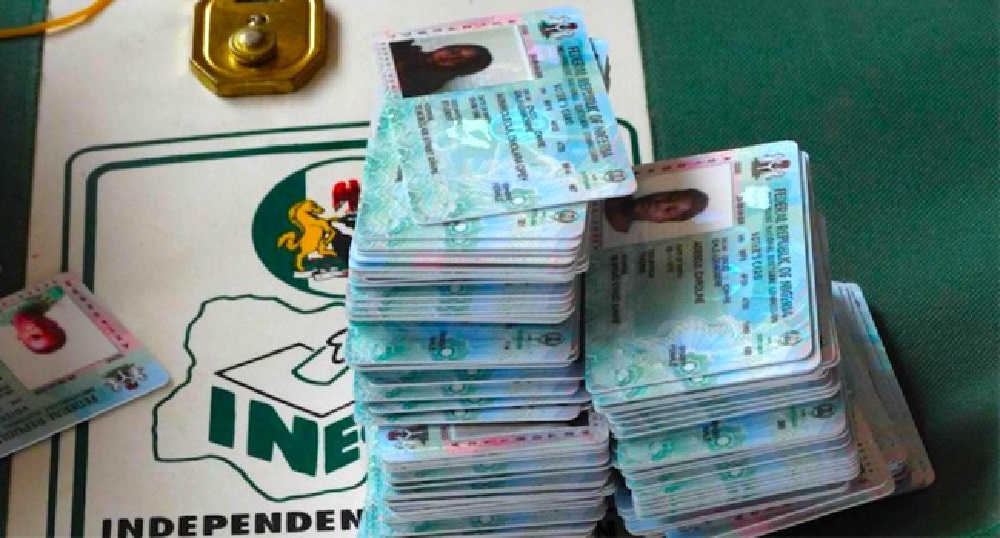
The Independent National Electoral Commission (INEC) has confirmed that 7,746 deceased voters were removed from the national voter register in Nigeria’s 36 states and the Federal Capital Territory as of December 2022.

INEC’s Director of Voter Education and Publicity, Victoria Etta-Messi, disclosed this on Thursday, emphasising the commission’s commitment to maintaining an accurate voter register.

Advertisement

“Seven thousand, seven hundred and forty-six decreased persons across the 36 states and the FCT were removed from the National Register of voters as of December 2022,” she stated.

Despite progress in cleaning the register, INEC highlighted persistent challenges during its 2023 post-general election review in December 2024. One major issue is the difficulty of removing deceased voters due to inadequate official death records.

“Problems with official death records continue to make it very difficult for INEC to remove deceased registrants,” the commission noted, adding that enhanced collaboration with agencies like the National Population Commission (NPC) and the National Identity Management Commission (NIMC) is critical to address the issue.

INEC also tackled double and multiple registrations using the Automated Biometric Identification System (ABIS), which flagged and removed 2,780,756 invalid registrations, accounting for 22.6% of new registrants.

Advertisement

Concerns over declining voter turnout were also raised. The 2023 presidential and National Assembly elections recorded a turnout of 27.5%, a drop from 35.6% in 2019. Stakeholders attributed this decline partly to an inflated voter register and proposed measures such as suspending individuals who have not voted in the last three elections and requiring them to revalidate their registration.

INEC affirmed its commitment to improving the voter registration process and addressing these issues to enhance electoral integrity in future elections.
News

Ibiyeomie: I give $12k every Sunday, don’t need your offerings to stay rich

Published

on

By

ADVERTISEMENT
Zoom Ad
ADVERTISEMENT
Zoom Ad

David Ibiyeomie, the presiding pastor of Salvation Ministries in Rivers State, has stirred fresh conversation around tithing and church giving after declaring in a viral sermon that he gives a minimum of $12,000 every Sunday — and that his personal wealth is entirely independent of his congregation’s offerings.

Ibiyeomie, one of Nigeria’s most prominent Pentecostal clergy, made the remarks while preaching on what he described as the foundational role of tithing in Christian covenant living, insisting that any believer who neglects the practice will face financial stagnation.

“You cannot say that you are walking in a covenant if your foundation is not in place. Your foundation covenant is your tithe,” he told his congregation.

“Trying to walk in covenant wealth without tithing is like trying to build a house without a foundation.”

Advertisement

To underscore his commitment to the principle he was preaching, the pastor disclosed the scale of his own giving.

“The minimum I give on a Sunday is $12,000. That is the minimum. Every Sunday. And the minimum I give on weekdays is $2,000.

“Even when I am not in church, even when I travel, my offering will be there,” he said.

Perhaps more striking was his assertion that his prosperity bears no relationship to what his members contribute to the church.

Advertisement

Addressing his congregation directly, he said their offerings — or the withholding of them — had no bearing on his financial standing.

“If you don’t give your offering, I will be rich, stinkingly rich. I am not depending on your money. If my birthday is coming, get angry and don’t give me any money.

“This guy will be rich because it is not coming from you. It is coming from my covenant work with God,” he declared.

The sermon has since circulated widely on social media, reigniting debate around the theology of tithing, pastoral wealth, and the financial expectations placed on church members in Nigeria’s booming Pentecostal landscape.

Advertisement
Continue Reading

News

Atiku, U.S House of Reps Caucus Meet Over Nigeria’s Electoral Integrity Concerns

Published

on

By

ADVERTISEMENT
Zoom Ad
ADVERTISEMENT
Zoom Ad

Fresh concerns about the credibility of Nigeria’s electoral process have drawn international attention, following a high-level meeting between representatives of former Vice-President Atiku Abubakar and senior staff of the U.S. House Democratic caucus.

The engagement, which took place remotely, was facilitated by Washington-based lobbying firm Von Batten-Montague-York, recently retained by Abubakar to manage his international political outreach and bolster his reputation in the United States.

In a statement shared on social media platform X, the firm disclosed that the meeting brought together congressional staff aligned with U.S. House Democratic Caucus and representatives of the former Nigerian vice-president’s political camp. According to the firm, discussions centered on what it described as “serious concerns regarding election integrity in Nigeria.”

Central to the deliberations were allegations that Nigeria’s current administration, led by President Bola Ahmed Tinubu, may be undermining democratic processes through electoral manipulation.

Advertisement

The lobbying firm claimed that participants examined “credible allegations” suggesting attempts to “circumvent the will of the Nigerian people.” While these claims were not independently verified, they reflect a growing narrative among opposition figures who have consistently questioned the transparency of recent elections.

The meeting also reportedly explored broader governance concerns, including what was described as a pattern of political consolidation that could tilt Nigeria toward a de facto one-party system. Though no official position has been issued by U.S. lawmakers, the framing of such concerns at a congressional level signals rising international scrutiny of Nigeria’s democratic institutions.

As of the time of filing this report, neither the Abubakar campaign nor the U.S. House of Representatives has released an official statement detailing the outcome of the discussions. The absence of formal communication leaves much of the substance of the meeting open to interpretation, with only the lobbying firm’s account providing insight.

Political analysts note that while such engagements are not unusual in international diplomacy, they often carry significant implications, particularly when tied to election integrity and governance issues in emerging democracies.

Advertisement

Abubakar’s engagement with U.S. policymakers comes on the heels of his formal agreement with Von Batten-Montague-York, a deal aimed at strengthening his “reputational standing” abroad.

Documents filed with the U.S. Department of Justice indicate that the contract, signed in March 2026 by the firm’s managing partner Karl Von Batten and Nigerian politician Fabiyi Oladimeji, outlines a robust advocacy strategy. This includes countering what the firm described as the Nigerian government’s “lobbying narratives” in Washington.

Under the agreement, the firm is tasked with arranging strategic meetings between Abubakar and key U.S. government officials, including members of Congress. It is also expected to provide advisory services on policy positioning and broader engagement strategies.

In a move that has further heightened tensions, Von Batten-Montague-York recently signaled its intention to recommend sanctions against Nigerian political actors and officials of the Independent National Electoral Commission (INEC) found to be complicit in electoral malpractice.

Advertisement

In an earlier statement, the firm said it would begin identifying individuals involved in election rigging and forward their names to the offices of the U.S. President and Congress. Proposed measures include asset freezes and travel bans, tools commonly used by Western governments to penalize individuals accused of undermining democratic processes.

This development aligns with a broader trend of international actors taking a firmer stance on election-related misconduct in Africa, particularly in countries with significant geopolitical and economic influence like Nigeria.

Nigeria’s electoral system has long faced criticism over logistical challenges, allegations of vote manipulation, and institutional weaknesses. However, the latest developments suggest that these concerns are increasingly resonating beyond the country’s borders.

For Abubakar, who remains a central figure in Nigeria’s opposition politics, the outreach to U.S. lawmakers may serve both as a strategic diplomatic move and a signal to domestic supporters that his campaign is pursuing all available avenues to address perceived injustices in the political system.

Advertisement

For the Nigerian government, the allegations, and the prospect of international sanctions, pose a reputational challenge that could impact diplomatic relations and investor confidence if not addressed.

While it remains unclear what immediate outcomes will arise from the meeting, its occurrence underscores the growing intersection between Nigeria’s domestic politics and international diplomatic engagement.

Observers caution that while foreign involvement can amplify calls for transparency, it also raises questions about sovereignty and the appropriate limits of external influence in national electoral matters.

As Nigeria continues to navigate its complex political landscape ahead of future elections, the spotlight from global actors is unlikely to dim anytime soon. The coming months may reveal whether these discussions translate into concrete actions, or remain part of a broader war of narratives between political stakeholders.

Advertisement
Continue Reading

News

APC Releases Timetable For Primaries, Unveils Form Prices

Published

on

By

ADVERTISEMENT
Zoom Ad
ADVERTISEMENT
Zoom Ad

The All Progressives Congress (APC) has released its timetable and schedule of activities for the 2027 general elections, setting in motion a tightly packed sequence of internal party processes that will culminate in its primaries across various elective positions in May 2026.

The schedule, signed by the party’s National Organising Secretary, Sulaiman Argungu, provides detailed timelines for the sale of nomination and expression of interest forms, screening of aspirants, publication of results, appeals, and the conduct of primary elections for all levels of elective offices.

The party said the timetable was issued in line with the Constitution of the Federal Republic of Nigeria 1999 (as amended), the Electoral Act 2026, and the Independent National Electoral Commission (INEC) revised timetable and schedule of activities for the 2027 general elections.

According to the APC, the release of the schedule underscores its commitment to what it described as credible and transparent primaries aimed at strengthening internal democracy and consolidating its “progressive ideals” ahead of the 2027 electoral contest.

Advertisement

“In accordance with the Constitution of the Federal Republic of Nigeria 1999 (as amended), the Electoral Act 2026, and the Independent National Electoral Commission (INEC) Revised Timetable and Schedule of Activities for the 2027 General Elections, the All Progressives Congress (APC) hereby releases its Timetable and Schedule of Activities for the Elections,” the party stated.

The process begins with the formal notice of election to state chapters and the commencement of the sale of forms at the APC national secretariat on Monday, 20 April.

The sale of forms will run from Saturday, 25 April, to Saturday, 2 May.

The party fixed Monday, 4 May, as the deadline for the submission of completed forms and accompanying documents by aspirants seeking to contest under its platform.

Advertisement

Screening of aspirants will then follow in phases. Aspirants for State House of Assembly, House of Representatives, Senate, and governorship positions will be screened between Wednesday, 6 May, and Friday, 8 May. Presidential aspirants are scheduled for screening on Saturday, 9 May.

The APC said screening results will be published on Monday, 11 May, covering all categories of offices, after which aggrieved aspirants will have the opportunity to file appeals.

Aggrieved aspirants will have two days, Tuesday, 12 May and Wednesday, 13 May, to file appeals before the party proceeds to its primaries.

Primary elections will commence shortly after the appeals process, beginning with the presidential primary scheduled for Friday, 15 May, to Saturday, 16 May.

Advertisement

This will be followed by the House of Representatives primary on Monday, 18 May, the Senate primary on Wednesday, 20 May, and the State House of Assembly primary on Thursday, 21 May, and Friday, 22 May. The governorship primary is scheduled for Saturday, 23 May.

The party also set dates for election-related appeals arising from the primaries.

Presidential primary appeals are expected to be handled from Monday, 18 May, while House of Representatives appeals are scheduled for Wednesday, 20 May.

Senate appeals will follow on Thursday, 21 May, State House of Assembly appeals on Saturday, 23 May, and governorship appeals on Monday, 25 May.

Advertisement

Beyond the timelines, the APC also detailed the cost structure for nomination and expression of interest forms across different elective offices, a recurring feature of internal party contests in Nigeria that has often generated public debate.

Aspirants for state houses of assembly will pay N1,000,000 for the expression of interest and N5,000,000 for the nomination forms. Those contesting seats in the House of Representatives are to pay N1,000,000 and N9,000,000, respectively.

Senatorial aspirants will pay N3,000,000 for the expression of interest and N17,000,000 for the nomination forms. Governorship aspirants are required to pay N10,000,000 for the expression of interest and N40,000,000 for nomination forms.

Presidential aspirants will pay N30,000,000 for the expression of interest and N70,000,000 for nomination forms.

Advertisement

However, in what may be seen as a concession to inclusivity concerns, the party said female aspirants, youths, and persons with disabilities will pay only for the expression of interest forms and 50 per cent of the prescribed nomination fees for their respective offices.

According to the Independent National Electoral Commission (INEC) timetable, presidential and National Assembly elections will hold on 16 January 2027, while governorship and state Houses of Assembly elections will hold on 6 February 2027.

Political parties are to conduct their primaries between 23 April and 30 May, including the resolution of disputes arising from the exercises.

Campaigns for presidential and National Assembly elections will commence on 19 August, while those for governorship and state Houses of Assembly will begin on 9 September.

Advertisement

However, INEC said that all campaigns must end 24 hours before election day.

See Time Table Below;

Continue Reading

Trending

Copyright © 2024 Naija Blitz News