News
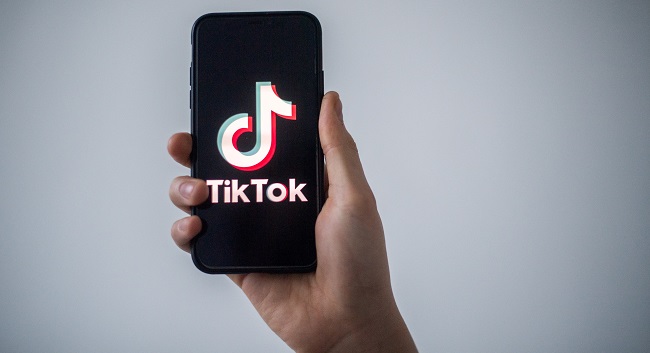
Tik Tok still swims against the tide in the USA
By Sonny Aragba-Akpore

President Donald Trump muted a ban on Tik Tok in 2020 in the dying days of his first White House residency but strangely after signing the Executive Order in his second coming on January 20,2025,to stay action on the enforcement of the Supreme Court ban,he was asked by a reporter why he’s had a change of heart since trying to ban TikTok in 2020, his response was “Because I got to use it.”
He floated the possibility of a joint venture running the company, saying he was seeking a 50-50 partnership between “the United States” and its Chinese owner ByteDance. But he did not give any further details on how that might work.

Trump also said he may impose new trade tariffs on China if a deal for the platform is not struck.
He was quoted as saying If Beijing rejected a deal “it would be somewhat of a hostile act”,
In the year 2020, Trump issued an executive order citing TikTok’s ability to capture vast amounts of user data as a significant national security threat. The order sought to prohibit certain transactions involving ByteDance but was blocked by federal courts.
Subsequently, the Trump Administration directed ByteDance to divest its U.S. TikTok operations and user data, but these efforts were stalled as negotiations with the president Joe Biden Administration aimed at a nondivestiture agreement failed to resolve the government’s concerns.
ByteDance’s proposed national security agreement was ultimately deemed insufficient to mitigate risks posed by Chinese control. Against this backdrop, Congress enacted the sale-or-ban law, further targeting TikTok and similar applications.
According to the Supreme Court’s finding, TikTok’s ultimate parent company, ByteDance, is a privately held company that has operations in China. ByteDance owns TikTok’s proprietary algorithm, which is developed and maintained in China.
The company is subject to Chinese laws that require it to assist or cooperate with the Chinese government’s intelligence work and to ensure that the Chinese government has the power to access and control private data that the company holds.
Underscored in the decision, TikTok’s extensive data collection from more than 170 million U.S. users could be exploited for surveillance, public influence campaigns or other harmful purposes that threaten national security. The Act and the holding reflect Congress’ and the Supreme Court’s efforts to address growing concerns over foreign adversary-controlled applications through the access to sensitive data of U.S. nationals and the resulting potential risks to U.S. national security.
With President Trump,s Executive Order to maintain the status quo on Tik Tok for 75 days,and the likely acquisition of 50% ownership in ByteDance,by Americans,Tik Tok still swims against the tide.
Tik Tok had gone to the Supreme Court to appeal against the April 24,2024 “Protecting Americans Against Foreign Adversary Controlled Application Act”but in a much-anticipated decision, the U.S. Supreme Court on Jan. 17, 2025, rejected TikTok’s appeal and upheld the Protecting Americans from Foreign Adversary Controlled Applications Act (Act).
The Act which was signed into law on April 24, 2024, gave ByteDance Ltd., the TikTok app’s Chinese parent company, nine months to divest the popular U.S. company or be banned from operating in the U.S.
ByteDance mounted a First Amendment challenge to the Act but was unsuccessful at the high court.
Starting on Jan. 19, 2025, one day before the inauguration of President Donald Trump, the Act effectively banned TikTok unless its U.S. operations are divested from ByteDance.
The platform went off air for 24 hours but after the Executive Order,it has 75 days to rejig its operations and determine the status of its operations in line with the subsisting Act.
In TikTok’s case, as established by the Supreme Court’s decision, the app is classified as a foreign adversary-controlled application due to its ownership and control by ByteDance.
Accordingly, the Act bans the distribution, maintenance or updates of TikTok in the U.S. unless ByteDance completes a qualified divestiture.
This divestiture would require ByteDance to relinquish all direct and indirect control over TikTok’s U.S. operations, ensuring its operational independence and preventing any future ties with ByteDance or other entities designated as foreign adversaries.
Should ByteDance refuse to divest its holdings in TikTok, the app would face a nationwide ban. The ban would not result in the immediate removal of the app from users’ devices. Instead, the ban would be enforced through penalties targeting companies that provide services to banned entities, such as internet hosting providers and app store operators such as Apple and Google.
These companies would be prohibited from distributing or updating TikTok on their platforms, leading to a gradual degradation of the app. Over time, without updates or maintenance, TikTok would likely become obsolete and unusable.
The Act prohibits any company from distributing, maintaining or updating an entity classified as a foreign adversary-controlled application within the U.S. Such an application is defined as one operated by a company that’s controlled by a foreign adversary and deemed by the president to pose a significant threat to U.S. national security. Violations of these restrictions can result in civil enforcement actions and significant monetary penalties.
The Act provides an exception for foreign adversary-controlled applications if they undergo a qualified divestiture. A qualified divestiture requires a presidential determination that the application is no longer under the control of a foreign adversary. Furthermore, the divestiture must ensure that no operational relationships remain between the U.S. operations of the application and any former entities affiliated with a foreign adversary.
The Act was signed with broad support from Republicans and Democrats.
Although some lawmakers had urged President Joe Biden to grant a reprieve to prevent TikTok from going dark in the U.S. as soon as Jan. 19,2025 ,the TikTok ban had already resulted in a number of “TikTok refugees” who moved to another Chinese app, RedNote, short for “Little Red Book.” RedNote became the most downloaded app in Apple’s app store in the U.S. the week leading up to the Supreme Court’s decision.
If this trend continues, this “migration” to a similarly situated app might defeat the purpose of the Act. The TikTok ban illustrates how U.S. regulatory actions are designed to mitigate potential threats posed by foreign adversaries, significantly increasing compliance requirements for cross-border investments and technology operations.
Particularly, the Supreme Court’s decision upholding the TikTok ban underlines the trend of intensifying scrutiny of foreign-controlled entities that collect or handle sensitive data in the U.S.
Although it’s not clear whether there will be a reprieve for Tik Tok,there are strong indications that the Trump administration needs more time to understand the situation and perhaps to be the one to implement the ban.
TikTok has 1,925 billion users globally, with 170 million monthly active users in the United States.
The average daily time spent on TikTok has more than doubled from 27 minutes in 2019 to 58 minutes in 2024.
The most popular categories on TikTok are Entertainment, Dance, and Pranks, with billions of views each.
Top influencers on TikTok include Charli D’Amelio, Khabane Lame, and Addison Rae, each with tens of millions of followers.
TikTok’s user base has grown exponentially from 133 million in 2018 to over 1,925 billion in 2024.
Daily active users on TikTok have skyrocketed into the millions, reflecting the platform’s ability to engage users on a daily basis.
News
ADC Reacts To Suspension Of Atiku, Lawal From Party
The African Democratic Congress (ADC) has dismissed the reported suspension of former Vice President, Atiku Abubakar and former Secretary to the Government of the Federation, Babachir Lawal, by a faction of the party in Adamawa State.
The party described the move as invalid, insisting that those behind it lack the authority to take such action.
The National Publicity Secretary of the party, Bolaji Abdullahi, said the announcement carries no weight within the party.
According to Abdullahi, “No, no, no. There’s nothing to it. It doesn’t make sense.
“Those saying it (they suspended Atiku and Babachir Lawal), don’t have the power to do that. No, they don’t have the power to do that. They are just jesters.”
The development followed a press conference by a factional chairman in Adamawa State, Raji Zumo, who announced the suspension of Atiku, Lawal and the party’s transition committee chairman, Sadiq Ibrahim.
Abdullahi said, “Let it be clearly stated, no individual, regardless of his status or influence, is above the law or the constitution of the African Democratic Congress, as long as he is a card-carrying member of the party.
“Those individuals are suspended for their roles in fostering disunity, creating parallel structures, undermining lawful authority, and disregarding a subsisting court order.”
The ADC has been grappling with internal disputes over its leadership structure.
Separate factions led by Nafiu Bala Gombe and Kingsley Ogga, both reportedly expelled during the party’s national convention, are laying claim to the position of national chairman.
The Independent National Electoral Commission (INEC) had earlier withdrawn recognition of the party’s leadership structures amid the ongoing crisis.
News
Reps Open Fresh Probe into N1.12tn Farm Scheme, Summon Insurers Over Gaps
By Gloria Ikibah
The House of Representatives has intensified its investigation into the troubled Anchor Borrowers Programme, turning its spotlight on insurance providers linked to the scheme amid concerns over weak coverage and alleged fund mismanagement.
At a hearing convened by the House Committee on Nutrition and Food Security, lawmakers began scrutinising the role of the Nigerian Agricultural Insurance Corporation alongside private insurers in a programme valued at over N1.12 trillion.
The session forms part of a broader inquiry into how funds earmarked for agricultural support were handled, including allegations of diversion by government agencies and questions surrounding disbursement by participating financial institutions.
Representing the Managing Director of the Nigerian Agricultural Insurance Corporation, Dayo Babaronti told the committee that the agency insured just over 200,000 farmers, covering about N109 billion under the scheme.
He revealed that the Central Bank deviated from the original framework, which designated the corporation as the sole insurer, by bringing in additional firms, including Veritas Kapital Insurance and Leadway Insurance. Neither company was present at the hearing.
According to him, the corporation’s involvement amounted to only a small fraction of the overall programme, leaving significant gaps in coverage.
He also outlined the corporation’s limited role in other agricultural financing initiatives, including support for smallholder farmers and specific crop programmes, where insurance backing fell far short of funding allocations. In some cases, he noted, the corporation was excluded entirely despite policy provisions.
Tge Committee Chairman, Rep. Chike Okafor, signalled that further hearings would follow, noting that the panel had received numerous complaints from farmers and industry groups regarding inadequate insurance protection.
He explained that the committee will recall the agency for additional questioning, particularly as its submission arrived late, leaving little time for proper review.
Rep. Okafor maintained that the investigation is aimed at uncovering the root causes behind the programme’s shortcomings and ensuring accountability across all institutions involved.
He pointed to early findings suggesting that key stakeholders, especially farmers and commodity associations, were largely excluded from the design and implementation of the intervention, a factor believed to have contributed to its underperformance.
He stressed the committee’s determination to get to the bottom of the issues, stating, “The reason why we are here is because the programmes did not succeed 100%. If they had succeeded 100%, we will not be here.”
News
Reps Back N248bn Lifeline for Power Firms, Unveil Debt Shake-Up Plan
By Gloria Ikibah
The House of Representatives Public Accounts Committee has approved sweeping financial reliefs and a long-term debt restructuring plan for three electricity distribution companies, in a move aimed at stabilising Nigeria’s troubled power sector.
The decision grants Kano, Jos and Ikeja DisCos a 10-year window to restructure liabilities running into hundreds of billions of naira, following mounting concerns over the sector’s financial sustainability.
At the heart of the intervention is a combined debt burden of over N248 billion, made up of more than N120 billion in historical obligations and about N128 billion in accumulated interest spanning a decade.
The resolution followed the adoption of a technical subcommittee report linked to findings from the Auditor-General, which highlighted rising debts across eleven distribution companies and growing pressure on the electricity market.
Chairman of the Technical subcommittee, Rep, Mark Chidi Obetta, said the move is part of broader legislative efforts to restore stability and address legacy financial challenges within the industry. He noted that the liabilities of the affected companies form a significant portion of the sector’s overall debt profile.
According to the report, total indebtedness across the eleven DisCos climbed from roughly N1 trillion at the end of 2024 to about N1.3 trillion by September 2025, driven largely by accumulating interest and unpaid obligations.
The committee said its investigation sought to verify these figures, establish the true extent of the debts and understand why the companies have struggled to meet payment commitments.
It confirmed that the liabilities had surged due to continued accruals, while also identifying disputes over interest charges as a major sticking point, particularly among the affected DisCos.
In response, the Nigerian Electricity Regulatory Commission NERC,, directed that interest should not be applied to outstanding invoices between 2015 and 2020, while allowing such charges from 2021 onwards. It also instructed that interest linked to delays involving a financial intermediary be excluded.
As part of the restructuring framework, the report stated, “Based on appearance, submissions and request, the Committee established that Jos and Kano Electricity Distribution Companies remain significantly indebted to NBET. The interest component and accrued debt during government receivership period form a substantial part of Kano Disco’s liabilities.”
It further recommended that, “NBET and NERC should allow Kano Electricity Distribution company (KEDCO), Jos Electricity Distribution Company and Ikeja Electricity Distribution company, with significant legacy obligations to restructure and repay their historical debts totaling N120,061,898,737… over an extended period of not more than 10 years.”
The report also proposed that certain liabilities incurred during periods of government intervention be transferred to a designated liability management body, while calling for a waiver of all accrued interest within the specified period.
Explaining the rationale, it added that the current market structure limits the ability of DisCos to recover costs, noting that revenue collection arrangements prioritise settlement of market obligations before operational expenses are released.
The committee stressed the need for discipline going forward, stating that, “All DisCos should ensure strict compliance with their current market obligations going forward to prevent further accumulation of liabilities.”
Chairman of the committee, Bamidele Salam, cautioned that without decisive restructuring and stronger regulatory oversight, the long-term viability of Nigeria’s electricity distribution system could remain under serious threat.
-
News18 hours agoPDP approved appointment of Wike as minister – APC
-
News18 hours agoSee Black Market Dollar To Naira Exchange Rate Today 16th April 2026
-
News13 hours agoBREAKING : Gunmen kidnap JAMB candidates, others in Benue
-
News19 hours agoTerrorists plotting massive attacks on Abuja International Airport, Correctional Centres, military detention centre — AP Report
-
News18 hours agoBBC to fire 2,000 workers to make £500m savings
-
Opinion14 hours agoDIAMOND DISTINCTIONS FOR THE PEOPLE’S MAN; DR. CHIDO ONUMAH
-
News18 hours agoPresidency mocks Atiku over 2027 ambition, calls him serial loser, advises Obi to leave ADC
-
News14 hours agoWike: Atiku a serial contestant, loser, he will still contest in 2031 (PHOTO)

You must be logged in to post a comment Login