News
FEC Approves N4.2trn for Lagos-Calabar Coastal Road, Other Major Road Projects Nationwide
- /home/naijuinz/public_html/wp-content/plugins/mvp-social-buttons/mvp-social-buttons.php on line 27
https://naijablitznews.com/wp-content/uploads/2024/02/FEC-meeting.jpg&description=FEC Approves N4.2trn for Lagos-Calabar Coastal Road, Other Major Road Projects Nationwide', 'pinterestShare', 'width=750,height=350'); return false;" title="Pin This Post">
- Share
- Tweet /home/naijuinz/public_html/wp-content/plugins/mvp-social-buttons/mvp-social-buttons.php on line 72
https://naijablitznews.com/wp-content/uploads/2024/02/FEC-meeting.jpg&description=FEC Approves N4.2trn for Lagos-Calabar Coastal Road, Other Major Road Projects Nationwide', 'pinterestShare', 'width=750,height=350'); return false;" title="Pin This Post">
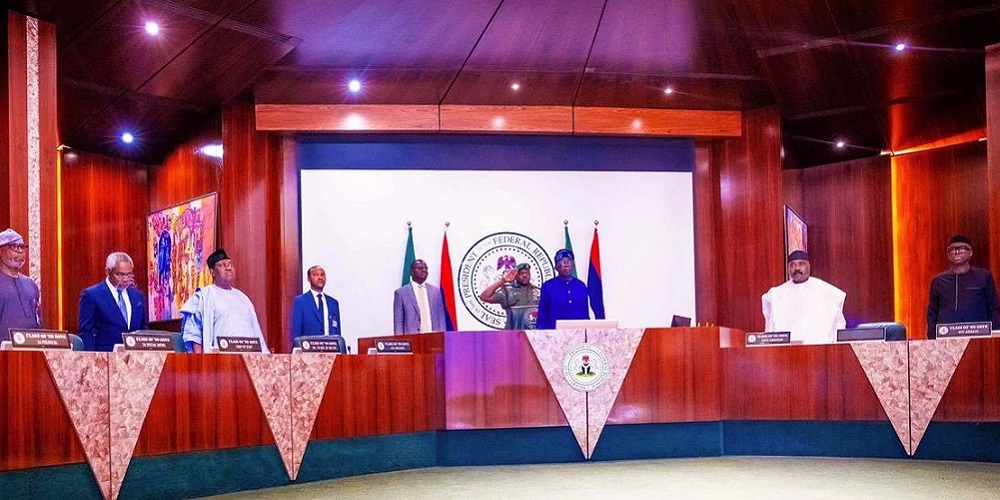
The federal government has approved road infrastructure contracts worth N4.2 trillion, covering major highways and bridges across Nigeria, including the second phase of the Lagos-Calabar Coastal Road. Minister of Works, Senator David Umahi, disclosed this to newsmen yesterday in Abuja at the end of the Federal Executive Council (FEC) meeting presided by President Bola Tinubu.

According to Umahi, the projects are spread over several states, with a focus on enhancing connectivity, improving road safety, and supporting economic growth.
FEC also approved road construction projects worth N159.5 billion for the Federal Capital Territory (FCT), targeting infrastructure development within the city and its satellite towns.

Minister of State for the FCT, Mariya Mahmoud Bunkure, disclosed the approvals during the post-FEC media briefing, where she detailed the major projects aimed at improving accessibility and urban development.
The federal government equally unveiled an ambitious plan to position the country’s creative and tourism sectors as key drivers of economic growth, with the potential to contribute at least $100 billion to the nation’s Gross Domestic Product (GDP) and creating two million jobs. Minister of Art, Culture, Tourism, and Creative Economy, Hannatu Musawa, made this known to newsmen yesterday after the FEC meeting.
The contracts for the nationwide road infrastructure included new constructions, rehabilitation of deteriorating sections, and expansion of critical routes, with many projects shifting towards concrete pavement for durability.
The largest allocation went to the Lagos-Calabar Coastal Highway, with FEC approving N1.334 trillion for the construction of a 130-kilometre dual carriageway. This covers 65 kilometres in Lagos and Ogun states, and an additional stretch starting from Calabar through Akwa Ibom.
The project will be executed under an Engineering, Procurement, and Construction (EPC) framework, with a 10-year maintenance plan.
FEC also approved N470.9 billion for the Delta State access road and N148 billion for the Anambra State access road to the Second Niger Bridge.
According to the minister, both roads will be constructed using concrete to ensure long-term resilience.
He explained, “Lagos-Ibadan Expressway (Phase 2, Section 1) got N195 billion approval to undergo reconstruction under the Presidential Infrastructure Development Fund (PIDF), focusing on improving traffic flow and reducing congestion along the busy corridor.
“The Abuja-Kano road project, previously handled by Julius Berger, has been restructured into two lots following contract termination, including Lot 1 (FCT-Niger boundary): Expanded by 5.71 kilometres towards Kogi State and Lot 3 (Kano section): extended by 17 kilometres.”
Umahi said the total length of the project was now 118 kilometres, with solar street lighting planned throughout. Section 1 will be built with concrete, while Section 3 will use asphalt.
The reconstruction of three sections of the Lokoja-Benin road will be done entirely with concrete for durability at N305 billion, including Obajana to Benin (Section I): N64 billion; Auchi to Edo (Section II): N110 billion; and Benin Airport area (Section III): N131 billion.
A contract worth N3.571 billion was approved for an extensive structural assessment of the Third Mainland Bridge and Carter Bridge in Lagos. Umahi said this evaluation aimed to prevent further deterioration, building on findings from assessments conducted in 2009 and 2013, which identified progressive structural decay.
FEC also approved Ado-Ekiti–Igede Road Project (N5.4 billion) as part of a series of smaller road upgrades in Ekiti State to improve local connectivity and reduce travel time.
It approved N22 billion for the Onitsha-Owerri Expressway. The minister said the expressway will undergo rehabilitation to ease movement between Anambra and Imo states, and foster trade within the South-east region.
Musasa-Jos Route (Kaduna State) was approved at N18 billion to enhance road safety and reduce travel time between Kaduna and Plateau states.
Abia and Enugu States Road Project got N12.75 billion in a joint project that will focus on key sections within the budget limits, and address long-standing infrastructure gaps.
Umahi emphasised that most new projects, including the Lokoja-Benin and Abuja-Kano roads, will be constructed using reinforced concrete pavement instead of traditional asphalt.
He said, “Concrete roads are not only more durable but also cost-effective in the long run. In fact, the cost of these concrete projects is significantly cheaper than previous asphalt-based contracts rejected by some contractors.”
The minister addressed concerns about terminated contracts, particularly with Julius Berger, clarifying that the government has negotiated cost-saving measures while equipment from previous contractors will be repurposed to avoid unnecessary mobilisation costs.
Umahi also dismissed recent reports about fake companies being awarded contracts, and assured Nigerians that due diligence was followed in selecting credible contractors.
According to him, “We’ve resolved misunderstandings with key stakeholders, including media organisations, to ensure transparency. The companies handling these projects are legitimate and well-equipped.
“This is not just about roads; it’s about driving Nigeria’s economic transformation. We are committed to delivering durable, cost-effective infrastructure that will stand the test of time.”
FEC also approved road projects worth N159.5 billion for the FCT, focussing on infrastructure development within Abuja and its satellite towns.
The FCT minister of state detailed the five major projects aimed at improving accessibility and urban development during the post-FEC media briefing.
She said the projects included Bus Terminal Access Road, Mabushi, awarded to Messrs SETRACO Nigeria Limited at the cost of N30.97 billion, with a completion period of 18 months.
The council approved Arterial Road from Wuye District to Ring Road II, awarded to Messrs Arab Contractors Nigeria Limited at the cost of N62.5 billion, with a completion period of 20 months.
Bunkure stated, “Also approved is Kuje-Gwagwalada Dual Carriageway Construction to Messrs Gilmor Engineering Nigeria Limited at N7.49 billion; the rehabilitation of Old Keffi Road (Kado Village to Dei Dei), awarded to
Messrs Lubric Construction Company Limited at N26.87 billion, with a completion time of 18 months.
“There is also a contract for the construction of access road to Renewed Hope Cities and Estates (Kasana West District) to Messrs Lubric Construction Nigeria Limited in the sum of N31.66 billion, with a completion time of 18 months.”
The minister emphasised that the projects aligned with the FCT administration’s commitment to urban expansion, improved road networks, and enhanced connectivity across Abuja.
She said the contracts were awarded to reputable construction firms with track records of delivering quality infrastructure projects.
Bunkure assured residents that the projects would be completed within the stipulated timelines to enhance mobility and economic development in the capital city.
Equally on Monday, the federal government unveiled a plan to position Nigeria’s creative and tourism sectors as key drivers of economic growth, with the potential to contribute at least $100 billion to GDP and create over two million jobs.
The art, culture, tourism, and creative economy minister told the post-FEC media briefing that at the heart of the plan was the establishment of Creative and Tourism Infrastructure Corporation (CTIC), a special-purpose vehicle designed to invest in and develop critical infrastructure for Nigeria’s creative and tourism industries.
The initiative, approved by the FEC, will operate under a public-private partnership (PPP) framework, and attract both local and international investors to support its ambitious goals.
“The CTIC is not just a project; it’s a transformative agenda,” Musawa stated.
“We aim to unlock the immense potential of Nigeria’s creative and tourism industries, enhance economic growth, and project Nigeria’s cultural soft power globally,” she added.
The minister outlined the government’s targets for the CTIC to include: contributing at least $100 billion to Nigeria’s GDP; creating over two million jobs, with a focus on Nigeria’s vibrant youth population; and developing world-class infrastructure to support talent development, cultural preservation, and tourism growth
“This is a deliberate strategy by President Bola Tinubu’s administration to diversify the economy beyond oil and tap into Nigeria’s vast creative and cultural wealth,” Musawa said.
The minister emphasised that while Nigeria boasted a wealth of creative talent and cultural heritage, lack of supporting infrastructure had been a major barrier to full realisation of the sector’s economic potential.
Musawa said, “Everyone talks about Nigeria’s creativity. Our content is globally celebrated, from Nollywood to Afrobeat. But what we lack is the infrastructure to support and sustain this growth.”
She stressed, “Imagine the impact if events, like December’s ‘Detty December’ in Lagos, were backed by world-class infrastructure. The value would be exponential.”
Musawa revealed an array of projects under consideration to drive the sector’s growth, including: Abuja Resort Range and Abuja Creative City; revitalisation of Yankari Game Reserve; development of 5,000 new cinema screens nationwide; Wole Soyinka Centre for African Arts in Lagos; and a National Digital Distribution Network for creative content.
Others were upgrading the National Gallery of Art and expanding the National Arena to 100,000-seat capacity; establishment of a Nigerian National Museum in Abuja; positioning Nollywood as a global film destination with dedicated production hubs; and a world-class music arena to support Nigeria’s booming music industry.
“It’s unthinkable that Nigeria, the Giant of Africa, doesn’t have a national museum in its capital city. We’re going to change that,” Musawa declared.
She also highlighted ongoing engagements with development partners and stakeholders worldwide to secure investments and adopt innovative financing models for the CTIC projects.
Musawa explained, “The government is intentional about this. We’re not just waiting for foreign investments; we’re putting domestic financing structures in place and creating an environment where the private sector can thrive.
“Today marks the beginning of a journey to not just build infrastructure, but to shift the national mind-set about the economic power of culture, creativity, and tourism.”
The minister added, “This is a new dawn for Nigeria’s creative and tourism industries.”
News
Nigeria Begins Evacuation of Citizens From South Africa Amid Xenophobic Attacks
By Gloria Ikibah
The Federal Government has commenced the evacuation of Nigerian nationals affected by the recent wave of xenophobic attacks in South Africa, with the first group of returnees expected to arrive in Lagos on Thursday morning.
In a statement issued by the Ministry of Foreign Affairs on Tuesday, the government confirmed that the initial batch of evacuees will continue depart Johannesburg’s Oliver Tambo International Airport on Wednesday night aboard an Air Peace flight.
According to the Ministry, the aircraft is scheduled to land at the Murtala Muhammed International Airport in Lagos at approximately 5:00 a.m. on Thursday.
Announcing the operation, the Ministry stated:
“The Ministry of Foreign Affairs wishes to inform that the first batch of Nigerian nationals that will be evacuated from the Republic of South Africa due to Xenophobic attacks will depart the Oliver Thambo International Airport in Johannesburg on Wednesday night, and the expected time of arrival at the Murtala Mohammed International Airport in Lagos is 5.00am on Thursday morning.”
The Ministry disclosed that the evacuation exercise is being carried out by Air Peace Airlines and fully financed by the Federal Government, ensuring that affected Nigerians are returned home without any financial burden.
“The evacuation operation will be undertaken by Air Peace Airlines. The Federal Government of Nigeria has fully funded the evacuation exercise; consequently, all affected Nigerians will be repatriated at no cost to them”, he stated.
Authorities also assured Nigerians that adequate arrangements have been made to receive and support the returnees upon arrival.
Q
The Ministry explained that relevant government agencies have put measures in place to ensure a smooth reintegration process for those being evacuated.
“The Ministry further wishes to assure the public that the Federal Government, through relevant Ministries, Departments and Agencies, has put in place the necessary reception and support arrangements for the returnees.”
It added that the evacuees would undergo documentation and profiling procedures before receiving assistance and being reunited with their families.
“Upon arrival, the evacuees will undergo documentation and profiling procedures and will receive the appropriate assistance and support before being reunited with their families”, it added.
The evacuation follows growing concerns over attacks targeting foreign nationals in parts of South Africa, prompting calls for the protection of Nigerians living and working in the country.
The Federal Government has repeatedly stated its commitment to safeguarding the welfare of Nigerians abroad and has continued to engage South African authorities over the safety of its citizens.
renewed
News
SEDC Defends Record Before Senate, Says Less Than 10% of ₦140bn Budget Released
…highlight major projects, Programme,Regional Development Plans Amid Funding Challenges
By Gloria Ikibah
The South East Development Commission (SEDC) has reiterated its commitment to transparency, accountability and regional development following an oversight session with the Senate Committee on South East Development Commission at the National Assembly.
The interactive session, chaired by the Committee Chairman, Senator Orji Uzor Kalu, formed part of the National Assembly’s constitutional responsibility to oversee the activities of government agencies.
During the engagement, the Commission presented a detailed report of its activities since the inauguration of its Board in February 2025, covering its financial performance, institutional development, procurement processes, staffing, partnerships and ongoing programmes across the South-East.
The Commission also briefed lawmakers on its engagements with state governments, federal institutions, development finance organisations and other stakeholders involved in driving development across the region.
As part of its review, the Senate Committee requested additional documentation relating to certain aspects of the Commission’s operations and programme implementation.
Responding to the request, the Commission welcomed the move and sought a short extension to collate and submit the required materials.
Following discussions, the Committee adjourned proceedings to a later date pending receipt of the requested submissions, which the Commission is expected to provide on or before 23 June 2026.
SEDC used the opportunity to highlight progress recorded despite what it described as significant funding constraints.
According to the Commission, preparatory work has advanced on several major regional projects since the Board was inaugurated, including strategic infrastructure initiatives such as gas pipeline and railway projects designed to drive economic growth and regional integration.
The Commission also disclosed that it had established partnerships with a number of national and international institutions, including the United Nations Development Programme (UNDP), Afreximbank, Rural Electrification Agency, the Bank of Industry, Presidential Initiative on Compressed Natural Gas and Gas Aggregator Company of Nigeria.
It added that extensive consultations had been held with the governments of the five South-East states, federal ministries, development partners, academic institutions and private sector stakeholders to create a coordinated approach to regional development.
One of the major achievements highlighted during the session was the South East Vision 2050 stakeholder consultations, which brought together government officials, development experts, business leaders, academics and civil society groups to develop a long-term blueprint for the economic transformation of the region.
The Commission also spotlighted the successful rollout of the inaugural South East Venture Capital Programme (SEVCP), which it described as a flagship initiative aimed at promoting innovation, entrepreneurship and investment.
According to SEDC, 25 start-ups from across the South-East received equity investments through a transparent and competitive selection process under the programme.
The Commission said the initiative aligns with President Bola Ahmed Tinubu’s Renewed Hope Agenda and reflects efforts to strengthen entrepreneurship, private sector growth and investor confidence.
“Anchored within the South East Investment Company, the Programme represents a strategic effort to move beyond fragmented interventions towards a more structured and credible venture capital ecosystem for the South East, combining capital deployment with venture development, institutional partnerships, and pathways for attracting institutional capital into early-stage, high-growth enterprises across the region,” it stated.
However, the Commission expressed concern over the pace of funding releases, warning that implementation of critical projects could be affected if appropriated funds are not released promptly.
It disclosed that despite the Federal Government and National Assembly approving ₦140 billion for the Commission in the 2026 budget, less than 10 per cent of the allocation has so far been released.
The statement further read: “Of the N140 billion appropriated to the Commission in the 2026 budget, less than 10% has been released to date across all budget lines.”
SEDC stressed that accelerated releases are essential to enable the execution of key infrastructure, agricultural transformation, youth empowerment, economic development and regional security initiatives captured within its mandate.
“The scale of development required across the South East demands sustained funding, institutional coordination, and continued collaboration among all stakeholders,” the Commission noted.
Reaffirming its commitment to openness and accountability, the Commission pledged full cooperation with the National Assembly and all relevant oversight institutions.
“SEDC remains committed to full cooperation with the National Assembly and all relevant oversight institutions. The Commission views accountability, transparency, and constructive engagement as fundamental to the successful delivery of its mandate and will continue to provide all information required to support effective legislative oversight.
“The Commission remains focused on its responsibility to deliver meaningful and measurable impact for the people of the South East through disciplined planning, transparent governance, strategic partnerships, and the effective deployment of public resources. The Commission appreciates the continued support of the National Assembly and looks forward to sustained collaboration in advancing inclusive growth, shared prosperity, and long-term development across the region.”
News
NDC leader, Dickson in closed door session peace talks to stop party crisis in Kano
The National Leader of the Nigeria Democratic Congress (NDC), Seriake Dickson, and other leaders of the NDC, on Monday, held a closed-door peace talks with aggrieved members of the party in Kano State.
Osa Director, the national spokesperson of the NDC, disclosed this in a statement on Tuesday.
Mr Director explained that the closed-door peace talks were part of efforts to resolve the primary election-related crisis between Kwankwasiya Movement and other NDC members in the North-western state.
Kwankwasiya Movement is a political support group founded by the NDC vice-presidential candidate and former Governor of Kano State, Rabiu Kwankwaso.
The national spokesperson said the meeting, which lasted for several hours, was “productive.”
Senator Dickson and the NDC leadership are mediating in the process in order to enhance inclusion and participation by every party member.
According to Oda Director the NDC leadership will not impose candidates in Kano State, and indeed across the nation as the party cherishes the virtues of internal democracy,” he said.
He stressed that the NDC has not released any official results of its 2027 primaries in any state.
He urged members to disregard any such list in circulation.
The cause of the crisis
It was gathered that some NDC members in North-west Nigeria recently alleged Mr Kwankwaso was plotting to facilitate the dominance of members of Kwankwasiya Movement in the region’s party structure while dropping other key party leaders.
The Vice-Chairman of the NDC in the North-west, Mohammed Serina, and the Chairman of the party in Kano State, Hussaini Mariga, made the allegations against Mr Kwankwaso in a petition recently submitted to the party’s national leadership.
The petition followed purported results of NDC’s primaries in North-west circulating on Facebook in which the majority of winners were linked to the Kwankwasiya Movement.
-
News23 hours agoOyo Police: How Family Aide Conspired in Kidnap of Ex-Minister’s Sister, Twin Sons
-
News23 hours agoINEC clears Maku, Ombugadu, 18 others for June 20 bye-elections
-
News23 hours agoFinally, Amaechi emerges Atiku’s running mate after closed door meeting with him
-
News15 hours agoThe 30 Days of Projects Commissioning in the FCT starts today
-
News15 hours agoSad: Nigerian Labour Leader Dies At International Labour Conference In Geneva
-
News23 hours agoOhanaeze Ndigbo Bans Monarchical Titles In Edo
-
News23 hours agoNCC hails Ministerial Initiative on Girls ICT Empowerment…Hosts 185 students on excursion
-
News23 hours ago‘Talk and do ‘ minister, Wike actualizing Renewed Hope Agenda as Tinubu begins commissioning of projects in Abuja to mark 3rd year

Warning: Undefined variable $user_ID in /home/naijuinz/public_html/wp-content/themes/zox-news/comments.php on line 49
You must be logged in to post a comment Login