Economy
SEE Black Market Dollar To Naira Exchange Rate In Lagos, FCT, 6th February 2025
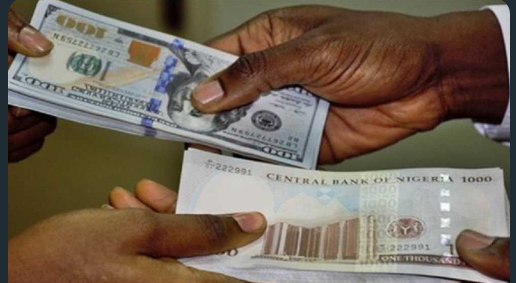
Bureau De Change (BDC) sources in Gwarimpa and Gwagwalada in FCT buy a dollar for N1685 and sell it for N1700 on Thursday, February 6th, 2024.
Black Market Dollar To Naira Exchange Rate in Lagos and FCT today, 6th February 2025.
The official naira black market exchange rate in Lagos and FCT, Abuja today including the Black Market rates, Bureau De Change (BDC), and CBN rates.

According to Bureau De Change (BDC) sources in the Ogba and Ikeja axis of Lagos state, the exchange rate for a dollar to naira at the Parallel Market (Black Market) is N1700 on Thursday, February 6th, 2024, players bought a dollar for N1685 and sold it for N1700.
Bureau De Change (BDC) sources in Gwarimpa and Gwagwalada in FCT buy a dollar for N1685 and sell it for N1700 on Thursday, February 6th, 2024.
Please note that the Central Bank of Nigeria (CBN) does not recognize the parallel market (black market), as it has directed individuals who want to engage in Forex to approach their respective banks.
Dollar to Naira Black Market Rate Lagos
Dollar to Naira (USD to NGN) Black Market Exchange Rate Today
Buying Rate N1685
Selling Rate N1700
Dollar to Naira Black Market Rate FCT, Abuja
Dollar to Naira (USD to NGN) CBN Rate Today
Buying Rate N1685
Selling Rate N1700
Please note that the rates you buy or sell forex may differ from what is captured in this article because prices vary from state to state across Nigeria.
Economy
See Current Dollar to Naira Rate at Black Market
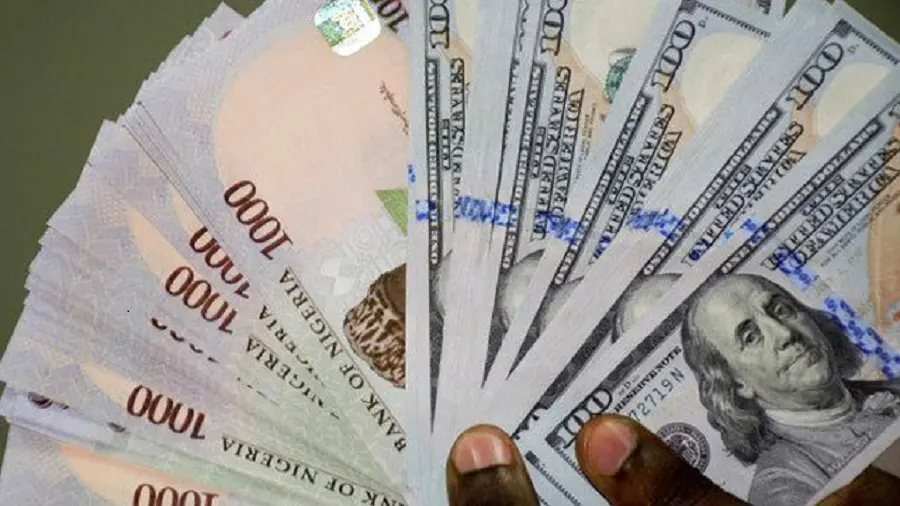
The naira continued to trade poorly against the United States dollar at the Lagos parallel market, commonly referred to as the black market.
According to information obtained from Bureau De Change (BDC) operators, the dollar was sold at ₦1,450, while buyers purchased the greenback at ₦1,435.
Dollar to Naira Black Market Rate
Currency Pair Exchange Rate
Selling Rate ₦1,450
Buying Rate ₦1,435
It is important to note that the Central Bank of Nigeria (CBN) does not officially recognise transactions carried out at the parallel market. The apex bank has repeatedly advised individuals and businesses seeking foreign exchange to conduct their transactions through licensed commercial banks and authorised dealers.
Official CBN Dollar to Naira Rate
At the official foreign exchange market, data shows that the dollar traded within a narrower band under the CBN window.
Currency CBN Rate Today
Highest Rate ₦1,373
Lowest Rate ₦1,361
Economy
Nigeria data protection ecosystem hits N16.2 billion in value within three years
The National Commissioner and CEO of the Nigeria Data Protection Commission (NDPC), Dr Vincent Olatunji, said on Wednesday that Nigeria is now a global player as the country’s Data Protection and Privacy ecosystem now peaked at about 16.2 billion naira in value.
Dr Olatunji attributed the feat to pragmatic steps taken by the leadership of the Commission following the signing into law of the Data Privacy and Protection Act by President Bola Tinubu in June 2023.
The NDPC boss said in less than four years the NDPC has transformed into a global institutions with no fewer than 12 countries understudying its ecosystem, while some institutions had signed Memorandum of Understanding (MoU) with NDPC on how to replicate the Commission’s achievements in their country.
Speaking during the opening ceremony of the 2026 Data Protection and Privacy Summit at the Transcorp Hotel, Abuja on Wednesday, Dr Olatunji praised President Bola Tinubu and the Minister of Communications, Innovations and Digital Economy, Dr Bosun Tijani for the transformations taking place in the sector.
He announced that besides the on going massive awareness campaigns embarked upon by the NDPC under his leadership, the Commission has been able to ensure the conclusion of investigations on 246 data privacy breaches by various institutions in the country.
Olatunji said while appropriate sanctions and remediation mechanisms have been meted out, no fewer than 23,000 new jobs have been created within the ecosystem, while government has earned 5.2 billion naira in compliance revenue from the sector.
He said the 2026 National Privacy Week with the theme “Privacy in the Age of Emerging Technologies: Trust, Ethics, and Innovation” which started on 28th January through to 4th February, ending with the summit would further enlighten Nigerians, the private and public sectors about the significance of data protection and privacy in the context of national security and economic development.
Listing the achievements of the NDPC, Dr Olatunji said, “The Commission initiated a multi-sector compliance drive, issuing compliance notices to 1,348 entities in August 2025 across the banking, insurance, pension, and gaming sectors, strengthening engagement and informing enforcement actions.
“Since the signing of Act by Mr President over 23,000 new jobs have been created within the ecosystem while the value of the data protection ecosystem is now over N16.2b.”
The Permanent Secretary in the Ministry of Communications, Innovations and Digital Economy, Mr Nadungu Gagare said the choice of the theme of the summit could not have been more relevant given the challenges of digitalisation in contemporary global economy.
The Permanent Secretary who was represented by Adetunji Adeyemo, a Director in the Universal Service Provision Department in the Ministry, called for ethical guidance that respect human dignity in the management of personal information and citizens’ data
He said responsible data management would be a catalyst to the growth and development of Nigeria economy, stressing that protection and privacy of data by institutions would not constitute any obstacle to innovations in the digital space.
He emphasised trust, credibility and collaboration of stakeholders in data protection and privacy, assuring that the government would continue to strengthen regulatory frameworks and build capacity of its workforce to enable them carry out their duties efficiently and effectively.
The Permanent Secretary further said emerging technologies such Artificial Intelligence, Robotics and others should be leveraged and deployed ethically to improve Nigeria Gross Domestic Product (GDP), while the private and public sectors, academia and civil society groups should work together to protect the private rights of citizens.
Economy
FG to councils: ‘No bank loans without clearance’
The federal government has warned state and local governments across the country not to take loans from banks or other financial institutions without first getting a Certificate of Proof of Compliance from the Fiscal Responsibility Commission.
It said such borrowing is against the law and can attract serious legal action.
This warning was directed especially at the 23 local government chairmen in Kaduna State by the Director of Legal Services, Investigation and Enforcement at the Commission, Barrister Charles Chukwuemeka Abana, who spoke at a financial management workshop in Kaduna.
A statement from the Commission, signed by its Director of Strategic Communication, Bede Ogueri Anyanwu, said Abana represented the Executive Chairman of the Fiscal Responsibility Commission, Victor Muruako, at the event organised by the Kaduna State Fiscal Responsibility Commission.
Abana told the council chairmen that under the Fiscal Responsibility Act of 2007, governments are only allowed to borrow for projects that build long-term value, such as infrastructure and human development, and not for everyday running costs.
He warned that any bank or financial institution that gives loans outside the law is also breaking the rules, while public officers who ignore the law could face serious consequences.
He strongly criticised the practice of spending public money without approval in the budget, calling it “fiscal haram,” and said such actions damage public trust and slow down development.
“Every kobo spent must have value for money. Public resources must be planned, budgeted for, properly appropriated, and disbursed towards the execution of projects that positively impact the lives of the people,” Abana said.
He cautioned local government leaders against giving out public funds to friends, supporters, or political loyalists, and against adding names of people who are not properly employed to their payrolls.
According to him, all spending must follow what has been approved in the budget and must be tied to real work and real benefits for the people.
Abana urged council chairmen to run open and transparent administrations, manage funds carefully, and think about how their decisions today will affect future generations.
He said the Commission is ready to offer technical support to help local governments put proper fiscal responsibility laws in place at the council level to build a strong and disciplined financial system.
He also praised the Governor of Kaduna State, Senator Uba Sani, for supporting reforms that promote transparency and accountability, saying this has helped institutions like the Kaduna State Fiscal Responsibility Commission to work better.
In his speech to open the workshop, Governor Sani condemned the misuse and theft of public funds and called on all elected officials and political appointees to act with honesty and openness in carrying out their duties.
He said his administration remains committed to reforms, financial discipline, and responsible leadership, adding that the trust of the people can only be earned when public money is managed properly and used for their benefit.
Earlier, the Executive Chairman of the Kaduna State Fiscal Responsibility Commission, Sani Rabiu Bako, described the workshop as an important step towards improving how public funds are managed at the local level.
He welcomed the support of agencies such as the Code of Conduct Bureau, the Economic and Financial Crimes Commission, the Bureau of Public Procurement, and the Centre for Fiscal Transparency and Public Integrity.
Bako said the programme aimed to teach public officers and financial managers the importance of getting value for money, being open in their dealings, and staying accountable, especially at the grassroots, where government services directly touch the lives of citizens.
He added that strong public financial management is key to lasting development, leading to better roads, cleaner communities, improved schools, and overall economic growth.
He noted that other agencies at the workshop presented papers on ethical leadership, proper procurement, and fighting corruption, all geared towards ensuring that public funds are used wisely at every level of government.
-
News18 hours agoCAC Delists 400,000 Inactive, Non-compliant Companies
-
News17 hours agoPlateau Confirms Lassa Fever Outbreak, Records 11 Cases, Four Deaths
-
News18 hours agoNIS denies report of passport issuance ban in southeast
-
News18 hours agoCBN raises alarm over Nigeria fintech’s foreign reliance
-
Politics18 hours ago2027 presidency: Kwankwaso supporters propose joint ticket with Obi
-
News18 hours agoDestabilising Nigeria will put Christians at greater risk — US lawmaker
-
Metro18 hours agoTerrorists kidnap Catholic priest, 10 others, kill 3 in Kaduna
-
News17 hours agoGunmen kill Anambra community leader, one other

You must be logged in to post a comment Login